
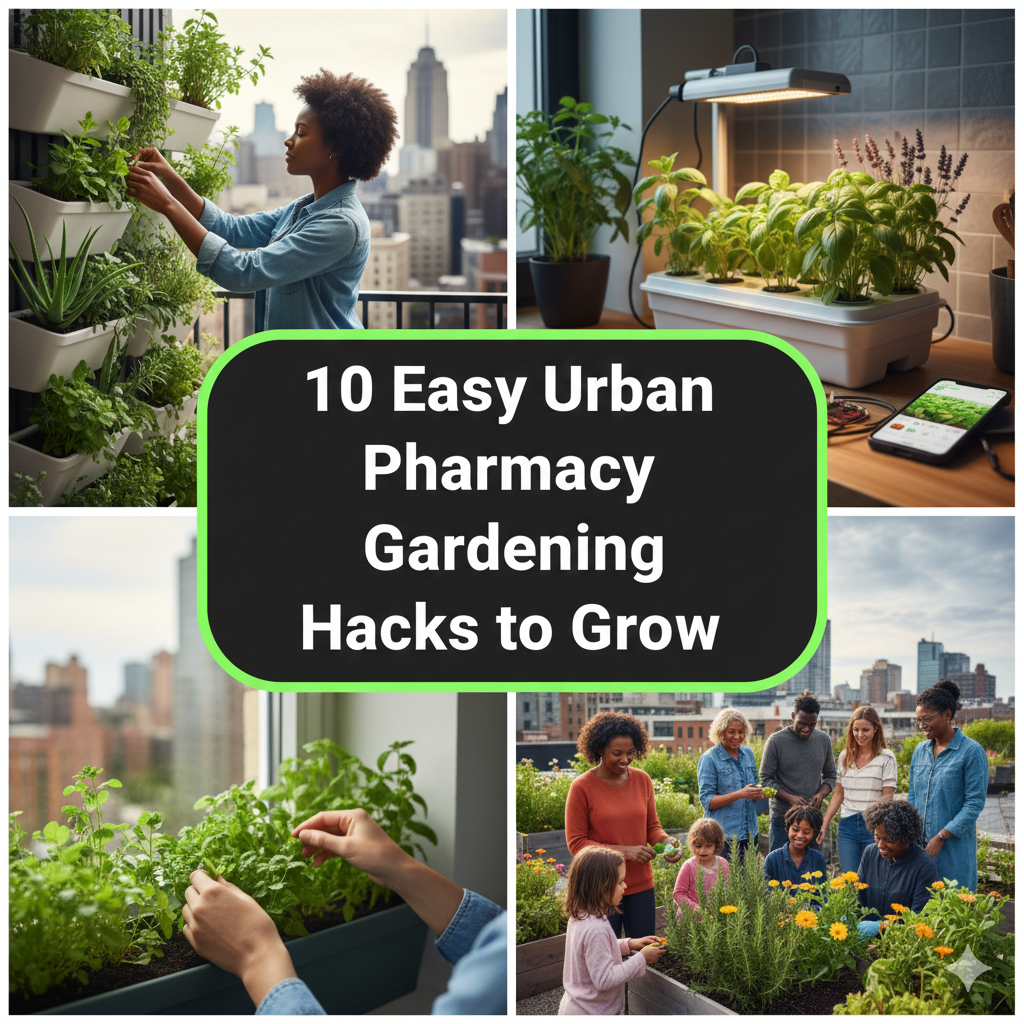
Imagine walking to your windowsill and plucking fresh herbs that could ease a headache, soothe a sore throat, or settle your nerves. No pharmacy line. No expensive supplements. Just nature, being all natural and stuff.
And so, the magic of pharmacy gardening in urban cities.
An increasing number of city dwellers are transforming balconies, rooftops, windowsills, and small apartments into green medicinal gardens. And the best part? You don’t need a green thumb, a large yard, or a botany degree. You just need the right life hacks.
This guide parcels out 10 easy, practical urban pharmacy gardening hacks that anyone can try — regardless of whether you live in a studio apartment or a townhouse with a tiny patio. Let’s dig in.
Urban Pharmacy Gardening Is Exploding Right Now
Consumers are sick and tired of being gouged for supplements and wellness products. They’re also more interested in natural remedies than ever. Urban pharmacy gardening — cultivating your own medicinal herbs in a city-based garden — is where the two overlap.
It’s affordable. It’s sustainable. And it genuinely works.
Research shows that plants such as lavender, chamomile, and peppermint have true health benefits. Growing them at home makes those benefits available to you every single day.
In addition to that, gardening helps lower stress. Levels of cortisol, a stress hormone, can decline after as little as 10 minutes spent gardening. So your garden heals you before you even touch it.
Hack #1: Get Started With the “Fab Five” Medicinal Herbs
Don’t overwhelm yourself. Begin with five easy-to-grow, incredibly useful herbs.
The Best Beginner Herbs for Your Urban Pharmacy Garden
| Herb | Health Benefit | Light Needed | Watering Needs |
|---|---|---|---|
| Peppermint | Digestion, headaches | Partial sun | Moderate |
| Lavender | Anxiety, sleep, skin | Full sun | Low |
| Chamomile | Sleep, stomach cramps | Full sun | Low-moderate |
| Lemon Balm | Stress, cold sores | Partial sun | Moderate |
| Aloe Vera | Burns, skin healing | Bright indirect | Low |
This covers a huge range of everyday health needs. Once you have become comfortable, you can build your collection.
Pro tip: If you are a beginning gardener, buy starter plants instead of seeds. They grow more quickly and are more difficult to kill.
Hack #2: Make Use of Vertical Space Like a Boss
In a city, square footage is gold. So quit thinking horizontally and start thinking vertically.
Vertical gardening allows you to grow more plants in the same square footage. It is one of the smartest urban pharmacy gardening hacks on record.
Simple Vertical Gardening Ideas
- Wall-mounted pocket planters — Hang pockets, made of fabric or plastic, on a fence or wall and plant herbs in each.
- Stacked crate shelves — Stack wooden or plastic crates and put pots on every level.
- Repurposed shoe organizers — Hang an over-the-door shoe organizer and fill each pocket with soil and herbs.
- Trellis planters — Attach a trellis to the wall and train a climbing herb to grow up it.
Pocket planters on a small 3×4 wall space can hold as many as 12 herb plants. That’s a whole pharmacy right there.
Hack #3: Become a Container Gardening Pro
You don’t need garden beds. Containers make ideal urban pharmacy gardening vessels because they are portable, flexible, and can go just about anywhere.
Choosing the Right Container
Not all pots are equal. Here’s what to keep in mind:
Drainage is everything. Use containers with holes at the bottom. Waterlogged roots kill plants fast.
Size matters. Larger containers retain moisture longer and provide roots room to grow. But small herbs, like thyme or chamomile, can do well in 6-inch pots.
Material affects temperature. Terracotta pots dry out more quickly, but they are excellent for drought-tolerant herbs such as lavender. For high-moisture herbs such as mint, plastic pots hold water better.
Creative Container Ideas
You don’t need to purchase high-end pots. Get creative:
- Tin cans with holes punched in for drainage
- Mason jars for small herbs
- Wooden wine crates lined with burlap
- Colanders for excellent drainage
- Repurposed boots or bags
Growing a pharmacy garden in a city is as much about creativity as it is about plants.
Hack #4: Create Your Own Super Soil Mix
Store-bought potting soil is fine, but custom mixes are much better. Herbs grown for medicinal purposes have particular soil requirements. Getting the soil right means healthier plants and better remedies.
A Simple Soil Recipe for Medicinal Herbs
Mix these together:
- 2 parts regular potting mix — provides structure
- 1 part perlite or coarse sand — enhances drainage
- 1 part compost — provides nutrients
- A small handful of worm castings — supercharges root development
This mixture works well for most medicinal herbs. It drains well, stays light, and provides natural nourishment for your plants.
Do not use heavy garden soil from outside. It compacts in containers and suffocates roots.
Hack #5: Create a Window Herb Garden With Recycled Items
Your kitchen windowsill is a prime piece of real estate. A sunny south or east-facing window provides enough light to grow a decent collection of herbs indoors.
Step-by-Step Window Garden Setup
- Use a windowsill tray or old wooden board as the base
- Arrange small pots or recycled containers — tin cans make ideal choices
- Use popsicle sticks or painted rocks to label each container
- Place your herbs — basil, peppermint, lemon balm, and aloe vera all do well here
- Bottom-water by placing containers in a shallow tray of water for 20 minutes, then remove
This technique keeps herbs healthy while avoiding overwatering — one of the biggest early mistakes. For more herb-growing inspiration, visit The Herb Garden — a fantastic resource packed with tips for growing and using medicinal herbs at home.
Sunlight Cheat Sheet
| Window Direction | Daily Light | Best For |
|---|---|---|
| South-facing | 6–8 hours | Lavender, rosemary, thyme |
| East-facing | 4–6 hours | Mint, lemon balm, parsley |
| West-facing | 3–5 hours | Chamomile, cilantro |
| North-facing | Under 3 hours | Not ideal (use grow lights) |
Hack #6: Use Grow Lights to Outsmart Low-Light Apartments
Many urban apartments are lacking in natural light. That doesn’t mean you can’t grow herbs. Grow lights change everything.
What Type of Grow Light Should You Buy?
LED grow lights are by far the best option for beginners. They’re energy-efficient, inexpensive, and available in full-spectrum varieties that approximate natural sunlight extremely well.
Find lights labeled “full spectrum” with a color temperature around 5000K–6500K. These will work for most medicinal herbs.
Grow Light Basics
- Place lights 6–12 inches above your plants
- Set them to run 14–16 hours a day (get a cheap outlet timer so you don’t have to think about it)
- Rotate plants weekly so all sides enjoy equal light
A simple LED grow light setup will run you between $20–$40 and could support an entire indoor urban pharmacy garden for a full year.
Hack #7: Keep Pests Away With Companion Planting
Pests are an actual issue, even in urban gardens. The good news? You don’t need chemical sprays. Companion planting relies on natural relationships between plants to protect your herbs.
According to the Royal Horticultural Society, companion planting is one of the most effective organic pest management strategies for home gardeners.
The Best Companion Plants for Medicinal Herbs
| Plant | Best Companion | Why It Works |
|---|---|---|
| Lavender | Rosemary | Repels both moths and aphids |
| Peppermint | Chamomile | Deters flea beetles and aphids |
| Lemon Balm | Basil | Attracts beneficial insects |
| Aloe Vera | Any herb | Repels flies and mosquitoes |
Other Natural Pest Control Tricks
- Spray diluted neem oil on leaves — safe and effective against most pests
- Scatter crushed eggshells around the base of plants — slugs hate crossing them
- Make a garlic spray (boil garlic in water, cool, strain, then spray) to keep insects away
- Introduce ladybugs if you have a balcony or rooftop garden — they eat aphids
The urban pharmacy garden should be chemical-free. Medicinal herbs absorb whatever they’re exposed to, so keep it clean and natural.
Hack #8: Water Smarter, Not More
More herbs are killed by overwatering than by anything else. In fact, most medicinal herbs like to dry out somewhat between waterings. Less really is more.
The Finger Test — The Simplest Watering Hack Ever
Before watering, poke your finger about an inch into the soil. If it feels moist, wait. If it feels dry, water thoroughly.
That’s it. No fancy gadgets needed.
Watering Tips That Actually Help
- Water in the morning — gives roots time to soak up moisture before the heat blows it away
- Water at the base — wet leaves attract fungal disease
- Use room temperature water — cold water shocks roots
- Self-watering pots are a good investment — they come with built-in reservoirs that feed plants slowly
Herb Watering Guide
| Herb | Watering Frequency |
|---|---|
| Lavender | Every 10–14 days |
| Rosemary | Every 7–10 days |
| Mint | Every 2–3 days |
| Aloe Vera | Every 14–21 days |
| Chamomile | Every 4–5 days |
Hack #9: Harvest Your Herbs Correctly to Encourage Growth
Most beginners harvest herbs wrong. They rip off huge pieces at random, causing stress to the plant and reducing regrowth. Smart harvesting actually causes your plant to grow back thicker and fuller.
The Golden Rule of Harvesting Herbs
Never prune more than one-third of the plant at once.
This ensures the plant stays alive and continues to grow. Take a little. Wait a week. Take a little more.
How to Harvest Common Medicinal Herbs
Peppermint: Pinch stems right above a leaf pair. This promotes bushy growth instead of tall, leggy stems.
Lavender: Snip stems in the morning before the heat hits. Harvest when flowers are just starting to open — that’s peak potency.
Chamomile: Harvest flowers when they are fully open and facing outward. Harvest every few days during the flowering season.
Aloe Vera: Cut outer leaves at the base. These are the most mature and contain the most gel.
Lemon Balm: Trim the entire plant down to about 4 inches tall once or twice a season. It will explode back with fresh new growth.
Hack #10: Store Your Herbs Like a Pro
Growing herbs is only half the equation. Knowing how to preserve them means you have access to natural medicine all year long — not just during the growing season.
Three Easy Preservation Methods
1. Air Drying Bundle 5–10 stems together with a rubber band. Hang upside down in a warm, dry, dark space. After 1–2 weeks, they’re ready to be crumbled and stored in glass jars.
Best for: Lavender, chamomile, lemon balm, peppermint
2. Freezing Chop fresh herbs and press them into ice cube trays. Fill with water or olive oil and freeze. Add a cube to teas, soups, or baths as needed.
Best for: Mint, lemon balm, basil
3. Making Tinctures Pack a glass jar with fresh herbs. Submerge fully in vodka or apple cider vinegar. Seal and let sit in a dark place for 4–6 weeks. Strain and bottle. A few drops in water or tea provides a concentrated dose.
Best for: Lemon balm, chamomile, echinacea
Storage Tips
- Always use airtight glass jars — plastic absorbs herb oils over time
- Label everything with the herb name and date
- Store away from heat, light, and moisture
- Properly stored, dried herbs last for up to 12 months
How to Set Up an Urban Pharmacy Garden: A Beginner Plan
Here’s a step-by-step guide for getting your urban pharmacy garden up and running in less than a week:
| Day | Task |
|---|---|
| Day 1 | Pick your space (window, balcony, shelf) |
| Day 2 | Collect containers and mix your soil |
| Day 3 | Purchase your Fab Five starter plants |
| Day 4 | Plant in containers and set up your watering system |
| Day 5 | Set up grow lights if needed |
| Day 6 | Add companion plants or natural pest deterrents |
| Day 7 | Label everything and start a simple garden journal |
Start small. Build from there. Your urban pharmacy garden will grow with you.
FAQs About Urban Pharmacy Gardening
Q: Do I need outdoor space to start an urban pharmacy garden? No. Many medicinal herbs do well indoors on windowsills, shelves, or under grow lights. To begin, all you need is a sunny window.
Q: Are homegrown herbs as effective as store-bought supplements? Fresh herbs that are grown well can be quite potent. But they are not a substitute for medical treatment. Always consult with a physician for serious health conditions.
Q: What’s the easiest medicinal herb for a total beginner? Mint can survive almost anything and will spread vigorously. Aloe vera is another great beginner plant — it requires virtually zero care.
Q: What does it cost to start an urban pharmacy garden? You can start with as little as $20–$30. A handful of starter plants, a few repurposed containers, and some basic potting mix are all you need.
Q: Can I grow medicinal herbs indoors year-round? Yes. With grow lights and proper care, you can maintain an indoor urban pharmacy garden through every season, no matter the weather outside.
Q: How can I tell when my herbs are ready to harvest? Most herbs are ready once they have at least 6–8 inches of established growth. Harvest in the morning for the highest concentration of oils and active compounds.
Q: Is it safe to use homegrown herbs medicinally? For general wellness purposes — teas, topical use, aromatherapy — homegrown herbs are generally safe. Do your research on each herb and consult a healthcare provider when in doubt.
Wrapping It All Up
Urban pharmacy gardening is more than just another trend. It’s a practical, money-saving, health-boosting lifestyle change that virtually anyone can achieve — no matter how tight their quarters.
You’ve now got 10 solid hacks to create your very own healing garden. From picking the proper starter herbs to getting smart about harvesting and preservation, each step takes you further down the road toward a more natural, self-reliant lifestyle.
Start with one plant. One container. One sunny windowsill.
That’s all it takes to begin. Your body — and your wallet — will thank you.