
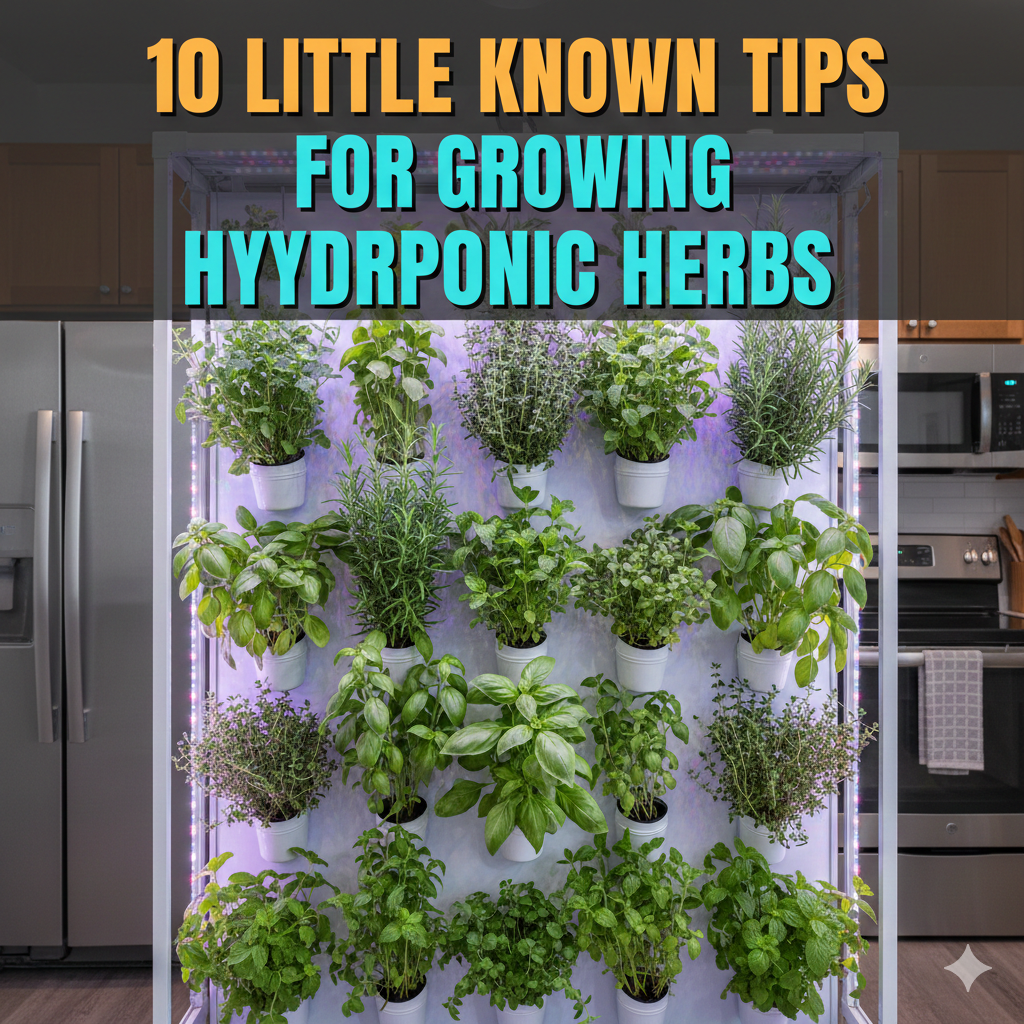
Imagine snipping fresh basil, mint, or cilantro straight from your kitchen — without soil, mess, or outdoor space. That’s precisely what hydroponics enables.
Hydroponics has redefined home gardening. No dirt. No weeding. No waiting on the weather. Just clean, fast-growing herbs thriving in a water-based system year-round.
But here’s the hard truth — hydroponics isn’t magic. Even with the best tools, plants struggle without the right knowledge, nutrient levels go awry, and many beginners find themselves quitting too early.
That’s why this guide exists.
Everything from setting up the system to timing your harvest is covered in these 10 tried and trusted hydroponic herbs growing tips. Every tip is practical, clearly explained, and aimed at producing real results — whether you’re growing on a kitchen counter or building a serious indoor herb wall.
Let’s get into it.
Why Hydroponics Is a Game-Changer for Growing Herbs
Soil-based herb growing is great. But hydroponics is a whole different story.
Plants can grow up to 50% faster in hydroponic systems compared to conventional soil. Why? Because their roots have direct access to nutrients dissolved in water. No searching through soil. No energy wasted. Just growth.
For herbs specifically, this means:
- Bigger, more fragrant leaves
- More flavor compounds and essential oils
- Faster harvests — some herbs mature in as little as 3 weeks
- Year-round growing with no seasonal limits
And the bonus? Hydroponic systems use up to 90% less water than traditional gardening. That’s a win for your water bill and the environment.
Who Is Hydroponic Herb Growing Right For?
Short answer — almost anyone.
People living in apartments with no outdoor space. People with busy schedules who prefer low-maintenance plants. Chefs who need fresh herbs daily. Beginners who have killed every soil plant they’ve ever owned.
Hydroponics levels the playing field. The tips below make it even easier.
Tip #1 — Get the Right Hydroponic System From the Get-Go
Your system is the foundation of everything. Choose poorly and you’re asking for trouble. Choosing the right one puts you on the path to success from day one.
There are five main types of hydroponic systems for herb growing:
| System Type | How It Works | Best For | Difficulty |
|---|---|---|---|
| Deep Water Culture (DWC) | Roots dangle in oxygenated nutrient water | Basil, lettuce, mint | Beginner |
| Kratky Method | Passive — no pump required | Small herb setups | Very beginner |
| Nutrient Film Technique (NFT) | Thin stream of nutrients flows over roots | Large herb gardens | Intermediate |
| Ebb and Flow | Tray floods then drains on a timer | Multiple herb varieties | Intermediate |
| Aeroponics | Roots misted with nutrients in air | Fast growth, advanced setups | Advanced |
The Ideal Starting System for Beginners
If you’re a beginner growing hydroponic herbs at home, the Kratky method or Deep Water Culture is the best place to start. Both are affordable, easy to set up, and forgiving of small mistakes.
A basic DWC setup can cost anywhere from $20–$50 using a bucket, net pots, an air pump, and an airstone. That’s it. Start small, master the fundamentals, then grow.
Tip #2 — Select Herbs That Actually Enjoy Hydroponic Growing
Not all herbs perform equally well in a hydroponic system. Some absolutely thrive. Others crave soil and struggle without it.
Herbs That Love Hydroponics
These herbs grow quickly, with little fuss, and are very well suited to water-based systems:
| Herb | Growth Speed | Flavor Benefit in Hydroponics | Difficulty |
|---|---|---|---|
| Basil | Very fast | Strong aroma, larger leaves | Easy |
| Mint | Very fast | Intense oils, aggressive spreader | Easy |
| Cilantro | Fast | Bright, fresh flavor | Easy |
| Chives | Moderate | Mild onion flavor, compact form | Easy |
| Parsley | Moderate | Rich earthy taste, steady harvests | Easy |
| Lemon balm | Fast | Intense citrus scent | Easy |
| Oregano | Moderate | Concentrated essential oils | Easy |
| Thyme | Moderate | Woodsy, aromatic flavors | Moderate |
| Rosemary | Slow | Potent, fragrant | Moderate |
| Watercress | Very fast | Peppery, nutrient-dense | Easy |
Herbs to Approach With Caution
Although lavender and chamomile can be grown hydroponically, their pH and nutrient ratios require extra attention. They are better options once you have a bit of experience under your belt.
Start with basil, mint, or cilantro. They’re forgiving, fast, and rewarding for first-time hydroponic herb growers.
Tip #3 — The Nutrient Solution Is Everything (So Get It Right)
In hydroponics, the nutrient solution is your soil. It’s where your plants get every single thing they need to grow. Get it right and your herbs will thrive. Get it wrong and they flounder or perish.
Hydroponic nutrient solutions contain three main elements:
- Nitrogen (N) — promotes leafy, green growth (essential for herbs)
- Phosphorus (P) — encourages root development and flowering
- Potassium (K) — overall plant health and disease resistance
Choosing the Right Nutrient Mix for Growing Herbs
Herbs are typically grown for their leaves. That means they need a nutrient solution higher in nitrogen than what you’d use for fruiting plants like tomatoes or peppers.
Look for nutrient solutions specifically designed for leafy greens or herbs. General hydroponic nutrients work too — just be precise about dilution. More is not better. Over-fertilizing burns roots and damages plants.
Nutrient Concentration Guide for Common Herbs
| Herb | Recommended EC (Electrical Conductivity) | Notes |
|---|---|---|
| Basil | 1.0 – 1.6 mS/cm | Sensitive to over-fertilization |
| Mint | 1.2 – 1.8 mS/cm | Tolerates slightly higher EC |
| Cilantro | 1.0 – 1.4 mS/cm | Prefers lighter feeding |
| Parsley | 0.8 – 1.8 mS/cm | Wide acceptable range |
| Chives | 1.2 – 1.6 mS/cm | Consistent feeding preferred |
| Rosemary | 1.0 – 1.6 mS/cm | Do not over-fertilize |
An EC meter is an essential tool for any hydroponic herb grower. It measures the concentration of nutrients in your water. They cost $10–$30 and eliminate the guesswork of feeding entirely.
Tip #4 — Master Your pH Every Single Time
pH is the single most important factor that most beginners overlook. And it’s why so many hydroponic herb gardens fail quietly.
Even with perfect nutrients, the wrong pH makes it impossible for plant roots to absorb those nutrients. The door is locked. The food is right there — but the plants can’t reach it.
The pH Sweet Spot for Hydroponic Herbs
For hydroponic systems, the ideal pH range for most herbs is 5.5 to 6.5. This is slightly more acidic than soil growing. That’s normal and intentional.
Here’s where individual herbs sit within that range:
| Herb | Ideal Hydroponic pH |
|---|---|
| Basil | 5.5 – 6.5 |
| Mint | 5.5 – 6.0 |
| Cilantro | 5.5 – 6.5 |
| Parsley | 5.5 – 6.0 |
| Chives | 6.0 – 6.5 |
| Oregano | 6.0 – 7.0 |
| Thyme | 5.5 – 7.0 |
| Rosemary | 5.5 – 6.0 |
How to Adjust pH in a Hydroponic System
Test your pH daily when you’re starting out. Use a digital pH meter for accuracy — liquid test kits work but are slower and less precise.
- pH too high? Add pH Down solution (typically phosphoric acid — comes with most hydroponic starter kits)
- pH too low? Add pH Up solution (usually potassium hydroxide)
Adjust in small amounts. Wait 30 minutes. Test again. Patience here saves plants.
For expert growing guides and herb-specific advice, The Herb Garden is an excellent resource for both beginner and advanced growers.
Tip #5 — Give Your Herbs the Right Amount of Light
Light is plant food. In hydroponics, your nutrient solution handles minerals — but light drives energy production through photosynthesis. Both matter equally.
When grown indoors under artificial lighting, most culinary herbs need 14 to 16 hours of light per day.
According to the Royal Horticultural Society, providing the right light spectrum and duration indoors is one of the most critical factors for achieving healthy, productive herb growth year-round.
Natural Light vs. Grow Lights for Hydroponic Herbs
| Light Source | Pros | Cons | Best For |
|---|---|---|---|
| South-facing window | Free, full spectrum | Seasonal, inconsistent | Supplemental use |
| LED grow light | Energy-efficient, adjustable | Upfront cost | Primary source indoors |
| T5 fluorescent | Affordable, even spread | Less efficient than LED | Compact setups |
| Full-spectrum smart LED | App-controlled, programmable | Higher cost | Serious growers |
Light Distance Matters More Than You Think
Too close and leaves burn. Too far and plants grow tall and leggy — a signal they’re reaching for more light (called etiolation).
General guidelines:
- LED panels: 12–24 inches above the plant canopy
- T5 fluorescents: 4–6 inches above canopy
- Clip-on LEDs: 6–12 inches above canopy
Use a basic timer to automate your light schedule. Set it and forget it. Herbs need consistency more than anything else.
Tip #6 — Keep Water Temperature in the Right Range
This tip gets overlooked all the time. And it silently kills hydroponic herb gardens.
Water temperature directly affects how much oxygen your nutrient solution holds. Warm water holds less oxygen. Less oxygen means stressed roots. Stressed roots lead to poor growth, nutrient deficiencies, and a condition called root rot.
The Perfect Water Temperature for Hydroponic Herbs
The sweet spot is 65°F to 72°F (18°C to 22°C).
- Below 60°F: Plant growth slows drastically. Nutrient uptake drops.
- 65°F–72°F: Optimal. Roots are healthy and growth is strong.
- Above 75°F: Oxygen levels drop. Root rot risk increases rapidly.
How to Manage Water Temperature
In summer or warm apartments, the water can heat up quickly. Here are practical solutions:
- Use a reservoir lid — reduces heat from light exposure
- Add a small aquarium chiller — maintains precise temperatures ($40–$100)
- Use frozen water bottles — a cheap short-term solution on hot days
- Keep your system away from radiators or direct sunlight
A simple aquarium thermometer ($5–$10) lets you monitor water temperature easily. Check it daily until you know your system’s natural range.
Tip #7 — Properly Oxygenate Your Water
Roots breathe. They need oxygen just as much as they need nutrients and water.
In soil, natural air pockets deliver oxygen to roots. In hydroponics, you have to create that oxygen supply artificially. This is done through aeration.
The Tools That Oxygenate Hydroponic Systems
Air pump + airstone: The standard setup for DWC systems. The pump pushes air through a tube into an airstone at the reservoir bottom. The airstone breaks the air into small bubbles, oxygenating the whole water column. Cost: $10–$25 for a basic setup.
Water pump + spray heads: Used in NFT and aeroponic systems. Moving water naturally absorbs oxygen.
Hydrogen peroxide (H₂O₂): Some growers add a small amount to boost dissolved oxygen and destroy pathogens. Use with caution — too much damages roots.
Signs Your Water Needs More Oxygen
Watch for these warning signs:
- Brown or slimy roots (healthy hydroponic roots are white)
- Foul smell coming from the reservoir
- Slow growth despite correct nutrients and pH
- Wilting even when water levels are fine
If you notice any of these signs, increase aeration immediately and check water temperature.
Tip #8 — Fine-Tune Your Harvest Timing and Technique
Hydroponic herbs are among the fastest-growing plants you’ll ever work with. But knowing when and how to harvest makes the difference between a plant that keeps producing for months and one that burns out in weeks.
When to Harvest Hydroponic Herbs
General rule: harvest before the plant flowers.
When herbs flower (called bolting), the plant shifts energy away from leaf production toward seed production. Leaves become smaller, tougher, and less flavorful. For culinary and medicinal herbs, this is a loss.
Harvest timing guide:
| Herb | Ready to Harvest | Harvest Signal |
|---|---|---|
| Basil | 3–4 weeks | 6+ sets of true leaves |
| Mint | 3–4 weeks | Stems reach 4–6 inches |
| Cilantro | 3–4 weeks | Lacy leaves fully formed |
| Parsley | 4–6 weeks | Outer leaves are full-sized |
| Chives | 4–6 weeks | Blades reach 6 inches tall |
| Rosemary | 6–8 weeks | Soft new growth present |
| Thyme | 5–7 weeks | Stems are 6+ inches |
The Right Way to Harvest Hydroponic Herbs
Never pull. Always cut.
Use clean pruning snips and cut just above a leaf node. This signals the plant to branch out and produce two new stems from that spot. More stems means more leaves. More leaves means more harvests.
At any single harvest, do not remove more than one-third of the plant. This allows it to retain enough foliage for photosynthesis and rapid regrowth.
Tip #9 — Spot and Stop Root Rot Before It Spreads
Root rot is the most common and most devastating problem in hydroponic herb growing. It spreads fast. And by the time you notice it on leaves, it may already be severe in the root zone.
The good news? It’s almost entirely preventable.
What Causes Root Rot in Hydroponic Systems?
Root rot is caused by Pythium — a water mold that thrives in warm, poorly oxygenated water. Three conditions create the perfect environment for it:
- Water temperature above 75°F
- Insufficient dissolved oxygen
- Light reaching the reservoir (algae growth uses up oxygen)
Prevention Checklist
- ✅ Keep water temperature between 65°F–72°F
- ✅ Run your air pump 24/7
- ✅ Block all light from entering your reservoir (use black buckets or wrap with black tape)
- ✅ Replace your nutrient solution every 7–14 days
- ✅ Rinse roots and reservoir during each water change
- ✅ Add beneficial bacteria products (like Hydroguard) to protect roots naturally
How to Identify Root Rot Early
Healthy hydroponic roots are white, firm, and slightly fuzzy. Root rot looks like:
- Brown or grey discoloration
- Slimy texture
- Unpleasant smell
- Soft, mushy root tissue
Catch it early and you can save the plant. Remove affected roots with sterilized scissors, treat with a diluted hydrogen peroxide solution (3% H₂O₂ at 1ml per liter of water), and fix the underlying cause.
Tip #10 — Keep a Simple Grow Journal (This One Habit Changes Everything)
This tip sounds basic. But any experienced hydroponic grower will tell you it’s one of the most valuable habits you can build.
A grow journal records every variable in your system. pH readings. EC levels. Water temperature. Light hours. Harvest dates. Problems you noticed. Changes you made.
Why a Grow Journal Matters
Without records, you’re guessing. With records, you’re learning.
If a plant suddenly struggles, your journal tells you exactly what changed. Did the pH shift three days ago? Did you add a new nutrient? Did the temperature spike? The answers are right there.
Over time, your journal becomes a personalized guide to your exact setup, your local environment, and your specific herbs. No article on the internet can give you that. It comes only from experience — tracked and recorded.
What to Record in Your Hydroponic Herb Journal
| Entry Type | What to Note |
|---|---|
| Daily check | pH, EC, water temp, water level |
| Weekly | Nutrient solution change, plant height, leaf color |
| Harvest log | Date, weight or volume, quality notes |
| Problem log | Symptom noticed, possible cause, action taken |
| System changes | New nutrients, equipment changes, light adjustments |
A basic notebook works perfectly. So does a free notes app on your phone. The tool doesn’t matter. The habit does.
Quick-Reference: All 10 Hydroponic Herbs Growing Tips at a Glance
| # | Tip | Key Action |
|---|---|---|
| 1 | System selection | Start with DWC or Kratky |
| 2 | Herb selection | Basil, mint, cilantro are best for beginners |
| 3 | Nutrient precision | Use herb-specific formula, check EC |
| 4 | pH monitoring | Keep between 5.5–6.5, test daily |
| 5 | Proper lighting | 14–16 hours, LED preferred |
| 6 | Water temperature | 65°F–72°F sweet spot |
| 7 | Oxygenation | Air pump running 24/7 |
| 8 | Harvest timing | Before flowering, cut above leaf nodes |
| 9 | Root rot prevention | Block light, keep temps down, use Hydroguard |
| 10 | Grow journal | Track pH, EC, temp, and harvests daily |
FAQs About Hydroponic Herbs Growing Tips
Q: How long does it take to grow herbs hydroponically?
Most fast-growing herbs like basil, mint, and cilantro will be ready to harvest within 3–4 weeks from transplant. Slower herbs such as rosemary and thyme take 6–8 weeks. Hydroponic herbs typically grow 30–50% faster than the same herbs grown in soil.
Q: Do hydroponic herbs taste different from soil-grown herbs?
Many growers and chefs say hydroponically grown herbs are just as flavorful — if not more so — than soil-grown varieties. The reason is that controlled nutrient levels and stable growing conditions allow plants to produce higher amounts of essential oils, which is where flavor and aroma come from.
Q: How often should I change the nutrient solution?
Replace your nutrient solution every 7–14 days. Top off with plain pH-adjusted water between changes as water levels drop. Fresh solution keeps nutrients balanced and prevents harmful buildup in your reservoir.
Q: Is tap water suitable for hydroponic herb growing?
Yes, but test it first. In many cities, tap water contains chlorine and chloramine, both of which can affect plant health and pH. Leave tap water uncovered for 24 hours to allow chlorine to dissipate. Or use a basic carbon filter. Check your tap water’s starting pH and EC before adding nutrients.
Q: What is the easiest hydroponic herb system for a complete beginner?
The Kratky method is the simplest system possible. No pump. No electricity. No timers. You fill a jar or container with nutrient solution, place a net pot with your herb seedling on top, and let the plant grow as it draws down the water. Basil and mint do particularly well in a basic Kratky setup.
Q: How much does it cost to start a hydroponic herb garden?
A basic beginner setup (Kratky or simple DWC) can be assembled for as little as $30–$60 all-inclusive — container, net pots, nutrients, pH meter, and a small grow light. Higher-end systems with multiple plant sites and smart lighting range from $150–$400. The ongoing expense is primarily nutrients and electricity, both of which are very affordable.
Q: Why are my hydroponic herb leaves turning yellow?
In hydroponics, yellow leaves are almost always caused by one of four things: incorrect pH (preventing nutrient absorption), nitrogen deficiency, overwatering, or insufficient light. Check your pH first — it’s the most common culprit. If pH is correct, check your EC levels to confirm nutrients are adequate.
Your Hydroponic Herb Garden Starts Right Here
Hydroponic herb growing rewards those who pay attention. The growers who monitor their pH, track their water temperature, harvest at the right time, and take notes on what works.
The 10 hydroponic herbs growing tips in this guide are not theories. They’re hands-on, proven techniques that work in real setups — from small studio apartments to dedicated indoor grow rooms.
Start with one system. Choose two or three beginner herbs. Follow the fundamentals. Keep a journal.
You’ll be surprised how quickly it all clicks. In a few weeks, you’ll have fresh herbs growing faster than you can use them — no soil, no outdoor space required.
The best hydroponic herb garden is the one you actually start. So start today.