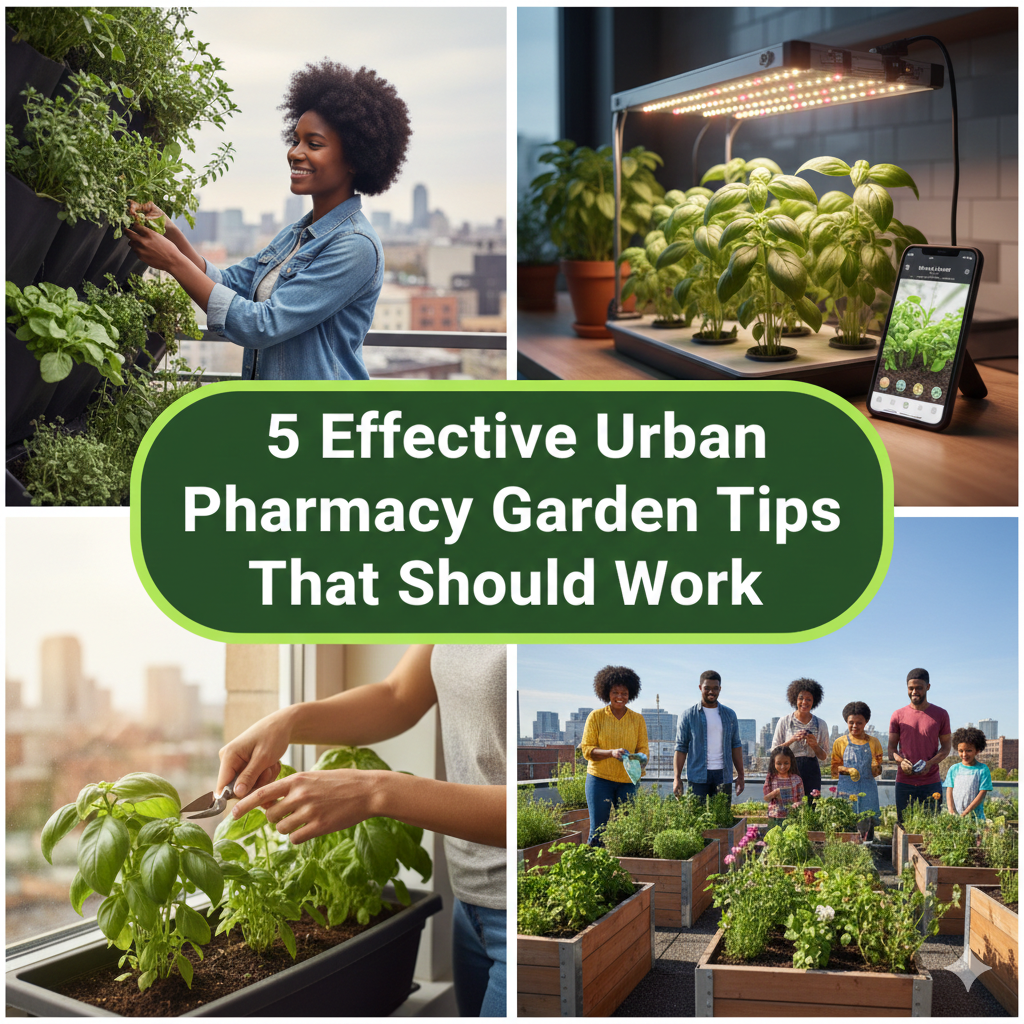
Then there’s the idea of stepping out onto your balcony to pluck fresh lavender for easing your nerves. Or snipping some mint leaves to settle an upset stomach. And that’s the magic of urban pharmacy gardening — and it’s closer than you think.
You don’t have to sacrifice nature for city life. Here’s how to start your own medicinal herb garden, even if you have a little apartment with no backyard, no rooftop, and just a sunny windowsill. It’s something more people are doing each year. And for good reason.
Growing your own healing herbs saves you money. It cuts down on pharmacy visits for small problems. It engages you with nature in a profound way. And it puts fresh, organic medicine at your fingertips.
This guide outlines 5 tried-and-true tips for urban pharmacy gardening that even beginners can do. No matter if you live in a studio apartment or a townhouse with a tiny yard, these tips will set you on the right path to get started.
What Is Urban Pharmacy Gardening, Exactly?
Before getting into the tips, let’s clarify what this term really means.
Urban pharmacy gardening involves growing medicinal plants within city environments. These are plants that are famous for their healing properties — herbs such as chamomile, peppermint, aloe vera, and echinacea.
It’s not about replacing your doctor. It’s essentially incorporating plants, used safely for centuries, to support your health naturally. It’s like a first-aid kit you can cultivate yourself.
It’s a perfect fit for small spaces. Containers, vertical walls, window boxes, and balcony railings can all be elements of your personal herb pharmacy.
Why City Dwellers Are Growing Medicinal Herb Gardens
The trend is growing fast. Here’s why:
- People turn to natural remedies as healthcare costs continue to rise
- It is a passion to grow something meaningful in the absence of land
- Gardening is well documented to provide mental health benefits
- People seeking sustainability targets turn to growing their own food and medicine
- Pandemic-era behaviors opened the gates to home gardening for millions
Urban pharmacy gardening intersects with all these motivations.
Tip #1 — Choose the Best Healing Herbs for Your Space
Begin With Herbs That Align With Your Health Goals
Not all medicinal herbs are the same. And not every plant grows well in pots or indoors. The first step is selecting the right plants for your space and health needs.
Ask yourself: What do I want from this garden?
- Trouble sleeping? → Grow chamomile or valerian
- Digestive issues? → Try peppermint or ginger
- Skin irritation or burns? → Plant aloe vera
- Frequent colds? → Consider echinacea or elderberry
- Stress and anxiety? → Lavender and lemon balm are your friends
Finding a list of plants that will work for you by selecting based on your health goals makes it a whole lot easier.
Best Herbs to Grow in Small Places
Some herbs tend to be naturally small and container-friendly. These are perfect for novice city pharmacy gardeners. For deeper guidance on individual herb varieties and their uses, The Herb Garden is an excellent resource to explore.
| Herb | Health Benefits | Light Needed | Container Size |
|---|---|---|---|
| Peppermint | Digestion, headaches | Partial sun | 6–8 inch pot |
| Lavender | Stress, sleep | Full sun | 8–12 inch pot |
| Aloe Vera | Burns, skin healing | Bright indirect | 6–10 inch pot |
| Chamomile | Relaxation, sleep | Full sun | 6–8 inch pot |
| Lemon Balm | Anxiety, mood boost | Partial sun | 8 inch pot |
| Basil (Holy) | Immunity, anti-inflammatory | Full sun | 6 inch pot |
| Rosemary | Memory, circulation | Full sun | 10–12 inch pot |
A Brief Note About Space Planning
Avoid trying to grow everything at first. Start with 3 to 5 herbs. Learn how they grow. Then expand your garden as your confidence increases.
Plant herbs that prefer the same amount of sun and water together. This simplifies maintenance and minimizes stress on the plants.
Tip #2 — The Ultimate Container Gardening Guide
Why Containers Are the Urban Gardener’s Best Friend
In a city, open ground is generally not an option. Containers solve that problem completely. They’re flexible, portable, and surprisingly good for growing medicinal herbs.
The trick is selecting the right container for each plant.
What to Look for in a Good Container
Drainage holes are non-negotiable. Without them, water collects at the bottom and leads to root rot. This is the biggest killer of potted herbs.
Materials are more important than you realize:
- Terracotta pots allow for airflow and are ideal for Mediterranean herbs such as rosemary and lavender
- Plastic pots hold moisture more easily, which benefits mint and lemon balm
- Fabric grow bags encourage air pruning of roots and discourage overwatering
- Wooden crates bring charm and insulation — perfect for balconies
Size is everything. If the pot is too small, root growth will be inhibited and your plant will experience stress. A pot that’s too big retains more moisture than necessary and tends to cause rot. Use a pot that is in proportion to the plant.
Vertical Gardening — Increase Your Growing Space
If you are short on floor space, go vertical. This is one of the smartest urban pharmacy gardening tips for apartment dwellers.
Options include:
- Wall-mounted pocket planters (great for small herbs like thyme or mint)
- Tiered plant stands on balconies
- Hanging baskets for trailing herbs
- Pallet gardens mounted to a sunny wall
- Ladder shelves near windows
Vertical setups can triple your growing capacity without sacrificing a single square foot of flooring.
Tip #3 — Use the Right Soil and Feeding Formula
Why Standard Potting Mix Falls Short
That’s where most beginners mess up. They pick up a generic bag of potting mix at the hardware store, plant their herbs, and wonder why nothing grows.
Medicinal herbs require certain soil conditions. Getting this right is one of the most important urban pharmacy gardening tips you will ever follow.
Creating the Perfect Soil Mix for Herbs
For most medicinal herbs, a good base mix is:
- 60% good potting soil — for structure and nutrients
- 20% perlite or coarse sand — aids drainage and aeration
- 20% compost — adds organic nutrients and beneficial microbes
For moisture-loving herbs (mint, lemon balm, chamomile), raise your compost to 30% and decrease perlite a little.
For drought-tolerant herbs (lavender, rosemary, thyme), bump up perlite to 30–40%. These plants hate wet feet.
Feeding Your Medicinal Herbs Naturally
Chemical fertilizers can help, but in a pharmacy garden, organic feeding is the smarter choice. You intend to eat or utilize these plants. What goes in them matters.
Top organic feeding options:
- Worm castings — mild, slow-releasing, and good for all herbs
- Diluted fish emulsion — high in nitrogen, great for leafy growth
- Compost tea — brewed with mature compost, enriches the soil
- Seaweed extract — promotes plant immunity and root development
Most herbs benefit from feeding every 2–3 weeks during the growing season (spring through early fall). Cut back in winter when growth has slowed.
Watch the pH Level
Most medicinal herbs like a soil pH range from slightly acidic to neutral — between 6.0 and 7.0. You can test this simply with an inexpensive pH meter from a garden center.
If your soil is too acidic (below 6.0), add a little garden lime. If it leans too alkaline (above 7.0), mix in sulfur or acidic compost — pine bark, for example.
Tip #4 — Master Your Watering and Light Strategy
The No. 1 Watering Mistake Almost Everyone Makes
Overwatering is the leading killer of potted herbs, outpacing any pest or disease. It’s the most common urban pharmacy gardening mistake — and it’s fully preventable.
Golden rule: Water when the top inch of soil is dry, not on a schedule.
Probe the soil an inch below the surface with your finger. If it feels dry, water thoroughly until it drains from the bottom. If it still feels damp, wait another day and check again.
Watering Needs by Herb Type
| Herb | Watering Frequency | Key Tip |
|---|---|---|
| Lavender | Every 7–10 days | Let soil dry out completely between waterings |
| Mint | Every 2–3 days | Enjoys consistently moist soil |
| Aloe Vera | Every 14–21 days | Deeply drought tolerant |
| Chamomile | Every 3–5 days | Prefers moist but not soggy soil |
| Rosemary | Every 7–10 days | Highly drought tolerant |
| Lemon Balm | Every 2–4 days | Prefers moist but well-drained soil |
Light — The Engine That Powers Your Garden
Sunlight is food for your plants. Without sufficient sunlight, medicinal herbs grow weak, generate fewer active compounds, and are more prone to disease.
Most medicinal herbs require at least 6–8 hours of direct sunlight daily. Remember that when deciding where to set up your garden.
Assessing your space:
- South-facing windows or balconies receive the most sunlight — perfect for lavender, rosemary, basil
- East-facing spots receive morning light — ideal for chamomile, lemon balm, mint
- West-facing areas receive afternoon sunlight — suitable for most herbs
- North-facing spots receive the least light — difficult but manageable with grow lights
Grow Lights for Spaces With Little Natural Light
Don’t let a north-facing apartment stand in the way of your urban pharmacy garden. Full-spectrum LED grow lights have become cheap and highly effective. According to the University of Missouri Extension, full-spectrum lighting can successfully support most indoor herb varieties when natural sunlight is limited.
Look for lights that provide 2000–3000 lumens for herbs and run them for 12–16 hours a day to imitate natural sunlight. Place the lights 6–12 inches above your plants for optimal results.
Tip #5 — Plan Your Harvest and Preserve Your Medicine
Why How You Harvest Matters as Much as How You Grow
Many urban pharmacy gardeners put all their energy into growing their herbs — and then rush the harvest. This is a missed opportunity.
Correct harvesting maximizes the medicinal potential of your plants. It also promotes new growth, ensuring your garden remains productive for months.
When to Harvest Medicinal Herbs
Time of day: Harvest in the morning, after dew has dried and before the heat sets in. This is when essential oils — the compounds that provide medicinal effects — are at their peak concentration.
Time of season: For leafy herbs, including mint and lemon balm, harvest just before the plant flowers. After the plant flowers, the leaves become slightly less potent.
For flowering herbs such as chamomile and lavender, pick when flowers are just opening — not fully open and definitely not going to seed.
Harvesting Guidelines That Keep Your Plants Happy
- Never remove more than one-third of the plant at one time
- Cut just above a leaf node (where a leaf meets the stem) to encourage bushy regrowth
- Use clean, sharp scissors or pruning shears to avoid tearing stems
- Steer clear of harvesting stressed or diseased plants
Drying and Storing Your Herbs
Fresh herbs are wonderful. But dried herbs bring the benefits of your urban pharmacy garden into the whole year.
Air drying is the simplest method:
- Tie 5–10 stems loosely together with a rubber band
- Hang upside down in a warm, dry, dark area with good ventilation
- Wait 1–2 weeks until completely dried out and crumbly
- Store in an airtight glass jar away from direct light
Dehydrator drying is quicker (4–8 hours at 95–115°F) and retains more color and aroma.
Freezing works particularly well for mint and lemon balm. Blend with a little water and freeze in ice cube trays. Drop a cube into teas, soups, or smoothies.
Easy Home Preparations Using Herbs
After you’ve harvested and dried your herbs, you can make simple remedies:
- Herbal tea (infusion): Steep 1–2 teaspoons of dried herb in boiling water for 5–10 minutes
- Tincture: Soak dried herbs in vodka or apple cider vinegar for 4–6 weeks, then strain
- Infused oil: Place dried herbs in olive or coconut oil on low heat for 2–4 hours
- Salve: Combine infused oil with beeswax and pour into small tins
As always, research every herb thoroughly before using it medicinally. Certain herbs interact with medications or may not be safe for children or pregnant women.
How to Keep Your Urban Pharmacy Garden Healthy All Year
Dealing With Common Pests Naturally
Even city herb gardens face pest problems. The most frequent offenders are aphids, spider mites, fungus gnats, and whiteflies.
Before resorting to chemical sprays, try these organic alternatives:
- Neem oil spray — effective against most soft-bodied insects
- Insecticidal soap — kills aphids and mites on contact
- Sticky yellow traps — captures fungus gnats and whiteflies
- Beneficial insects — ladybugs eat aphids if your garden is outdoors
Inspect plants weekly. Detecting a pest issue early puts you more in control of it.
Seasonal Adjustments for Your Garden
Urban pharmacy gardening is a year-round commitment, but the way you approach it changes from season to season.
| Season | Key Tasks |
|---|---|
| Spring | Repot root-bound plants; start seeds; restart feeding |
| Summer | Water more often; watch for pests; harvest regularly |
| Fall | Slow down feeding; bring tender herbs indoors; preserve harvests |
| Winter | Cut back on watering; use grow lights; plan next year’s garden |
FAQs About Urban Pharmacy Gardening
Q: Is it actually possible to grow medicinal herbs in an apartment with no outdoor space? Yes, absolutely. Many medicinal herbs grow well indoors near sunny windows or under grow lights. Mint, aloe vera, lemon balm, and chamomile all thrive well in apartments.
Q: What’s the cost of starting an urban pharmacy garden? You can start small for less than $50. A handful of pots, a bag of good potting mix, and 3–5 herb seedlings from your local nursery are all you need. Costs increase as your garden gets bigger.
Q: Are homegrown medicinal herbs as effective as store-bought supplements? Homegrown herbs that are fresh and properly dried can be quite powerful — often more so than mass-produced supplements that may spend months in warehouses. You are responsible for quality control.
Q: How can I tell if an herb is safe to use? Research every herb thoroughly before consuming it. Use trusted sources such as university extension websites or books by certified herbalists. Always consult a healthcare provider if you’re on medication or have a health condition.
Q: What medicinal herb is the easiest to begin with? Mint is widely regarded as the easiest. It grows quickly, withstands a bit of neglect, thrives in containers, and has well-documented benefits for digestion and headaches. Just keep it in its own pot — it is a vigorous spreader.
Q: How often do I need to replace the soil in my containers? Change or refresh potting mix every 1–2 years. Soil compacts, loses nutrients, and can become home to pathogens over time. Spring is the perfect time to repot with fresh mix.
Q: Can children help with an urban pharmacy garden? Yes! Gardening is a great activity for kids. Invite them to help with watering, harvesting, and simple tasks. It teaches responsibility and builds a connection to nature. Just supervise closely around any herbs that may not be child-safe.
Wrapping It All Up
For those who dwell in the concrete jungle, urban pharmacy gardening is one of the best things you can do.
You don’t need a big yard. You don’t need a green thumb. You don’t have to break the bank. What you really need is the right knowledge — and a little patience.
This guide gives you a complete roadmap with 5 proven urban pharmacy gardening tips:
- Pick the right healing herbs for your space and health goals
- Master container gardening — including vertical options
- Get the right soil and feeding formula for medicinal potency
- Master your watering and light strategy to keep plants thriving
- Harvest smart and preserve properly for year-round benefits
Start with three herbs this week. Put them by your sunniest window. Water them mindfully. Watch them grow.
Your very own pharmacy awaits planting.