
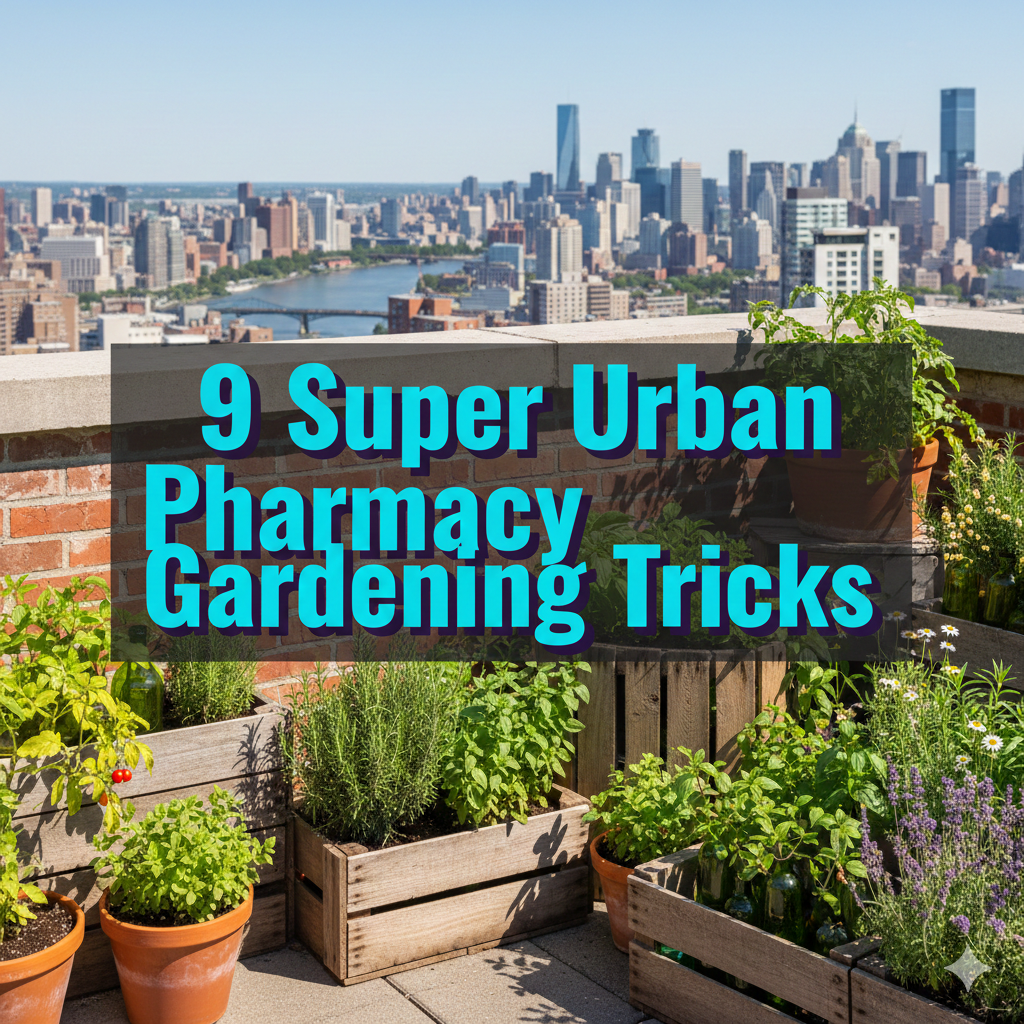
A small city block or yard can jump start a lavish pharmacy garden with modern urban gardening hacks. 9 Smart, Proven Tips to Create Healing Gardens on a Balcony or Windowsill.
You can step out on your balcony, pluck a sprig of fresh lavender and brew yourself a cup of tea that’ll help you dissolve your stress. Or snipping a few aloe vera leaves to treat a burn — all from your own windowsill.
That’s the magic of urban pharmacy gardening.
You don’t need a big yard. You don’t need a green thumb. And you definitely don’t need to blow your cash at the health food store.
What you actually need is relevant knowledge — and that’s precisely what this article brings.
Urban pharmacy gardening is the cultivation of medicinal herbs and healing plants in small city spaces. Apartments, rooftops, balconies, fire escapes and kitchen windowsills all become mini apothecaries when you know what to grow and how to care for it.
This guide walks you through 9 solid hacks that will make the whole thing easier, smarter, and more rewarding. Whether you’re a complete novice or simply someone already getting their hands dirty with herbs, these are the tips to take your urban garden to the next level.
What Is Urban Pharmacy Gardening, Specifically?
Here’s the quick picture, before the hacks.
Urban pharmacy gardening is the overlap between two concepts: urban gardening (the practice of growing plants within city environments) and herbal medicine (using the healing qualities of plants to support better health). That leaves you with a garden that is small, serves your health, and doesn’t sacrifice appearance.
It’s like your own homegrown, natural pharmacy — right outside your window.
Some of the most powerful medicinal plants on earth also happen to be among the easiest to grow in pots and containers. Plants such as peppermint, chamomile, lemon balm, echinacea and holy basil have been used for thousands of years. And today, they thrive in a 6-inch container on a sunlit shelf.
The worldwide herbal medicine market was estimated to be worth around $178 billion in 2023, and is still growing. More and more people are looking to plants for daily wellness support. Urban pharmacy gardening brings that power straight back into your hands — literally.
Hack #1 — Go Up With Vertical Herb Towers
The Problem With Flat Thinking
People tend to think about garden space horizontally. They see a tiny balcony and declare, “There’s no room.”
But plants grow up. And so should your garden.
One of the best urban pharmacy gardening hacks is vertical herb towers. A simple tower planter or wall-mounted pocket system can accommodate 12–20 plants in the footprint that one big pot would fill.
What to Plant in Your Tower
Keep your most frequently used medicinal herbs at eye level for easy access. Great choices include:
- Peppermint — digestive aid, headaches
- Lemon Balm — for anxiety and sleep support
- Thyme — a natural antimicrobial, good for coughs
- Chamomile — calming, anti-inflammatory
- Holy Basil (Tulsi) — stress relief, immune support
DIY Tower Options
You don’t need to get anything extravagant. Use a repurposed wooden pallet, hanging shoe organizer, or stacked PVC pipes with holes cut in them. Just fill each pocket with a good potting mix and slow-release fertilizer, and you’re ready.
Tip: Place heavier, thirstier plants lower in the tower. Lighter, drought-resistant herbs such as thyme and oregano go at the top.
Hack #2 — Learn Companion Planting for Medicinal Herbs
How Plants Help Each Other
Companion planting is not only a trick for vegetable gardens. The right neighbors matter a great deal for medicinal herbs.
Certain herbs deter pests that would ruin your healing plants. Others enrich the soil, attract pollinators, or even boost nearby plants’ growth.
Companion Planting Ideas for Urban Pharmacy Gardens
| Medicinal Herb | Best Companion | Why It Works |
|---|---|---|
| Chamomile | Peppermint | Repels aphids, improves growth |
| Lavender | Rosemary | Similar water needs, repel moths |
| Echinacea | Holy Basil | Attract pollinators together |
| Lemon Balm | Calendula | Both repel garden pests |
| Valerian | Most herbs | Attracts earthworms, improves soil |
What to Avoid Planting Together
Some herbs are bad neighbors. Fennel, for instance, is notoriously difficult — it suppresses the growth of most plants nearby. Keep fennel separately from your other medicinal herbs.
Mint is another one. It tends to spread aggressively and will take over any pot it shares. Always grow mint solo.
Hack #3 — Utilize the “Pharmacy Shelf” Window System
Your Window Is Prime Real Estate
A south-facing or west-facing window is one of the most valuable pieces of real estate in your apartment. Most urban pharmacy gardeners completely underutilize it.
The Pharmacy Shelf system transforms your windowsill into a layered, organized medicinal herb station — almost like a real pharmacy shelf, but green and alive.
How to Set It Up
Set up two to three tiered shelves in front of a bright window. Each shelf holds a row of containers. Assign each shelf a purpose:
- Top shelf: Sun-loving herbs — lavender, rosemary, thyme, oregano
- Middle shelf: Moderate-light herbs — lemon balm, holy basil, chamomile
- Bottom shelf: Shade-tolerant herbs — mint, parsley, chives, ginger
This creates a microclimate gradient where every plant gets the exact light level it prefers.
Label Everything Like a Real Pharmacy
Use small chalkboard labels or wooden plant markers for each pot. Include the herb name, its primary medicinal use, and the harvest date. This keeps your urban pharmacy gardening system organized and intentional — not merely decorative.
Hack #4 — Brew Liquid Gold: Make Your Own Herbal Fertilizer
Why Store-Bought Fertilizers Fall Short
Most commercial fertilizers are made for ornamental plants or vegetables. Medicinal herbs have specific needs. They flourish with the right balance of nitrogen, potassium, and trace minerals — and they actually produce more of their active healing compounds when fed correctly.
The Compost Tea Method
Compost tea is the secret weapon of serious urban pharmacy gardeners. Here’s how to make a simple batch:
- Fill a bucket with dechlorinated water (let tap water sit overnight)
- Add a handful of good compost or worm castings
- Aerate with a small aquarium pump for 24–48 hours
- Strain the liquid and dilute to a light amber color
- Water your medicinal herbs with this solution once a week
The result is a living, microbially-rich fertilizer that feeds your herbs at the root level — and boosts the production of the essential oils responsible for their medicinal properties.
Herb-Specific Fertilizer Tips
| Herb | Key Nutrient Need | Best Feed |
|---|---|---|
| Lavender | Low nitrogen, high potassium | Diluted compost tea |
| Chamomile | Minimal feeding needed | Occasional worm casting tea |
| Holy Basil | Moderate nitrogen | Weekly compost tea |
| Echinacea | Well-balanced | Balanced liquid feed |
| Peppermint | Moderate, regular feeding | Diluted fish emulsion |
Important: Over-fertilizing medicinal herbs is more detrimental than under-fertilizing. Too much nitrogen makes plants lush and green but dilutes their medicinal potency. Less is more.
Hack #5 — Grow From Cuttings, Not Seeds (Save Time and Money)
The Cutting Advantage
Seeds are cheap but slow. For many medicinal herbs — particularly woody varieties such as lavender, rosemary, and lemon verbena — growing from cuttings is much faster and more dependable.
A cutting taken from a healthy mother plant will be genetically identical to it. That means you get the same medicinal potency, the same growth habit, and the same fragrance. Every time.
Step-by-Step Cutting Method
- Choose a healthy, non-flowering stem about 4–6 inches long
- Remove the lower leaves, keeping only 2–3 at the top
- Dip the cut end in rooting hormone powder (optional but beneficial)
- Push the stem into moist perlite or a mix of perlite and coco coir
- Cover loosely with a clear plastic bag to retain humidity
- Place in bright, indirect light — not direct sunlight
- Roots typically develop in 2–4 weeks
Herbs That Root Easily From Cuttings
- Peppermint and spearmint
- Lemon balm
- Lavender
- Rosemary
- Holy basil
- Thyme
This hack alone can multiply your urban pharmacy garden several times over — completely for free. Ask friends with herb gardens if they’ll share a few cuttings. Most herb gardeners are happy to give them away.
Hack #6 — Harvest With a Plan, Not Just When You Think of It
The Harvesting Mistake Most Beginners Make
Most beginner urban gardeners harvest randomly — plucking a few leaves here and there as needed. This approach actually weakens the plant over time.
Strategic harvesting does the opposite. It encourages the plant to grow bushier, produce more leaves, and concentrate more of its medicinal oils.
The One-Third Rule
Never harvest more than one-third of the plant at a single time. This is the golden rule of medicinal herb harvesting. Taking more stresses the plant and slows recovery.
Best Time of Day and Season to Harvest
Time of day: Harvest in the morning, after the dew has dried but before the afternoon heat. This is when essential oil concentration is at its peak in most herbs.
Season: Harvest leafy herbs like mint, lemon balm, and holy basil before they flower. Once a plant starts flowering, its energy shifts from leaf production to seed production. Medicinal potency in the leaves often drops.
For flowers like chamomile and calendula, harvest just as the blooms open fully — this is when their active compounds are most concentrated.
Quick Harvest Guide
| Herb | Best Harvest Time | What to Harvest |
|---|---|---|
| Peppermint | Before flowering | Top 2–3 inches of stem |
| Chamomile | When blooms open | Flower heads |
| Lavender | When 50% of flowers open | Flower spikes |
| Holy Basil | Before flowering | Leaves and soft stems |
| Lemon Balm | Before flowering | Leaves and stems |
| Echinacea | Late summer/fall | Roots (year 2+), flowers |
Hack #7 — Build a Micro-Climate With Reflective Surfaces
Light Is Everything in Urban Pharmacy Gardening
In city apartments, light is often the biggest limiting factor. Many urban balconies and windowsills don’t get the 6–8 hours of direct sunlight that sun-loving medicinal herbs need.
Reflective surfaces are a simple, inexpensive hack that can double the effective light your plants receive.
How to Use Reflective Surfaces
Place white-painted boards, mirrors, or aluminum foil-covered boards behind or beside your plant containers. These surfaces bounce light back onto the plant from multiple angles, essentially increasing light exposure without adding any artificial lighting.
White walls work well too. If you’re arranging your urban pharmacy garden near a white wall, position containers so the wall is behind them, reflecting light forward.
When to Add Grow Lights Instead
If your space genuinely gets fewer than 4 hours of natural light, no amount of reflection will fully compensate. In this case, a full-spectrum LED grow light is the right investment. Modern LED grow lights are energy-efficient, low-heat, and designed specifically for herb growing.
A single LED grow light panel costing $30–$50 can sustain a 6–8 plant urban pharmacy garden through an entire winter.
Hack #8 — Preserve Your Harvest Like You Mean It
The Gap Between Growing and Using
You grow a beautiful batch of chamomile flowers. You harvest them. And then… you’re not sure what to do with them.
This is where many urban pharmacy gardeners lose momentum. Knowing how to properly preserve your harvest is just as important as growing it.
Four Preservation Methods Compared
| Method | Shelf Life | Best For | Medicinal Potency Retained |
|---|---|---|---|
| Air Drying | 1–2 years | Leafy herbs, flowers | Good |
| Oven Drying (low heat) | 1–2 years | Roots, bark | Good |
| Freeze Drying | 2–3 years | Delicate flowers, leaves | Excellent |
| Infused in Oil | 6–12 months | Calendula, lavender | Excellent |
| Tincture (alcohol) | 5–10 years | Most herbs | Excellent |
The Easiest Method: Hanging Bundles
Tie small bundles of harvested herbs with twine and hang them upside down in a cool, dark, well-ventilated space. This is the classic method, and it works beautifully for most leafy herbs and flowers.
Drying time is typically 1–3 weeks depending on humidity. Once dry, crumble into glass jars, label with the herb name and harvest date, and store away from direct light.
Hack #9 — Start With the “Big Six” Medicinal Herbs for Beginners
Don’t Overwhelm Yourself
One of the most common mistakes in urban pharmacy gardening is trying to grow too many herbs at once. This leads to overwhelm, neglect, and a lot of dead plants.
Start with six. Master those. Then expand.
The Big Six for Urban Pharmacy Beginners
These six herbs are chosen because they’re easy to grow, highly useful medicinally, and thrive in containers:
1. Peppermint Grows vigorously in almost any pot. Great for digestive issues, headaches, and respiratory support. Keep it in its own container — it spreads fast.
2. Chamomile Produces beautiful daisy-like flowers. Used for anxiety, sleep, and stomach upset. Grows well from seed and self-sows once established.
3. Lemon Balm One of the most calming herbs in the garden. Used for stress, anxiety, and sleep. Grows quickly and generously.
4. Lavender Needs good sunlight and excellent drainage. Used for stress, skin healing, and sleep support. Also one of the most beautiful plants in any urban garden.
5. Holy Basil (Tulsi) A cornerstone herb in Ayurvedic medicine. Used for stress, immunity, and inflammation. Loves warmth — ideal for sunny balconies and windowsills.
6. Calendula Bright orange flowers that bloom generously. Used topically for skin healing, wounds, and inflammation. Easy to grow from seed and excellent as a companion plant.
If you’re looking for more guidance on which medicinal herbs to start with and how to care for them, The Herb Garden is a fantastic resource packed with herb profiles, growing tips, and beginner-friendly advice.
At a Glance: The Big Six
| Herb | Primary Use | Light Need | Water Need | Container Size |
|---|---|---|---|---|
| Peppermint | Digestion, headaches | Part sun | Moderate-high | 8 inches+ |
| Chamomile | Sleep, anxiety | Full sun | Low-moderate | 6 inches+ |
| Lemon Balm | Stress, sleep | Part-full sun | Moderate | 8 inches+ |
| Lavender | Stress, skin, sleep | Full sun | Low | 10 inches+ |
| Holy Basil | Immunity, stress | Full sun | Moderate | 8 inches+ |
| Calendula | Skin healing | Full sun | Low-moderate | 6 inches+ |
How to Get Started With Your Urban Pharmacy Garden
Here’s a practical week-by-week guide to starting your urban pharmacy garden:
Week 1: Pick your space (balcony, windowsill, shelf), find out how many sunlight hours you get, and gather containers and potting mix.
Week 2: Acquire the Big Six — whether that means purchasing or sourcing from friends. Plant in individual containers using quality potting mix with good drainage.
Week 3: Set up your vertical tower or shelf system. Label all plants. Begin watering routine.
Week 4: Observe growth. Test soil pH (6.0–7.0 is ideal for most medicinal herbs). Apply first round of compost tea fertilizer.
Month 2: Begin strategic harvesting as plants establish. Start preserving early harvests.
Month 3 and beyond: Take cuttings to expand your collection. Add companion plants. As you gain confidence, continue to expand your urban pharmacy garden.
FAQs About Urban Pharmacy Gardening Hacks
Q: What if I have no gardening experience — can I really start an urban pharmacy garden? Absolutely. Many of the best medicinal herbs — peppermint, lemon balm, and chamomile — are extremely forgiving and easy to grow. The hacks in this guide are tailored specifically to beginners working with small city spaces.
Q: How much space do I really need? Surprisingly little. A sunny windowsill can house 4–6 medicinal herb containers. With vertical growing systems, a small balcony of merely 4×6 feet can accommodate more than 20 plants. Urban pharmacy gardening is tailored specifically for space constraints.
Q: Are homegrown medicinal herbs as effective as store-bought supplements? Freshly grown, properly harvested herbs are often far more potent than dried herbs sitting on store shelves for months. That said, for serious medical conditions, always consult a healthcare provider. Urban pharmacy gardening supports everyday wellness — it is not a replacement for professional medical care.
Q: Which medicinal herb is the easiest for a first-timer to grow? Peppermint or lemon balm. Both grow with vigor, tolerate a measure of neglect, and have clear, everyday uses. They’re virtually impossible to kill and give beginners an early win that builds confidence.
Q: Can I grow medicinal herbs indoors year-round? Yes — with adequate light. Many herbs do well in a south-facing window. In spaces with limited natural light, a simple LED grow light setup (roughly $30–$50) makes year-round indoor growing entirely achievable. Most medicinal herbs don’t need outdoor conditions to flourish.
Q: How do I know when my herbs are ready to harvest? Most leafy medicinal herbs are ready when they have several sets of healthy leaves and look bushy and full. The best time is just before flowering. For flowers such as chamomile and calendula, harvest when the blooms are fully open but before they begin to fade.
Q: How expensive is it to set up an urban pharmacy garden? It can be as cheap or as invested as you want. A basic setup with six herbs in recycled containers, homemade compost tea fertilizer, and cuttings from friends can cost under $30. A full vertical tower setup with grow lights and premium containers might run $150–$200. The hacks in this guide specifically help keep costs low.
According to the National Center for Complementary and Integrative Health (NCCIH), many commonly grown herbs such as peppermint, chamomile, and lavender have well-documented uses in supporting everyday health and wellness — making them ideal choices for a beginner urban pharmacy garden.
The Bigger Picture: What This Is Really About
Urban pharmacy gardening is more than a pastime.
It’s a quiet act of self-sufficiency in a world where we’ve become entirely reliant on supply chains for the most basic wellness products. It reconnects you with plants that humans have depended on for thousands of years. It saves money, reduces stress, and brings something live and beautiful into what can be bleak urban landscapes.
That peppermint plant on your windowsill is a tiny act of rebellion against the notion that wellness must come bottled from a shelf.
And honestly? There’s something deeply satisfying about making a tea from plants you grew yourself, harvested yourself, and dried yourself. It’s a kind of knowledge that stays with you — and a kind of care that transfers into everything else you do.
Wrapping It All Up
Urban pharmacy gardening hacks aren’t that difficult. They’re practical, inexpensive, and they actually work. Here’s a quick recap of all 9:
- Go vertical — multiply your growing space with towers and wall systems
- Plant smart companions — let herbs support each other naturally
- Build a pharmacy shelf system — organized by light needs at your window
- Make compost tea — feed your herbs with living, homemade fertilizer
- Grow from cuttings — faster, cheaper, and just as effective as seeds
- Harvest wisely — use the one-third rule and harvest at peak potency
- Use reflective surfaces — bounce more light onto your plants for free
- Preserve properly — dry, infuse, or tincture your harvest for long-term use
- Start with the Big Six — get the fundamentals right before expanding
Start with one hack. Then add another. Within just a few months, you can have a thriving urban pharmacy garden that supports your health, saves money, and brings a little nature back into your daily routine.
Your windowsill is waiting. Let it heal you.