
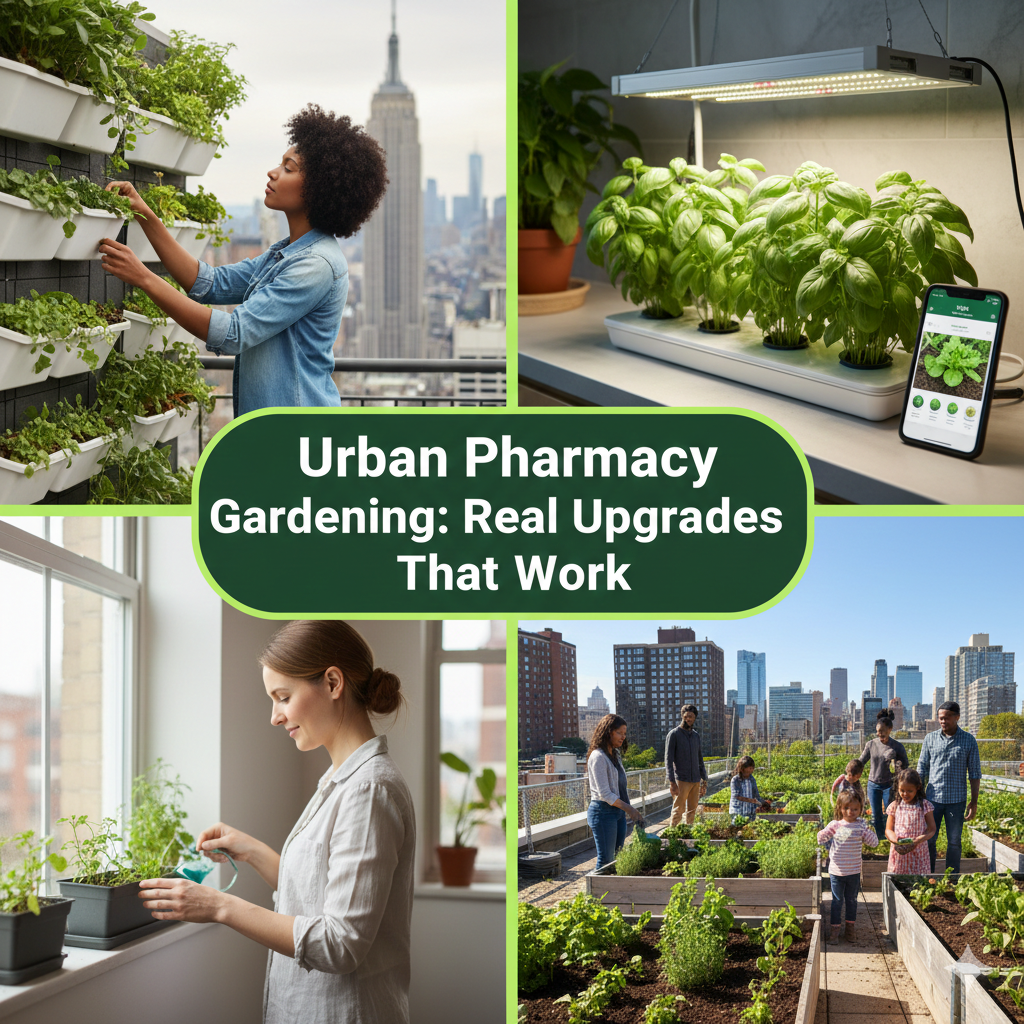
You don’t need a backyard to grow your own medicine cabinet.
There are small spaces, concrete walls and tiny balconies when living in a city. But that doesn’t mean you can’t cultivate a flourishing stock of healing plants right where you are.
Urban pharmacy gardening is cultivating medicinal herbs and plants in small spaces within cities. Think windowsills, rooftops, balcony rails and vertical walls transformed into living apothecaries.
The problem? Most gardeners hit the same walls. Limited space. Poor airflow. Forgetting to water. Not knowing which plants truly work with each other.
That is precisely why intelligent upgrades are important.
These aren’t just aesthetic improvements. They are practical, purposeful changes to make your urban pharmacy garden more efficient, higher-yielding and easier on yourself — even if you’ve never grown a single plant.
Here’s how to make four of the best upgrades you can make now.
Upgrade #1: Install a Vertical Tiered Herb Wall System
In the city, floor space is a luxury. Wall space? That’s almost always wasted.
A tiered herb wall system inverts that entirely. Rather than spreading plants out on the floor, you stack them up. This one change can expand your growing capacity three to five times in the same square footage.
Why Medicinal Plants Respond So Well to Vertical Growing
Most medicinal herbs are light-hungry. They crave sunlight. In a conventional single-row arrangement — say, on the sill of your kitchen window — front plants receive full exposure; the back row never does.
With a vertical wall system, each tier can slant just so to capture maximum light. Each plant has its turn in the spotlight.
One more thing that folks overlook: air circulation. Herbs like lavender, thyme, and rosemary absolutely despise sitting in stagnant, humid air. They’re Mediterranean plants. They developed in dry, windy conditions.
In a vertical setup, airflow between pots is encouraged. That helps to minimize fungal disease and keeps your plants healthier with zero additional work.
What to Plant in a Tiered Herb Wall
Not every plant is a candidate for vertical living. Here’s a quick breakdown:
| Plant | Why It Works Vertically | Main Medicinal Use |
|---|---|---|
| Lavender | Breathes well, stays snug | Stress relief, sleep aid |
| Thyme | Trails beautifully, drought-tolerant | Cough, immune support |
| Lemon Balm | Fast-growing, loves partial sun | Anxiety, digestion |
| Mint | Grows a bit rampant (contain it!) | Headaches, nausea |
| Chamomile | Light and airy, fits small pots | Relaxation, skin soothing |
| Holy Basil (Tulsi) | Thrives in warmth and sun | Stress, inflammation |
How to Build or Buy One
You have two paths here.
DIY option: Use a wooden pallet, a pegboard with S-hooks, or mounted pipe brackets with small terracotta pots. Cost is less than $30 if you have the skills.
Homemade alternative: Create pocket planters yourself by repurposing materials you have at home, such as stiff felt or canvas to make fabric pockets that can be hung on a balcony railing or exterior walls. Good starter kits are offered by brands such as Woolly Pocket or Mr. Stacky.
The cardinal rule: Ensure good drainage. Medicinal plants perish quickly in saturated soil. Always use a tray, or divert drainage away from your wall surface.
Upgrade #2: Use a Smart Self-Watering Container System
Watering is the biggest way urban pharmacy gardens go wrong.
Excess water drowns roots and invites root rot. Too little puts the plant into distress and diminishes the potency of its medicinal compounds. Getting it right consistently is harder than it sounds — especially as city life gets busy.
With a self-watering container system, the guesswork is eliminated entirely.
How Self-Watering Containers Actually Work
These containers have two chambers.
A water reservoir is placed in the bottom chamber. The top chamber contains your soil and plant. Both are connected by a wicking material — typically a fabric wick, cotton rope or porous soil column.
The plant draws up exactly as much water as it needs through capillary action. No overwatering. No underwatering. The plant itself controls the intake.
This isn’t just convenient. It’s scientifically smarter. Research in horticulture has repeatedly shown that growing herbs such as basil, mint and thyme with consistent soil moisture results in higher essential oil content. That can translate into more powerful medicine in your pot.
For a deeper dive into growing potent medicinal herbs at home, The Herb Garden is a fantastic resource packed with practical growing guides and herbal wisdom.
Plants That Are Best Suited for Self-Watering Setups
| Plant | Water Preference | Notes |
|---|---|---|
| Mint | High moisture | Ideal for self-watering pots |
| Lemon Balm | Moderate-high | Likes constant moisture |
| Aloe Vera | Low | No self-watering; likes dry soil |
| Lavender | Low-moderate | Only try if you can regulate reservoir |
| Echinacea | Moderate | Enjoys steady moisture |
| Calendula | Moderate | Thrives and blooms more |
Not every plant is meant for a self-watering container, however. Lavender and aloe like to dry out between waterings. For those, stick with traditional terracotta pots that breathe and drain quickly.
Smart Watering Tech Worth Adding
If you want to take it a step further, a simple soil moisture sensor costs under $15 and syncs with your phone. It tells you exactly when any particular plant needs watering — even the ones that aren’t in self-watering containers.
Brands like XLUX or Govee are basic and easy to use. Basic models have no Wi-Fi setup required.
Just this upgrade alone can save dozens of plants a year. It’s that impactful.
Upgrade #3: Create a Companion Planting Map for Your Space
Most urban pharmacy gardeners treat their plants like solo acts.
One pot of chamomile here. One pot of lavender there. Mint in the corner, minding its business.
But plants are social. They communicate via root chemicals, scent compounds and even shared soil microbes. Certain pairings make an active effort to help one another flourish. Others compete and rob nutrients, even inhibiting each other’s growth.
A companion planting map is a simple visual plan that places your medicinal plants so they help — not hinder — each other.
The Science Behind Plant Partnerships
This isn’t folklore. Companion planting is based on real science.
Some plants secrete root chemicals (called allelochemicals) that defend neighbors from pests. Others lure certain insects that pollinate or prey on nuisance bugs.
Here’s an easy example: basil, when planted near chamomile, has been shown to repel aphids. Chamomile, in turn, emits compounds that enhance the root systems of neighboring plants. Together, they are more powerful than as individual entities.
According to research published by the University of California’s Integrated Pest Management Program, strategic plant combinations can significantly reduce pest pressure without any chemical intervention — making companion planting a cornerstone of organic medicinal gardening.
The Urban Pharmacy Companion Planting Guide
| Medicinal Plant | Best Companions | Avoid Pairing With |
|---|---|---|
| Lavender | Thyme, Rosemary | Mint, Chamomile |
| Mint | Chamomile, Tomatoes | Parsley, Lavender |
| Chamomile | Basil, Mint, Calendula | Lavender, Fennel |
| Echinacea | Black-eyed Susan | Heavy nitrogen feeders |
| Calendula | Chamomile, Tomatoes | Nothing major |
| Lemon Balm | Chamomile, Mint, Fennel | Lavender |
| Holy Basil | Cabbages, Peppers | Sage, Rosemary |
Drawing Your Own Companion Planting Map
You don’t need design software. A pencil and some paper are all you need.
Step 1: Draw a rough sketch of your layout, whether you have a balcony, windowsill or rooftop.
Step 2: Note the amount of light during different parts of the day.
Step 3: Group sun-lovers together and shade-tolerant plants in less exposed areas.
Step 4: Refer to the companion table above to plan which pots will be placed next to each other.
Step 5: Pay attention to seasonal changes — some plants grow quickly in summer and might crowd neighbors by August.
Redraw your map each season. Plants grow, and your layout should too.
The Money Side of Companion Planting
Here’s something people rarely mention. Companion planting helps to minimize pest issues organically. That saves money on organic sprays or treatments.
A small city pharmacy garden without companion planning could spend $40–$80 a year on pest control. A companion garden, when planned well, often costs nearly nothing.
That’s an impactful saving over five years — and a healthier garden with no products coming into contact with your medicinal plants.
Upgrade #4: Add a Grow Light System Designed for Medicinal Potency
This is the upgrade that best unleashes urban pharmacy gardening in low natural light apartments.
Many city apartments face north. Or they’re hemmed in by taller buildings. Or the windows are small and old. Most medicinal herbs simply won’t thrive under natural light alone — much less produce significant amounts of their healing compounds.
The right grow light system makes all the difference.
What Qualifies a Grow Light as “Right” for Medicinal Plants
You can’t just grab any grow light and go. Incorrect light can cause leggy plants (tall, weak stems) or fail to stimulate the chemical processes that yield medicinal oils and compounds.
Here are three primary things to watch for:
Full spectrum output: Your grow light should provide both blue light (400–500nm range), which is beneficial for leaf and root development, as well as red light (600–700nm range), which plays a role in flowering and the production of essential oils. Full visible-spectrum lighting most closely resembles the sun.
Proper intensity (PPFD): PPFD stands for Photosynthetic Photon Flux Density. It refers to the amount of usable light that actually reaches your plant. Most medicinal herbs require 200–400 PPFD during vegetative growth and 400–600 PPFD when flowering or producing essential oils.
Timer compatibility: Plants require a dark cycle too. A grow light lacking a built-in timer — or one that won’t work with a simple plug-in timer — is an opportunity missed for automation.
Grow Light Setups by Space Type
| Space Type | Recommended Setup | Approx. Cost |
|---|---|---|
| Windowsill (small) | Clip-on LED panel, 20–45W | $20–$40 |
| Shelf unit (medium) | Full-spectrum LED bar light | $35–$80 |
| Balcony grow wall | Waterproof LED strip + reflector panel | $50–$120 |
| Dedicated grow corner | Spider LED panel, 100–200W | $80–$180 |
Which Medicinal Plants Respond Best to Grow Lights
Grow lights work with every type of plant. But some demonstrate marked increases in medicinal potency specifically:
Ashwagandha yields more withanolides (the active compounds in its root) under prolonged, consistent lighting.
Tulsi (Holy Basil) produces significantly more eugenol — its primary medicinal essential oil — under red-spectrum light.
Lemon Balm at 14–16 hour light cycles produces a significantly higher concentration of rosmarinic acid — the compound responsible for its anti-inflammatory effect.
Calendula blooms more prolifically, producing more of the flavonoids responsible for its skin-healing properties.
This isn’t just about growth. It’s about medicine quality. A grow light doesn’t just keep your plants alive — it gets them working harder for you.
A Simple Timer Schedule
Here’s a basic lighting schedule that works for most medicinal herbs:
- Seedlings: 16–18 hours of light per day
- Vegetative plants: 14–16 hours of light per day
- Flowering/fruiting plants: 12 hours light, 12 hours dark
A simple plug-in mechanical timer (under $10) will do, or a smart plug with scheduling if you already have a smart home setup. Set it and forget it.
Putting It All Together: Your Upgraded Urban Pharmacy Garden
These four upgrades work best together.
Imagine this setup:
Your balcony’s south-facing railing holds a vertical herb wall filled with lavender, thyme and chamomile — all positioned according to your companion planting map.
Inside, a shelf unit next to the window holds self-watering containers filled with mint, lemon balm and tulsi — a moisture sensor pings your phone when the reservoir needs filling.
In the dimmer corner of your apartment, a small LED grow panel on a timer keeps your ashwagandha and calendula thriving at full medicinal potency.
That’s an entire living pharmacy in less than 40 square feet of urban space.
Cost Breakdown: What These Upgrades Will Actually Cost You
| Upgrade | Budget Option | Mid-Range Option | Premium Option |
|---|---|---|---|
| Vertical Herb Wall | $20–$40 (DIY pallet) | $50–$100 (pocket planters) | $120–$250 (modular system) |
| Self-Watering Containers | $15–$30 (basic plastic) | $40–$80 (ceramic style) | $90–$150 (smart sensors included) |
| Companion Planting Map | $0 (pencil + paper) | $5–$15 (planner/app) | $20–$40 (pro planner tool) |
| Grow Light System | $20–$40 (clip-on LED) | $50–$100 (LED bar) | $100–$200 (spider panel) |
| Total | $55–$110 | $145–$295 | $330–$640 |
All four budget version upgrades can transform your urban pharmacy garden for less than $120.
Urban Pharmacy Gardening Upgrades FAQs
Q: What exactly is urban pharmacy gardening and is it safe for beginners?
Urban pharmacy gardening is cultivating healing plants and medicinal herbs in small city spaces — balconies, windowsills and rooftops. Yes, it’s completely beginner-friendly. Try simple herbs like mint, chamomile or lemon balm. They are forgiving, fast-growing and actually useful.
Q: How much space do I need to start?
You can begin with a single square foot of windowsill space. A single tiered pocket planter attached to a balcony railing can hold 12–20 small herb plants. Space is seldom the true constraint — organization and light are.
Q: Is there a way to grow medicinal plants indoors without any natural light?
Yes, with a full-spectrum grow light. With the right LED grow light system, many apartment dwellers have succeeded in growing highly potent medicinal herbs in rooms with zero natural light. It takes a small investment to get into, but pays dividends.
Q: How can I tell if my medicinal herbs are really producing their healing compounds?
Your best raw indicator is smell. A lavender, basil or thyme plant that smells pungently is actively producing essential oils. Pale, less odorous plants are probably not producing significant medicinal compounds. Good light, proper watering and companion planting all enhance fragrance — and potency.
Q: Is there specific soil I need for urban pharmacy gardening?
Yes. Most medicinal herbs prefer a well-draining, slightly gritty soil over standard potting mix. For Mediterranean herbs such as lavender, thyme and rosemary, a blend of two parts regular potting soil to one part perlite to one part coarse sand will do nicely. Standard potting mix suits moisture-loving herbs like mint and lemon balm.
Q: Is keeping an urban pharmacy garden expensive?
Not after the initial setup. Most medicinal herbs are perennials — they return year after year. Once established, your primary costs are occasional soil refresh, seeds for annuals like calendula, and minimal electricity for grow lights (generally $2–$5 a month).
Q: Are medicinal herb gardens safe around children and pets?
Most common medicinal herbs are safe, but some — including certain varieties of lavender, eucalyptus or pennyroyal mint — can be hazardous to pets. Always check on pet-safety before introducing plants in shared spaces. For children, supervision is advised, and do not grow toxic plants such as foxglove or comfrey in accessible locations.
Little Space, Lotta Medicine
The sweet irony is that urban pharmacy gardening isn’t about perfect conditions.
It’s all about taking advantage of what you possess.
A tiered herb wall transforms unused vertical space into a productive growing surface. Self-watering containers remove the daily watering worry from your plate. A deliberate companion planting map turns individual plants into a cooperative, thriving ecosystem. And a properly selected grow light system guarantees that your plants are producing genuine, potent medicine — not just pretty leaves.
These four upgrades play well with each other. They are economical, practical and truly life-changing for anyone committed to creating their own healing garden in the city.
You don’t need a farm. You need four clever upgrades and the gumption to kick off.
Your urban pharmacy is waiting.