
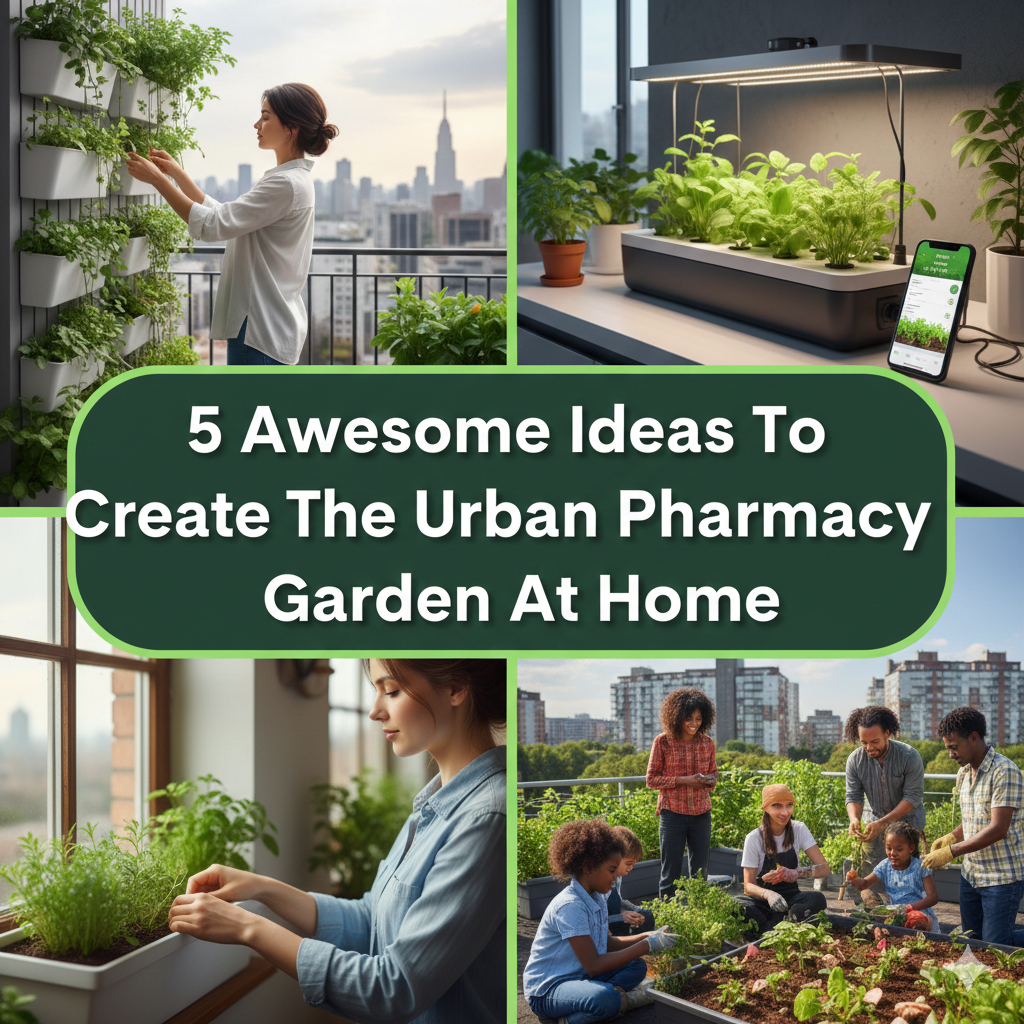
Have you ever wanted to get your natural remedy straight from the comfort of your home?
Imagine going out onto your balcony and picking fresh lavender for stress relief. Or snipping some peppermint leaves to settle an upset stomach. That dream is more attainable than you might think.
Urban pharmacy gardening is the cultivation of healing and medicinal plants in small city spaces. You don’t need acres of land. You don’t need a green thumb. You just need the right ideas, the right plants, and some patience.
Living in the city often involves tight spaces. But limited square footage doesn’t have to equal no greenery. Millions of people worldwide are creating healing gardens in their apartments, rooftops, balconies, and even kitchen counters.
In this guide, we will take you through 5 ultimate urban pharmacy gardening ideas that are practical, beautiful, and actually good to have. Whether you’re a complete novice or someone who’s played around with growing herbs, there’s something for you here.
Let’s dig in.
Why Urban Pharmacy Gardens?
Natural health solutions are more popular than ever. So, what’s driving this trend? Skyrocketing healthcare costs, a burgeoning love of sustainability, and the desire to know exactly what you are putting into your body.
Urban pharmacy gardening sits right at the intersection of all those trends.
Saving money at the pharmacy is not the only issue. It’s about being in touch with nature even when facing a concrete jungle. It’s about having fresh, chemical-free plants on hand whenever you need them.
And the advantages are not just about health.
Growing plants reduces stress. It improves air quality. It provides you with a productive talent that nourishes both your body and spirit.
What Qualifies as a “Pharmacy Plant”?
A pharmacy plant is a plant with medicinal, therapeutic, or healing properties. These include:
- Herbs such as basil, thyme, and rosemary
- Relaxing plants such as chamomile and lavender
- Herbs that support digestion such as peppermint and fennel
- Immune boosters such as echinacea and elderberry
- Skin soothers like aloe vera
You don’t have to grow all of these. Start with two or three. Build from there.
Idea #1 — The Windowsill Medicine Cabinet
Your windowsill could be the most underutilized real estate in your apartment.
A south-facing window gets full sun for most of the day. That makes it ideal for cultivating a mini garden of healing herbs in your own home. Think of it as your very own medicine cabinet — only alive and green.
The 3 Best Plants for a Windowsill Pharmacy
| Plant | Primary Benefit | Sunlight Needed | Watering Frequency |
|---|---|---|---|
| Peppermint | Digestive relief, headaches | Partial to full sun | Every 2–3 days |
| Aloe Vera | Skin healing, burns | Bright indirect light | Every 7–10 days |
| Chamomile | Sleep aid, anxiety relief | Full sun | Every 2–3 days |
| Lemon Balm | Stress relief, digestion | Partial sun | Every 2–3 days |
| Thyme | Cough relief, antibacterial | Full sun | Every 3–4 days |
How to Set It Up
Start with small terracotta pots. They are inexpensive, breathable, and look great.
Stand them on your windowsill in height order — shortest at the front, tallest at the back. This way, each plant receives light without being blocked by another one.
Choose a well-draining potting mix made for herbs. Mix in a bit of perlite for drainage.
Use a small wooden stick or cute chalkboard label to tag each pot. It helps organize everything and gives it a nice visual feel.
Pro Tip
Rotate your pots every few days. This ensures an even distribution of light to all sides of the plant. It also prevents uneven growth and keeps your plants bushy and healthy-looking.
The windowsill pharmacy is perfect for beginners. It’s inexpensive, easy to harvest, and provides immediate access to medicinal herbs as you cook or brew tea.
Idea #2 — The Vertical Healing Wall
No floor space? No problem.
One of the best urban pharmacy gardening ideas is a vertical garden. Instead of spreading your plants across the ground, you stack upward. Dozens of plants can fit on one wall.
This solution works great on balconies, but also in kitchens or even a narrow hallway. If you’re looking for more herb growing inspiration, The Herb Garden is a fantastic resource for both beginners and experienced growers alike.
What You Need to Create a Vertical Pharmacy Wall
You don’t need expensive equipment. Here are some affordable options:
Pocket planters — Fabric panels divided into pockets. Hang them on any wall. Add soil to each pocket, then one plant. Easy.
Repurposed wooden pallets — Place a pallet on its back, line the openings with landscape fabric, add soil, and plant directly into each space. Just lean it against a wall and you’re there.
Stacked shelf units — A basic tiered metal or wooden shelf is the simplest answer. Place pots on each level. If natural light is limited, add a grow light.
PVC pipe planters — Cut holes in a vertical PVC pipe, fill with soil, and plant herbs in each opening. Mount it on a wall. It has a futuristic look and saves a ton of space.
The Best Medicinal Plants for Vertical Gardens
Trailing and compact plants work best here. Try these:
- Spearmint — Grows fast, smells great, aids digestion
- Oregano — Natural antibacterial properties, trails beautifully
- Nasturtium — Edible flower with immune-boosting qualities
- Rosemary — Aids memory and focus, super hardy
- Sage — Helps with sore throats, great for oral health
Watering a Vertical Garden
Watering vertical gardens can get complicated. Water flows down, so the plants at the top get more moisture than those further below.
You can fix this by watering from the bottom up, or by using a basic drip irrigation system. Inexpensive kits are available online for less than $20.
Check for moisture each day by sticking your finger one inch into the soil. Water when it feels dry.
Idea #3 — The Balcony Apothecary Garden
If you’ve got a balcony, you have a complete outdoor pharmacy waiting to bloom.
A balcony offers more space than a windowsill and more light than most indoor setups. It’s the perfect place for slightly larger medicinal plants that need room to breathe.
Designing Your Balcony Apothecary
Think in zones. Break your balcony down into three areas:
Zone 1 — Sunny Edge (railing area) Full sun here. Use it for sun lovers such as lavender, rosemary, and thyme.
Zone 2 — Middle Ground Moderate light. Great for chamomile, echinacea, and lemon balm.
Zone 3 — Shaded Corner More indirect sunlight. Ideal for mint, parsley, and aloe vera.
Container Choices That Maximize Space
| Container Type | Best For | Space Efficiency |
|---|---|---|
| Rectangular window boxes | Rail mounting | ⭐⭐⭐⭐⭐ |
| Stackable planters | Compact corners | ⭐⭐⭐⭐ |
| Large terracotta urns | Tall plants like echinacea | ⭐⭐⭐ |
| Hanging baskets | Trailing plants like nasturtium | ⭐⭐⭐ |
| Fabric grow bags | Root vegetables and herbs | ⭐⭐⭐⭐ |
Fantastic Plants for a Balcony Apothecary
Lavender — The queen of balcony pharmacy. Soothes anxiety, aids sleep, keeps bugs away. Needs full sun and very good drainage.
Echinacea — Gorgeous purple flowers known to boost the immune system. A little more difficult to grow but worth every bit.
St. John’s Wort — Historically used for low mood and nerve pain. Grows well in containers and prefers full sun.
Calendula — Lovely orange flowers that are remarkably anti-inflammatory. Great for skin healing. Easy to grow from seed.
Elderflower — Grows as a dwarf variety in a large pot. Berries and flowers both have amazing immune and antiviral properties.
Protecting Your Balcony Garden
Wind can damage fragile plants. Use a simple windbreak — a bamboo screen or even a row of taller, sturdier plants along the outer edge.
Before loading on too many heavy containers, check how much weight your balcony can handle. If you’re not sure, consult a structural engineer.
Idea #4 — The Indoor Grow Light Pharmacy Station
Not every room has great natural light.
If you have a north-facing apartment, a basement unit, or live somewhere with long dark winters, this idea is your best friend.
A grow light pharmacy station allows you to grow healing plants year-round, no matter what the weather or lighting conditions are like in your home. It’s one of the strongest urban pharmacy gardening ideas for people in tough circumstances.
How Grow Lights Work
Plants need light to photosynthesize. Without it, they wilt and become leggy — reaching toward any light source with lean, pale stems.
Grow lights replicate the spectrum of natural sunlight. The best option is full-spectrum LED grow lights. They’re energy efficient, long lasting, and generate very little heat. According to the Royal Horticultural Society, most culinary and medicinal herbs thrive under consistent artificial lighting when natural light is unavailable.
Setting Up Your Station
Step 1: Choose a shelf unit. A wire rack works well. Adjust the shelf heights for your plants.
Step 2: Attach an LED grow light strip to the underside of each shelf. Most clip-on or magnetic lights install without tools.
Step 3: Set a timer. Most medicinal herbs need 12–16 hours of light per day. A simple plug-in timer takes the thinking out of it.
Step 4: Add a small fan. Air circulation helps prevent mold and strengthens plant stems. A mini USB desk fan gently aimed at the plants does the trick.
Step 5: Put a drip tray under each pot to catch excess water and protect your floors.
Cost Summary for a Basic Grow Station
| Item | Estimated Cost |
|---|---|
| Metal wire shelf unit (4 shelves) | $25–$50 |
| Full-spectrum LED grow light strips (x3) | $30–$60 |
| Plug-in timer | $8–$15 |
| Small USB fan | $10–$20 |
| Pots and potting mix | $15–$30 |
| Total Estimated Cost | $88–$175 |
That’s a one-off investment that can save you hundreds of dollars on herbal products year after year.
Best Plants for an Indoor Grow Station
Ashwagandha — An adaptogen known to help your body deal with stress. Loves warmth and consistent light.
Holy Basil (Tulsi) — Sacred herb in Ayurvedic medicine. Immunity-boosting, anti-inflammatory, and tasty in tea.
Feverfew — Historically used for migraines and fever. Compact enough for any shelf.
Valerian — A powerful sleep aid. Can thrive indoors with plenty of light.
Ginger — A digestive powerhouse. Start from a ginger root bought at the grocery store and grown in shallow soil.
Idea #5 — The Community Rooftop Pharmacy Garden
This final idea has the widest scale — and is possibly the most exciting.
If you have access to a rooftop at your apartment building, community center, or local organization, the opportunity exists to create something truly special.
A rooftop pharmacy garden brings neighbors together to grow not just food, but healing and sustainability. It transforms an unused concrete slab into a lush garden high above the city streets.
Why Rooftop Gardens Work So Well
Rooftops receive excellent sunshine — sometimes even better than any balcony or windowsill. They’re removed from street-level pollution. And they offer the kind of space that individual apartments simply can’t deliver.
Studies have shown that rooftop gardens can lead to lower energy costs for buildings, better stormwater management, and a significant boost in residents’ mental wellbeing.
Add a focus on medicinal plants, and you have something truly special.
How to Get a Community Garden Up and Running
Talk to your building manager or landlord. Frame the idea as a benefit to the building — more property value, happier residents, lower cooling costs.
Form a small committee. Even three or four willing neighbors can make it work. Divide responsibilities: one manages planting, another handles watering schedules, another oversees community communications.
Apply for local grants. Many cities have funding to support urban greening projects. Search “[your city name] urban garden grants” to find opportunities.
Start a shared cost model. Residents contribute a small monthly amount — even $5 each — to cover soil, seeds, and maintenance.
What to Plant in a Rooftop Pharmacy Garden
| Section | Plants | Purpose |
|---|---|---|
| Immunity Support Corner | Echinacea, elderberry, garlic | Cold and flu defense |
| Stress Relief Row | Lavender, chamomile, lemon balm | Anxiety relief, sleep |
| Digestive Health Patch | Peppermint, fennel, ginger root | Gut health |
| Skin Care Area | Calendula, aloe vera | Wound healing |
| Respiratory Support | Thyme | Coughs and congestion |
Making It Sustainable
Install a rainwater collection system. A basic barrel attached to a downspout can harvest hundreds of gallons.
Use companion planting — placing plants next to natural partners that repel pests. Basil, for instance, repels aphids and helps protect neighboring plants.
Compost food scraps from building residents to create free, nutrient-dense fertilizer.
With good management, a well-run community rooftop pharmacy garden can provide fresh medicinal herbs to residents for decades. It’s urban pharmacy gardening in its most powerful, transformative form.
Quick-Start Guide: Choosing the Right Idea for You
Not sure which idea fits your situation? Use this simple guide:
| Your Scenario | Best Idea |
|---|---|
| Small apartment with lots of sunlight | Windowsill Medicine Cabinet |
| No floor space but have a wall | Vertical Healing Wall |
| Have a balcony | Balcony Apothecary Garden |
| Low light, indoors year-round | Grow Light Pharmacy Station |
| Access to rooftop or shared space | Community Rooftop Garden |
Harvesting and Using Your Apothecary Plants
Growing is just part of the process. The other half is making use of your plants.
Harvesting Tips
- Harvest in the morning after dew has evaporated
- Never harvest more than one third of a plant at any time
- Use clean scissors or pruning shears
- For the most potent leaves, harvest before flowering
Easy Ways to Use Your Plants
Teas and infusions — The simplest method. Steep fresh or dried herbs in hot water for 5–10 minutes.
Tinctures — Steep herbs in alcohol (such as vodka) for 4–6 weeks. Strain and store in dark glass bottles. Very long shelf life.
Salves and balms — Infuse herbs into coconut oil or olive oil, then combine with beeswax. Great for skin conditions.
Raw — Many herbs can be consumed raw. Add to smoothies, salads, or meals for an everyday health boost.
Mistakes to Avoid in Your Urban Pharmacy Garden
Even enthusiastic gardeners hit snags. Here are the biggest missteps — and how to avoid them:
Overwatering — The most common killer. More plants die from overwatering than underwatering. Always check the soil before watering.
Using the wrong soil — Regular garden soil is too dense for pots. Use a potting mix designed for container growing.
Skipping drainage — All pots need drainage holes. Standing water causes root rot quickly.
Planting too many varieties at once — Start with three or four plants. Learn them well before expanding.
Ignoring pests early on — Check leaves weekly for aphids, spider mites, or fungus. Catching problems early makes them easy to fix.
FAQs About Urban Pharmacy Gardening
Q: Do I need gardening experience to start an urban pharmacy garden? Not at all. Most medicinal herbs are forgiving and easy to grow. Beginner-friendly plants include peppermint, aloe vera, and chamomile.
Q: What does it cost to get started? You can start a simple windowsill setup for under $30. A basic grow light station will run around $100–$175. Community rooftop gardens can be funded through shared contributions or local grants.
Q: Are homegrown medicinal plants as effective as store-bought supplements? Fresh homegrown herbs can be incredibly potent — often more so than dried supplements that have been sitting on shelves for months. The key is in harvesting and preparing them properly.
Q: Can I grow pharmacy plants if I have pets or young children? Certain medicinal plants can be harmful to pets or children when ingested in large quantities. Always research each plant before you grow it. Lavender, for example, can be mildly toxic to cats. Keep plants out of reach of both pets and children.
Q: How long before my plants are ready to use? Fast-growing herbs such as mint and chamomile are typically ready to harvest in 6–8 weeks. Slower-growing species, such as echinacea, can take an entire season or more.
Q: Can I grow pharmacy plants in a windowless room? Yes — with grow lights. A good full-spectrum LED setup can fully replicate natural sunlight. It’s a game changer for low-light city apartments.
Q: Do I need organic soil and seeds? Organic is a better option, especially for plants you’re going to consume. However, it’s not strictly required. Start with what’s available and upgrade as your garden matures.
Bringing It All Together
These urban pharmacy gardening ideas are more than just fun projects. They’re transformative.
Whether you’re creating a miniature medicine cabinet on your windowsill or rallying your neighbors to build a healing rooftop garden, you are doing something meaningful. You are taking charge of your health and well-being. You’re staying connected to the natural world. And you’re developing a skill that will last a lifetime.
Start small. Be consistent. Learn as you grow.
The city may be concrete and glass — but in your apartment, on your balcony, or up above it all, nature is ready to bloom.
Your personal pharmacy is only a few pots of soil away.