
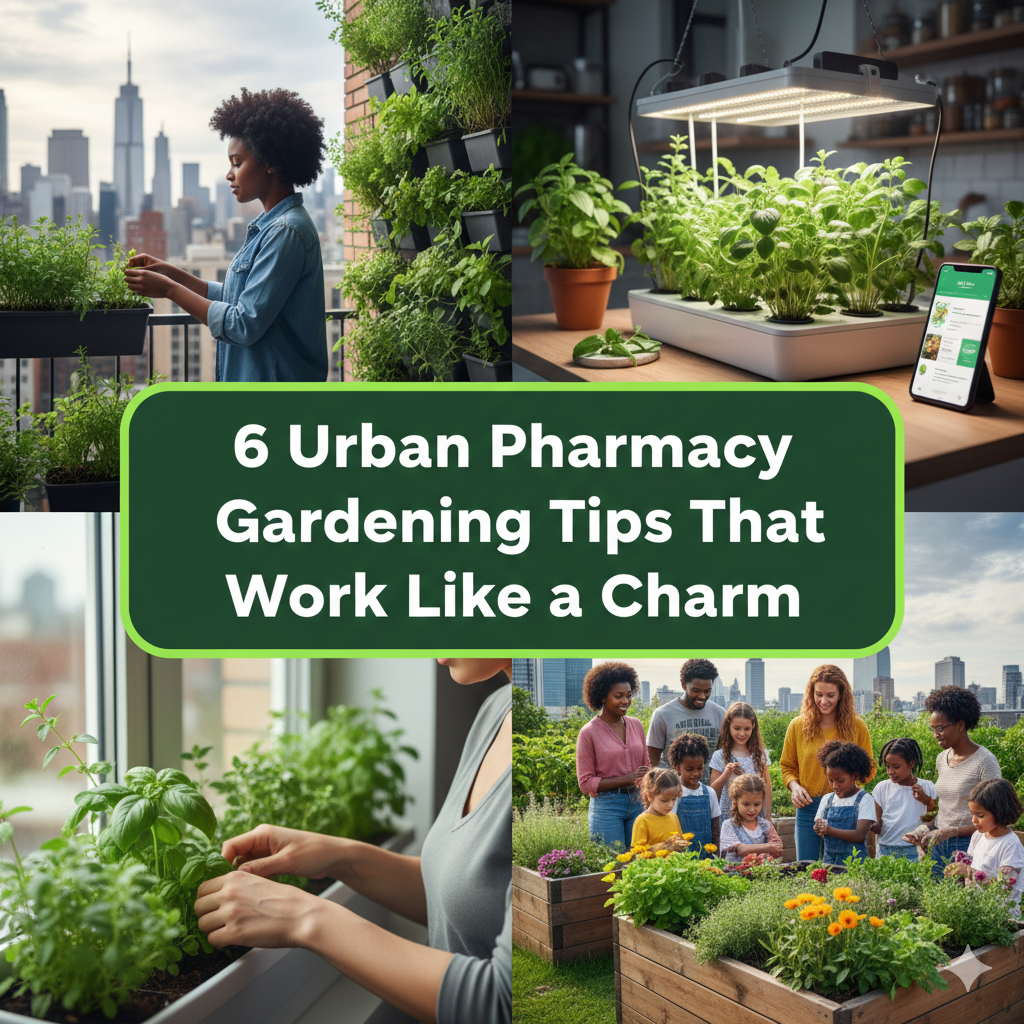
Imagine walking outside your apartment door, snipping a few sprigs off a plant and making a remedy to calm that sore throat — no pharmacist needed. That’s the magic of urban pharmacy gardening.
Life in the big city doesn’t mean no growing your own therapeutic plants. Whether you have a balcony, a sunny windowsill or even just an unused space under a grow light, you can create a small but potent herbal garden right where you live.
This guide breaks down 6 quick tricks to get you started, staying consistent and grow herbs that work. No fancy tools. No huge yard. Just sensible, uncomplicated actions that work in actual urban life.
What Is Urban Pharmacy Gardening, Anyway?
Urban pharmacy gardening involves cultivating medicinal herbs and therapeutic plants in small urban spaces. Consider it as creating your own natural medicine cabinet — only in pots, containers and window boxes.
The planting of healing herbs dates back thousands of years. City dwellers are reviving that tradition today. They’re growing plants including lavender, chamomile, peppermint and aloe vera on balconies, rooftops, fire escapes and even kitchen counters.
Why Urban Gardeners Are Looking to Medicinal Herbs
There are more individuals seeking natural means to enhance their health. Here’s a quick summary of why urban pharmacy gardening is taking off:
| Reason | Why It Matters |
|---|---|
| Cost savings | Fresh herbs are much less expensive than supplements |
| Accessibility | Grow at home and harvest whenever you need |
| No toxic fillers or additives | You control what you feed your plants |
| Mental health benefits | Gardening reduces stress and anxiety |
| Sustainability | Less packaging, less waste |
| Educational value | Perfect for kids and families |
That’s enough preamble — let’s get into the tricks themselves.
Trick #1 — Choose the Best Healing Herbs for Tight Spaces
Start With the Things You Actually Need
Not all medicinal herbs are meant to be grown in a city apartment. Some grow too tall. Some explode and overwhelm everything. The very first trick in urban pharmacy gardening is to choose herbs that are compact, robust and truly useful.
Ask yourself: What do I actually use remedies for? Headaches? Trouble sleeping? Skin irritation? Digestion issues? Let your health needs guide your plant picks.
The Easiest Herbs to Grow for Beginners in the City
Here are some favorites that do well in small pots:
Peppermint — Good for digestion, headaches, and congestion. Grows fast in pots. However, it spreads easily — so keep it contained.
Lavender — Soothes anxiety, promotes sleep and treats minor skin irritations. Loves sunlight and dry conditions.
Aloe Vera — Essential for burns, cuts, and skin care. Barely needs watering. Perfect for beginners.
Chamomile — Great for helping with stress and sleep support. Makes a beautiful tea. Grows well in small containers.
Lemon Balm — Eases anxiety and aids digestion. Smells incredible. It grows rapidly and prefers partial shade.
Echinacea — Aids the immune system. Can thrive in larger containers provided they drain well.
A Simple Herb Selection Chart
| Herb | Main Benefit | Pot Size Needed | Light Requirement |
|---|---|---|---|
| Peppermint | Digestion, headaches | Medium (6–8 inch) | Partial sun |
| Lavender | Stress, sleep | Medium (8 inch) | Full sun |
| Aloe Vera | Skin care, burns | Small to medium | Bright indirect light |
| Chamomile | Anxiety, sleep | Small (4–6 inch) | Full sun |
| Lemon Balm | Calm, digestion | Medium | Partial shade |
| Echinacea | Immunity | Large (10–12 inch) | Full sun |
Begin with two or three herbs you know you’re going to use. Build from there.
Trick #2 — Container Gardening Like a Pro
Your Container Is Everything
With urban pharmacy gardening, your container is your garden bed. The right one makes a big difference in the success of your plants.
The most common mistake made by beginners is choosing containers that are too small or those that do not provide adequate drainage. Roots need room to breathe. Water that doesn’t drain can lead to root rot and kill plants quickly.
How to Choose a Container
Drainage holes — Non-negotiable. Every pot needs them.
Depth — Plants such as lavender and echinacea require a minimum of 8–10 inches in depth. 4–6 inches is sufficient for shallow herbs like thyme and chamomile.
Material — Terracotta pots are porous and excellent for herbs that prefer dry soil. Plastic pots are more moisture-retaining, which can be a better home for herbs that love humidity like lemon balm.
Creative Container Ideas for Urban Areas
You don’t have to purchase expensive planters. Here are some inexpensive alternatives that work superbly:
- Old wooden crates lined with burlap
- Old colanders — the holes make them great for drainage
- Fabric grow bags for balconies with little floor space
- Vertical pallet planters stacked for walls and fences
- Window boxes with multiple herb varieties side by side
The advantage of urban pharmacy gardening is that ingenuity matters. A pot that functions and drains well is a good pot, end of story.
Soil Is More Important Than You Realize
Use a high-quality potting mix — not plain garden soil. Garden soil becomes solid in containers and chokes roots. Mix in some perlite or coarse sand to enhance drainage — especially for herbs like lavender and rosemary that dislike wet feet.
Trick #3 — Use Vertical Space Like a Pro
Think Up, Not Out
Apartments in the city are rarely set out with generous amounts of floor space. But vertical space is what they almost always have: walls, fences, trellises and hanging areas. One of the smartest moves in urban pharmacy gardening is using vertical space.
Vertical growing allows you to fit more plants in a smaller footprint. It also facilitates air circulation around your herbs, which leads to fewer mold and pest issues.
Vertical Gardening Methods That Work
Pocket planters (wall-mounted) — Fabric or plastic pockets that mount on a wall or fence. Each pocket holds one herb. Perfect for small herbs such as thyme, parsley and chamomile.
Tiered plant stands — Three to five levels of shelving allow stacking of multiple containers. Put sun-loving herbs on upper tiers and shade-tolerant ones lower down.
Hanging baskets — Ideal for trailing herbs such as peppermint or lemon balm. Suspend them from ceiling hooks or balcony railings.
DIY ladder shelves — Lean an old wooden ladder against a wall and set potted herbs on each rung. Simple, stylish, and effective.
Pegboard herb walls — Attach a pegboard to a wall and hang small pots from it with hooks. Works brilliantly in kitchens and on balconies.
Pairing Plants in Vertical Gardens
If you are using vertical setups, group plants that require similar watering and lighting conditions. This simplifies watering and eliminates accidentally overwatering sensitive herbs while trying to keep moisture-loving ones satisfied.
| Vertical Tier | Best Herbs For That Layer | Why |
|---|---|---|
| Top (most light) | Lavender, Echinacea, Rosemary | Need full sun |
| Middle | Peppermint, Chamomile | Partial sun |
| Bottom (least light) | Lemon Balm, Aloe Vera | Tolerate shade |
Trick #4 — Light Hacking for Indoor Herb Gardens
The Light Challenge Every City Gardener Faces
Not every apartment receives enough natural light. North-facing windows. Tall adjacent buildings that block the sun. Windows too small to admit a proper square of light. This presents quite a challenge for urban pharmacy gardening.
The good news? You can hack it.
Using Natural Light to Your Advantage
Start by placing your herbs in the brightest spot you have. Generally speaking, south-facing and west-facing windows are ideal in the Northern Hemisphere.
Use reflective surfaces to bounce more light onto your plants. A sheet of aluminum foil or a white-painted wall behind your herb shelf can greatly increase light exposure at no additional expense.
Rotate your pots every few days so all sides of the plant receive light. This prevents lopsided, leaning growth.
When Natural Light Is Not Sufficient — Grow Lights
Grow lights are revolutionizing indoor urban pharmacy gardening. They are not solely for serious growers. Even a basic, low-cost LED grow light can help your medicinal herbs thrive through dark winters.
What to consider when shopping for a grow light:
- Full-spectrum LED (mimics natural sunlight)
- Adjustable height
- Timer function (so you don’t have to remember to turn it on and off)
The majority of medicinal herbs require 12–16 hours of light each day. A timer-equipped grow light makes this effortless.
Estimated costs for basic grow light setups:
| Setup Type | Approximate Cost | Best For |
|---|---|---|
| Clip-on LED panel | $15–$30 | 1–3 small pots |
| Strip grow light bar | $25–$50 | Window shelves |
| Full-spectrum floor lamp | $50–$100 | Larger indoor gardens |
A $20 LED panel is enough to keep peppermint, chamomile and lemon balm alive through even the darkest months.
Trick #5 — Water Smart, Not Often
Too Much Water Is the Top Cause of Death Among Container Herbs
Most beginners kill their plants with kindness — specifically, overwatering. Water in containers can only drain out through the drainage holes. If you water too often, the roots remain in moist soil where they rot.
In urban pharmacy gardening, knowing how to water correctly is just as vital as selecting the right plant.
The Simple Finger Test
Before watering, push your finger about one inch into the soil. If it feels moist, leave it. If it feels dry, water it. That is literally all you need to know for 90% of herbs.
Herbs by Water Need
Various medicinal herbs have drastically different thirst levels. Grouping by water needs makes maintaining your routine so much easier.
Low-water herbs (water every 7–10 days):
- Lavender
- Aloe Vera
- Rosemary
- Echinacea
Medium-water herbs (water every 3–5 days):
- Chamomile
- Peppermint
- Basil
Higher-water herbs (check every 1–2 days):
- Lemon Balm
- Spearmint
Water-Wise Tools for Urban Gardens
Self-watering pots — These contain a reservoir at the bottom. The plant draws water as it requires it. Perfect for busy city people.
Drip watering spikes — Fill a bottle with water and insert a slow-release spike. Great for when you travel.
Watering cans with narrow spouts — Water right at the base of the plant, not on the leaves. Wet leaves invite fungal problems.
Rainwater Is Better Than Tap
Collect rainwater if you have a balcony. It is naturally soft and free of chlorine. Herbs love it. Even leaving out a bucket or container during rain will give you a free supply of better-quality water.
Trick #6 — Harvest, Preserve and Make the Best Use of Your Herbs
Growing Is Only Half the Job
This is something a lot of new urban pharmacy gardeners overlook: the way you harvest your herbs matters as much as how you grow them. A bad harvesting method can weaken plants or even kill them.
And if you don’t preserve your herbs the right way, you’ll likely be left with nothing but a pile of dried-out useless leaves long before you ever get to use them.
The Golden Rules of Harvesting
Never remove more than one-third of a plant at a time. Taking too much shocks the plant and slows recovery.
Harvest in the morning. This is when the plant’s essential oils — the thing that gives herbs their medicinal potency — are most concentrated.
Use clean scissors or pruning snips. Tearing leaves by hand can damage stems and introduce bacteria.
Harvest before the plant flowers for the strongest flavor and medicinal strength. After a plant flowers, it invests energy in seeds instead of leaves.
For more expert guidance on growing and using medicinal herbs at home, visit The Herb Garden — a great resource for herb enthusiasts of all levels.
Preservation Methods for Medicinal Herbs
| Method | How It Works | Best For | Shelf Life |
|---|---|---|---|
| Air drying | Hang bundles upside down in warm, dry spot | Lavender, chamomile, rosemary | 1–2 years |
| Oven drying | Low heat (95–115°F) for 1–4 hours | Chamomile, mint, lemon balm | 1 year |
| Freezing | Freeze leaves in ice cube trays with water | Mint, lemon balm | 6–12 months |
| Infused oil | Soak herbs in carrier oil for 4–6 weeks | Lavender, calendula | 6–12 months |
| Tincture | Steep herbs in alcohol for 4–6 weeks | Echinacea, chamomile | 3–5 years |
Simple Ways to Use Your Harvested Herbs
Teas and infusions — The easiest method. Steep fresh or dried herbs in hot water for 5–10 minutes.
Herb-infused honey — Pack fresh herbs into a jar and cover with raw honey. Use for sore throats and immune support.
Topical salves — Infuse herbs in oil, mix with beeswax, and apply to skin. Great for lavender and calendula.
Steam inhalations — Add fresh peppermint or eucalyptus to a bowl of hot water and inhale the steam for congestion relief.
Bath soaks — Put dried chamomile or lavender into a muslin bag and hang it under running bathwater.
According to the National Center for Complementary and Integrative Health (NCCIH), many herbs like peppermint and chamomile have well-documented therapeutic benefits when used correctly — a reassuring endorsement for any urban pharmacy gardener.
How to Keep Your Urban Pharmacy Garden Thriving All Year Round
Seasonal Care Tips
Urban pharmacy gardening goes beyond the summer months. With the right approach, growing herbs year-round is possible.
In spring and summer, focus on growth. Water more often and feed with a mild liquid fertilizer every two to three weeks — and don’t forget to harvest regularly so the plants stay bushy.
In fall, bring plants indoors before the first frost. Most medicinal herbs are not frost-tolerant.
In winter, transition to grow lights and cut back on watering. Many herbs will slow down in growth but thrive indoors with the right light.
Dealing With Unwanted Guests in Small Spaces
Even city balconies get pests. On medicinal herbs, the three most common are aphids, spider mites and fungus gnats.
Aphids — Spray plants with a mixture of water and a few drops of neem oil.
Spider mites — Raise humidity near plants. These pests hate moisture.
Fungus gnats — These originate in overwatered soil. Allow soil to dry out between waterings. Place sticky yellow traps near pots.
Do not use harsh chemical pesticides on medicinal herbs. These are plants you will be using on your body and in your food — keep them clean and natural.
FAQs About Urban Pharmacy Gardening
Q: Do I need a large area to begin an urban pharmacy garden? No. A single sunny windowsill can grow two or three medicinal herbs. Begin small and build as you feel more comfortable.
Q: Is it expensive to get started with urban pharmacy gardening? Not at all. You can begin with some seed packets, basic potting mix and repurposed containers. Most beginners get started for less than $30.
Q: Can I grow medicinal herbs indoors with no natural light? Yes. A basic LED grow light gives sufficient lighting for the majority of medicinal herbs. Full-spectrum lights work best.
Q: How can I tell when an herb is ready to harvest? Most herbs are ready to pick after they have a few sets of mature leaves. Harvest before the flowers come for optimum medicinal quality. The one-third rule always applies.
Q: Are home-grown herbs as good as supplements bought in shops? Herbs can be extremely potent, especially when freshly grown and properly harvested. But they are not a substitute for medical treatment. For serious health conditions, always consult a health professional.
Q: What herb is the easiest for a complete beginner? Aloe vera and peppermint are both very forgiving and useful. If you’ve never grown anything before, start with one of these.
Q: How frequently should I feed my medicinal herb containers? Every two to three weeks during the growing season (spring to early fall) is generally sufficient. Apply a mild, balanced liquid fertilizer. Over-fertilizing results in lush foliage but with lower medicinal potency.
Wrapping It All Up
Urban pharmacy gardening is one of the most practical and rewarding things a city dweller can do. It brings you closer to nature, saves money, supports your health and makes even the tiniest apartment feel just a tad greener and more alive.
The six tricks in this guide — choose the right herbs, master container gardening, use vertical space, hack your light situation, water smart and harvest properly — are all you need to get started and keep going.
You do not need a yard. You don’t even need fancy equipment. All you need is a few pots, good soil, the right plants and some regular attention.
This week, choose one or two herbs to start with. Place them somewhere bright. Water them wisely. And watch your own little urban pharmacy come to life.