
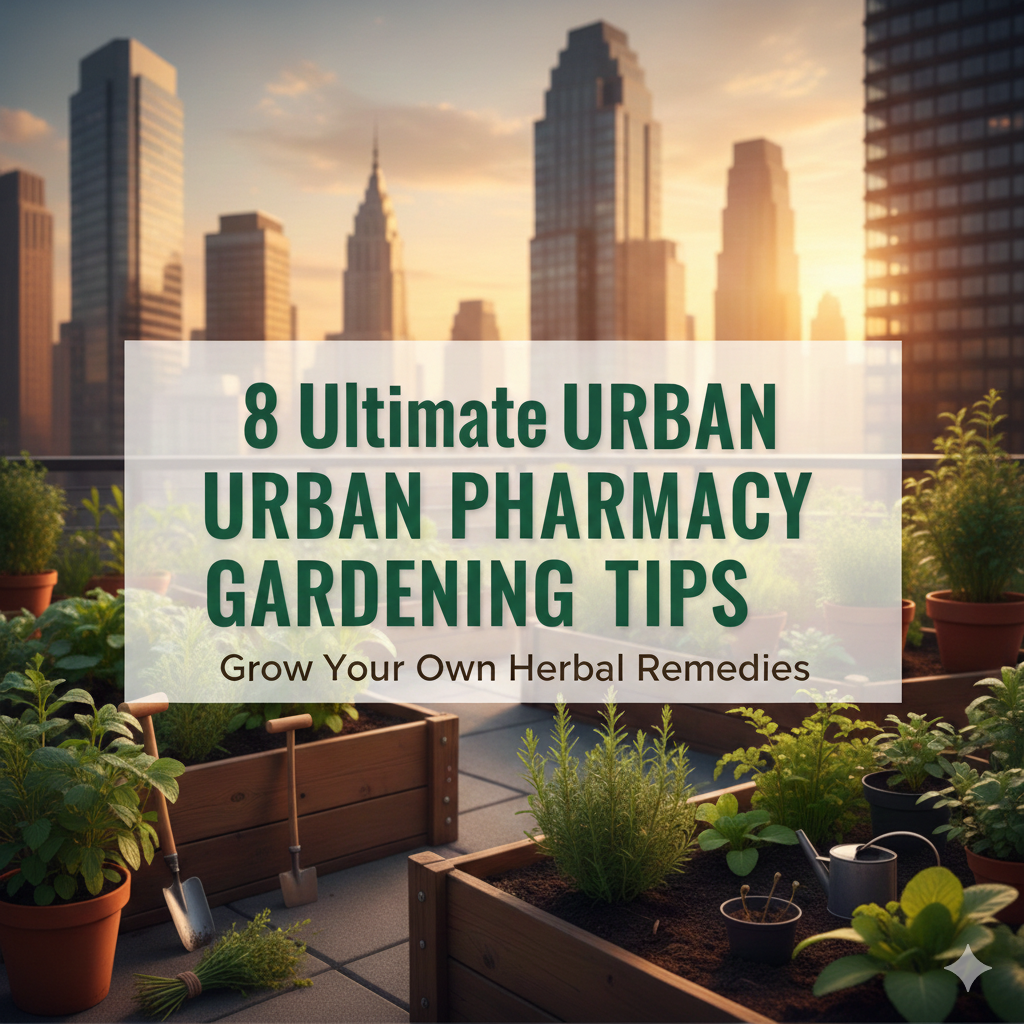
Have you ever wished you could just step outside, instead of making an emergency grocery run, for a natural remedy? That dream is closer than you might imagine.
Urban pharmacy gardening is the craft of cultivating medicinal herbs and healing plants in your city home — on balconies, windowsills, rooftops, or small backyards. It marries the old-world tradition of herbal medicine with modern city living.
More people are engaged in this practice today. The green trend is driven by escalating healthcare costs, a desire for natural wellness, and the basic satisfaction that comes from growing your own food and medicine. No matter if your living space is a studio apartment or a full-fledged townhouse, you can create your own urban pharmacy garden.
This guide walks you through 8 ultimate tips to make it happen — even if all you’ve ever planted is a paper airplane.
Why Growing a Pharmacy Garden in the City Matters
Before we jump into the tips, let’s cover why this idea is worth your time and energy.
Growing medicinal herbs at home puts natural remedies right at your fingertips. Plants such as lavender, peppermint, and chamomile have been used for thousands of years to remedy headaches, anxiety, digestion issues, and skin irritation.
Here are some solid reasons to begin:
- Save money on herbal teas, supplements, and remedies
- Know exactly what goes into your medicine
- Reduce stress through the act of gardening
- Improve indoor air quality inside your home
- Reconnect with nature in an urban world
In a 2021 survey conducted by the American Horticultural Society, more than 65% of urban gardeners reported lower stress levels since starting their gardens. That alone is a good reason to start.
Tip #1: Start With the Best Healing Plants for Beginners
Growing medicinal plants isn’t always a walk in the park. Getting started with the right ones saves you a lot of frustration and wasted effort.
Top Medicinal Herbs for Urban Growers
If you’re new to urban pharmacy gardening, start with hardy, low-maintenance plants first. Here is a quick guide:
| Plant | Medicinal Use | Sunlight Need | Space Needed |
|---|---|---|---|
| Peppermint | Digestion, headaches | Partial sun | Small pot |
| Lavender | Sleep, anxiety, skin | Full sun | Medium pot |
| Chamomile | Stress, sleep, stomach | Full sun | Small-medium pot |
| Aloe Vera | Burns, skin healing | Bright indirect | Small pot |
| Lemon Balm | Calm, cold sores | Partial sun | Small pot |
| Echinacea | Immune boost | Full sun | Large pot |
| Rosemary | Memory, circulation | Full sun | Medium pot |
| Ginger | Nausea, inflammation | Indirect light | Deep pot |
Start with three or four of these. As your confidence grows, so can your garden.
Why Peppermint Is a Must-Have
If there’s a case to be made for an MVP of urban pharmacy gardening, it would tend toward peppermint. It grows quickly, smells wonderful, and has dozens of uses. Add it to hot water for tea, apply it to your temples to ward off headaches, or use it to repel insects naturally. A single small pot will yield enough mint for months.
Tip #2: Choose Your Growing Space Wisely
Space is the biggest hurdle to growing plants in the city. But here’s the great news — medicinal herbs need very little of it.
Where to Grow in a City Home
Take a fresh look around your home. Almost every space has potential:
- Windowsills — Ideal for small pots of mint, chamomile, or aloe
- Balconies — Great for larger container plants such as rosemary or lavender
- Kitchen counters — Best for herbs you use daily, such as basil or lemon balm
- Vertical wall planters — Stack plants upward when floor space is at a minimum
- Rooftop gardens — When allowed by your building, this makes all the difference
Even a south-facing window can yield a flourishing collection of medicinal herbs. For more plant-by-plant growing guidance, The Herb Garden is a fantastic resource to explore.
The Vertical Garden Trick
If floor space is zero, go up. Wall-mounted pocket planters, pegboard systems, or hanging baskets let you grow upward instead of outward. A single wall can hold 10–15 herb pots. This is one of the most clever moves in urban pharmacy gardening.
Tip #3: Master Container Gardening the Right Way
Most urban pharmacy gardeners rely entirely on containers. Mastering container gardening is therefore non-negotiable.
Choosing the Right Pots
Not all pots are equal. Here is what to look for:
- Drainage holes are essential. Without them, roots rot.
- Material matters. Terracotta breathes well but dries fast. Plastic retains moisture longer. Self-watering pots are perfect for busy people.
- Size it right. Deep-rooted plants like ginger need tall pots. Shallow-rooted herbs like chamomile thrive in wide, shallow containers.
The Best Soil Mix for Medicinal Herbs
Regular garden soil is too dense for containers. Use a well-draining potting mix instead. A good recipe for most medicinal herbs is:
- 60% quality potting mix
- 20% perlite (for drainage)
- 20% compost (for nutrients)
This keeps roots healthy, airy, and well-nourished. You can find all three at any garden center.
Tip #4: Get the Light Right Every Single Time
Light is the power source for your plants. Get it wrong, and nothing grows well — no matter how good your soil or watering routine is.
How Much Light Do Medicinal Herbs Need?
Most medicinal plants fall into one of three light categories:
Full Sun (6+ hours daily) Lavender, rosemary, echinacea, chamomile — these are sun lovers. A south- or west-facing window is ideal.
Partial Sun (3–6 hours daily) Peppermint, lemon balm, and holy basil thrive with moderate light. East-facing windows work best.
Low Light (less than 3 hours) Aloe vera and ginger can handle dimmer spots. But “low light” doesn’t mean “no light.”
When Natural Light Doesn’t Do the Job
City apartments frequently face other buildings, blocking natural sunlight. In this case, grow lights are your best friend.
Full-spectrum LED grow lights closely simulate sunlight and work brilliantly for indoor urban pharmacy gardening. Place them 6–12 inches above your plants. Run them 12–16 hours per day for best results. They are energy-efficient and surprisingly affordable. According to the Royal Horticultural Society, supplemental lighting can make a significant difference for herbs grown in low-light city conditions.
Tip #5: Water Like a Pro — Not Too Much, Not Too Little
Overwatering kills more houseplants than anything else. Medicinal herbs are no different.
The Golden Rule of Watering
Stick your finger one inch into the soil. If it feels dry, water. If it still feels moist, wait. It is that simple.
Most herbs prefer “dry between waterings” rather than constantly wet soil. Overwatering suffocates roots and encourages mold and disease.
Watering Tips by Plant Type
| Plant | Watering Frequency | Special Notes |
|---|---|---|
| Aloe Vera | Every 2–3 weeks | Thrives on neglect |
| Lavender | Once a week | Hates wet roots |
| Peppermint | Every 2–3 days | Likes consistent moisture |
| Ginger | 2x per week | Keep soil evenly moist |
| Chamomile | Every 2–3 days | Avoid soggy soil |
Self-Watering Pots Save the Day
If you travel or tend to forget, self-watering containers are a brilliant investment. They have a reservoir at the bottom that the plant draws from as needed. This prevents both overwatering and drought stress — a huge win for busy urban pharmacy gardeners.
Tip #6: Feed Your Plants With the Right Nutrients
Plants need food just like we do. Medicinal herbs grown in containers especially need regular feeding because nutrients wash out with every watering.
Organic vs. Synthetic Fertilizers
For a pharmacy garden, always choose organic fertilizers. You will be consuming these plants or applying them to your skin. You don’t want synthetic chemicals in your medicine.
Great organic options include:
- Worm castings — gentle, slow-release, and incredibly effective
- Compost tea — steep compost in water to make a liquid fertilizer
- Fish emulsion — fast-acting and nutrient-rich (yes, it smells, but it works)
- Seaweed extract — boosts plant immunity and overall vigor
How Often to Fertilize
Throughout the growing season (spring through summer), feed your herbs every two to three weeks. In fall and winter, most herbs slow down. Pull back to once a month or stop altogether.
Over-fertilizing is just as bad as overwatering. Too much nitrogen causes plants to grow large but weak, with lower medicinal potency. Slow and steady is the way.
Tip #7: Guard Your Healing Plants Against Pests and Disease
Pests are a problem even in city gardens. If you’re not paying attention, aphids, spider mites, whiteflies, and fungal disease can wipe out your urban pharmacy garden in no time.
Common Pests in Indoor Herb Gardens
| Pest | Signs | Natural Fix |
|---|---|---|
| Aphids | Sticky residue, curled leaves | Neem oil spray |
| Spider Mites | Tiny webs, speckled leaves | Increase humidity, neem oil |
| Fungus Gnats | Tiny flies near soil | Let soil dry out, yellow sticky traps |
| Whiteflies | White cloud when disturbed | Insecticidal soap spray |
| Mealybugs | White cottony clumps | Rubbing alcohol on a cotton swab |
Natural Pest Control Methods That Work
Since you’re growing plants for health reasons, keep your pest control 100% natural:
- Neem oil is the holy grail. Mix with water and a few drops of dish soap. Spray weekly as prevention.
- Companion planting helps too. Basil repels flies. Lavender deters moths. Plant strategically.
- Proper airflow prevents fungal disease. Don’t overcrowd your plants. A small fan makes a big difference in stuffy apartments.
- Inspect weekly. Catch problems early before they spread.
Dealing With Powdery Mildew
Powdery mildew is a white, dusty fungal coating that attacks chamomile, mint, and other herbs. Fix it quickly by spraying a mixture of one teaspoon baking soda per quart of water. Improve airflow and reduce humidity around the plant.
Tip #8: Harvest, Preserve, and Use Your Medicinal Plants the Right Way
After all your hard work, it’s time to harvest your urban pharmacy garden. But there is a right way and a wrong way to do it.
How to Time Your Harvest for Maximum Potency
Timing matters. The medicinal potency of herbs is highest at specific moments:
- Harvest leaves in the morning after the dew has dried but before the afternoon heat. This is when essential oils are most concentrated.
- Harvest flowers just as they begin to open — not fully bloomed, not yet wilting.
- Harvest roots (like ginger) in the fall, when the plant has stored its energy underground.
How to Harvest Without Killing Your Plant
Never strip a plant completely bare. Follow the “one-third rule” — only remove up to one-third of the plant at a time. This allows the plant to recover and keep producing.
Use clean, sharp scissors or pruning shears. Blunt cutting tools crush stems and invite disease.
Preserving Your Herbal Harvest
Fresh herbs are wonderful, but preserving them extends their usefulness for months:
Drying: Tie small bundles of herbs together and hang them upside down in a warm, airy spot away from direct sunlight. Most herbs dry fully within one to two weeks.
Freezing: Chop herbs and freeze them in ice cube trays with a little water or olive oil. Pop out a cube whenever you need it.
Infused oils: Fill a jar with dried herbs and cover with olive or coconut oil. Let sit for 4–6 weeks in a dark spot. Strain and use topically or in cooking.
Tinctures: Steep herbs in food-grade alcohol (such as vodka) for 4–6 weeks. Shake daily. Strain and bottle. A few drops under the tongue delivers a concentrated dose.
Putting It All Together — Your Urban Pharmacy Garden Plan
Here is a simple starter plan to launch your urban pharmacy garden this week:
Week 1: Choose your space. Pick 3–4 beginner plants. Buy containers with drainage holes.
Week 2: Set up your soil mix. Plant your seeds or starter plants. Position them in the best light spot.
Week 3: Set a watering routine. Add a grow light if needed. Begin weekly inspections for pests.
Month 2: Start feeding with organic fertilizer every two weeks. Watch your plants take off.
Month 3: Begin your first harvest. Try your first cup of home-grown chamomile tea or a peppermint steam for congestion.
It really is that achievable.
FAQs About Urban Pharmacy Gardening
Q: Do I need a large space to start an urban pharmacy garden? Not at all. A single sunny windowsill is enough to begin. Most successful urban pharmacy gardeners started with just two or three pots on a kitchen counter.
Q: Are medicinal herbs safe for everyone? Herbs such as mint and chamomile are generally safe for most people. However, some plants interact with medications or aren’t safe during pregnancy. Always research each plant and consult a doctor if you have any health conditions before using herbal remedies.
Q: How long before I can harvest my herbs? Fast-growing varieties like peppermint and lemon balm are ready for light harvesting about 4–6 weeks after planting. Slower growers like echinacea may take a full growing season.
Q: Can I grow medicinal herbs indoors year-round? Yes! Many medicinal herbs can grow indoors all year long with sufficient light (natural or artificial), adequate temperature, and appropriate care.
Q: What is the easiest medicinal plant to grow in a city apartment? Aloe vera and peppermint are widely considered the simplest. Aloe nearly thrives on neglect, while mint grows so aggressively it actually needs to be contained.
Q: Do I need special soil for medicinal herbs? Most medicinal herbs do well in a well-draining potting mix amended with perlite. Avoid dense garden soil in containers — it compacts over time and suffocates roots.
Q: Is urban pharmacy gardening expensive to start? It can be as cheap or as invested as you want. A basic starter setup with three pots, potting mix, and seed packets can cost less than $30. Scale up as your confidence and interest grow.
Wrapping It All Up
Urban pharmacy gardening is more than just a hobby. It is a lifestyle shift toward self-sufficiency, natural wellness, and a deeper connection with the plants that have supported human health for thousands of years.
You don’t need a country estate or a giant backyard. All you need is curiosity, a few pots, some good soil, and a sunny window.
Start small. Be consistent. Learn as you grow — literally. Every plant you nurture teaches you something new about nature, health, and your own resilience.
Your city home can become a living, breathing pharmacy. The eight tips in this guide give you everything you need to make that happen. Now there’s only one thing left to do: start.
Happy growing — your urban pharmacy garden awaits!