
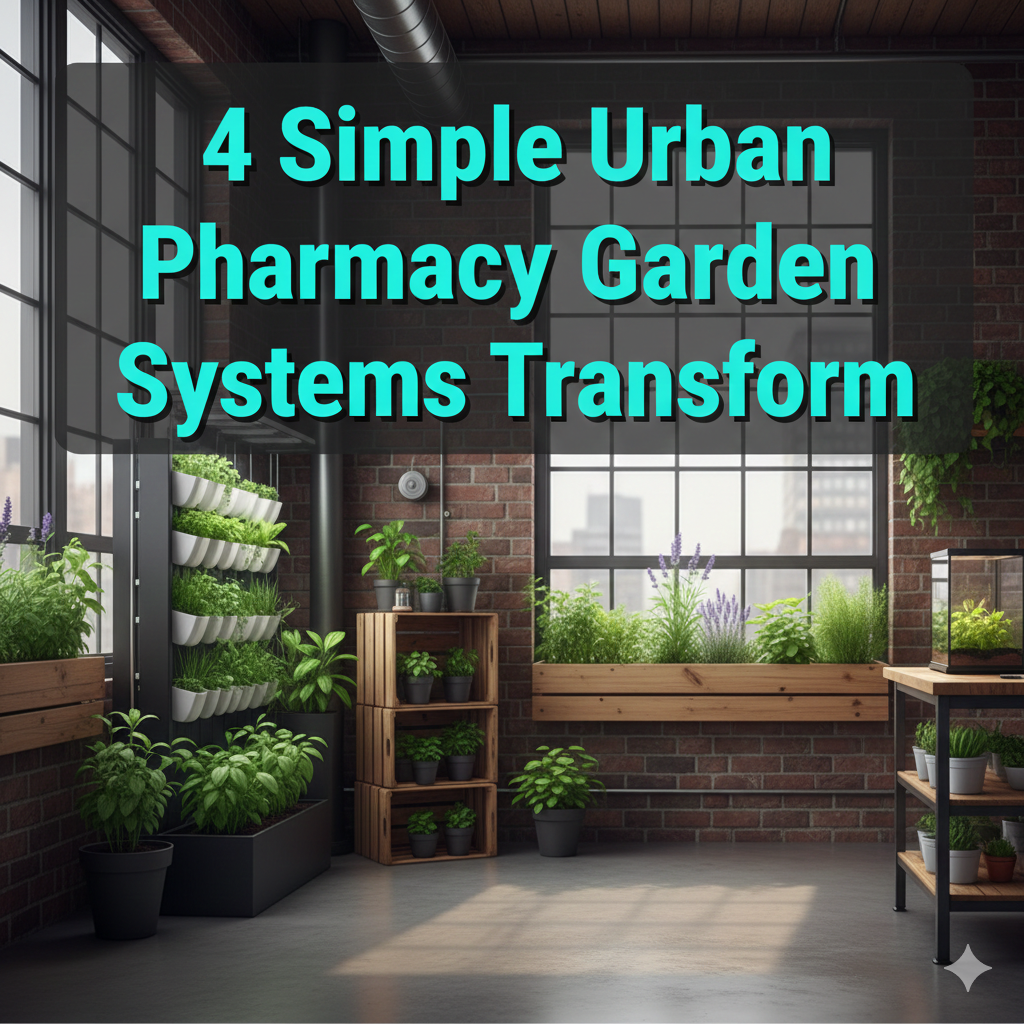
You don’t need a backyard. You don’t need a ton of money. And you certainly do not need a green thumb to begin growing your own medicinal plants at home.
Urban pharmacy gardening is one of the fastest-growing trends among those city slickers looking to take back control over their health and wellness. The concept is simple: cultivate herbs and plants with time-tested healing properties right in your apartment, balcony, rooftop or windowsill. Utilize them for teas, tinctures, skin care and home remedies.
The best part? There are specific systems tailored for urban environments — compact, efficient and beginner-friendly.
In this article we are going to walk through how anyone can set up 4 simple urban style pharmacy gardens. Regardless of whether you’re in a studio apartment in New York City or a pint-size flat in London, one of these systems will suit your needs.
Let’s get into it.
What Is Urban Pharmacy Gardening, Exactly?
Before we dive into the systems, let me quickly explain what this means.
An urban pharmacy garden is a grouping of medicinal plants cultivated in an urban environment. Instead of stopping by a store every time you need an herbal supplement, you grow the plants in your own garden. You pick them fresh, dry them and use them or use them directly.
It’s like having a mini apothecary on your kitchen counter.
The plants where medicines like lavender, peppermint, chamomile, lemon balm, aloe vera and turmeric come from have been around for thousands of years. Modern science supports many of these applications. Growing them at home puts that power into your hands.
Urban pharmacy gardens are also:
- More affordable than store-bought supplements
- More vibrant and potent than dried products in a cupboard
- Good for mindfulness (gardening itself burns stress)
- Eco-friendly and sustainable
- Educational for kids and families
Next, let’s explore the four primary systems from which you can choose.
System 1: Windowsill Herb Shelf — A Small Space Solution
A Windowsill: Why It Works Better Than You Might Think
Most people underestimate their windowsill. That little sliver of sunshine is somehow potent enough to grow a whole pharmacy’s worth of herbs. South-facing or east-facing windows are ideal. They receive several hours of direct or indirect sunlight each day.
A neatly organized windowsill herb shelf can accommodate 8 to 12 small pots with herbs. That’s plenty for common health needs such as headaches, digestion, anxiety and skin problems.
Windowsill System: Top Medicinal Plants
| Plant | Medicinal Use | Sun Requirement | Watering Frequency |
|---|---|---|---|
| Peppermint | Digestion, headaches | Partial sun | Every 2-3 days |
| Lavender | Anxiety, sleep, skin | Full sun | Once a week |
| Chamomile | Relaxation, stomach | Full sun | Every 2-3 days |
| Lemon Balm | Stress, cold sores | Partial sun | Every 2-3 days |
| Aloe Vera | Burns, skin care | Indirect sun | Every 10-14 days |
| Holy Basil (Tulsi) | Immunity, stress | Full sun | Every 2 days |
How to Start Your Windowsill Pharmacy Garden
Step 1: Measure your windowsill. Be aware of how many small pots (4-inch or 6-inch) can fit without obstructing the light from one another.
Step 2: Add a tiered shelf. A basic tiered window shelf from any home store will allow you to stack plants vertically. This triples your growing space without needing extra window width.
Step 3: Choose terracotta pots. These give the plants plenty of air and discourage root rot, which is the biggest enemy of any indoor herb.
Step 4: Use a quality potting mix. Conventional garden soil has too much weight. Use an indoor potting mix with good drainage or make your own from coco coir, perlite and some compost.
Step 5: Label everything. Once dried or confined in tins, these plants are easily mistaken for one another. Make sure to label each pot from day one.
Common Mistakes to Avoid
The biggest killer of indoor herbs is overwatering. Always check the soil an inch down before watering. If it is still wet, wait another 24 hours.
Also, don’t crowd plants. Give each one breathing room. Air circulation prevents fungal problems.
System 2: The Vertical Wall Garden — Max Plants, Min Floor Space
Why Go Vertical?
In a major metropolis apartment, floor space is gold. A vertical wall garden flips that script. Instead of branching out, you go up. A single 3-foot by 4-foot wall panel can hold 20 or more plant pockets.
This system is great for a balcony, kitchen wall or even a bathroom wall that gets plenty of indirect sunlight. It’s beautiful, works great, and gives your space a genuine “living pharmacy” vibe.
Urban pharmacy gardening on a vertical wall is also trending in offices, cafes and co-working spaces. It is at once functional and beautiful.
Types of Vertical Systems
Pocket planters: Panels made from fabric or felt with individual pockets. Each pocket holds one plant. Very cheap (full panel from $15). Great for lighter herbs.
PVC pipe systems: This makes DIY very simple — just get a few sections of PVC tubing, cut holes along the side, fill the tube with soil and plant herbs in each hole. Cheap, durable, and surprisingly effective.
Modular wall systems: Premade systems from the likes of Florafelt or Woolly Pocket. They’re pricier but quite polished and durable.
Pegboard planter installations: A wooden pegboard mounted to a wall, with tiny flower pots attached to hooks. Very customizable and easy to rearrange.
Best Medicinal Plants to Grow in a Vertical Garden
Plants for vertical gardens must be light and compact. Plants with deep roots like turmeric or ginger won’t survive here. Focus on:
- Peppermint
- Spearmint
- Thyme
- Oregano
- Lemon balm
- Calendula (pot marigold)
- Parsley
- Rosemary (in wider pockets)
Smart Way to Water a Vertical Garden
Mistaken vertical system watering can make quite a mess. Here are two effective approaches:
Drip irrigation: Integrate a small drip system on top of the wall panel. The water seeps slowly down into each pocket. A timer-controlled system, available for about $25, automates the entire process.
Bottom-up watering: Certain modular systems have a reservoir at the base that pulls water upward through a wicking material. Very low maintenance.
Manually watering using a long-spouted watering can to slowly water each pocket also works. Let the water soak in before moving to the next one.
Light Considerations for Vertical Setups
Natural light is best, but not every wall receives sufficient sun. If the wall doesn’t get four or more hours of light a day, attach a grow light strip along the top of the panel. Herb LED grow lights are affordable and energy-efficient. For most vertical panels, a 20-watt LED strip will suffice.
System 3: The Container Balcony Apothecary — For Those With Outdoor Access
Your Balcony Is a Goldmine
Those who even have a balcony, no matter how small, are serious winners. Outdoor light is much more powerful than indoor light. Even a balcony that receives 4 to 6 hours of sun per day can support a thriving medicinal garden with upwards of 30 plants.
A container balcony apothecary system using large containers, grow bags, raised box planters and hanging baskets makes use of every square foot of outdoor space.
This system can grow bigger medicinal plants that don’t survive indoors, such as:
- Echinacea (immune support)
- St. John’s Wort (mild depression, nerve pain)
- Valerian (sleep aid)
- Elderberry (cold and flu prevention)
- Lemon verbena (digestion, anxiety)
- Ashwagandha (stress and energy)
Setting Up Your Balcony Apothecary
Choose your containers wisely. Fabric grow bags are excellent. They air-prune roots, prevent overwatering, and they’re lightweight — an important consideration if you are on an upper-floor balcony with weight limits.
Typical container sizes to use:
| Container Size | Good For |
|---|---|
| 1-2 gallon | Smaller herbs (mint, thyme, lemon balm) |
| 3-5 gallon | Medium plants (echinacea, chamomile) |
| 7-10 gallon | Larger plants (valerian, lemon verbena) |
| 15-20 gallon | Shrubby plants (elderberry, lavender) |
Arrange by sun needs. Position sun-lovers like lavender and echinacea at the front of the balcony where they will receive maximum exposure. Put shade-tolerant plants, such as lemon balm and mint, in corners or beneath other plants.
Build vertical layers. Create different levels with plant stands, step ladders or shelving units. This way one plant doesn’t end up blocking the rest and each container gets its own zone of light.
Seasonal Planning for a Balcony Pharmacy Garden
Outdoor balcony gardens follow the seasons. Here’s a simple seasonal breakdown:
Spring: Sow seeds or purchase seedlings. Grow chamomile, echinacea, lemon balm and calendula. These will grow well in cooler temperatures and are easy to transplant.
Summer: Your most productive season. Regular harvesting will stimulate new growth. Wrap them in bundles for drying, or use a food dehydrator for best results.
Autumn: Before the soil has cooled, harvest root plants such as valerian and ashwagandha. Start drying and saving your summer harvest.
Winter: Move cold-sensitive plants indoors. Aloe vera, lemon verbena and holy basil will not survive frost. If you overwinter them on a sunny windowsill, they will survive for next year.
Keeping Your Balcony Garden Safe From Urban Challenges
City environments bring specific challenges. High winds, pollution and heat reflected off concrete can put stress on plants.
A few easy solutions:
- Use a windbreak (a simple fabric screen or trellis with climbing plants) to minimize wind damage.
- Mulch the tops of containers with straw or wood chips to capture moisture on hot days.
- Rinse the leaves of your plants every few weeks to remove dust and pollution.
System 4: The Indoor Hydroponic Pharmacy Garden — High-Tech, High-Yield
Growing Without Soil? Yes, It Works
Hydroponics sounds complicated. It’s not. Hydroponics is simply growing plants in water with added nutrients instead of soil. The roots are immersed in or suspended near a nutrient-rich water solution, and the plants grow quicker, cleaner and often more potently than they do in soil.
Hydroponics is a revolution in urban pharmacy gardening. You don’t have to worry about poor soil quality, pests in the soil or uneven sunlight. Everything is controlled.
For a deeper dive into which herbs work best for home healing, visit The Herb Garden — a great resource for both beginner and experienced herb growers looking to build their own medicinal garden.
Top Hydroponic Systems for Medicinal Herbs
The Kratky Method: The simplest hydroponics there is. You fill a container with nutrient water and put your plant in a mesh net cup over the water, allowing the roots to grow downward. No pump, no electricity, no upkeep. Perfect for beginning gardeners growing small herbs.
Deep Water Culture (DWC): Plants sit in net cups above a container filled with oxygenated nutrient water. A tiny air pump maintains oxygen in the water. Faster than Kratky, still low cost and simple.
NFT (Nutrient Film Technique): A thin current of nutrient water continuously flows over the roots. Best for larger systems producing a variety of plants. Requires a pump and tubing but not too complex to build.
AeroGarden and similar units: These are all-in-one hydroponic gardens for home use. They are equipped with integrated LED grow lights, automatic watering and nutrient dispensers. Ideal for zero-setup beginners. Pricing: $80–$250 depending on size.
Herbs That Thrive in Hydroponics for Medicinal Purposes
| Herb | Hydroponic Ease | Medicinal Benefit |
|---|---|---|
| Peppermint | Very Easy | Digestion, headaches |
| Lemon Balm | Very Easy | Anxiety, stress |
| Chamomile | Moderate | Sleep, inflammation |
| Holy Basil (Tulsi) | Easy | Immunity, adaptogen |
| Lavender | Moderate | Anxiety, sleep, skin |
| Echinacea | Moderate | Immune support |
The Only Two Things You Really Need to Monitor
Hydroponics needs just two regular checks:
Nutrient solution: Use a premade hydroponic nutrient mix (brands like General Hydroponics or Fox Farm are more beginner-friendly). Mix according to instructions. Replace the water every 1–2 weeks.
pH level: Medicinal herbs prefer a pH of 5.5 to 6.5. Test the water using a simple pH test kit or a digital pH meter ($10–$15). Without the right pH, plants may not be able to absorb nutrients even if they’re present. pH up and pH down solutions remedy this almost instantly.
Why Hydroponic Herbs Are Usually More Potent
According to research published by the University of Florida IFAS Extension, some herbs grown hydroponically concentrate their essential oils and active compounds at higher levels than their soil-grown counterparts. That is because you are in control of every variable — the plant is never affected by drought, poor soil or competition from weeds. It expends all its energy on growing and producing.
For medicinal purposes, the stronger the essential oil, the better.
How to Harvest and Store Your Urban Apothecary Plants
Regardless of what system you’re using, the harvesting phase is where the magic happens.
Pick in the morning when the dew has dried. This is when the concentration of essential oils in most herbs is at its peak.
Never crop more than a third of the plant. It ensures the plant stays healthy and keeps producing.
Dry herbs properly. Form small bunches and hang them upside down in a dry, dark, well-ventilated space for 1–2 weeks. Or use a food dehydrator set at low heat (95°F to 115°F).
Seal in glass mason jars and keep away from light and heat. Note the name of the herb and your harvest date. Dried herbs generally stay potent for 12–18 months.
Quick Comparison: Which System Is Right for You?
| System | Space Required | Cost to Begin | Complexity Level | Ideal For |
|---|---|---|---|---|
| Windowsill Herb Shelf | Minimal | $20–$50 | Beginner | Apartments, rentals |
| Vertical Wall Garden | 1 wall | $15–$150 | Beginner–Intermediate | Any indoor space |
| Container Balcony Apothecary | Balcony or patio | $50–$200 | Intermediate | Outdoor access |
| Indoor Hydroponic Garden | Counter or shelf | $80–$300 | Beginner–Intermediate | Year-round growing |
FAQs About Urban Pharmacy Gardening
Q: Do I need any gardening experience to begin an urban pharmacy garden? Not at all. All four of the systems mentioned in this article are designed for beginners. Begin with a windowsill shelf or a simple hydroponic kit, such as an AeroGarden, and you’ll be harvesting within weeks.
Q: Are home-grown herbs safe to use as medicine? With common, well-known herbs — like peppermint, lavender and chamomile — yes, they’re extremely safe for general wellness use. Always do your research on an herb before using it medicinally. If you’re on prescription medications or have a health condition, talk to a healthcare provider before using herbal remedies.
Q: How much light do plants in an indoor pharmacy garden need? The majority of medicinal herbs require 4–8 hours of light per day. South-facing windows are best. LED grow lights are an affordable and effective solution if natural light is limited.
Q: Are urban pharmacy gardens suitable for a rented apartment? Absolutely. Both the windowsill shelf and vertical pocket systems require no drilling or permanent installation. They’re fully renter-friendly.
Q: When can I begin harvesting? Most herbs are ready for their first harvest within 4–8 weeks after planting. Hydroponic system plants also tend to grow 30–50% faster than soil systems, so you might be harvesting even sooner.
Q: What system provides the best bang for your buck when starting out? At the very bottom of the cost scale is the windowsill herb shelf. You can kick off with only a couple of pots, some simple potting mix and herb seedlings from a local nursery for less than $30.
Q: Do urban pharmacy herbs attract bugs? Bringing a garden indoors creates far fewer pest issues than outdoor gardens have. The two most common indoor pests are fungus gnats (from overwatering) and aphids. Both can be controlled with neem oil spray or sticky traps.
Bringing It All Together
Pharmacy gardening in urban settings is more than a mere hobby. It’s a way of life that connects you to your food, your health and the planet.
The 4 easy urban pharmacy gardening systems detailed in this article — the windowsill herb shelf, the vertical wall garden, the container balcony apothecary and the indoor hydroponic garden — each present an alternative way to create your own healing space. Some require almost no money to get started. Others employ technology to optimize yield and potency.
You don’t have to pick just one. Many urban gardeners combine systems. A windowsill shelf for daily-use herbs, a vertical wall for a wider variety, and a small hydroponic unit for year-round growing is a powerful combination that covers almost every wellness need.
Start small. Pick one system. Grow three plants. Learn how they work. Then expand at your own pace.
Your home can be a living, breathing pharmacy — one pot at a time.