
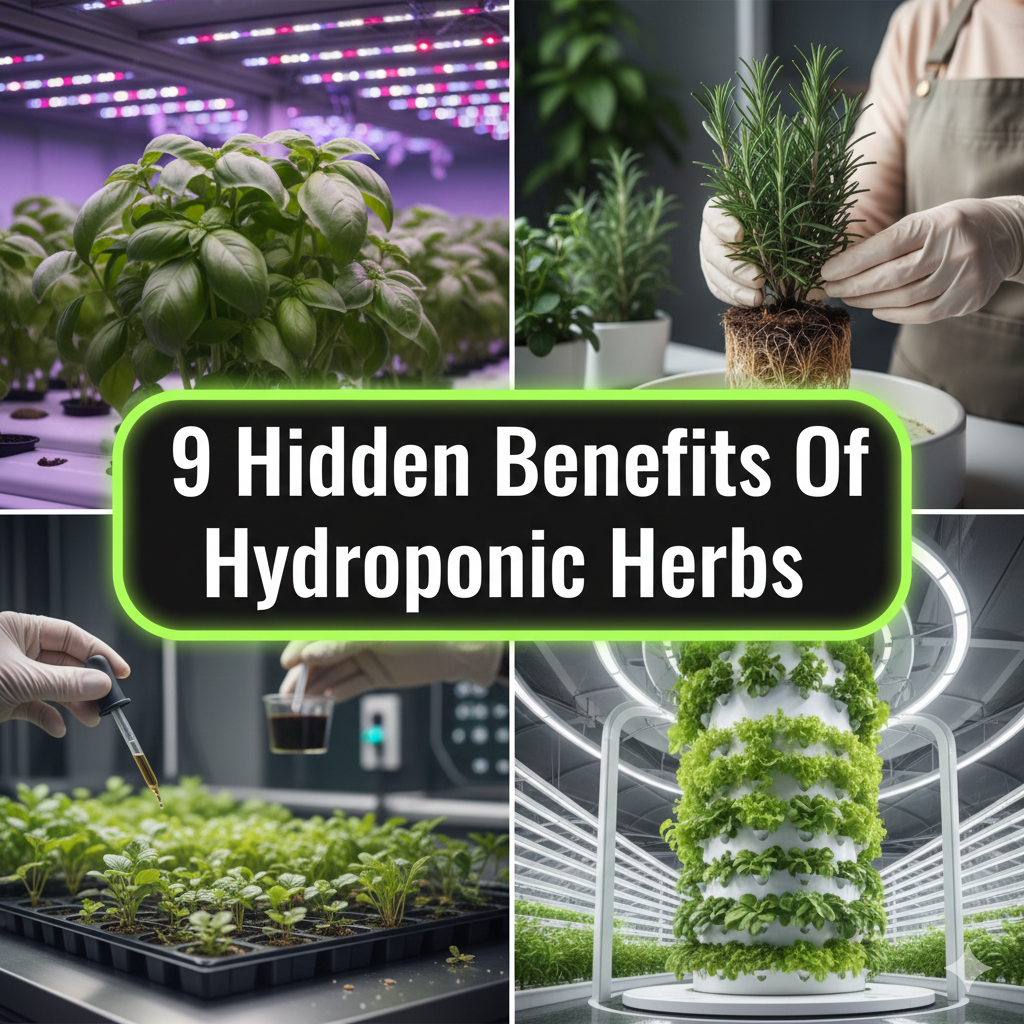
Growing herbs is nothing new. It was thousands of years old when people began doing it. But hydroponic herb growing? That’s entirely another plane — and most people do not know half of what it does.
You might’ve heard that hydroponics is growing plants without soil. True. But that simple reality leads to a range of advantages that extend far beyond “it’s faster.” A few of these benefits are going to shock you. Others might even transform how you feel about food, health, and home gardening.
It doesn’t matter if you’re a novice or an expert who has been growing herbs for years. In this article, we share 9 hidden benefits of hydroponic herbs that really don’t get enough attention.
Let’s dig in.
These Hydroponic Herbs Are More Flavorfully Packed Into Each Leaf
Here’s something you might not expect: hydroponically grown herbs often taste stronger and riper than soil-grown herbs.
Why? It comes down to control.
In hydroponic systems, you control precisely what nutrients the plant absorbs and at what time. There are no missing minerals. No nutrient lockout from bad soil pH. No weeds or other plants competing for the resources your basil requires.
When a plant receives precisely the right nutritional elements when they are needed, essential oils will reach their fullest potential. Those oils are what impart flavor and scent to herbs. More oils = stronger taste.
Why Hydroponics Is Perfect for Basil, Mint, and Cilantro
You can grow a few of your kitchen herbs hydroponically and they are especially responsive to this growing method. Hydroponically grown basil tends to have a sweeter, more intense smell. Mint gets almost sharp on the tongue. Cilantro keeps its aroma longer after harvesting.
For years, high-end restaurant chefs have only used hydroponic herbs for this very reason. It’s not trendy — it’s a flavor upgrade.
You Get Harvests Year-Round Regardless Of Where You Live
If you live in a cold place, then you know this struggle. For half the year, fresh herbs are nonexistent — they won’t grow outside. You buy overpriced bundles at the grocery store or you go without.
Hydroponic herbs fix this completely.
Since hydroponic systems are almost always set up indoors (or inside a greenhouse), the outside weather doesn’t matter at all. No frost. No heat waves. No drought.
You manage the light, the temperature, the water, and the nutrients. That means your herbs grow in “perfect summer” conditions year-round — even in January in Minnesota.
What It Means for Your Kitchen
Imagine having fresh rosemary, thyme, parsley, and chives at your disposal every day of the year. No more jarred dried herbs. No more paying three dollars for a pint-sized plastic clamshell of dead basil at the grocery store.
Growing herbs year-round is one of the most helpful hydroponic herbs benefits for everyday home cooks. If you’re just getting started, The Herb Garden is a great resource to explore herb varieties, growing tips, and everything in between.
Herbs Grow Up To 50% Faster When Grown Without Soil
Speed is a big deal in gardening. Nobody wants to wait months for a few measly leaves of basil.
Hydroponic herbs grow much quicker than their soil counterparts. Research and grower reports consistently confirm that plants in hydroponics grow 30–50% faster on average. Others grow more quickly than that.
The reason is simple: the plant doesn’t have to struggle.
Roots of plants use a huge amount of energy looking for water and nutrients in the soil. They spread out and down in search of what they need. A hydroponic system delivers the nutrients and water directly to the roots. The plant doesn’t need to “look.” Instead, all that saved energy gets redirected into growing leaves and stems.
Hydroponics vs. Soil: Comparing Growth Rate
| Herb | Soil Harvest Time | Hydroponic Harvest Time |
|---|---|---|
| Basil | 60–90 days | 30–45 days |
| Mint | 90 days | 45–60 days |
| Cilantro | 45–70 days | 25–40 days |
| Parsley | 70–90 days | 40–60 days |
| Chives | 60–80 days | 30–45 days |
Faster growth also means more frequent harvests. More harvests = more fresh herbs for your cooking — or more product to sell if you’re growing on a commercial scale.
No Soil, No Soil-Borne Diseases or Pests
Soil is full of life. Most of that life is good. But some of it is downright harmful to your herb garden.
Soil-borne diseases such as root rot, fusarium wilt, and pythium can decimate an entire crop. Soil-dwelling pests such as fungus gnats, cutworms, and nematodes (the bad kind) attack plant roots where you can’t even see them until it’s too late.
Hydroponic systems eliminate soil entirely. And no soil takes away much of the habitat for these threats.
That is one of the most underrated benefits of hydroponic herbs. Growers who have made the switch from soil to hydroponics often find that they never deal with the pest and disease issues that used to destroy their entire harvest every year.
What About Pests That Are Still There?
Hydroponics isn’t a 100% pest-proof garden. Aphids, spider mites, and whiteflies can still show up — they’re airborne. But without soil pests in the mix, the overall pest burden is significantly lowered.
Since hydroponic setups are typically indoors, you have far more control over keeping flying pests out in the first place.
Hydroponic Herbs Use 90% Less Water Than Traditional Gardens
This one surprises almost everyone.
Most people assume that growing plants in water must use more water. The opposite is true.
Conventional soil gardens waste massive amounts of water through evaporation, runoff, and deep drainage. Much of the water you pour onto soil never actually reaches the plant roots in a useful way.
A hydroponic system recirculates water and nutrients. The plant absorbs what it needs, and the excess remains in the reservoir for reuse. Very little is wasted.
In fact, according to the Food and Agriculture Organization of the United Nations, hydroponic systems can use up to 90% less water than conventional soil gardening for equal yield — making it one of the most water-efficient growing methods available today.
Why This Is Important Beyond Your Garden
Every year, water becomes a more precious commodity. Fresh water is actually scarce in many parts of the world. Growing food with 90% less water isn’t just good for your water bill — it’s also good for the planet.
This hydroponic herbs benefit is a game-changer for city growers, apartment gardeners, and everyone who lives in a dry climate.
Hydroponic Herbs Can Have A Higher Nutritional Value
Here’s a secret that even some seasoned gardeners still don’t know: you can actually influence the nutritional content of your herbs through hydroponics.
In soil, it’s difficult to guarantee which nutrients your plants are able to take up. Soil composition varies. pH affects nutrient availability. Competing microbes alter what is available to plant roots.
With a hydroponic system, you dial in the exact nutrient formula. Want more magnesium? Add more. Want to increase iron levels in your herbs? Adjust the solution. This level of control means you can grow herbs that are far more nutritionally dense than what you’d typically find in a grocery store.
Specific Nutrient Advantages
Several studies have found that hydroponically grown herbs can contain higher levels of:
- Vitamin C — most abundant in parsley and chives
- Polyphenols — antioxidants that occur naturally in basil and oregano
- Essential minerals such as potassium and calcium
These nutrients are important for immune health, inflammation reduction, and overall wellbeing. Eating fresh herbs is not just about flavor — it’s also about nutrition. And hydroponic growing helps you optimize that nutrition.
Growing Herbs Hydroponically Uses A Lot Less Space
Traditional herb gardens require ground space. If you live in an apartment, a condo, or a house with a tiny yard, you might think gardening is impossible.
With hydroponic systems, that idea gets turned on its head.
Hydroponic systems can be built in vertical layers. You can stack five or six “layers” of herbs in the same floor space it would take to grow just one layer in soil. Vertical hydroponic towers and wall-mounted systems enable you to produce a surprising amount of food in a very small area.
A standard vertical tower system that takes up less than 2 square feet of floor space can accommodate up to 20–30 herb plants simultaneously.
Great Options for Small Spaces
| System Type | Space Required | Plants Supported |
|---|---|---|
| Countertop Kratky jar setup | 1–2 sq ft | 4–8 plants |
| Vertical tower | 1–2 sq ft | 20–30 plants |
| Wall-mounted NFT panels | Wall space only | 15–40 plants |
| 4-site DWC bucket system | 4–6 sq ft | 4 large plants |
Hydroponic herb growing is perhaps the best option for city dwellers, renters, and anyone working with limited space. You don’t need a backyard. You don’t even need a balcony. A spare corner of your kitchen or a small shelf by a window can be enough.
You Have Full Control Over What Goes Into Your Herbs
When you buy herbs at the grocery store, you have no idea what they were grown with. Pesticides. Synthetic fertilizers. Contaminated soil. Wax coatings to extend shelf life.
With hydroponic herbs, you know exactly what goes in — because you put it there yourself.
You choose the nutrients. You decide whether to use organic solutions or synthetic ones. You control the pH. You know whether any pesticides were used — because you’re the one who decided not to use them.
This transparency is something the commercial food system simply cannot claim. It’s one of the most personally empowering hydroponic herbs benefits on this list.
Cleaner Herbs for People With Sensitivities
Hydroponic home growing is a genuine solution for people with chemical sensitivities, autoimmune conditions, or those who simply prefer to eat as cleanly as possible. No guessing. No label reading. Just clean, fresh herbs grown exactly the way you want them.
Hydroponic Herb Growing Saves Real Money Over Time
Let’s talk numbers.
A small bunch of fresh basil at a typical grocery store costs $2–$4. A bunch of cilantro runs $1–$3. Fresh rosemary and thyme? Often $3–$5 for a small package. And it’s not like these herbs last very long.
A basic Kratky system starts at about $30, while a more advanced hydroponic setup can cost $200–$300. But once it’s going, the ongoing expense is low — just nutrients, water, and occasional seed packets.
If you use fresh herbs even just a few times a week, you’ll recoup that initial investment within about 2–3 months and then start saving money every single month after that.
Long-Term Cost Breakdown (Basic Home Setup)
| Expense | One-Time or Recurring | Estimated Cost |
|---|---|---|
| Basic hydroponic system | One-time | $30–$150 |
| Grow lights | One-time | $20–$80 |
| Nutrient solution | Monthly | $5–$15 |
| Seeds | Every few months | $5–$10 |
| Total Year 1 | — | ~$100–$300 |
| Savings on store herbs | Annually | $200–$600+ |
By their second year, the overwhelming majority of home hydroponic growers are financially ahead — and eating truly fresher herbs than anything available at stores.
What Herbs Grow Best in Hydroponics?
Not every herb adapts equally to hydroponics. Some are almost made for it. Here’s a quick guide:
Top Performers (Easiest to Grow Hydroponically):
- Basil — fast, productive, fragrant
- Mint — vigorous, sometimes bordering on effortless
- Lettuce-leaf herbs like chervil and sorrel
- Chives — quick-growing, low-maintenance
- Cilantro — short growing cycles, great for beginners
Mid-Level (Requires a Bit More Attention):
- Parsley — slower to start but well worth the wait
- Dill — needs good light and airflow
- Oregano — slow to start but prolific once established
Advanced (For Experienced Growers — Worth It):
- Rosemary — slow to take off but once it does, look out
- Thyme — requires decent drainage and light control
- Lavender — possible, but you must manage nutrients closely
How to Grow Hydroponic Herbs at Home
You don’t need to be a scientist or engineer to grow hydroponic herbs. Here’s the simplest path:
Step 1: Decide on Your System Start with the Kratky method. It needs no pumps, no timers, and very little equipment. All you need is a jar, a net pot, growing medium (hydroton clay pebbles or rockwool), nutrients, and seeds.
Step 2: Choose Your First Herbs Basil, mint, or chives are great first-time choices. These are the most forgiving and fastest-growing options.
Step 3: Set Up Your Light Source If you are near a sunny south-facing window, that might be enough natural light. If not, a basic LED grow light for about $20–$40 works wonders.
Step 4: Mix Your Nutrients Purchase a basic two-part or three-part hydroponic nutrient solution. Dilute according to label instructions. To prevent overfeeding, most beginners start with half-strength.
Step 5: Plant and Monitor Place your seeds or seedlings into the net pots. Fill the reservoir so that the roots are barely touching the water. Test the pH (aim for 5.5–6.5). Replenish the water level every few days. And really, that is all there is to it at the start.
FAQs About Hydroponic Herbs Benefits
Q: Are hydroponic herbs actually healthier than store-bought herbs? A: In many cases, yes. Hydroponic herbs are fresher (often harvested minutes before consumption), free of unknown pesticides if grown at home, and can be nutritionally optimized through careful nutrient management.
Q: Do herbs grown in hydroponics taste different from soil-grown herbs? A: Many growers and chefs say hydroponic herbs have stronger flavor. This is tied to greater production of essential oils when the plants have access to consistent, ideal nutrients.
Q: Is it expensive to start hydroponic gardening? A: It can be as inexpensive or as fancy as you’d like. A basic Kratky setup for 4–6 herbs can be built for less than $40. More sophisticated systems come at a higher upfront price, but they rapidly pay for themselves in fresh herbs.
Q: Do I need any special skills to grow herbs hydroponically? A: Not at all. Hydroponic systems are among the simplest gardens in existence. The Kratky method requires very little technical know-how — only water, nutrients, light, and seeds.
Q: Can I grow herbs hydroponically without a grow light? A: Yes, if you have a very bright window (south-facing, 6+ hours of direct light per day). But a plain LED grow light makes it easier and far more reliable, especially in winter months.
Q: How frequently must I replace the water in a hydroponic herb system? A: For many small systems, a complete drain and refill of the reservoir every 1–2 weeks is best. As the plants drink, you’ll top it off with fresh water more frequently.
Q: Can hydroponic herbs be grown organically? A: Yes. Organic-certified hydroponic nutrients are available and they work excellently. Growing organically hydroponically provides the cleanest herbs possible.
The Bottom Line on Hydroponic Herbs Benefits
The argument in favor of growing herbs hydroponically is honestly difficult to refute.
Faster growth. Better flavor. Year-round harvests. Less water use. No soil pests. Nutritional control. Small space requirements. Full transparency about what you’re eating. Long-term cost savings.
That’s nine genuinely compelling reasons — and most of them don’t get nearly enough coverage in the mainstream gardening conversation.
Whether it be saving money, eating healthier, getting back in touch with the source of your food, or simply because you enjoy having fresh ingredients at your disposal, hydroponics improves almost every aspect of that experience.
You don’t need a big budget. You don’t need much space. You don’t need a green thumb.
You just need to start.