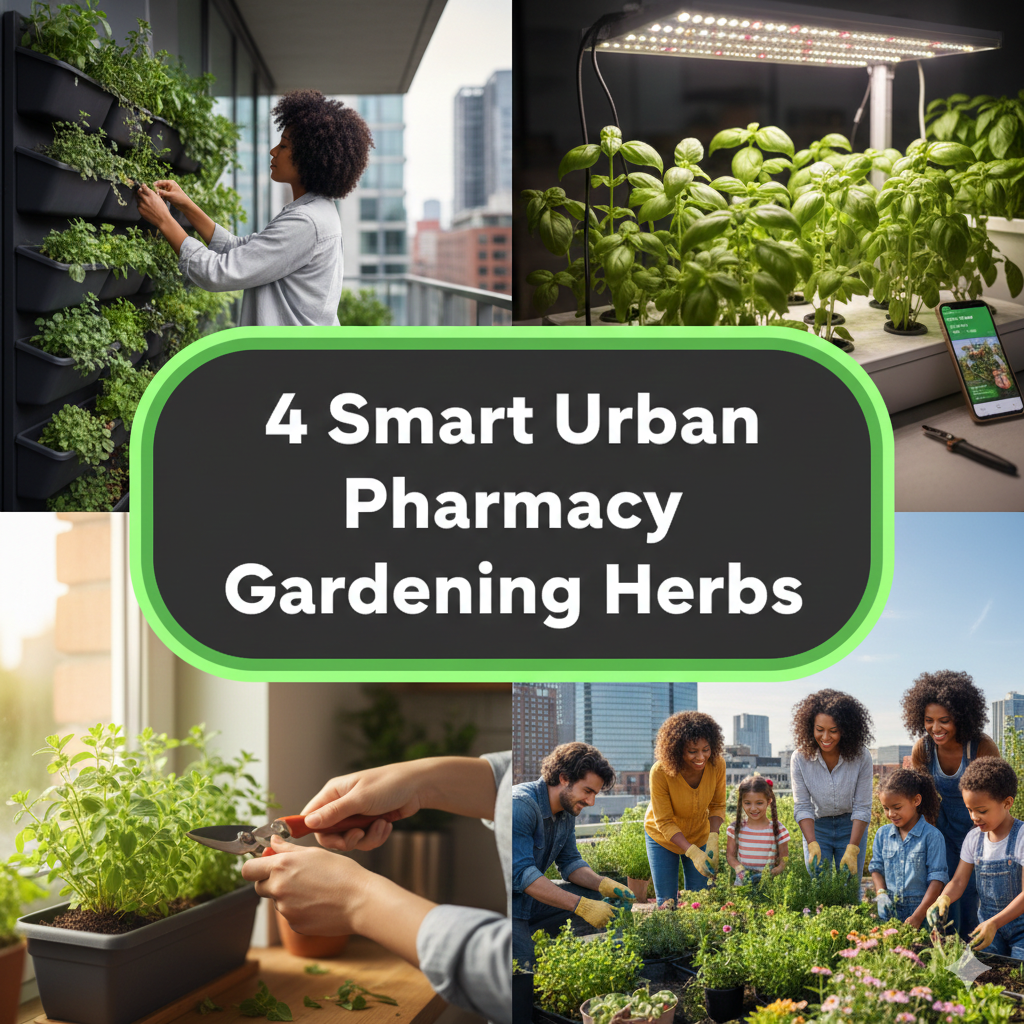
Imagine this: You wake up with a pounding headache. Instead of reaching for the medicine cabinet, you walk to your kitchen windowsill, snip a few sprigs of fresh lavender and brew yourself a soothing tea. That is the quiet magic of urban pharmacy gardening herbs — and millions of urban dwellers are already making this work.
Urban gardening has seen a boom in popularity during the past decade. Apartments, balconies, rooftops and small patios have become little green havens. But there’s a smarter way to make that garden — beyond growing tomatoes or decorative flowers. Herbs with real medicinal value literally give your little container garden a dual purpose as a pharmacy, which you can enter 24/7 and without a prescription.
This guide explores four highly impactful urban pharmacy gardening herbs that are not only easy to grow indoors, but can be cultivated in tight outdoor spaces. Trusted for centuries in traditional medicine and proven by modern research as well, these herbs can be genuinely beneficial. Whether you’re starting from scratch or already have a few pots on your balcony, this article will tell you precisely which herbs to grow, how to grow them and how to actually use them.
Let’s get growing.
It Just Makes Good Sense to Grow Your Own Medicinal Herbs in the City
City life is busy. Stress, bad air quality, processed food and endless screen time all affect your body. But many city residents do not live near nature and few have access to fresh, organic vegetables — much less fresh medicinal plants.
This is where urban pharmacy gardening herbs come into the picture.
You don’t need a backyard. A sunny windowsill, a small balcony or even a bright bathroom shelf should be able to accommodate several medicinal herb plants. These herbs are easy to care for, inexpensive to grow from scratch and incredibly fulfilling. The majority are grown in ordinary pots containing standard potting soil.
And beyond convenience, there’s a genuine health value here. Dried and processed forms of herbs won’t contain as high concentrations of active compounds as their fresh versions. When you grow your own, there’s also no mystery about what goes into the soil — no pesticides, no chemical fertilizers, no unknown ingredients.
And the cost savings? Significant. One lavender plant can live for years. A mint plant can occupy an entire pot in just weeks and keep producing for several seasons. Add buying essential oils or herbal supplements at the store into the mix, and suddenly, you have interesting math.
4 Best Urban Pharmacy Gardening Herbs to Grow at Home
Now, let’s get to know the four herbs that will shine in your urban herb setup. These were selected based on three factors: ease of growing indoors or in containers, proven medicinal benefits and practical everyday use.
Herb #1 — Basil: The Kitchen Healer That Busts Stress
What Makes Basil Special
Most people don’t think of basil as more than a pizza topping. But this aromatic herb has long been used as a healing plant across Southeast Asia, the Mediterranean and India for thousands of years. Holy basil — also known as Tulsi — is especially prized in Ayurvedic medicine for its adaptogenic properties, which help the body cope with stress.
Sweet basil (the most common cooking variety) is loaded with antioxidants, anti-inflammatory compounds and essential oils like linalool and eugenol. These compounds have been researched for their potential to lower oxidative stress, promote digestive health and help combat certain bacteria.
Health Uses You Can Try at Home
One of the easiest remedies you can make is basil tea. Add 5–6 fresh basil leaves to hot water and steep for 5 minutes. Add honey if you like. This tea works well to reduce bloating, mild nausea and nervous tension.
Its anti-inflammatory nature makes crushed basil leaves an effective topical application for insect bites. Eating fresh basil in meals every day is another small but powerful step toward reducing chronic inflammation.
Growing Basil in a Small Urban Space
Basil enjoys sunlight — at least 6 hours daily. Set it in your sunniest windowsill or balcony location. It will flourish in a 6–8 inch pot with standard well-draining potting mix.
Water when the top inch of soil feels dry. Don’t let it sit in soggy dirt. Pinch off flowers as soon as they appear — this encourages the plant to continue making abundant foliage rather than going to seed.
| Growing Factor | Details |
|---|---|
| Light Required | 6+ hours of direct sunlight |
| Pot Size | 6–8 inch pot |
| Watering | When top inch of soil is dry |
| Best Season | Spring through early Fall |
| Common Problems | Overwatering, root rot, aphids |
Basil is an annual, which means it will not live longer than one season. But it’s so fast-growing that you can easily and cheaply start fresh seeds every spring.
Herb #2 — Mint: The Pocket-Friendly Pain and Gut Remedy
Why Mint Should Be in Every Urban Herb Collection
Mint is one of those plants that almost grows itself. It’s aggressive, fragrant and packed with menthol — the compound that gives it that cool feeling and a whole array of medicinal effects.
The two most common types are peppermint and spearmint, both of which can be grown at home. Peppermint packs a more medicinal punch. Its menthol content makes it useful for digestive relief, tension headaches, respiratory congestion and even mild muscle pain.
There is peer-reviewed research supporting peppermint oil for symptoms of irritable bowel syndrome (IBS) and tension headaches when applied topically.
Medicinal Uses of Fresh Mint on a Daily Basis
The most classic use is mint tea. Steep a small handful of fresh leaves for 5–7 minutes in boiling water. Drink after meals to help dispel bloating, gas or indigestion. It is among the oldest natural digestive aids in the world.
For tension headaches, crush a couple of fresh mint leaves and rub gently on your temples. The menthol gives a cooling, soothing effect that many people find genuinely helpful.
Fresh mint added to a steam bowl — simply pour boiling water into a bowl, add the leaves, tent a towel over your head and breathe deeply — can help clear nasal congestion during colds.
How to Grow Mint Without It Taking Over Everything
Mint is famously invasive. It grows quickly in an open garden and can smother other plants. In urban areas, this is not an issue as long as you grow it in its own container. Do not plant mint in the ground with other herbs.
A 10–12 inch pot works well. Mint likes partial to full sun and consistently moist (but not waterlogged) soil. It’s one of the most forgiving herbs — it recovers even if you skip watering it for a few days.
| Growing Factor | Details |
|---|---|
| Light Required | Partial to full sun (4–6 hrs) |
| Pot Size | 10–12 inch pot (keep solo) |
| Watering | Keep soil consistently moist |
| Best Season | Spring through Fall; can overwinter indoors |
| Common Issues | Rust fungus, aphids, spider mites |
Mint is perennial in most climates — that is, it returns year after year. Bring it inside before the first frost and it will continue to grow through winter.
Herb #3 — Lavender: The Anxiety-Fighter That Also Smells Amazing
A Long History of Lavender as a Healing Plant
Lavender’s medicinal use dates back over 2,500 years. It was used by ancient Egyptians in embalming. Roman soldiers brought it with them to disinfect wounds. Today, it is one of the most widely studied aromatic herbs in the world.
Linalool is the primary active ingredient in lavender. Research has shown linalool has real anxiolytic (anti-anxiety) effects on the central nervous system. Silexan, a German pharmaceutical product made from lavender oil, has even been approved in Europe to treat generalized anxiety disorder. You can read more about the clinical research behind lavender and other healing plants at the National Center for Complementary and Integrative Health.
For city dwellers coping with chronic stress, sleep problems or anxiety, lavender is a natural first option worth growing.
How to Use Lavender as a Home Remedy
Lavender tea, made from dried or fresh flowers, is a soothing evening ritual that many people swear by for better sleep. Use 1–2 teaspoons of fresh flowers steeped in hot water for 10 minutes. Drink 30–60 minutes before bed.
Probably the most common use is lavender aromatherapy. Just having a lavender plant near your desk or bedroom can release a calming fragrance into the space. Bruising a few leaves releases the oils more strongly.
Diluted lavender essential oil (always dilute in a carrier oil such as coconut oil) can be used for small burns and skin irritation. It works as a mild antiseptic and is soothing as well. You could also create sachets of dried flowers to slip under your pillow.
How to Grow Lavender on a Balcony or Windowsill
Lavender is a Mediterranean plant — it loves warm, dry conditions with lots of sun. In fact, it prefers slightly poor, sandy soil over rich garden soil. Excellent drainage is essential. Lavender will quickly develop root rot and die if its roots sit in wet soil.
Use a terracotta pot (which dries out faster) and make a 50/50 mix of regular potting soil and perlite or coarse sand. Put it in your sunniest location.
| Growing Factor | Details |
|---|---|
| Light Required | 8+ hours of full sun |
| Pot Size | 12–14 inch terracotta pot |
| Soil Type | Sandy, well-draining (add perlite) |
| Watering | Allow to dry out between waterings |
| Common Problems | Root rot from overwatering |
Lavender is a perennial shrub that, with good care, can live for many years. It blooms most beautifully in its second and third year.
Herb #4 — Aloe Vera: The Emergency First Aid Plant
The Plant That Has Been a Medicine Cabinet for Centuries
Aloe vera may be the most widely known medicinal plant in the world. Aloe has always occupied a place of respect in healing, from ancient Egypt to traditional Chinese medicine to modern dermatology.
The thick, fleshy leaves house a clear gel with more than 75 biologically active compounds, including vitamins A, C, E and B12, enzymes, amino acids and polysaccharides. Its two principal therapeutic elements are the gel (from within the leaf) and the latex (the yellow layer just below the outer skin).
Aloe gel is best known as a skin healer — for burns, sunburns, small wounds, eczema and psoriasis. Studies show that it accelerates wound healing and reduces inflammation. Some people also use diluted inner-leaf gel for digestive problems, though it is essential to exercise caution in this regard.
The Practical Uses of Aloe for the Urban Dweller
Aloe is one of the most useful plants you can keep at home for everyday first aid. Got a minor kitchen burn? Break off a small leaf, split it and rub the fresh gel directly on the burn. The cooling relief is nearly instant.
Dry, irritated skin? Fresh aloe gel works as a simple, natural moisturizer with anti-inflammatory properties. It is also widely used as an after-sun treatment for minor sunburns.
Some city residents blend a tablespoon or so of inner-leaf aloe gel into smoothies, drawn by its antioxidant content and possible digestive benefits. If you try this, use only the clear inner gel and start with very small amounts.
How to Grow Aloe Vera Indoors — It’s Almost Foolproof
Aloe is one of the simplest medicinal plants to grow indoors. It’s a succulent — meaning it stores water in its leaves and is extremely drought-tolerant. The number one cause of death? Overwatering.
Use a good cactus or succulent potting mix. Water well, then allow the soil to dry out entirely before watering again. In most household setups, this means watering every 2–3 weeks in summer and even less frequently in winter.
Aloe loves bright indirect light rather than harsh direct sunlight, making it perfect for spots that receive good ambient light but not full blazing sun all day.
| Growing Factor | Details |
|---|---|
| Light Needed | Bright indirect light |
| Pot Size | 6–10 inch pot with drainage hole |
| Soil Type | Cactus/succulent mix |
| Watering | Every 2–3 weeks (let soil dry completely) |
| Common Issues | Root rot from overwatering |
Aloe is a perennial that can live for decades indoors. It also regularly develops “pups” — small offshoot plants — that you can separate and repot to start new plants.
The 4 Urban Pharmacy Herbs — Side-by-Side Comparison
| Herb | Main Benefit | Difficulty | Light | Water Frequency | Lifespan |
|---|---|---|---|---|---|
| Basil | Stress, digestion, inflammation | Easy | High (6+ hrs) | Every 1–2 days | Annual |
| Mint | Digestion, headaches, congestion | Very Easy | Moderate | Every 1–2 days | Perennial |
| Lavender | Anxiety, sleep, skin | Moderate | Very High (8+ hrs) | Every 7–10 days | Perennial |
| Aloe Vera | Burns, skin repair, first aid | Very Easy | Indirect bright | Every 2–3 weeks | Perennial |
Starting Your City Pharmacy: A Beginner’s Strategy for Herb Gardening
Start Small and Build Up
Avoid buying eight kinds of herbs at the same time. Begin with two — aloe and mint are the ideal starter combo. They’re virtually indestructible, they cost almost nothing to start and they provide instant, tangible utility.
When you’re comfortable with those, add basil in the spring and lavender at the end of spring or early summer. In just one growing season, you’ll have a functioning four-herb medicinal garden.
If you want to go deeper into herb growing techniques and plant profiles, The Herb Garden is a great resource for beginners and experienced growers alike.
The Right Containers and Soil Setup
When growing herbs in containers, drainage is the single most important consideration. Every pot must have a drainage hole. If your pot lacks holes, drill them or use a smaller pot inside a decorative one with gravel at the bottom.
Mediterranean herbs, such as lavender and basil, do great in terracotta pots. Plastic or glazed ceramic pots hold moisture better — perfect for mint.
Each herb should have good quality potting mix. Don’t use old soil from previous seasons — it can contain disease and lacks nutrients.
Feeding Your Herbs
Most medicinal herbs don’t need heavy fertilizing. In fact, excess fertilizer tends to lower the concentration of medicinal compounds. Just a light feeding with a balanced liquid fertilizer once per month during the growing season is more than sufficient.
Especially for aloe and lavender, less is more. They developed in nutrient-poor soils and actually perform better without constant feeding.
Four Herbs You Can Use Together
The true joy of having all four herbs comes from combining them in simple home remedies.
A steep of fresh mint, basil and lavender flowers makes a “stress-relief tea blend” — a potent calming after-dinner beverage. For minor burns and skin irritation, try a “first aid duo” of fresh aloe gel mixed with a drop of diluted lavender essential oil. A “digestive support combo” of fresh mint tea with a basil leaf or two hits multiple angles of gut support in one cup.
These aren’t complicated recipes. They’re practical, everyday applications that put your urban herb garden to work in concrete, meaningful ways.
Common Mistakes New Urban Herb Gardeners Make
Killer No. 1: Overwatering
Too much water kills more urban herb plants than too little. The instinct is to nurture — but roots require air, and saturated earth strangles them. Always check soil moisture before watering. If in doubt, wait another day.
Not Enough Light
Mistake No. 2 is putting herbs in dark corners. Most medicinal herbs require real sunlight. If you have a dark apartment, look into a simple grow light on a timer. Modern LED grow lights are affordable and highly effective.
Harvesting Too Aggressively
It’s tempting to pluck big handfuls at once, but this stresses the plant. A good rule of thumb: never harvest more than a third of the plant at once. Frequent, moderate harvesting actually encourages bushier, more productive growth.
Frequently Asked Questions About Urban Pharmacy Gardening Herbs
Q: Is it possible to grow these four herbs indoors year-round? Yes, with sufficient light. Aloe and mint are among the easiest to continue growing indoors year-round. Basil requires strong light in winter — a grow light helps. Lavender can be tricky as a long-term indoor plant, but it can survive winter if you keep it cool and bright.
Q: Are any of these herbs safe for use around children and pets? Aloe vera gel is safe to apply topically but toxic to dogs and cats when swallowed. Mint is generally fine in small amounts but can irritate sensitive digestive systems in very young children. Lavender is generally safe aromatically but shouldn’t be consumed in large amounts. Always check with a pediatrician or vet before using herbal remedies around small children or pets.
Q: What is the cost of starting a four-herb urban pharmacy garden? Very little. Basil and mint seeds typically cost less than $5. Small starter plants for lavender and aloe generally go for $5–$15 each. Basic pots and soil can be sourced cheaply at garden centers or thrift stores. A full setup can practically be done for under $50.
Q: Is it OK to use these herbs alongside prescribed medications? Always check with your doctor before using a herbal remedy alongside prescribed medicine. Some herbs — especially lavender and mint — may interact with certain medications. They are relatively safe for topical and culinary use, but medicinal doses need professional guidance.
Q: How soon can I start harvesting? You can start harvesting basil and mint within 3–4 weeks of planting. Aloe leaves can be harvested when the plant has several thick, mature leaves — typically after 6–12 months. Most lavender varieties won’t produce flowers until the second year.
Q: Do these herbs require special fertilizer? No special fertilizers needed. A simple balanced liquid fertilizer (such as a 10-10-10 formula) applied once per month during the growing season is sufficient. Aloe and lavender require even less.
The Takeaway — Your Windowsill as a Wellness Toolkit
Urban pharmacy gardening herbs are not a trend. They’re a nod to something old and useful — the notion that the plants we live among can heal us, if we take care of them.
Basil, mint, lavender and aloe vera are four of the simplest, most effective and most rewarding medicinal herbs you can grow in any urban living situation. They require very little — a pot, some sunlight, the occasional watering — and give back so much in return.
You don’t need to overhaul your medicine cabinet all at once. Begin with one or two plants this week. Learn to use them. Cultivate confidence alongside your garden. Before long you’ll be reaching for your windowsill before you reach for the pharmacy shelf — and that’s a genuinely powerful shift.
The city might not have forests or meadows. But four carefully selected plants on a kitchen windowsill? That’s plenty to begin with.