
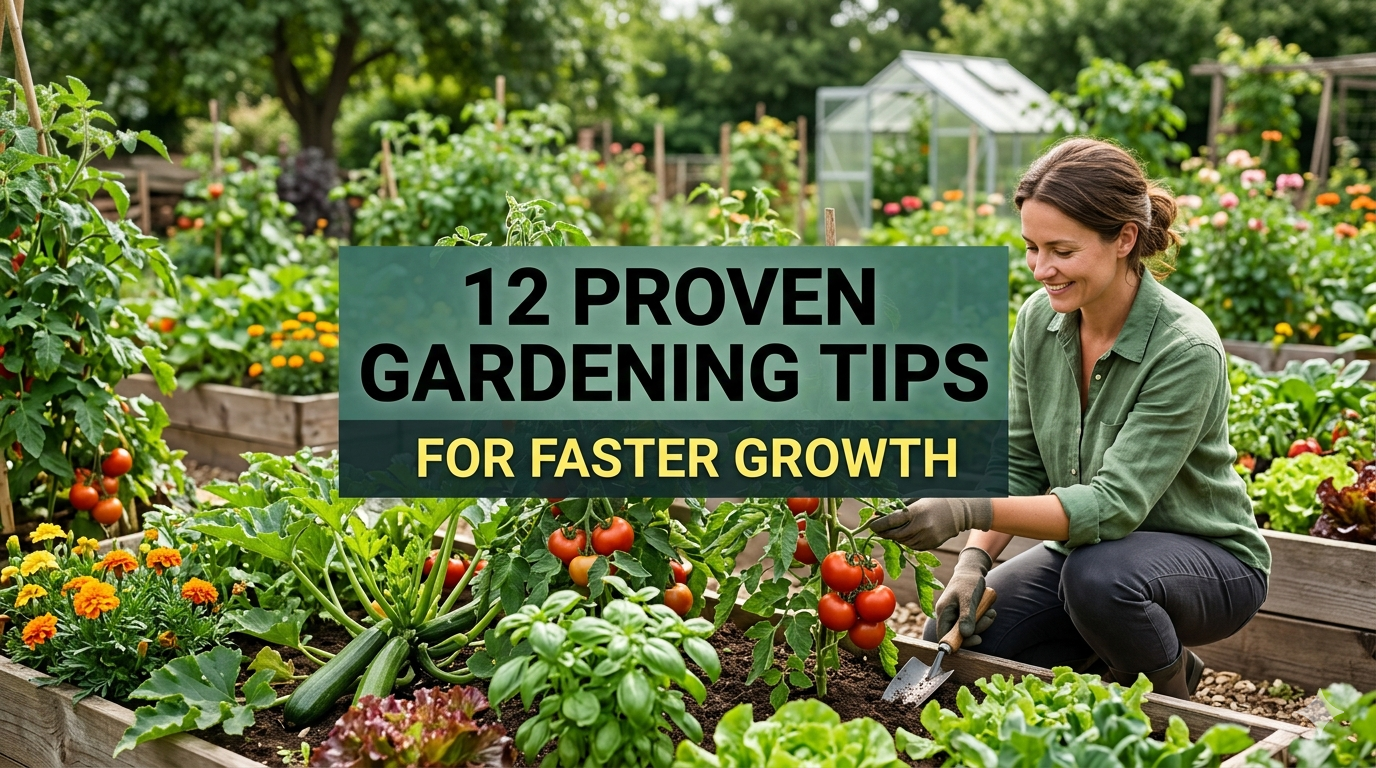
Every gardener, whether beginner or experienced, eventually asks the same question: how do I make plants grow faster without harming their health? The truth is, faster growth doesn’t come from forcing plants—it comes from creating the right conditions so they naturally thrive.
In 2026, gardening is less about trial-and-error guessing and more about understanding simple biological needs: soil quality, light exposure, water balance, and timing. Once these basics are optimized, plants respond quickly and visibly.
This guide breaks down 12 proven gardening tips that help accelerate plant growth in a healthy, sustainable way. Each tip includes practical explanations, comparison tables, and simple charts so you can apply them immediately in your own garden setup.
tip 1: choose fast-growing plant varieties from the start
Not all plants grow at the same speed. Some are naturally slow, while others are designed by nature to grow quickly.
fast vs slow growers:
| plant type | growth speed | harvest time | beginner suitability |
|---|---|---|---|
| radish | very fast | 3–4 weeks | excellent |
| lettuce | fast | 4–6 weeks | excellent |
| spinach | fast | 4–6 weeks | very good |
| tomato | moderate | 8–12 weeks | good |
| carrot | slow | 10–14 weeks | moderate |
If faster results are your goal, starting with leafy greens and herbs gives instant motivation.
tip 2: improve soil quality before planting
Soil is the foundation of plant growth. Poor soil equals slow growth, no matter how much you water or fertilize.
ideal soil mix composition:
| component | percentage | purpose |
|---|---|---|
| loamy soil | 40% | structure support |
| organic compost | 30% | nutrients |
| sand | 20% | drainage |
| coco peat | 10% | moisture retention |
soil quality comparison:
| soil type | growth speed | nutrient level |
|---|---|---|
| clay soil | slow | low drainage |
| sandy soil | moderate | low nutrients |
| loamy soil | fast | balanced |
Healthy soil equals faster root development, which directly impacts growth speed.
tip 3: ensure proper sunlight exposure

Light is one of the most important factors for plant growth. Without enough sunlight, plants become weak and slow.
sunlight requirements:
| plant type | sunlight needed | growth impact |
|---|---|---|
| herbs | 4–6 hours | fast growth |
| vegetables | 6–8 hours | optimal growth |
| succulents | 5–6 hours | stable growth |
| leafy greens | 3–5 hours | moderate growth |
sunlight impact chart:
| light level | growth rate | plant health |
|---|---|---|
| low light | slow | weak |
| medium light | moderate | stable |
| high light | fast | strong |
Positioning plants correctly can instantly improve growth performance.
tip 4: water consistently, not excessively
Watering is essential, but overwatering slows growth by suffocating roots.
watering balance guide:
| plant type | frequency | risk of overwatering |
|---|---|---|
| herbs | every 1–2 days | medium |
| vegetables | every 2–3 days | high if excessive |
| succulents | once a week | very high if frequent |
watering effectiveness:
| method | efficiency | growth impact |
|---|---|---|
| random watering | low | inconsistent growth |
| scheduled watering | high | stable growth |
| soil-based watering | very high | optimal growth |
Tip: always check soil moisture before watering instead of following strict schedules.
tip 5: use organic compost regularly
Compost is a natural growth booster that improves soil fertility over time.
benefits of compost:
- improves root strength
- increases nutrient absorption
- enhances soil structure
fertilizer comparison:
| type | cost | growth speed | sustainability |
|---|---|---|---|
| chemical fertilizer | high | fast but unstable | low |
| organic compost | low | steady fast growth | high |
| no fertilizer | none | slow | high risk of deficiency |
Compost provides long-term growth benefits without harming soil health.
tip 6: space plants properly
Overcrowding slows growth because plants compete for nutrients, water, and light.
spacing impact:
| plant spacing | growth outcome | disease risk |
|---|---|---|
| too close | slow | high |
| balanced | fast | low |
| too wide | moderate | low |
recommended spacing guide:
| plant type | spacing needed |
|---|---|
| herbs | 6–8 inches |
| leafy greens | 8–12 inches |
| vegetables | 12–24 inches |
Proper spacing allows airflow and reduces fungal growth.
tip 7: prune regularly for stronger growth
Pruning removes weak or dead parts of a plant so energy is redirected to healthy growth.
pruning benefits:
- increases plant strength
- improves airflow
- encourages new shoots
pruning impact table:
| action | result | growth speed |
|---|---|---|
| no pruning | weak structure | slow |
| light pruning | balanced growth | moderate |
| regular pruning | strong growth | fast |
Even simple trimming of dead leaves can boost plant energy.
tip 8: rotate plants for even light exposure
Plants tend to grow toward light sources. Without rotation, they become uneven and weak.
rotation benefits:
- balanced growth
- stronger stems
- uniform leaf development
rotation effect:
| frequency | growth balance |
|---|---|
| never | uneven |
| weekly | moderate balance |
| daily/alternate days | excellent balance |
This is especially important for indoor plants.
tip 9: use mulch to regulate soil conditions
Mulch helps maintain moisture and temperature in the soil.
mulch materials:
- dried leaves
- straw
- wood chips
mulch benefits chart:
| feature | without mulch | with mulch |
|---|---|---|
| water retention | low | high |
| temperature stability | unstable | stable |
| weed growth | high | low |
Mulch reduces stress on plant roots, leading to faster growth.
tip 10: control pests early
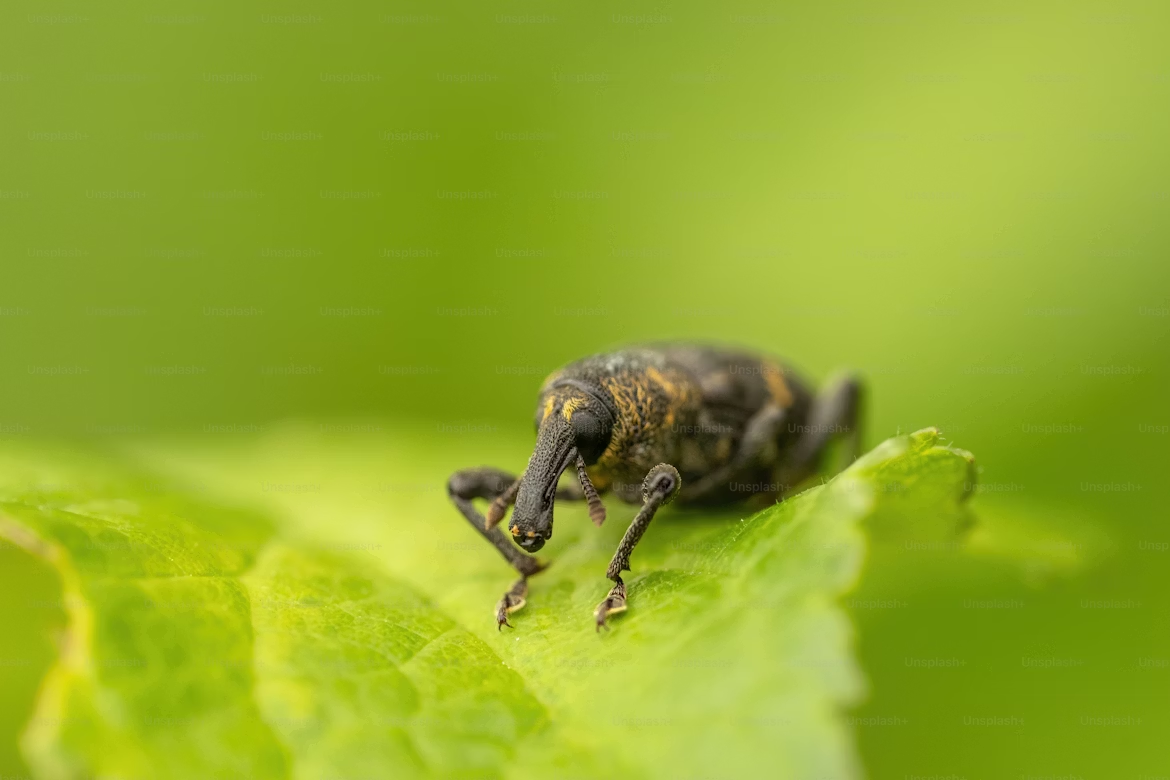
Pests slow plant growth by damaging leaves and roots.
common pest control methods:
| method | safety | effectiveness |
|---|---|---|
| chemical spray | low | high |
| neem oil | high | medium-high |
| garlic spray | high | moderate |
pest impact on growth:
| pest level | plant health | growth speed |
|---|---|---|
| none | strong | fast |
| moderate | weak | slow |
| high infestation | damaged | very slow |
Early detection is key to maintaining fast growth.
tip 11: maintain proper temperature conditions
Temperature affects metabolic activity in plants.
ideal temperature ranges:
| plant type | optimal temperature |
|---|---|
| herbs | 18–25°C |
| vegetables | 20–30°C |
| tropical plants | 22–32°C |
temperature impact:
| condition | growth rate |
|---|---|
| too cold | slow |
| optimal | fast |
| too hot | stressed growth |
Keeping plants in stable environments improves consistency.
tip 12: follow a simple growth tracking routine
Tracking helps identify what works and what doesn’t.
weekly tracking sheet:
| week | height | leaf count | condition notes |
|---|---|---|---|
| week 1 | baseline | few leaves | planting stage |
| week 2 | slight growth | more leaves | stable |
| week 3 | visible growth | strong leaves | improving |
benefits of tracking:
- better watering decisions
- improved fertilizing timing
- early problem detection
simple gardening growth timeline
| stage | duration | visible change |
|---|---|---|
| germination | 3–10 days | sprouting |
| early growth | 1–3 weeks | leaves form |
| development | 3–6 weeks | strong structure |
| mature growth | 6+ weeks | full plant |
growth efficiency comparison
| practice | growth speed | plant health |
|---|---|---|
| no structure | slow | inconsistent |
| basic care | moderate | stable |
| optimized care | fast | strong |
closing thoughts
Faster plant growth is not about shortcuts—it is about removing obstacles. When plants receive proper soil, light, water, and space, they naturally grow at their maximum potential.
The real secret is consistency. Small, repeated actions like watering correctly, pruning regularly, and improving soil quality have a compounding effect over time.
With these 12 proven tips, any garden—no matter how small—can become more productive, healthier, and faster-growing without unnecessary complexity.
frequently asked questions
- what is the fastest way to make plants grow faster?
Providing proper sunlight, balanced watering, and nutrient-rich soil is the fastest natural method. - does fertilizer make plants grow faster?
Yes, but organic compost is safer and provides steady long-term growth compared to chemical fertilizers. - how often should I water plants for faster growth?
It depends on the plant, but generally every 1–3 days is ideal for most garden plants. - can pruning really improve plant growth?
Yes, pruning redirects energy to healthy parts of the plant, improving overall growth speed. - what is the biggest mistake that slows plant growth?
Overwatering and poor soil quality are the most common causes of slow growth. - do indoor plants grow slower than outdoor plants?
Usually yes, due to lower light levels, but proper lighting can reduce this difference significantly.