
Gardening changes with time in a way that’s easy to underestimate when you’re just starting out. I used to think gardening meant doing the same tasks all year—watering, planting, and occasional pruning. But over time, I learned that each season has its own rhythm, and working with that rhythm makes everything easier.
Once I stopped fighting the seasons and started adapting to them, my garden became more stable, more productive, and far less stressful to maintain.
These nine essential gardening tips are organized around seasonal flow and real-world experience—not theory. They’re the habits that quietly keep a garden alive all year long.
tip 1: adjust watering based on seasonal demand
Watering is not a fixed routine—it changes constantly depending on temperature, sunlight, and soil evaporation rates.
seasonal watering guide:
Season | Watering Frequency | Key Note
Spring | Moderate (2–3x/week) | Growth phase begins
Summer | High (daily or every other day) | Evaporation increases
Autumn | Reduced (1–2x/week) | Soil retains moisture longer
Winter | Minimal (as needed) | Overwatering risk increases
water needs comparison:
Season | Soil Drying Speed | Plant Water Demand
Spring | Medium | Medium
Summer | Fast | High
Autumn | Slow | Medium-low
Winter | Very slow | Low
what I learned:
Most plant problems weren’t from lack of care—they were from watering at the wrong time of year.
tip 2: seasonal soil preparation matters more than planting
Healthy plants start with soil preparation, not seeds.
Each season requires different soil adjustments.
soil adjustment breakdown:
Season | Soil Action | Purpose
Spring | Add compost | Boost nutrients
Summer | Mulch layer | Moisture retention
Autumn | Soil enrichment | Recovery phase
Winter | Soil rest | Protection
soil health impact:
Condition | Plant Growth Quality
Unprepared soil | Weak
Seasonally prepared soil | Strong
When I started preparing soil in advance instead of reacting later, plant survival rates increased noticeably.
tip 3: rotate crops every season to prevent soil exhaustion

Planting the same crops repeatedly in the same soil weakens it over time.
crop rotation pattern:
Season | Bed A | Bed B | Bed C
Spring | Leafy greens | Legumes | Root crops
Summer | Legumes | Root crops | Leafy greens
Autumn | Root crops | Leafy greens | Legumes
Winter | Soil recovery | Cover crops | Rest
benefits of rotation:
- Prevents pest buildup
- Improves soil fertility
- Reduces disease risk
soil health comparison:
Practice | Soil Condition After 1 Year
No rotation | Depleted
Rotation system | Balanced
This one habit alone can extend garden productivity significantly.
tip 4: seasonal pruning improves plant structure
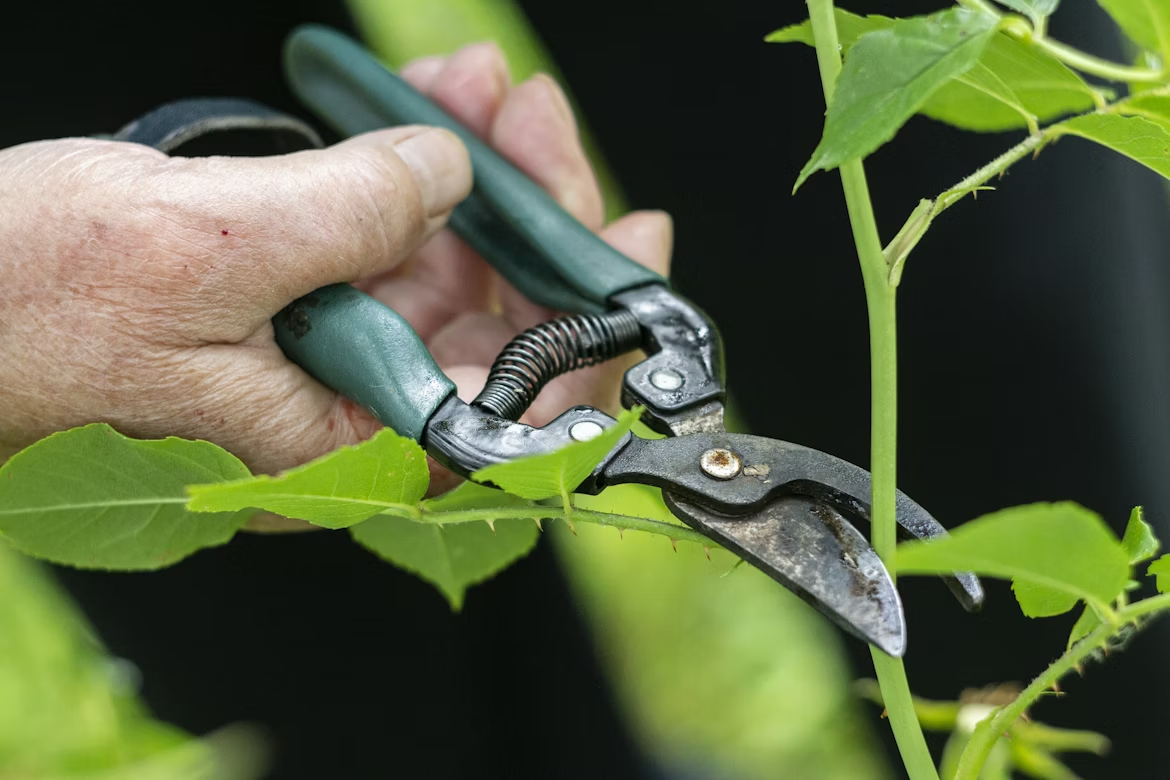
Pruning is not a one-time activity—it changes with seasons.
seasonal pruning guide:
Season | Pruning Style
Spring | Shape and growth control
Summer | Light trimming
Autumn | Cleanup pruning
Winter | Structural pruning
pruning effect chart:
Type | Growth Outcome
No pruning | Overgrowth
Seasonal pruning | Controlled strong growth
why it matters:
Plants redirect energy more efficiently when trimmed at the right time.
I used to avoid pruning because it felt destructive—but it’s actually strategic maintenance.
tip 5: adapt planting schedules to climate timing
Planting at the wrong time is one of the most common mistakes.
Even healthy seeds fail if timing is off.
seasonal planting chart:
Crop Type | Best Season
Tomatoes | Spring
Spinach | Autumn
Beans | Late spring/summer
Carrots | Autumn/winter
Herbs | Year-round (controlled conditions)
plant success rate comparison:
Timing | Germination Success
Incorrect timing | Low
Correct seasonal timing | High
After aligning planting with seasonal cycles, I stopped losing half my crops each year.
tip 6: protect plants during extreme seasonal shifts
Season transitions are when most plant damage happens.
protection methods:
- Shade cloth in summer
- Mulch insulation in winter
- Wind barriers in autumn
- Cover protection in early spring
stress level comparison:
Condition | Plant Stress
Unprotected transitions | High
Protected transitions | Low
Even simple coverings can save entire plant groups from seasonal shock.
tip 7: adjust fertilizing schedules seasonally
Fertilizer is not a constant requirement—it should match plant growth cycles.
fertilizing schedule:
Season | Fertilizer Use
Spring | High (growth boost)
Summer | Moderate
Autumn | Low (soil strengthening)
Winter | None or minimal
fertilizer impact:
Usage Style | Plant Health Outcome
Constant fertilizing | Soil imbalance risk
Seasonal fertilizing | Stable growth
I learned that over-fertilizing is often more harmful than under-fertilizing.
tip 8: seasonal pest awareness is critical
Pests don’t behave the same way year-round.
pest activity chart:
Season | Pest Activity Level | Common Issues
Spring | Medium | Aphids, leaf damage
Summer | High | Insects, fungal growth
Autumn | Medium | Soil pests
Winter | Low | Dormant pests
pest management effectiveness:
Approach | Efficiency
Random control | Low
Seasonal awareness | High
Once I started tracking seasonal pest cycles, infestations became easier to predict and prevent.
tip 9: maintain seasonal cleanup habits
Each season leaves behind organic clutter—dead leaves, broken stems, and unused plant material.
cleanup checklist:
- Remove dead plants
- Clear fallen leaves
- Refresh mulch layers
- Inspect soil condition
- Store seasonal tools
cleanup impact:
Condition | Garden Health
No cleanup | Pest buildup risk
Regular cleanup | Balanced ecosystem
This habit resets the garden environment before the next growth cycle begins.
combined seasonal gardening system overview
When all nine tips work together, gardening becomes a structured yearly cycle rather than a set of random tasks.
overall performance comparison:
Factor | Before Seasonal System | After Seasonal System
Plant survival | Inconsistent | Stable
Yield output | Variable | Predictable
Maintenance stress | High | Manageable
Soil health | Declining | Improving
Pest control | Reactive | Preventive
what improves most:
- Timing accuracy
- Soil stability
- Plant resilience
- Long-term productivity
why seasonal gardening works so well
Plants don’t grow in isolation—they respond to environmental cycles. Temperature, sunlight, rainfall, and soil biology all shift throughout the year.
seasonal alignment benefits:
- Natural growth optimization
- Reduced stress on plants
- Better resource efficiency
- Healthier ecosystem balance
growth stability comparison:
Approach | Stability Level
Random gardening | Low
Seasonal gardening | High
common mistakes gardeners make across seasons
- Using same watering routine year-round
- Ignoring soil recovery phases
- Over-fertilizing in winter
- Planting too early in spring
- Skipping seasonal cleanup
Most gardening problems come from ignoring timing, not technique.
frequently asked questions
- Do I need to follow all seasonal tips strictly?
No, but the closer you align with seasonal patterns, the healthier your garden will be. - What is the most important seasonal task?
Soil preparation is often the foundation of seasonal success. - Can I garden year-round in all climates?
Yes, but techniques must be adjusted for local weather conditions. - Why is crop rotation so important?
It prevents soil exhaustion and reduces pest buildup over time. - What happens if I ignore seasonal changes?
Plants may grow, but they will be weaker, more stressed, and less productive. - Is seasonal gardening suitable for beginners?
Yes, it actually simplifies gardening by creating a clear yearly structure.
closing thought
Gardening becomes far more predictable when you stop treating it as a constant routine and start treating it as a seasonal cycle. Each part of the year has a role to play—growth, maintenance, recovery, and preparation.
Once I started working with seasons instead of against them, gardening stopped feeling like a struggle and started feeling like a rhythm that takes care of itself.