
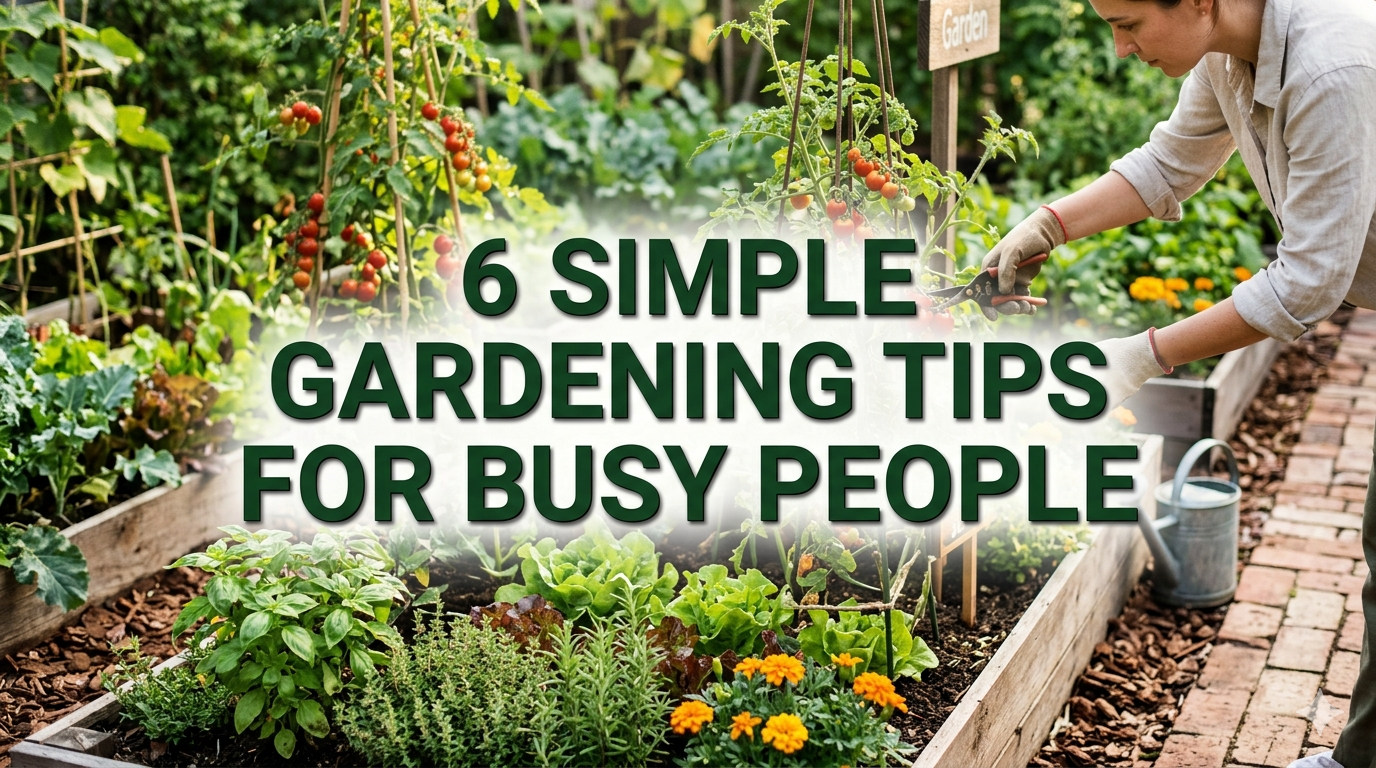
Gardening is often seen as a time-consuming hobby, something reserved for people with long weekends or flexible schedules. But the reality is very different. You don’t need hours every day to maintain a healthy, thriving garden. What you need is structure, efficiency, and a few smart habits that reduce effort while maximizing results.
Busy people can still enjoy lush plants, fresh herbs, and even productive vegetable gardens by focusing on simplicity rather than complexity. The key is to work smarter, not harder.
This guide explores six practical gardening tips designed specifically for people with limited time. Each tip focuses on reducing maintenance while improving plant health and garden efficiency.
- Choose Low-Maintenance Plants That Practically Grow Themselves
The most important decision for a busy gardener happens before planting anything: plant selection. Choosing high-maintenance plants is the fastest way to turn gardening into a chore.
Instead, focus on resilient plants that can survive with minimal attention.
Low-maintenance plant comparison table
| Plant Type | Water Needs | Sun Requirement | Maintenance Level | Best Use |
|---|---|---|---|---|
| Succulents | Very Low | High | Very Easy | Decoration |
| Snake Plant | Low | Low–Medium | Very Easy | Indoor/outdoor |
| Basil | Medium | High | Easy | Cooking herb |
| Mint | Medium | Partial shade | Easy | Herb garden |
| Marigold | Low | High | Easy | Pest control |
Why this works for busy people
- Less watering frequency
- Fewer pest problems
- Slower growth means less pruning
- More forgiving of neglect
Quick tip:
If you are unsure, always start with hardy plants first before experimenting with sensitive species.
- Use Self-Watering Systems to Eliminate Daily Maintenance
One of the biggest time drains in gardening is watering. Busy people often forget it or do it inconsistently, which harms plant health.
Self-watering systems solve this problem by automating moisture delivery.
Self-watering system comparison chart
| System Type | Setup Time | Cost | Efficiency | Ideal For |
|---|---|---|---|---|
| Watering can | None | Low | Low | Small plants |
| Drip irrigation | Medium | Medium | Very High | Gardens & beds |
| Self-watering pots | Low | Medium | High | Indoor plants |
| Bottle drip DIY | Low | Very Low | Medium | Beginners |
Benefits of self-watering systems
- Reduces daily effort
- Prevents overwatering
- Maintains consistent soil moisture
- Helps plants survive short absences
Simple DIY method:
Use a plastic bottle with small holes, bury it near plant roots, and fill it with water once or twice a week.
- Mulching to Reduce Weeding and Watering Time
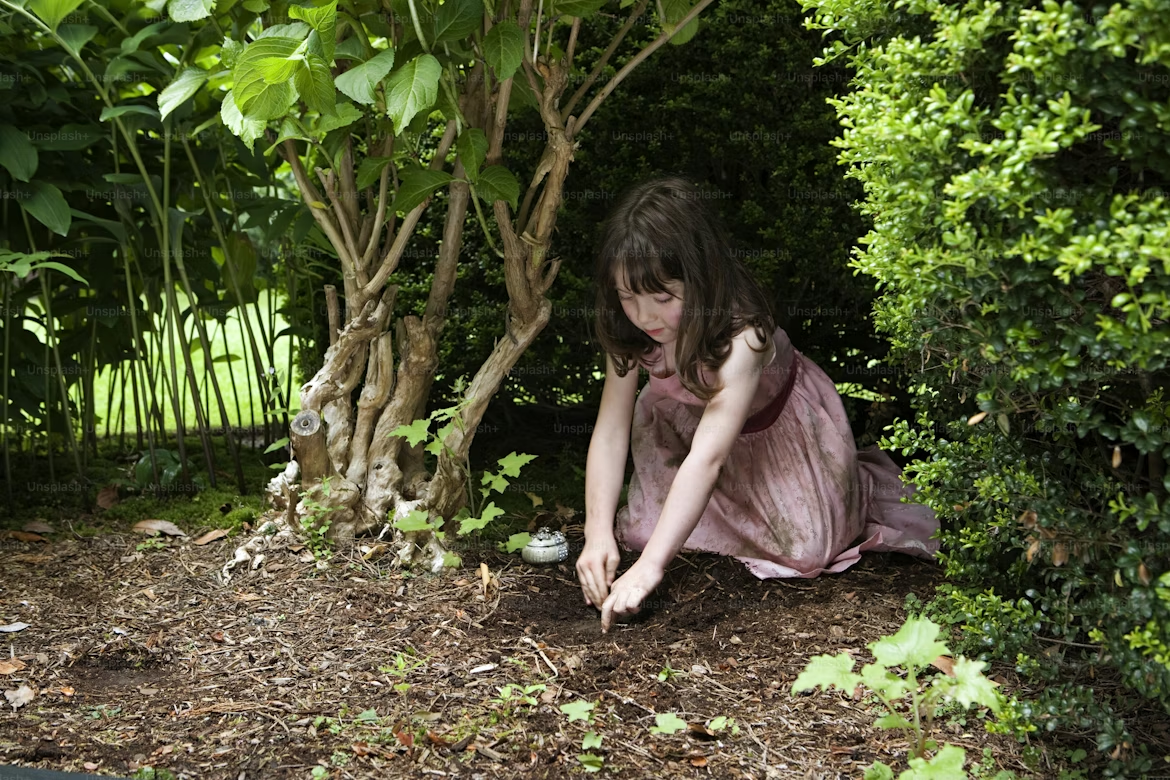
Mulching is one of the simplest time-saving gardening techniques. It involves covering soil with organic or inorganic material to protect it.
Busy gardeners benefit massively because mulch reduces two major tasks: watering and weeding.
Mulch effectiveness table
| Mulch Type | Weed Control | Water Retention | Durability |
|---|---|---|---|
| Wood chips | High | High | Medium |
| Straw | Medium | High | Low |
| Gravel | High | Medium | High |
| Leaves | Medium | Medium | Low |
How mulch saves time
- Blocks weed growth
- Reduces soil evaporation
- Maintains stable soil temperature
- Improves long-term soil quality
Time-saving insight:
A properly mulched garden can reduce weekly maintenance by up to 50%.
- Group Plants by Water and Sun Needs
One common mistake in busy gardening is placing plants randomly. This leads to uneven watering, over-care of some plants, and neglect of others.
Grouping plants based on their needs simplifies everything.
Plant grouping structure table
| Group | Water Needs | Sunlight | Examples |
|---|---|---|---|
| High water zone | Frequent | Full sun | Tomatoes, cucumbers |
| Medium zone | Moderate | Partial sun | Herbs, flowers |
| Low water zone | Rare | Full sun | Succulents, rosemary |
Why grouping saves time
- One watering session covers similar plants
- Easier fertilization schedules
- Reduced plant stress
- Faster maintenance routines
Practical tip:
Design your garden in “zones” instead of scattering plants randomly.
- Adopt a Weekly 15-Minute Garden Routine
Busy people often think gardening requires daily attention. In reality, a structured weekly routine is enough for most home gardens.
A short, focused schedule prevents overwhelm.
Weekly gardening checklist
| Task | Time Required | Frequency | Purpose |
|---|---|---|---|
| Watering check | 5 min | 2–3 times/week | Hydration control |
| Pruning dead leaves | 5 min | Weekly | Plant health |
| Weed removal | 5 min | Weekly | Clean growth |
| Quick inspection | 5 min | Weekly | Pest detection |
Why this works
- Prevents small problems from growing
- Keeps tasks predictable
- Reduces daily workload pressure
- Makes gardening sustainable long-term
Key insight:
Consistency beats intensity. Small weekly actions outperform irregular long sessions.
- Use Vertical Gardening to Save Space and Time
Vertical gardening is a powerful solution for busy people, especially those with limited space. Instead of expanding outward, you grow upward.
This reduces ground maintenance and makes everything easier to access.
Vertical gardening setup comparison
| Structure Type | Space Usage | Maintenance Ease | Best Plants |
|---|---|---|---|
| Wall planters | Very low | High | Herbs, ferns |
| Hanging pots | Low | High | Flowers, strawberries |
| Vertical frames | Medium | Medium | Mixed vegetables |
| Trellis systems | Medium | Medium | Climbing plants |
Benefits of vertical gardening
- Easier watering and pruning
- Better pest control visibility
- Saves floor space
- Improves airflow
Time-saving tip:
Vertical systems reduce bending, lifting, and walking time in the garden.
Overall Time-Saving Gardening Efficiency Summary
When these six tips are combined, gardening becomes significantly more manageable even for very busy schedules.
Efficiency comparison table
| Factor | Traditional Gardening | Time-Smart Gardening |
|---|---|---|
| Daily effort | High | Low |
| Watering time | Frequent | Automated/Reduced |
| Weed control | Regular | Minimal |
| Plant survival rate | Moderate | High |
| Weekly workload | Heavy | Light |
The biggest transformation is not just reduced effort—it is improved consistency.
Extra Practical Tips for Busy Gardeners
Small habits can make a big difference:
- Keep tools in one fixed location
- Use reminders for weekly garden checks
- Avoid overplanting
- Start small and expand gradually
- Focus on automation whenever possible
The goal is not perfection—it is sustainability.
Common Mistakes Busy Gardeners Should Avoid
Even simple gardens can become stressful if mismanaged.
Avoid these:
- Choosing too many plant varieties
- Ignoring sunlight placement
- Skipping mulching
- Overwatering due to irregular checks
- Starting too large too quickly
Simplification is the foundation of success.
FAQs
- Can I really maintain a garden with only 15 minutes a week?
Yes, if you use low-maintenance plants and basic systems like mulching and grouping, weekly maintenance is enough. - What is the easiest plant for busy beginners?
Succulents and snake plants are the easiest because they require minimal watering and care. - Do self-watering systems actually work long-term?
Yes, especially drip irrigation and self-watering pots, which maintain consistent moisture levels. - Is vertical gardening suitable for beginners?
Yes, it is beginner-friendly and actually reduces physical effort and space requirements. - How often should I water a low-maintenance garden?
It depends on plants, but typically 2–3 times per week is enough when using mulch and grouping methods. - What is the biggest mistake busy gardeners make?
Trying to grow too many plants without a structured system, which leads to burnout and neglect.