
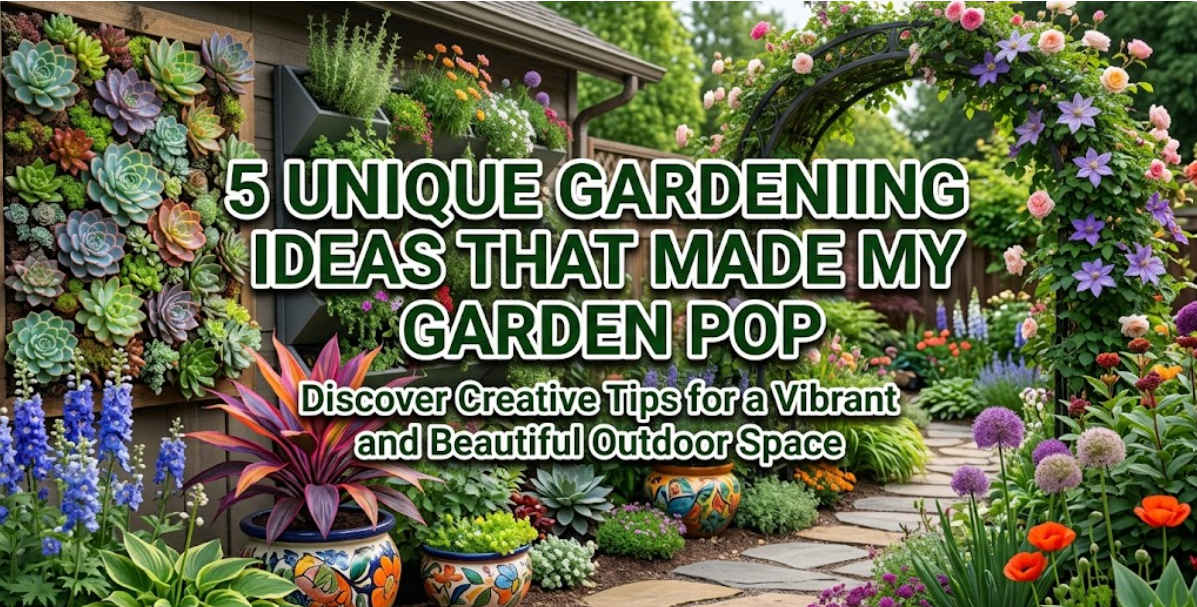
When I first started gardening, I thought success meant having healthy plants and maybe a few flowers here and there. But over time, I realized something: a garden doesn’t just grow—it can be designed to feel alive, expressive, and visually powerful.
There was a point where my garden looked… fine. Green, healthy, but forgettable. It didn’t have personality. It didn’t “pop.” That changed when I started experimenting with ideas that went beyond basic planting. These weren’t expensive landscaping projects either. Most of them came from observation, trial, and a bit of creative thinking with what I already had.
The transformation wasn’t instant, but once these ideas started stacking together, the difference was dramatic. Visitors noticed it before I even said anything. More importantly, I started enjoying the space in a completely new way.
Below are the five unique gardening ideas that changed everything for me.
idea 1: vertical layering instead of flat gardening
The first major shift happened when I stopped thinking of my garden as a flat surface. Most beginner gardens are built horizontally—rows of plants, patches of soil, maybe a few pots scattered around. It works, but it doesn’t create depth.
Vertical layering changed that completely.
Instead of just planting on the ground, I started building upward:
- Tall plants at the back (sunflowers, corn, bamboo)
- Medium-height plants in the middle (tomatoes, peppers, herbs)
- Low-growing plants in the front (lettuce, strawberries, ground cover)
Then I added physical layers:
- Hanging pots
- Wall-mounted planters
- Stackable crates
- Trellises for climbing plants
This created a “3D effect” that made even a small garden feel full and dynamic.
simple vertical structure layout
Layer | Plant Type | Example Plants
Top layer | Tall plants | Sunflower, corn, amaranth
Middle layer | Medium plants | Tomato, basil, pepper
Bottom layer | Low plants | Lettuce, spinach, strawberries
Vertical wall | Climbers | Beans, cucumber, ivy
What surprised me most was how this changed light usage. Plants that normally struggled suddenly thrived because they were no longer competing on the same level.
Another benefit was space efficiency. I was growing nearly twice as much in the same footprint.
Before and after impact:
Feature | Flat Garden | Vertical Layered Garden
Plant variety | Medium | High
Visual depth | Low | High
Space efficiency | 100% | 180–200%
Maintenance ease | Moderate | Slightly higher but organized
It didn’t just make the garden more productive—it made it more interesting to look at from every angle.
idea 2: color zoning instead of random planting
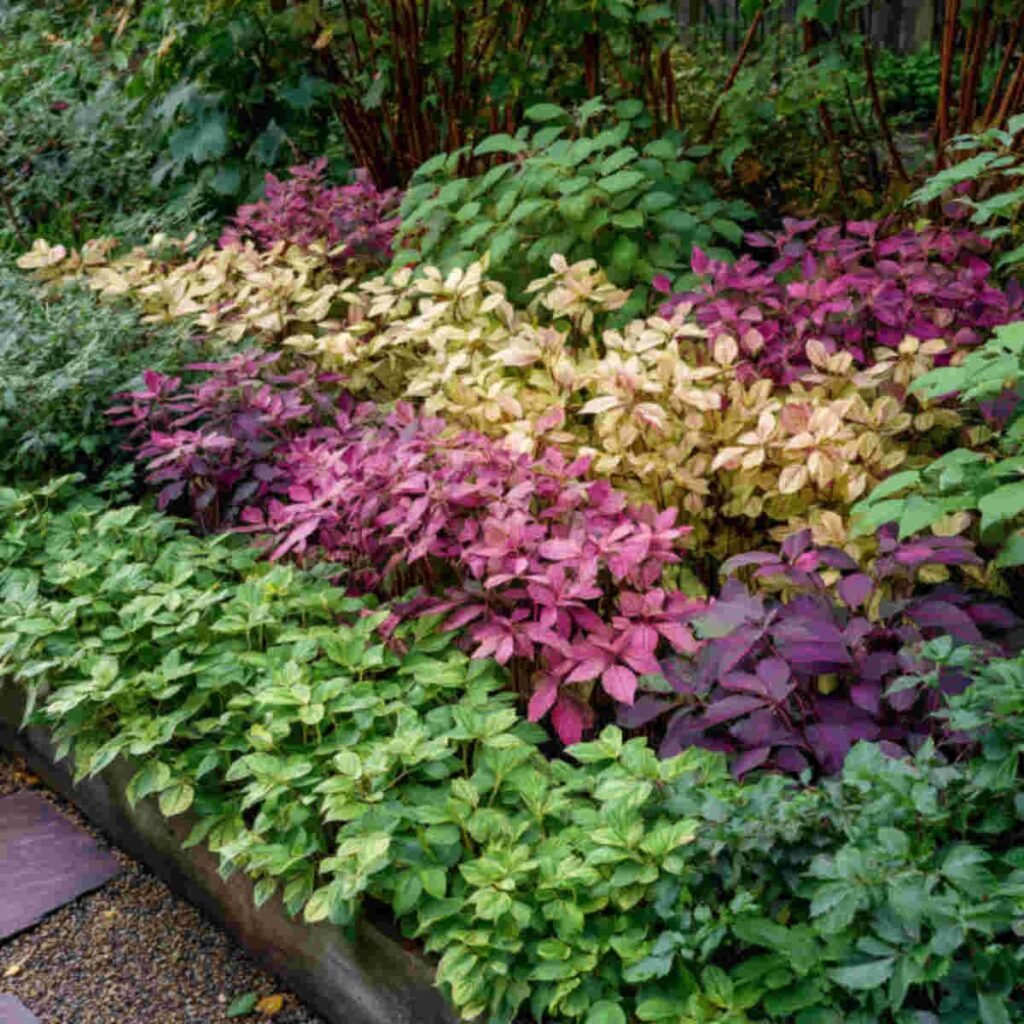
At one point, my garden had all the right plants—but it still felt visually chaotic. Greens were everywhere, flowers were scattered randomly, and nothing stood out.
That’s when I started thinking in color zones instead of plant types.
Instead of mixing everything together, I grouped plants by dominant color tones:
- Warm zone (reds, oranges, yellows)
- Cool zone (blues, purples, whites)
- Neutral zone (greens, silvers, earthy tones)
This created visual “rooms” inside the garden.
color zoning guide
Zone | Color Theme | Plants Used | Effect
Warm Zone | Red/Orange/Yellow | Marigold, calendula, zinnia | Energy, brightness
Cool Zone | Blue/Purple | Lavender, salvia, cornflower | Calm, depth
Neutral Zone | Green/Silver | Ferns, herbs, ornamental grasses | Balance, structure
The result wasn’t just aesthetic—it changed how the space felt emotionally. The warm zone felt lively and energetic. The cool zone felt relaxing and almost meditative.
One of the most interesting effects was how visitors naturally moved through the garden. They didn’t walk randomly—they followed color transitions.
I also noticed photography improved dramatically. Every section looked intentionally designed instead of accidental.
color impact comparison chart
Design Style | Visual Impact | Emotional Effect | Maintenance Difficulty
Random planting | Low | Neutral | Low
Structured rows | Medium | Functional | Medium
Color zoning | High | Strong emotional response | Medium
This idea made me realize that gardening isn’t just biology—it’s visual storytelling.
idea 3: repurposed garden art structures
At some point, I stopped throwing things away and started asking: “Can this become part of the garden?”
That mindset completely changed the personality of my space.
Old items became focal points:
- Broken chairs turned into plant stands
- Rusted bicycle frames became vertical planters
- Wooden ladders became herb displays
- Glass bottles became light reflectors
- Metal buckets became flower containers
Instead of buying decorative garden features, I built them from what I already had.
repurposed structure examples
Item | New Use | Cost Savings | Visual Impact
Old chair | Flower stand | High | Medium
Wooden ladder | Herb shelf | High | High
Bicycle frame | Vertical planter | High | Very high
Glass bottles | Light reflectors | High | Medium
Metal bucket | Large planter | High | Medium
What made this idea powerful wasn’t just cost savings—it was uniqueness. No two gardens look the same when built this way.
Every repurposed object added personality. Visitors often asked where I “bought” certain pieces, assuming they were custom-made installations.
Another unexpected benefit was sustainability. Instead of discarding materials, I was extending their life in a creative way.
Over time, the garden began to feel like an art installation rather than just a growing space.
idea 4: nighttime transformation with light layering
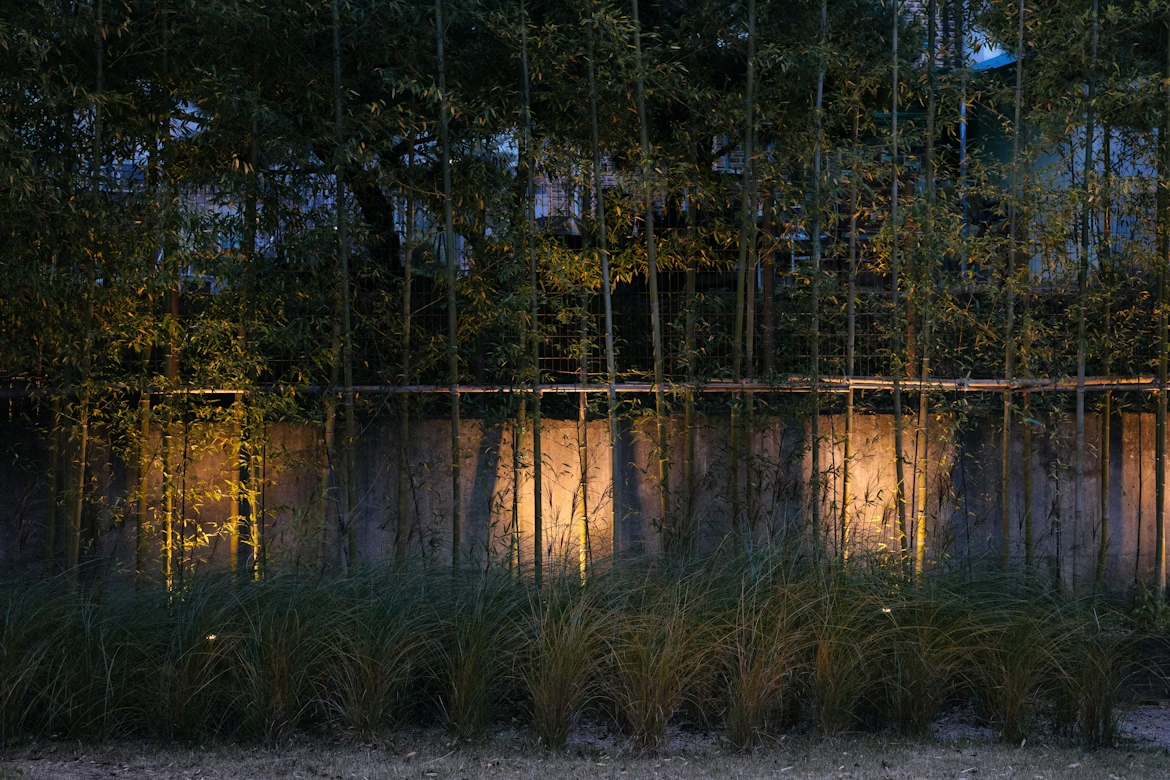
During the day, a garden is one thing. At night, it can become something completely different—but only if it’s designed for it.
I learned this after adding simple lighting elements that didn’t cost much but completely changed the atmosphere.
Instead of bright floodlights, I used layered lighting:
- Low solar path lights
- Hanging warm bulbs
- Reflective glass and water surfaces
- Small hidden LED accents near plants
The goal wasn’t brightness—it was depth and shadow contrast.
lighting structure breakdown
Lighting Type | Placement | Purpose | Cost Level
Path lights | Ground level | Safety/navigation | Low
Hanging lights | Trees/structures | Atmosphere | Low-medium
Accent LEDs | Plant bases | Highlight texture | Low
Reflective surfaces | Decorative objects | Light amplification | Free
Once this system was in place, the garden became usable at night—not just visible.
Certain plants looked completely different under warm light. Leaves gained texture. Shadows created patterns that didn’t exist during the day.
Even simple seating areas felt more inviting.
day vs night perception
Aspect | Daytime | Nighttime (with lighting)
Color visibility | Natural | Warm-enhanced
Mood | Active | Relaxed
Focus points | Broad | Selective highlights
Experience | Functional | Atmospheric
This idea made the garden feel like two spaces in one.
idea 5: companion planting as a living system design
The final idea wasn’t about appearance alone—it was about relationships between plants.
Instead of planting randomly or based only on appearance, I started grouping plants that benefit each other. This is known as companion planting, but I treated it more like ecosystem design.
Plants were chosen based on:
- Pest control benefits
- Growth enhancement
- Soil improvement
- Shade sharing
companion planting matrix
Plant A | Plant B | Benefit
Tomato | Basil | Pest repellent + flavor improvement
Carrot | Onion | Mutual pest protection
Corn | Beans | Structural support + nitrogen fixing
Lettuce | Taller plants | Shade protection
Marigold | Vegetables | Insect control
This changed how the garden functioned as a system.
Instead of fighting pests or constantly adjusting conditions, the plants started supporting each other naturally.
The visual benefit was subtle but important. Plants grew healthier, fuller, and more balanced, which made the entire garden look more vibrant.
system performance comparison
Factor | Traditional Planting | Companion System
Pest issues | Higher | Lower
Growth rate | Standard | Improved
Soil health | Depleting | Self-supporting
Maintenance effort | Medium | Lower over time
What I liked most was how natural it felt. The garden started behaving like an ecosystem rather than a collection of separate plants.
final transformation overview
When I combined all five ideas—vertical layering, color zoning, repurposed structures, lighting design, and companion planting—the garden changed completely.
It wasn’t just more beautiful. It felt intentional.
transformation summary chart
Element | Before | After
Visual depth | Low | High
Plant diversity | Moderate | High
Night usability | None | Strong
Maintenance effort | Medium | Optimized
Overall impact | Basic garden | Designed experience
The biggest realization was that “popping” doesn’t come from one dramatic change. It comes from layering small design decisions that work together.
frequently asked questions
- Do I need a large garden to use these ideas?
No. In fact, vertical layering and color zoning work especially well in small spaces because they maximize visual and physical efficiency. - Are repurposed materials safe for plants?
Yes, as long as they are clean, non-toxic, and have proper drainage where needed. - Does companion planting really reduce pests?
Yes, certain plant combinations naturally deter insects and improve growth conditions. - Is garden lighting expensive to maintain?
Not necessarily. Solar lights and low-energy LEDs keep costs very low after initial setup. - Which idea is best for beginners?
Color zoning and companion planting are the easiest to start with because they require no special tools. - Can I combine all five ideas at once?
Yes, and that’s when the strongest transformation happens. They complement each other rather than compete.