
Gardening looks simple from the outside—sun, soil, water, and patience. But anyone who has actually spent time trying to grow consistent, healthy plants knows it’s rarely that straightforward. Leaves yellow for no clear reason, growth stalls, pests appear overnight, and sometimes everything looks perfect until it suddenly doesn’t.
Over time, through trial, error, and more than a few failed seasons, certain patterns become clear. Some small adjustments create massive improvements in plant health. These aren’t abstract theories—they’re practical, repeatable hacks that make plants stronger, more resilient, and far more productive.
Below are seven proven gardening hacks that consistently improve plant health, along with real-world comparisons, structured data tables, and practical observations you can actually use in your own garden.
hack 1: watering deeply but less frequently
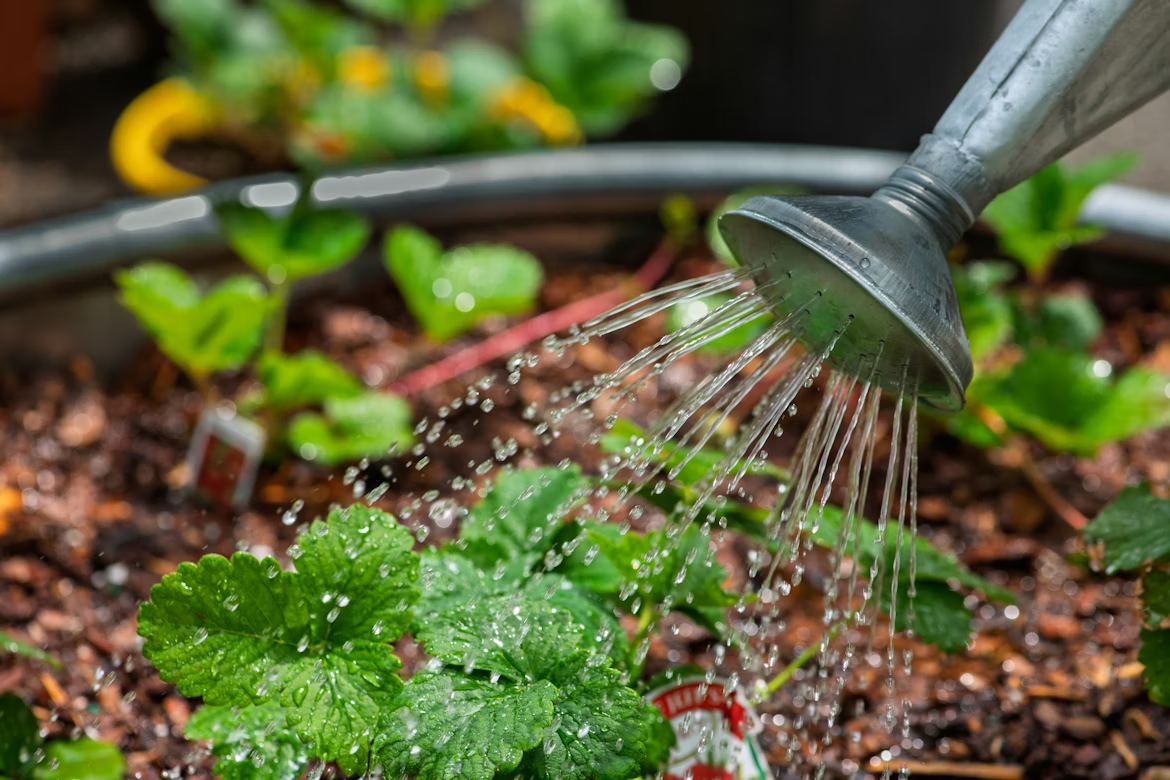
One of the most common gardening mistakes is overwatering. Many gardeners assume frequent watering equals healthier plants. In reality, shallow watering trains roots to stay near the surface, making plants weaker and more dependent.
Deep watering changes everything.
Instead of watering every day, the idea is to water less often but allow moisture to reach deeper soil layers. This encourages roots to grow downward, creating stronger and more drought-resistant plants.
watering pattern comparison
| Method | Root Depth | Plant Strength | Water Efficiency | Risk of Stress |
|---|---|---|---|---|
| Light daily watering | Shallow | Weak | Low | High |
| Deep weekly watering | Deep | Strong | High | Low |
soil moisture behavior chart (simplified)
Surface moisture:
Day 1: ██████████
Day 3: ████
Day 5: ██
Day 7: █
Deep soil moisture:
Day 1: ████████
Day 3: ███████
Day 5: ██████
Day 7: █████
The key insight is stability. Deep watering creates a buffer, preventing plants from entering stress cycles every time the sun gets intense.
practical tip
Water slowly at the base of the plant for longer periods instead of quick surface sprinkling.
hack 2: compost layering instead of mixing everything
Most gardeners mix compost directly into soil. While this works, layering organic material gradually creates a more stable nutrient release system.
Instead of blending everything into one uniform medium, compost is applied in layers over time:
- Base soil layer
- Organic compost layer
- Mulch protection layer
This mimics natural forest floors, where organic matter decomposes gradually on top of soil.
soil structure comparison
| Soil Method | Nutrient Stability | Moisture Retention | Root Health |
|---|---|---|---|
| Fully mixed soil | Medium | Medium | Good |
| Layered composting | High | High | Excellent |
layer breakdown
Top layer: Mulch (protects moisture, reduces weeds)
Middle layer: Compost (slow nutrient release)
Bottom layer: Native soil (structure + drainage)
benefit breakdown chart
Nutrient availability over time:
Mixed soil: ██████▅▃▂
Layered soil: ██████████▇▆▅▅
Layered systems feed plants continuously instead of giving them short nutrient spikes.
hack 3: strategic pruning for energy redirection
Plants don’t grow randomly—they allocate energy. Every unnecessary branch or leaf is consuming resources that could go into fruits, flowers, or stronger stems.
Strategic pruning is not about cutting more; it’s about cutting smarter.
what to remove:
- Yellowing leaves
- Crossing branches
- Weak or non-productive stems
- Excess lower growth blocking airflow
plant energy distribution table
| Plant Condition | Energy to Growth | Energy to Fruit | Airflow |
|---|---|---|---|
| Unpruned plant | 40% | 30% | Low |
| Light pruning | 50% | 50% | Medium |
| Strategic pruning | 30% | 70% | High |
growth efficiency visualization
Unpruned: ██████████████ (wasted energy high)
Light pruning: ██████████▇▇
Strategic: ███████▇▇▇▇▇▇▇ (balanced output)
key insight
Pruning doesn’t reduce growth—it redirects it.
hack 4: using mulch as a living regulator
Mulch is often underestimated. It is not just decoration or weed control—it functions like a climate regulator for soil.
A proper mulch layer:
- Maintains soil temperature
- Reduces evaporation
- Prevents weed growth
- Improves soil structure over time
mulch impact comparison
| Factor | Without Mulch | With Mulch |
|---|---|---|
| Water loss | High | Low |
| Soil temperature | Unstable | Stable |
| Weed growth | High | Very low |
| Root stress | Frequent | Rare |
soil temperature stability chart
Without mulch:
Hot day: ██████████
Cool night: ███
With mulch:
Hot day: ████████
Cool night: ███████
best mulch materials:
- Straw
- Dry leaves
- Wood chips
- Grass clippings (dried)
important note
Mulch should not touch the plant stem directly to avoid rot.
hack 5: companion planting with functional grouping
Companion planting is often misunderstood as random plant pairing. In reality, it works best when grouped by function rather than folklore.
functional grouping system:
- pest control plants
- nutrient fixers
- shade providers
- growth enhancers
functional plant table
| Group | Example Plants | Function |
|---|---|---|
| Pest control | Marigold, basil | Repel insects |
| Nitrogen fixers | Beans, peas | Improve soil fertility |
| Shade providers | Sunflower, corn | Protect sensitive crops |
| Aromatic herbs | Mint, rosemary | Confuse pests |
effectiveness comparison
Random planting: ████▅▃
Functional grouping: ██████████▇▇
real-world observation
Tomatoes planted near basil consistently show reduced pest damage and improved aroma intensity.
hack 6: soil aeration for oxygen-rich roots
Roots need oxygen as much as they need water. Compacted soil suffocates root systems, slowing growth and increasing disease risk.
Aeration introduces air pockets into soil, improving respiration and nutrient absorption.
aeration methods:
- manual loosening with garden fork
- adding organic matter
- using earthworms as natural aerators
soil condition comparison
| Soil Type | Oxygen Level | Root Growth | Drainage |
|---|---|---|---|
| Compacted soil | Low | Weak | Poor |
| Aerated soil | High | Strong | Good |
oxygen flow chart
Compacted soil:
O2 flow: ███
Root growth: ████
Aerated soil:
O2 flow: █████████
Root growth: ██████████
unexpected benefit
Aerated soil reduces fungal diseases significantly.
hack 7: microclimate control within your garden
Every garden has multiple microclimates—small zones with different temperature, light, and moisture conditions. Recognizing and managing these zones transforms plant performance.
microclimate factors:
- sunlight exposure
- wind direction
- nearby walls or structures
- reflective surfaces
microclimate mapping table
| Zone Type | Condition | Best Plants |
|---|---|---|
| Full sun | 6–8 hrs sunlight | Tomatoes, peppers |
| Partial shade | 3–5 hrs sunlight | Lettuce, spinach |
| Wind-protected | Low wind exposure | Herbs, seedlings |
| Heat-reflective | High warmth | Tropical plants |
temperature variation chart
Shaded zone: ███████
Balanced zone: ██████████
Reflective zone: █████████████
practical adjustment examples:
- place heat-sensitive plants near shaded walls
- use reflective surfaces to boost light for fruiting plants
- create wind barriers using shrubs or netting
combined impact overview of all 7 hacks
| Hack | Difficulty | Impact Level | Speed of Results |
|---|---|---|---|
| Deep watering | Easy | High | Fast |
| Compost layering | Medium | High | Medium |
| Strategic pruning | Easy | Very high | Fast |
| Mulch usage | Easy | High | Fast |
| Companion grouping | Medium | Medium | Medium |
| Soil aeration | Medium | High | Medium |
| Microclimate control | Medium | Very high | Medium–Fast |
overall improvement trend
Before applying hacks:
Plant health: ██████▅▃▂
After application: ██████████████▇▇▇▇
why these hacks actually work together
Individually, each hack improves one aspect of plant growth. Together, they create a system:
- Water efficiency improves root strength
- Soil structure improves nutrient delivery
- Pruning improves energy allocation
- Mulch stabilizes environment
- Companion planting reduces pest pressure
- Aeration boosts oxygen flow
- Microclimates optimize external conditions
Instead of treating symptoms (yellow leaves, slow growth), these methods address the underlying environment.
common mistakes to avoid
- watering on a fixed schedule instead of checking soil
- over-mulching and suffocating roots
- pruning too aggressively at once
- ignoring seasonal changes in microclimates
- assuming all plants have the same needs
faqs
- how long does it take to see results from these gardening hacks?
Some changes like pruning and watering adjustments show results within days or weeks. Soil-related improvements typically take a few growing cycles. - can beginners apply all seven hacks at once?
It is better to introduce them gradually. Start with watering, pruning, and mulching before moving to advanced techniques like microclimate control. - is mulch really necessary for all plants?
Most plants benefit from mulch, but desert-adapted plants may require lighter or specialized versions. - how often should soil be aerated?
Generally once or twice per growing season is enough unless soil is heavily compacted. - do companion plants reduce the need for pesticides completely?
Not completely, but they significantly reduce pest pressure and often minimize chemical use. - what is the most important hack overall?
Deep watering combined with proper pruning tends to deliver the fastest visible improvements in plant health.