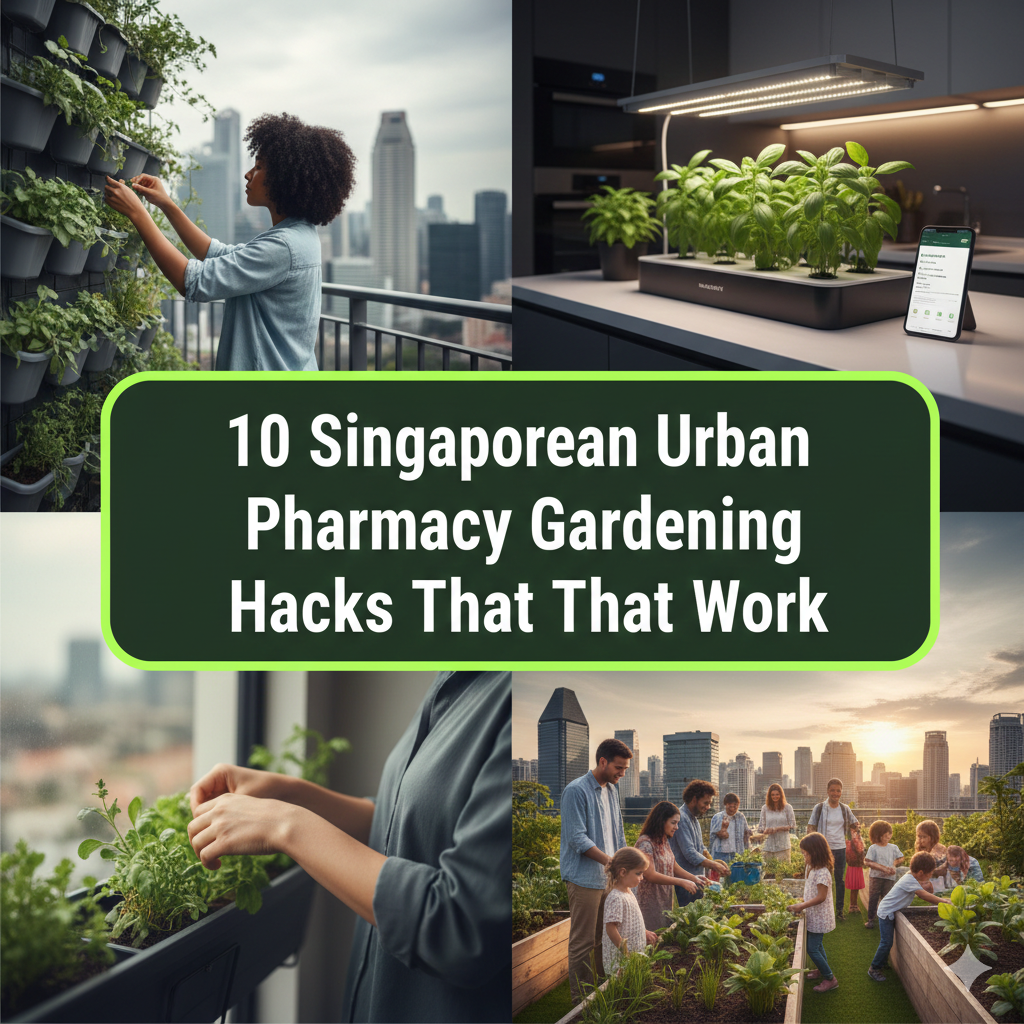
You don’t need a large back lawn to cultivate your own medicine cabinet. A sunny windowsill, a little balcony or even a kitchen counter can turn into a rich herb garden full of healing plants. This is the essence of urban pharmacy gardening — growing your medicine in medicinal herbs and plants right where you live, regardless of space constraints.
Living in a city can feel like a challenge to find nature. But millions around the world are creating their own mini green pharmacies in their apartments and on their rooftops. They are cultivating chamomile for sleep, lavender for stress and aloe vera for burns — all close at hand.
In this article, we give you 10 smart, realistic and established hacks to make urban pharmacy gardening work for you! Whether you’re a complete novice or have a few pots going already, these tips are sure to take your game up a notch.
The Perfect Reason to Grow Medicinal Plants in The City
Before we get into the hacks, let’s talk about why this matters.
You have to pay for pharmacy herbs. Fresh medicinal herbs at grocery stores are even pricier. But growing your own? You pay a little up front and harvest for months — even years.
There’s also the quality factor. Dried herbs purchased from the store lose strength quickly. Homegrown herbs from your windowsill will have far more essential oils and active compounds.
And it’s good for your mental health. Research has shown that caring for plants is associated with decreased stress, lowered blood pressure and better mood. You’re growing medicine, and the urban pharmacy garden is itself a form of medicine.
Hack #1: Stack Your Space With Vertical Herb Towers
Think Up, Not Out
You may not have floor space — but you have walls. Vertical gardening is a powerful weapon in any urban pharmacy gardening arsenal.
Pocket planters, wall-mounted pallets and tiered shelf systems are available for purchase. Alternatively, you can make your own with scrap wooden boards and some simple hardware.
A vertical tower that stands 5 feet tall by 2 feet wide can accommodate 15–20 individual herb plants. That is quite the pharmacy in one wall unit.
Best Medicinal Herbs for Vertical Towers
- Mint (for digestion and headaches)
- Thyme (antiseptic and cough suppressant)
- Oregano (antimicrobial properties)
- Lemon balm (soothes anxiety and supports sleep)
- Basil (anti-inflammatory)
Ensure your tower receives a minimum of 6 hours of light daily. If not, place a simple grow light above it.
Hack #2: Pick the Right Pot for Each Plant Purpose
All Pots Are Not Created Equal
What you use as a container has a direct impact on the growth of your medicinal herbs. Shallow pots stress deep-rooted plants. Oversized pots lead to root rot in small herbs. Getting this right is a subtle game changer.
| Herb | Pot Width | Pot Depth |
|---|---|---|
| Aloe Vera | 6–8 inches | 8 inches |
| Mint | 12 inches | 6 inches |
| Lavender | 12–16 inches | 10 inches |
| Chamomile | 8–10 inches | 8 inches |
| Echinacea | 12–14 inches | 12 inches |
| Lemon Balm | 10–12 inches | 8 inches |
Terra cotta pots are great for drought-tolerant herbs like lavender and thyme. They allow for good aeration and help prevent overwatering. Plastic pots hold moisture more effectively — good for mint and lemon balm.
Always use pots with drainage holes. No exceptions.
Hack #3: Build a Basic Indoor Grow Light Setup
Sunlight Is Great. But It’s Not Always Enough.
A majority of apartments don’t receive 6–8 hours of direct sunlight every day. North-facing windows, tall buildings nearby, or gray climates can all seriously diminish your herb garden’s output.
A simple LED grow light setup changes the situation completely.
You don’t need expensive equipment. A simple full-spectrum LED strip or bulb placed above your herb shelf will work just fine. Put it on a timer — 14 to 16 hours of light per day is ideal for most medicinal herbs.
Quick Cost Breakdown
| Setup Type | Price Range | Growing Area |
|---|---|---|
| LED grow bulb (single) | $10–$20 | 1–2 pots |
| LED strip light | $20–$40 | 3–6 pots |
| Full shelf grow light | $40–$80 | 8–15 pots |
| Smart grow light with timer | $60–$120 | 10–20 pots |
A $15 full-spectrum LED bulb in a clip-on fixture is sufficient for small windowsill pharmacy gardening on a budget.
Hack #4: Master the “Chop and Come Again” Harvesting Technique
The Secret to Non-Stop Harvests
Almost everyone starting out harvests herbs wrong. They rip off large chunks or strip a plant bare. Then they wonder why it stopped growing.
The “chop and come again” method keeps your plants fruitful all season long.
How it works: Never take more than one-third of a plant at once. Always make your cut just above a leaf node — the point where leaves join the stem. This causes the plant to branch and become bushier.
Plants such as mint and lemon balm are strengthened by regular harvesting. When they are being regularly used, they push out more growth.
Small Urban Pharmacy Garden Harvest Calendar
| Herb | Harvest Frequency |
|---|---|
| Mint | Every 2–3 weeks |
| Basil | Weekly (to avoid bolting) |
| Thyme | Every 3–4 weeks |
| Chamomile | Pick each flower as it opens |
| Lavender | At full bloom |
The golden rule: harvest in the morning after the dew dries. That’s when the concentration of essential oils in the leaves is at its peak.
Hack #5: Set Up a Makeshift Medicinal Herb Drying Station
Preserve Your Harvest the Right Way
Fresh herbs are powerful. Dried herbs have a shelf life of months — even over a year. Creating a basic drying station at home helps ensure you’re stocked even when plants go dormant.
You don’t need fancy equipment. Here’s what works:
Option 1 – Hanging in small bundles: Tie small bundles of herbs using twine. Hang them upside down in a warm, dry, airy place out of direct sunlight. Most herbs dry completely in 1–2 weeks.
Option 2 – Screen drying: Place herbs on a mesh screen or drying rack. Great for chamomile flowers and lavender buds. Air circulation is key.
Option 3 – Low oven drying: Preheat the oven to 95–110°F (35–43°C). Spread a single layer of herbs across a parchment-lined baking sheet. Leave the oven door slightly open. Check every 30 minutes. Done in 1–4 hours.
Option 4 – Food dehydrator: The most consistent results. Set to 95–115°F for 2–4 hours.
When dry, store herbs in glass jars with tight lids. Keep sealed away from heat, light and moisture. Label each jar with the herb name and date dried.
Hack #6: Harness Companion Planting for Medicinal Benefits
Certain Plants Strengthen Each Other
Companion planting is not limited to vegetables. Some herbs are compatible and can increase each other’s growth, repel pests and even enhance potency when planted nearby.
For a deeper dive into herb pairings and medicinal plant growing guides, The Herb Garden is a fantastic resource for both beginners and experienced growers.
Powerful Medicinal Companion Pairs
| Plant | Best Companion | Why It Works |
|---|---|---|
| Chamomile | Mint | Increases oil production in mint |
| Lavender | Rosemary | Both thrive in dry, sunny conditions |
| Lemon Balm | Basil | Together they repel aphids |
| Echinacea | Thyme | Thyme repels most common herb pests |
| Aloe Vera | Grows alone best | Sensitive to competing root systems |
On a windowsill, this means clustering companion pots together. On a balcony, it means grouping planters so friendly herbs share the same microclimate.
Do not plant fennel next to most herbs — it is one of the few plants that inhibits its neighbors.
Hack #7: Mix Your Own Medicinal Potting Blend
Feed Your Plants Right From Day One
Store-bought potting mix works fine for vegetables. Medicinal herbs, however, have different needs. Most originate in rocky, well-drained Mediterranean soils. Others prefer rich, moist woodland conditions.
Getting your soil mix right from the start results in hardier plants and better essential oil content. According to the Royal Horticultural Society, good drainage is one of the most critical factors in growing Mediterranean herbs successfully in containers.
Two Base Blends for Urban Pharmacy Gardening
Blend A – For Mediterranean herbs (lavender, thyme, oregano, rosemary):
- 40% standard potting mix
- 30% perlite or coarse sand
- 20% compost
- 10% fine gravel
Blend B – For moisture-loving herbs (mint, lemon balm, chamomile):
- 50% standard potting mix
- 30% compost
- 15% coconut coir
- 5% perlite
These combinations improve drainage, aeration and nutrient quality simultaneously. You can make a large batch in a bucket and store it for months.
Avoid heavy potting soil for containers. It compacts quickly and suffocates roots.
Hack #8: Build a Simple Wicking Self-Watering System
Water Smarter, Not More Often
Nothing kills container herbs faster than overwatering. But in a hot city apartment, underwatering can be just as damaging. A self-watering wicking system solves both problems.
Here’s how to build a simple one:
- Grab two containers — one slightly smaller than the other.
- Fill the smaller one with potting mix and plant your herb.
- Thread a thick cotton rope or strip of fabric through the drainage hole, with one end buried deep in the soil.
- Place the small pot inside the large one, with the wick hanging down into a water reservoir below.
- Fill the reservoir. The wick draws water up into the soil as the plant needs it.
This keeps soil consistently moist — not waterlogged, not parched. It’s ideal for mint, lemon balm and chamomile.
Self-watering pots are also available ready-made for less than $15. They work on the same principle.
Hack #9: Keep a Medicinal Herb Tea Blend Journal
Record What You Grow and How It Helps You
This hack is different. It’s not about how much you grow — it’s about using what you grow more effectively.
A simple notebook or phone note where you log your herbs, your harvests and your tea blends becomes an incredibly valuable resource over time.
What to Write Down
- What herbs you have and when they were planted
- When you harvested and how much
- Which blends you tried and what you used them for
- How the blend tasted and whether it helped
Over time, this journal becomes your personal herbal handbook. You begin to notice patterns — which blend helped you sleep, which soothed your digestion, which calmed your anxiety.
Starter Blend Ideas for Beginners
| Blend Name | Herbs Used | Purpose |
|---|---|---|
| Calm Down Tea | Chamomile + Lemon Balm | Stress and sleep support |
| Breathe Easy Blend | Thyme + Oregano + Mint | Respiratory support |
| Tummy Soother | Mint + Fennel + Ginger | Digestion support |
| Glow Skin Tea | Calendula + Chamomile | Skin anti-inflammatory |
| Energy Lift | Rosemary + Mint | Mental clarity boost |
Journaling also helps you scale up. You’ll quickly learn which herbs you use most — so you can plant more of them next season.
Hack #10: Propagate Your Own Plants to Save Money
One Plant Can Become Ten
Buying new herb plants every year adds up. But most medicinal herbs are easy to propagate — from cuttings, divisions or seeds — for next to nothing.
3 Methods for Propagating Your Urban Pharmacy Garden
Stem Cuttings (works well with mint, lemon balm, basil, thyme):
- Take a 4–6 inch stem cut just below a node.
- Strip off the bottom half of the leaves.
- Place in a glass of water. Set in bright indirect light.
- Roots appear in 1–3 weeks.
- Transplant when roots are 1–2 inches long.
Root Division (for mint, lemon balm, chamomile):
- Remove the plant from its pot.
- Gently separate the root ball into 2–4 sections.
- Pot each section separately.
- Water well and keep shaded from direct sun for one week.
Seed Starting (for chamomile, lavender, echinacea, calendula):
- Fill a small tray with seed-starting mix.
- Sprinkle seeds on the surface. Don’t bury deeply.
- Mist with water. Cover with plastic wrap to retain humidity.
- Place under a grow light or in a bright window.
- Germination takes 7–21 days depending on the herb.
Propagating your own plants keeps your urban pharmacy garden growing at minimal cost year after year.
10 Medicinal Herbs Worth Growing in the City
Before you run out and buy pots and soil, know which plants give you the most return in a small space.
| Herb | Ease of Growth | Medicinal Use | Pot Size Needed |
|---|---|---|---|
| Aloe Vera | Very Easy | Burns, skin healing | Small pot |
| Oregano | Very Easy | Immune support, antimicrobial | Medium pot |
| Mint | Easy | Digestion, headaches | Medium pot |
| Chamomile | Very Easy | Sleep, inflammation | Small-medium pot |
| Lavender | Easy | Stress, sleep, skin | Medium pot |
| Lemon Balm | Easy | Anxiety, digestion | Medium pot |
| Thyme | Easy | Respiratory support, antiseptic | Small-medium pot |
| Basil | Easy | Anti-inflammatory | Medium pot |
| Echinacea | Moderate | Immune support | Larger pot |
| Rosemary | Easy | Circulation, mental clarity | Medium-large pot |
Choose three to five plants from this list. Master them before expanding.
Common Mistakes to Cut Out of Your Urban Pharmacy Garden
Even small errors can cause big setbacks. Watch out for these:
Overwatering. It’s the biggest killer of container herbs. Stick your finger an inch into the soil — if it’s still damp, don’t water.
Wrong light placement. Placing shade-lovers in full sun, or sun-lovers in a dim corner, hurts both growth and medicinal potency.
Never harvesting. Left unattended, herbs go leggy and weak. Regular harvesting keeps plants healthier and more productive.
Mixing incompatible herbs. Some herbs simply shouldn’t share a pot. Conflicting water and light requirements cause problems for both plants.
Skipping labels. Many herbs look identical once dried. Label everything — both pots and jars.
FAQs About Urban Pharmacy Gardening
Q: Can I actually grow medicinal herbs in a tiny apartment? Absolutely. Many powerful medicinal herbs — including mint, lemon balm, aloe vera and thyme — grow readily in small pots on a windowsill or under a simple grow light.
Q: How long until I can harvest? Most herbs are ready for a light harvest within 4–8 weeks after planting. Perennials such as lavender and echinacea require a little longer to establish — typically one full season.
Q: Do I need to use special soil for medicinal herbs? Standard potting mix works as a base, but customizing your blend (as in Hack #7) helps enormously — especially for Mediterranean herbs that require excellent drainage.
Q: Is it safe to use homegrown medicinal herbs? Yes, when used correctly. Always research the proper dosage and preparation for any herb you use medicinally. If you’re taking medications or have existing health conditions, speak with a healthcare provider before making herbal remedies a regular part of your routine.
Q: How can I tell when to harvest at peak potency? Harvest just before or at flowering, in the morning after the dew dries. That’s when most medicinal herbs have the highest concentration of essential oils.
Q: What is the simplest medicinal herb for a total beginner? Mint. It grows quickly, is nearly impossible to kill, roots effortlessly in water and has real medicinal value for digestion and headaches. Start there.
Q: Can I grow medicinal herbs indoors year-round? Yes. With a good grow light setup and the right temperature — most herbs prefer 60–75°F (15–24°C) — you can maintain an active indoor urban pharmacy garden through every season.
Bringing It All Together
Urban pharmacy gardening is no fad. It is a return to something ancient and deeply practical — growing plants that make you feel better, right where you live.
The 10 hacks in this article give you everything you need to start smart and grow consistently. Stack your space with vertical towers. Choose the right pots. Build a grow light setup. Harvest correctly. Dry and store your medicine properly. Use companion planting. Mix the right soil. Water smart with wicking systems. Keep a journal. And propagate freely.
None of this requires a large budget or a natural green thumb. It takes curiosity, consistency and a little bit of space — things you already have.
Start this week with a single plant. One pot. One sunny window. Give it water and attention. Watch it grow. Then add another.
Your city apartment can become one of the most powerful spaces in your life — a small, green pharmacy that serves you every single day.