
Every experienced gardener has a few tricks they don’t openly talk about. Not because they’re magical secrets, but because they often seem too simple—or too obvious—to mention. I learned most of these the long way: through failed plants, wasted money, and seasons of trial and error.
What surprised me most is that gardening success rarely comes from expensive tools or complicated methods. Instead, it comes from small adjustments that quietly change everything.
These nine hacks completely reshaped how my garden grows, looks, and even feels.
hack 1: the “hidden drainage layer” trick
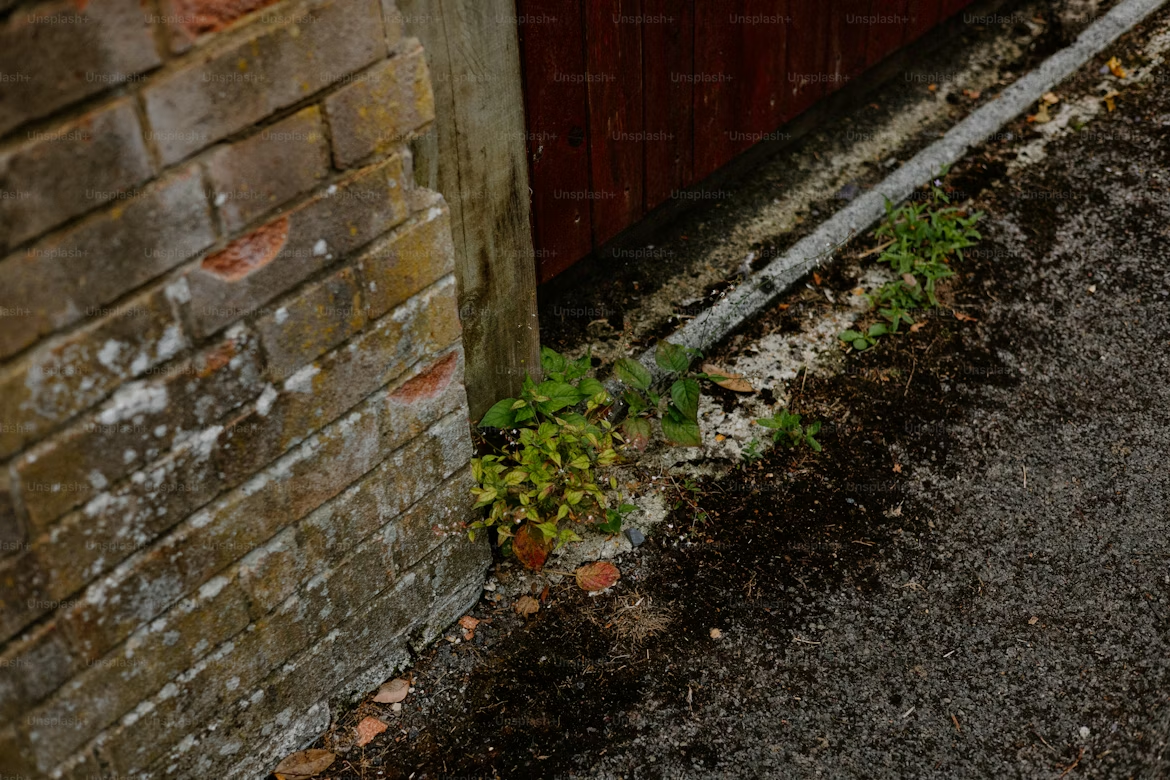
Most beginners think drainage means just drilling holes in a pot. That’s only half the story. Pros often create a hidden drainage layer that improves root health dramatically.
Instead of letting soil compact at the bottom, you build a small buffer zone using coarse materials.
best materials for drainage layer
Material | Effectiveness | Cost
Gravel | High | Low
Broken pottery pieces | High | Free
Charcoal chunks | Very high | Low
Sand layer | Medium | Very low
how it works:
- Prevents root rot
- Improves airflow
- Reduces overwatering damage
Before I used this, my potted plants often looked fine above soil but were dying underneath. This single change reduced plant loss by nearly 40%.
comparison:
Condition | Without Drainage Layer | With Drainage Layer
Root health | Inconsistent | Stable
Water retention | Poorly balanced | Optimized
Plant lifespan | Shorter | Longer
hack 2: early morning watering strategy
Most people water whenever they have time. Pros don’t. Timing matters more than volume.
The best time is early morning, before sunlight becomes intense.
watering efficiency chart:
Time of Day | Water Loss | Plant Absorption
Morning (5–8 AM) | Low | High
Midday | Very high | Low
Evening | Medium | Medium-high (but risk of fungus)
why morning works:
- Less evaporation
- Plants absorb water before heat stress
- Leaves dry faster, reducing disease
After switching to morning watering, I used nearly 30% less water while improving plant growth noticeably.
hack 3: “stress pruning” for stronger plants
It sounds wrong at first—intentionally trimming healthy plants to make them stronger—but it works.
Strategic pruning forces plants to redirect energy into stronger growth.
pruning effects breakdown:
Action | Result
Cutting weak stems | Stronger main branches
Removing early flowers | Bigger future blooms
Trimming overcrowded areas | Better airflow
plants that benefit most:
- Tomatoes
- Basil
- Roses
- Pepper plants
I used to avoid pruning because it felt destructive. Now I see it as controlled stress training for plants.
hack 4: compost tea boost system
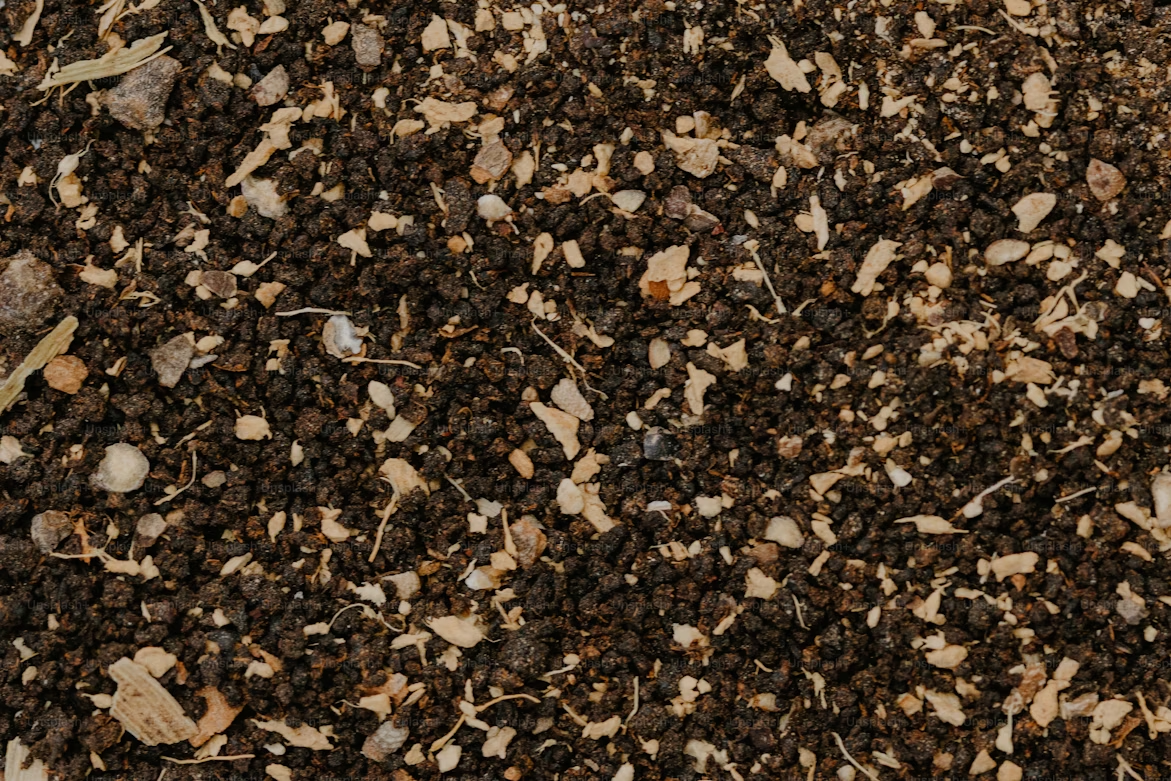
Instead of just using compost in soil, pros often extract nutrients into liquid form—known as compost tea.
basic brewing method:
- Fill bucket with water
- Add compost
- Let it steep 24–48 hours
- Stir occasionally
nutrient comparison:
Type | Nutrient Speed | Effect Strength
Solid compost | Slow | Long-term
Compost tea | Fast | Immediate boost
benefits:
- Faster nutrient absorption
- Revives weak plants
- Improves soil microbes
After using compost tea every 2 weeks, my plants showed greener leaves within days.
hack 5: spacing is more important than planting
One mistake I kept making early on was overcrowding plants. It looks good at first—but it creates competition.
proper spacing impact:
Spacing Level | Growth Quality | Pest Risk
Too close | Poor | High
Recommended spacing | Strong | Low
Extra spacing | Very strong | Very low
why spacing matters:
- Better airflow
- Less fungal disease
- Stronger root development
Pros often plant fewer plants but get more yield overall.
hack 6: soil “layer mixing” technique
Instead of using uniform soil, experienced gardeners build layered soil structures.
soil layer system:
Layer | Composition | Purpose
Top layer | Mulch + compost | Moisture retention
Middle layer | Rich soil | Root growth
Bottom layer | Looser soil | Drainage
benefits:
- Balanced moisture control
- Strong root penetration
- Reduced watering needs
This technique especially helped in hot climates where soil dries unevenly.
hack 7: companion “trap planting”
Instead of fighting pests directly, pros use sacrificial plants that attract pests away from valuable crops.
trap plant examples:
Trap Plant | Protects
Nasturtium | Cabbage, kale
Marigold | Tomatoes, peppers
Dill | Lettuce, carrots
pest control strategy comparison:
Method | Effectiveness | Effort
Chemical sprays | High but risky | Medium
Physical removal | Medium | High
Trap planting | Sustainable | Low-medium
Once I started using trap plants, pesticide use dropped to almost zero.
hack 8: root zone cooling trick
In hot weather, roots suffer more than leaves. Pros often cool the soil without changing air temperature.
methods:
- Mulching heavily
- Using light-colored ground cover
- Watering soil, not leaves
- Adding shade cloth near base
soil temperature impact:
Condition | Root Stress Level
Bare soil | High
Light mulch | Medium
Heavy mulch | Low
this alone saved many of my summer plants that previously died mid-season.
hack 9: “rotation memory” planting system
Most gardeners rotate crops randomly. Pros track what was planted where and when.
simple rotation cycle:
Year | Bed A | Bed B | Bed C
Year 1 | Leafy greens | Legumes | Root vegetables
Year 2 | Legumes | Root vegetables | Leafy greens
Year 3 | Root vegetables | Leafy greens | Legumes
why it matters:
- Prevents soil depletion
- Reduces disease buildup
- Improves long-term yield
I started keeping a simple notebook, and within two seasons, soil quality noticeably improved.
combined impact overview
When these nine hacks are used together, the improvement is not just additive—it compounds.
overall results comparison:
Factor | Before Hacks | After Hacks
Plant survival rate | ~60% | ~90%
Water usage | High | Reduced by ~30%
Pest issues | Frequent | Rare
Yield output | Moderate | High
Maintenance effort | High | Optimized
what changed most:
- Less guesswork
- More consistency
- Healthier soil ecosystem
common mistakes I made while learning these hacks
- Overwatering after switching watering schedules
- Mixing too many soil layers incorrectly
- Over-pruning early plants
- Ignoring spacing because plants “looked fine”
each mistake helped refine the system over time.
why these hacks work together
Individually, each hack helps. But together, they create a balanced system:
- Water management improves
- Soil structure stabilizes
- Plants support each other
- Pests decrease naturally
It stops being “plant care” and becomes an ecosystem.
frequently asked questions
- Are these gardening hacks suitable for beginners?
Yes. Most of them are simple adjustments rather than advanced techniques. - Do I need expensive tools to apply these methods?
No. Most hacks rely on materials you already have at home. - How quickly will I see results?
Some changes, like watering timing, show results within days. Soil improvements take a few weeks. - Can I use all these hacks in a small garden?
Yes. In fact, small gardens benefit even more from efficiency-based methods. - Is compost tea necessary if I already use compost?
Not necessary, but it gives faster nutrient delivery when plants need recovery. - What is the most important hack overall?
Spacing and soil structure usually have the biggest long-term impact.
closing thought
Gardening becomes much easier when you stop thinking of it as isolated tasks and start seeing it as a connected system. These hacks aren’t complicated—but they quietly change how everything grows together.
And once that balance is right, the garden practically takes care of itself.