
Introduction
Gardening often looks simple from the outside—dig soil, plant seeds, water regularly, and wait for growth. But anyone who has actually tried it knows the reality is far more complex. Plants can be unpredictable, soil conditions vary, pests appear overnight, and sometimes even well-cared-for gardens fail without warning.
Over time, experienced gardeners develop small but powerful techniques—“hacks”—that dramatically improve plant health, growth speed, and overall garden success. These are not complicated scientific methods, but practical, real-world tricks learned through trial and error.
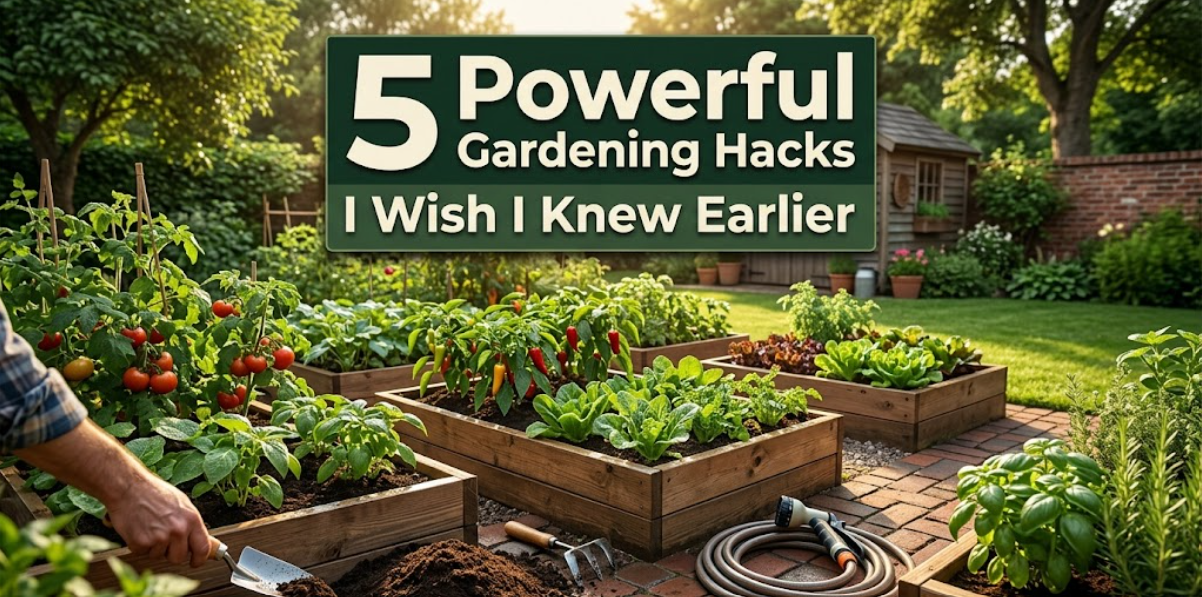
This article explores 5 powerful gardening hacks that many gardeners wish they had known earlier. Each hack is broken down with practical explanations, comparison tables, and simple visual charts so you can apply them immediately in your own garden.
Hack 1: The “Lazy Compost Layering” method
One of the biggest mistakes beginners make is treating composting as a separate, complicated task. In reality, composting can be integrated directly into your garden using a layering method that works almost automatically.
What it is:
Instead of maintaining a compost bin, you layer organic waste directly into soil beds over time.
How it works:
- Add dry leaves or cardboard (carbon layer)
- Add kitchen scraps (nitrogen layer)
- Add soil or old compost (activator layer)
- Repeat every 2–3 weeks
Layer structure table:
| Layer Type | Material Examples | Purpose |
|---|---|---|
| Carbon layer | Dry leaves, paper | Prevents odor |
| Nitrogen layer | Vegetable scraps | Feeds microbes |
| Soil layer | Garden soil, compost | Activates breakdown |
Why it works:
Microorganisms naturally break down layers over time, enriching soil without extra effort.
Soil improvement chart over 8 weeks:
Week 1–2: ███░░░░░░ Low activity
Week 3–4: ██████░░░ Medium decomposition
Week 5–6: ████████░ High nutrient formation
Week 7–8: ██████████ Rich compost soil
Benefits:
- No compost bin required
- Reduces kitchen waste
- Improves soil fertility naturally
- Saves time and effort
Hack 2: Morning watering timing strategy
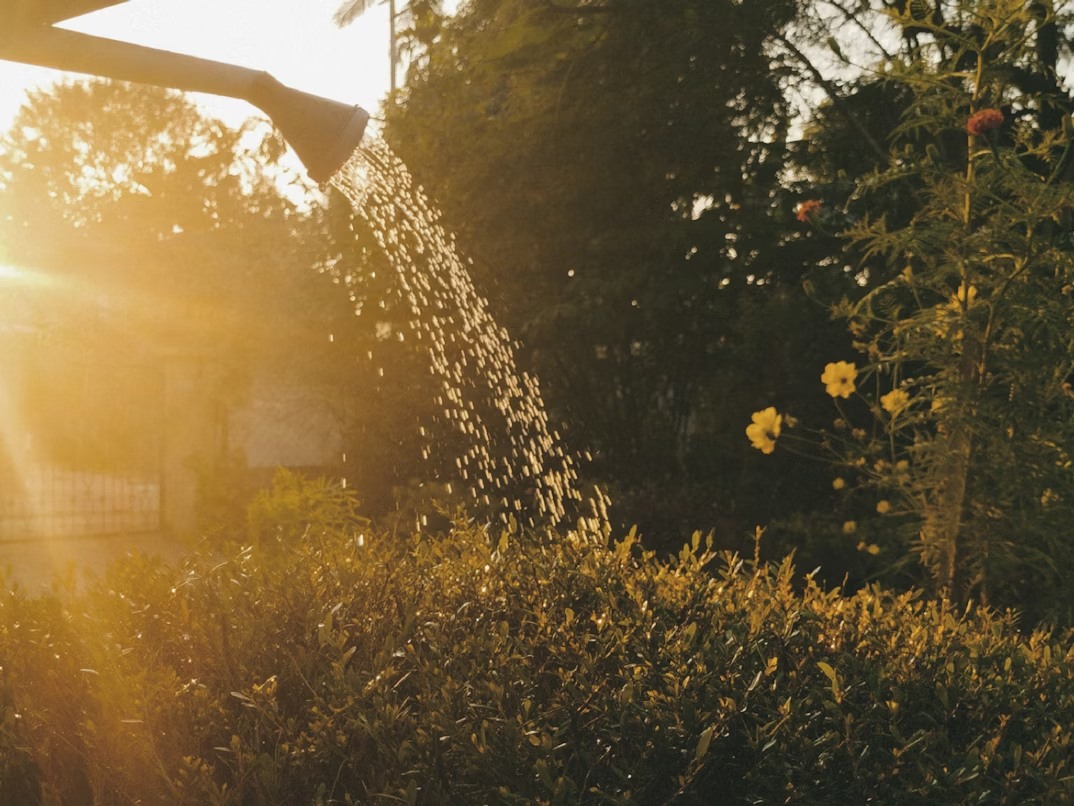
Most people water their plants whenever it is convenient, but timing is actually one of the most important factors in plant health.
Best practice:
Water plants early in the morning (5 AM – 8 AM).
Why it matters:
- Less evaporation loss
- Plants absorb water before heat stress
- Reduces fungal growth
- Improves root hydration
Water efficiency comparison:
| Time of Day | Water Efficiency | Plant Absorption | Risk of Disease |
|---|---|---|---|
| Morning | Very High | High | Low |
| Afternoon | Low | Medium | Medium |
| Evening | Medium | Medium | High (fungus) |
Water loss chart (evaporation):
Morning: ███ 20% loss
Afternoon: ██████████ 70% loss
Evening: █████ 40% loss
Extra tip:
Combine watering with mulch to lock moisture in soil longer.
Hack 3: Banana peel fertilizer trick
One of the most underrated natural fertilizers is something most people throw away daily—banana peels.
What makes it powerful:
Banana peels are rich in:
- Potassium (boosts flowering)
- Phosphorus (root development)
- Calcium (cell strength)
How to use it:
Method 1: Direct burial
- Cut peel into small pieces
- Bury 3–5 cm into soil
Method 2: Banana tea fertilizer
- Soak peels in water for 48 hours
- Use water for plants
Nutrient release comparison:
| Method | Speed of Effect | Nutrient Strength |
|---|---|---|
| Direct burial | Slow | High |
| Liquid fertilizer | Fast | Medium |
Plant response chart:
Week 1: ███░░░░░░ No visible change
Week 2: █████░░░░ Improved leaf color
Week 3: ████████░ Strong flowering response
Week 4+: ██████████ Full growth boost
Best plants for banana fertilizer:
- Roses
- Tomatoes
- Pepper plants
- Flowering shrubs
Hack 4: Companion planting for natural pest control
Instead of using chemical pesticides, companion planting uses plant combinations that naturally protect each other.
How it works:
Certain plants repel pests while others attract beneficial insects.
Example combinations:
| Plant A | Plant B | Benefit |
|---|---|---|
| Tomatoes | Basil | Repels insects, improves taste |
| Carrots | Onions | Prevents carrot flies |
| Roses | Garlic | Deters aphids |
Garden protection chart:
Chemical pesticides: ██████████ Fast but harmful
Companion planting: ████████ Sustainable and safe
No protection: ███ Vulnerable to pests
Bonus combinations:
- Marigolds with vegetables (pest deterrent)
- Mint near cabbage (repels worms)
- Lavender near fruit plants (attracts pollinators)
Benefits:
- No chemicals needed
- Healthier soil ecosystem
- Long-term pest resistance
- Improved biodiversity
Hack 5: The “pruning shock” growth boost technique
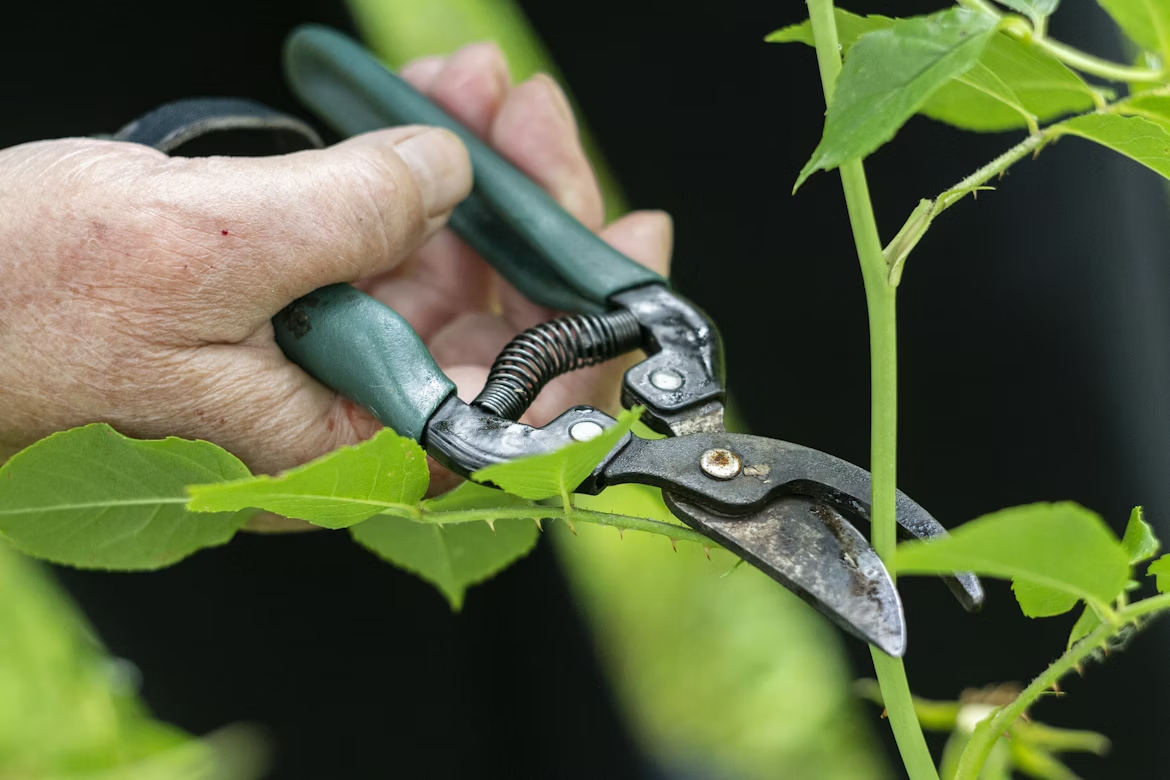
Pruning is often seen as trimming dead parts, but strategic pruning can actually stimulate stronger growth.
What is pruning shock?
A controlled trimming method that encourages plants to redirect energy into new growth.
When to use it:
- Overgrown plants
- Weak stem growth
- After flowering cycles
Pruning intensity table:
| Pruning Level | Effect on Plant | Risk Level |
|---|---|---|
| Light trim | Maintains shape | Very Low |
| Moderate trim | Boosts growth | Low |
| Heavy prune | Rapid regrowth | Medium |
Growth response chart:
No pruning: ███████ Slow growth
Light pruning: █████████ Healthy maintenance
Moderate pruning: ██████████ Fast balanced growth
Heavy pruning: ████████ Strong but delayed recovery
Important rule:
Never prune more than 30% of a plant at once unless it is a hardy species.
Best plants for pruning shock:
- Basil
- Mint
- Roses
- Hibiscus
Final comparison of all 5 gardening hacks
| Hack | Difficulty | Cost | Impact on Growth | Sustainability |
|---|---|---|---|---|
| Compost layering | Easy | Low | Very High | Very High |
| Morning watering | Easy | None | High | High |
| Banana peel fertilizer | Easy | None | High | Very High |
| Companion planting | Medium | Low | Very High | Very High |
| Pruning shock technique | Medium | None | High | Medium |
Overall effectiveness score:
Compost layering: ██████████
Morning watering: █████████
Banana fertilizer: █████████
Companion planting: ██████████
Pruning technique: ████████
Conclusion
Gardening success is rarely about expensive tools or complex systems. Instead, it comes from small, smart techniques that improve soil health, plant behavior, and environmental balance.
These five gardening hacks—compost layering, smart watering timing, banana fertilizer, companion planting, and pruning shock—can dramatically improve your garden’s productivity with minimal cost and effort.
The key is consistency. Even one or two of these methods can transform weak plants into thriving, productive greenery over time.
FAQs
- What is the easiest gardening hack for beginners?
Morning watering is the simplest and most effective hack to start with. - Can banana peels really improve plant growth?
Yes, they provide potassium and phosphorus, which support flowering and root development. - Is companion planting better than pesticides?
In many cases, yes. It reduces pests naturally without harming soil or plants. - How often should I prune my plants?
It depends on the plant, but generally every 3–6 weeks during growing seasons is effective. - Can compost layering replace traditional compost bins?
Yes, in small to medium gardens it can completely replace separate compost systems. - What is the biggest mistake new gardeners make?
Inconsistent watering and ignoring soil health are the most common mistakes.