
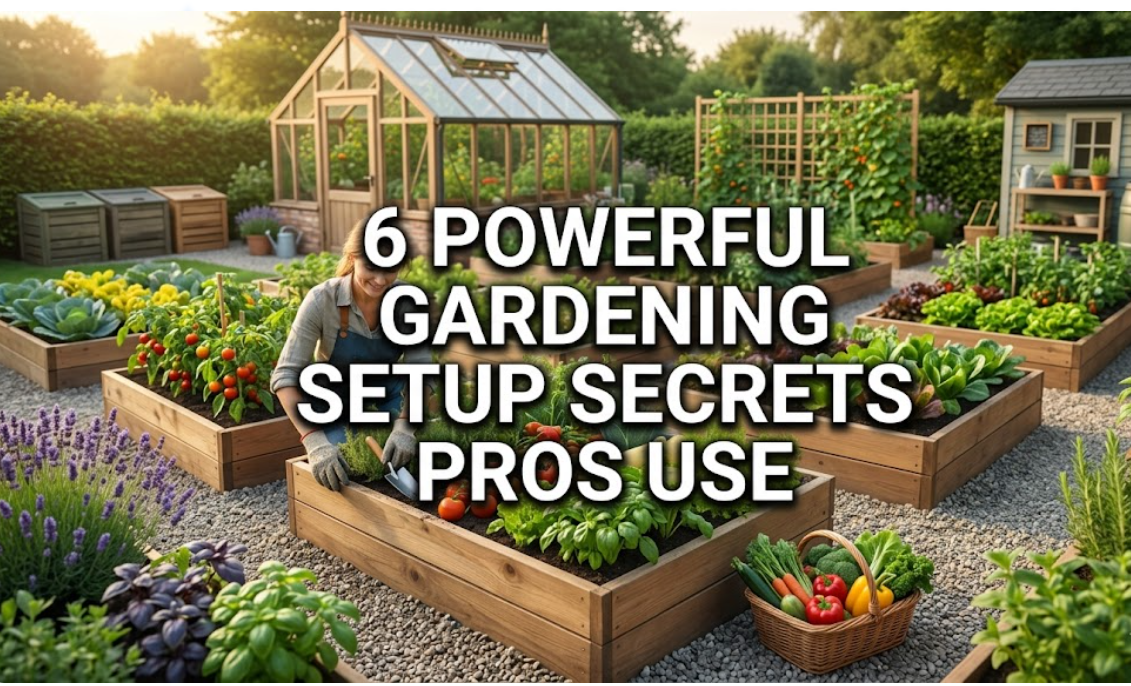
A well-designed garden is never an accident. While beginners often focus only on plants and watering schedules, professional gardeners think differently. They treat a garden like a system—where soil, layout, airflow, sunlight, irrigation, and structure all work together.
The difference between an average garden and a thriving one is not effort—it is setup. Professionals rely on a set of foundational “setup secrets” that make gardening easier, more productive, and far more sustainable over time.
This article breaks down six powerful gardening setup secrets that experienced gardeners use to maximize results with less effort. Each section includes practical breakdowns, comparison tables, and structured planning guides you can apply immediately.
- The Zoning System Setup (Functional Garden Mapping)
One of the most important secrets professionals use is zoning—dividing the garden into functional areas instead of treating it as one large space.
Instead of planting randomly, each section has a purpose.
Common garden zones
- Growth zone (vegetables, fruits)
- Relaxation zone (seating, aesthetics)
- Utility zone (compost, tools)
- Water zone (irrigation or water features)
Garden Zoning Structure Table
| Zone Type | Purpose | Ideal Plants/Items | Maintenance Level |
|---|---|---|---|
| Growth Zone | Food production | Vegetables, herbs | High |
| Relaxation Zone | Visual comfort | Flowers, grass, seating | Low |
| Utility Zone | Storage/work | Compost bins, tools | Medium |
| Water Zone | Hydration system | Drip irrigation, fountains | Medium |
Why this setup works
- Reduces clutter and confusion
- Improves workflow efficiency
- Makes maintenance easier
- Helps plants receive targeted care
Professional insight:
Most failed gardens are not plant issues—they are layout issues.
- Raised Bed Optimization System
Professionals rarely rely on flat ground planting alone. Raised beds are used to control soil quality, drainage, and root growth.
But the secret is not just using raised beds—it is optimizing them strategically.
Raised Bed Comparison Chart
| Bed Type | Soil Control | Drainage | Yield Efficiency | Best Use |
|---|---|---|---|---|
| Ground Level | Low | Medium | Medium | Large gardens |
| Standard Raised Bed | High | High | High | Vegetables |
| Deep Raised Bed | Very High | Very High | Very High | Root crops |
Setup advantages
- Prevents soil compaction
- Improves oxygen flow to roots
- Reduces weed spread
- Enhances yield per square meter
Professional tip:
Beds should not exceed 1.2 meters width—this ensures easy access from both sides without stepping on soil.
- Irrigation Line Mapping System
One of the biggest mistakes beginners make is manual watering without structure. Professionals design irrigation systems before planting anything.
A mapped irrigation system ensures every plant receives the right amount of water automatically or semi-automatically.
Irrigation System Setup Table
| System Type | Cost | Efficiency | Maintenance | Best For |
|---|---|---|---|---|
| Manual watering | Low | Low | High | Small gardens |
| Sprinkler system | Medium | Medium | Medium | Lawns |
| Drip irrigation | Medium | Very High | Low | Vegetables |
| Smart irrigation | High | Very High | Very Low | Professional setups |
Why professionals use drip systems
- Direct water delivery to roots
- Minimal water waste
- Reduces fungal issues
- Saves time daily
Setup insight:
Watering consistency matters more than quantity. Drip systems stabilize both.
- Soil Layer Engineering Technique
Healthy gardens are built from the ground up—literally. Professionals never rely on single-layer soil. Instead, they build engineered soil layers designed for long-term fertility.
This is often called “layered soil architecture.”
Soil Layer Breakdown Chart
| Layer | Composition | Function |
|---|---|---|
| Top Layer | Mulch or compost | Moisture retention |
| Middle Layer | Garden soil | Root expansion |
| Bottom Layer | Organic matter | Nutrient reservoir |
Benefits of layered soil
- Faster plant establishment
- Better water retention
- Long-term fertility stability
- Reduced fertilizer dependency
Professional secret:
The bottom organic layer acts as a slow-release nutrient bank for months.
- Sunlight Positioning Strategy
Sunlight is not just about exposure—it is about precision placement. Professionals carefully design garden layouts based on sun movement patterns throughout the day.
Plants are positioned according to their light requirements, not randomly.
Sunlight Optimization Chart
| Light Level | Duration | Suitable Plants |
|---|---|---|
| Full Sun | 6–8 hours | Tomatoes, peppers |
| Partial Sun | 3–5 hours | Herbs, leafy greens |
| Shade | 1–3 hours | Ferns, moss plants |
Why positioning matters
- Prevents uneven growth
- Improves flowering and fruiting
- Reduces plant stress
- Enhances photosynthesis efficiency
Setup tip:
Track sunlight for one full day before planting anything.
- Companion Structure Planning (Plant Networking System)
Professionals don’t just plant—they build plant networks. Some plants support others by improving soil nutrients, repelling pests, or enhancing growth.
This is called companion structure planning.
Companion Planting System Table
| Primary Plant | Companion Plant | Benefit |
|---|---|---|
| Tomatoes | Basil | Pest reduction + flavor boost |
| Carrots | Onions | Root pest protection |
| Beans | Corn | Structural support + nitrogen fixation |
| Lettuce | Garlic | Insect control |
Why this is powerful
- Reduces chemical pesticide need
- Improves soil efficiency
- Creates natural balance
- Boosts yield naturally
Professional insight:
A well-designed plant network behaves like a self-supporting ecosystem.
Overall Garden Setup Efficiency Comparison
When these six setup systems are applied together, the difference in performance is significant.
Garden System Performance Table
| Factor | Basic Setup | Professional Setup |
|---|---|---|
| Water usage | High waste | Optimized |
| Plant health | Inconsistent | Stable |
| Maintenance effort | High | Low |
| Yield output | Moderate | High |
| Pest issues | Frequent | Minimal |
The key difference is structure. Professionals design systems before planting begins.
Extra Professional Setup Tips
These additional insights help refine any garden setup further:
- Always leave walking space between zones
- Use mulch to protect soil structure
- Avoid mixing irrigation zones randomly
- Label plant zones for tracking growth
- Reassess layout every seasonal cycle
Small structural improvements compound into major long-term gains.
Common Mistakes Beginners Make
Even with good plants, poor setup can ruin results.
Avoid these mistakes:
- Overcrowding plant beds
- Ignoring sunlight direction
- Mixing irrigation systems randomly
- Using flat, unstructured soil beds
- Planting without zone planning
Most gardening problems originate before planting even begins.
FAQs
- What is the most important gardening setup secret?
Zoning is the most important because it organizes the entire garden into functional, manageable sections. - Are raised beds necessary for all gardens?
Not required, but they significantly improve soil control, drainage, and yield efficiency. - How often should irrigation systems be checked?
At least once a week to ensure no clogging, leaks, or uneven water distribution. - What is the easiest setup improvement for beginners?
Starting with basic zoning and simple raised beds provides the fastest improvement. - Can companion planting replace fertilizers?
It reduces fertilizer dependency but does not completely replace it in all cases. - How long does it take to see results from a better garden setup?
Most improvements become noticeable within 2–4 weeks, especially in plant health and growth consistency.