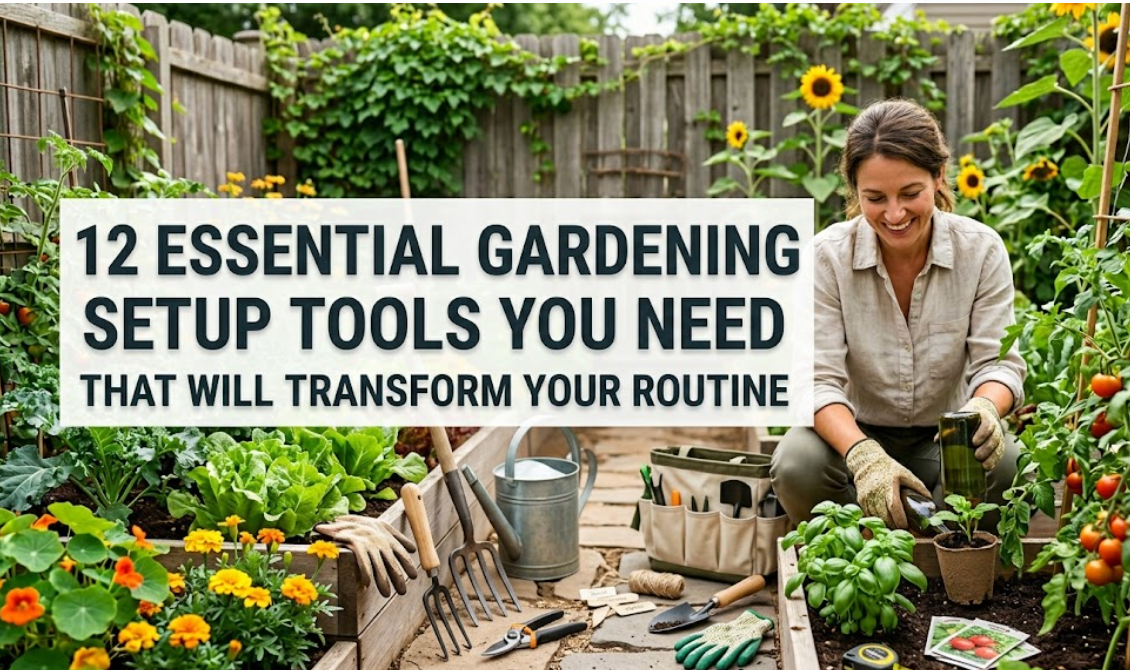
Starting a garden—whether it’s a small balcony setup, a backyard vegetable patch, or a collection of indoor pots—always begins with the same foundation: having the right tools. Many beginners assume gardening success depends mostly on plants or soil quality, but in reality, the tools you use shape everything from efficiency to plant health.
In 2026, gardening tools have also evolved. Some are traditional and timeless, while others are modern upgrades designed to save time, reduce effort, and improve precision. But the core idea remains simple: the right setup tools make gardening easier, cheaper, and far more enjoyable.
This guide breaks down 12 essential gardening setup tools every beginner or intermediate gardener should consider. Along the way, you’ll find comparison tables, cost breakdowns, usage charts, and practical insights that help you build a smart gardening setup without overspending.
tool 1: hand trowel (the everyday essential)
A hand trowel is one of the most basic but most important gardening tools. It is used for digging small holes, transplanting seedlings, and mixing soil.
why it matters:
- perfect for container gardening
- helps with precise planting
- reduces soil disturbance
usage breakdown:
| task | difficulty without tool | ease with trowel |
|---|---|---|
| planting seedlings | high | very easy |
| repotting plants | medium | easy |
| soil mixing | medium | easy |
A stainless steel trowel is usually more durable and resistant to rust compared to plastic versions.
tool 2: gardening gloves (hand protection essential)
Gardening without gloves often leads to cuts, dirt buildup, and skin irritation. Gloves are not optional if you want consistent gardening comfort.
benefits:
- protects from thorns and sharp edges
- prevents skin dryness
- improves grip
material comparison:
| glove type | durability | comfort | best use |
|---|---|---|---|
| cotton gloves | low | high | light gardening |
| rubber-coated gloves | medium | medium | watering tasks |
| leather gloves | high | medium | pruning & heavy work |
Good gloves reduce fatigue during longer gardening sessions.
tool 3: watering can (controlled hydration tool)
A watering can allows controlled water distribution, which is critical for plant health.
why it’s important:
- prevents overwatering
- delivers water directly to roots
- reduces soil erosion
watering methods comparison:
| method | control level | water waste | plant safety |
|---|---|---|---|
| bucket pouring | low | high | moderate |
| hose watering | medium | medium | moderate |
| watering can | high | low | high |
For indoor plants, a narrow spout watering can is ideal.
tool 4: pruning shears (plant shaping tool)
Pruning shears are used to trim leaves, cut stems, and maintain plant shape.
key benefits:
- improves plant growth
- removes dead or damaged parts
- prevents disease spread
comparison chart:
| feature | dull shears | sharp shears |
|---|---|---|
| cut quality | poor | clean |
| plant damage | high | low |
| efficiency | low | high |
Keeping blades sharp is essential for plant health.
tool 5: garden soil scoop (precision soil handling)
A soil scoop is used for moving soil, fertilizer, or compost into pots.
why it saves time:
- faster pot filling
- reduces mess
- improves accuracy
usage efficiency table:
| task | scoop efficiency | alternative method |
|---|---|---|
| pot filling | very high | hands (messy) |
| fertilizer spreading | high | spoon (slow) |
| soil mixing | medium | manual mixing |
It’s especially useful for container gardening setups.
tool 6: hand rake (soil leveling tool)
A hand rake is used to break soil clumps and level garden beds.
benefits:
- improves soil aeration
- removes debris
- smoothens planting surface
soil condition improvement:
| before rake | after rake |
|---|---|
| compact soil | loose soil |
| uneven surface | level surface |
| poor drainage | improved drainage |
A small rake is enough for home gardening setups.
tool 7: plant pots and containers
Containers are the foundation of any gardening setup, especially for indoor or balcony gardening.
types of containers:
| material | durability | cost | best use |
|---|---|---|---|
| plastic pots | medium | low | beginners |
| ceramic pots | high | high | indoor plants |
| clay pots | high | medium | moisture balance |
| fabric pots | medium | medium | root health |
Container choice directly affects plant growth and watering needs.
tool 8: garden sprayer (fine mist control)
A sprayer is used for misting plants, applying liquid fertilizer, or pest control solutions.
why it matters:
- gentle hydration for delicate plants
- even distribution of liquids
- helps humidity-loving plants
sprayer usage comparison:
| task | sprayer effectiveness |
|---|---|
| leaf misting | high |
| pesticide application | high |
| watering succulents | low |
It is essential for indoor gardening environments.
tool 9: soil testing kit (growth optimization tool)
A soil testing kit helps determine pH and nutrient levels in soil.
importance:
- prevents nutrient imbalance
- improves plant selection
- increases yield success
soil condition guide:
| pH level | soil type | suitable plants |
|---|---|---|
| 6.0–7.0 | balanced | most vegetables |
| below 6.0 | acidic | potatoes, berries |
| above 7.0 | alkaline | spinach, herbs |
Testing soil avoids guesswork in gardening.
tool 10: garden kneeling pad (comfort support tool)
Gardening often requires bending or kneeling for long periods.
benefits:
- reduces knee strain
- improves comfort
- allows longer sessions
comfort comparison:
| surface | knee pressure | comfort level |
|---|---|---|
| bare ground | high | low |
| towel | medium | moderate |
| kneeling pad | low | high |
It is especially helpful for older gardeners or long sessions.
tool 11: plant support stakes (growth guidance tool)
Stakes are used to support growing plants like tomatoes or beans.
why they matter:
- prevent plant collapse
- improve vertical growth
- increase fruit exposure to sunlight
support effectiveness:
| plant type | needs staking | benefit level |
|---|---|---|
| tomatoes | high | very high |
| beans | high | high |
| flowers | medium | medium |
Without support, many plants grow unevenly or break.
tool 12: compost bin (soil enrichment system)
A compost bin converts organic waste into nutrient-rich soil.
why it is essential:
- reduces waste
- improves soil quality
- saves fertilizer costs
compost cycle chart:
| stage | time | output |
|---|---|---|
| waste collection | daily | organic mix |
| decomposition | 2–4 weeks | partial compost |
| curing | 2–3 weeks | usable compost |
| final compost | 4–8 weeks | rich soil |
It is one of the most cost-effective tools in gardening.
complete gardening setup cost overview
| tool category | average cost | importance level |
|---|---|---|
| basic hand tools | low | essential |
| watering tools | low-medium | essential |
| containers | medium | essential |
| soil tools | low | important |
| advanced tools | medium-high | optional |
setup efficiency comparison:
| setup type | cost level | productivity |
|---|---|---|
| minimal setup | low | basic growth |
| balanced setup | medium | strong growth |
| full setup | high | optimal results |
smart gardening setup workflow
| step | action | purpose |
|---|---|---|
| 1 | choose containers | structure setup |
| 2 | prepare soil | ensure nutrients |
| 3 | plant seeds/seedlings | start growth |
| 4 | water properly | hydration balance |
| 5 | monitor growth | maintenance |
| 6 | prune & support | improve structure |
| 7 | harvest | final output |
closing thoughts
A successful garden is not built by chance—it is built with the right tools and consistent care. While plants and soil are important, tools are what make gardening practical, efficient, and enjoyable.
The key is not to buy everything at once but to build your setup gradually. Start with the basics like a trowel, gloves, watering can, and containers. As your experience grows, you can add advanced tools like soil testers and compost systems.
With the right setup, gardening becomes less of a task and more of a structured, relaxing activity that fits naturally into everyday life.
frequently asked questions
- what is the most important gardening tool for beginners?
A hand trowel is the most essential tool because it is used for planting, digging, and transplanting. - do I need all 12 tools to start gardening?
No, beginners can start with 4–5 basic tools and gradually expand their setup. - are expensive gardening tools necessary?
Not always. Many affordable tools work just as well if maintained properly. - how often should gardening tools be cleaned?
Tools should be cleaned after each use to prevent rust and plant disease spread. - what is the best tool for indoor gardening?
A watering can, small trowel, and sprayer are the most useful indoor tools. - is a compost bin necessary for small gardens?
It is not necessary but highly beneficial for improving soil quality and reducing waste.