
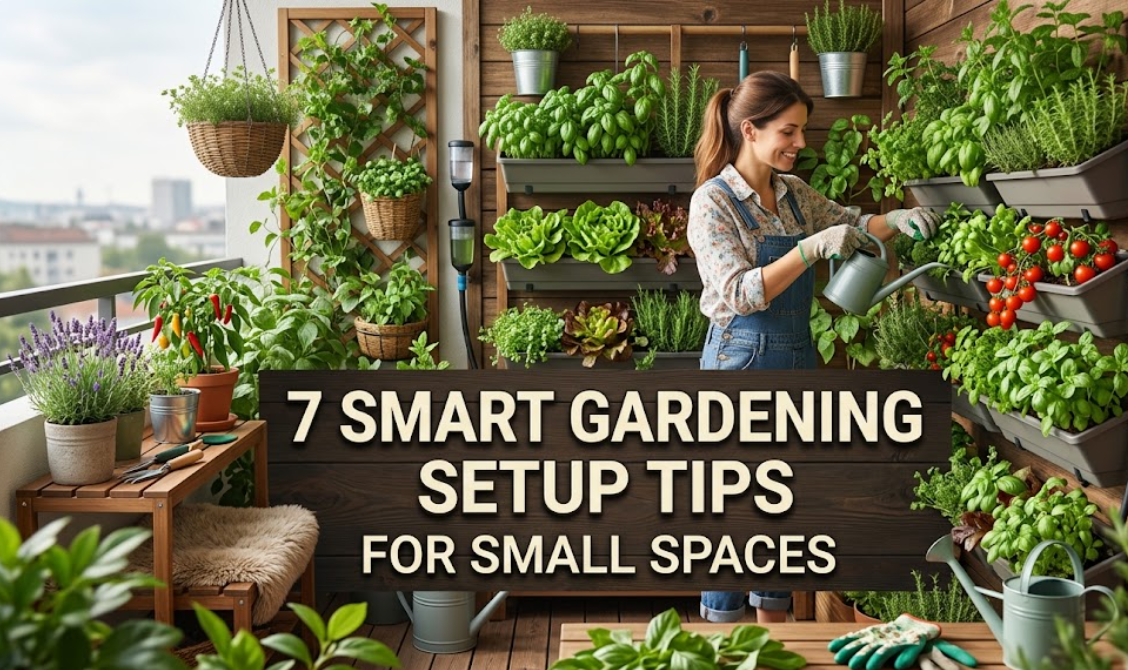
Small-space gardening has become one of the most practical and creative ways to bring nature into modern living environments. Whether you’re working with a balcony, rooftop corner, apartment windowsill, or a compact backyard, limited space doesn’t mean limited gardening potential.
In fact, small spaces often force smarter design choices, better organization, and more efficient plant care systems. The key is not how much space you have—it’s how intelligently you use it.
This guide breaks down seven smart setup strategies that help you turn even the smallest area into a productive, visually appealing, and easy-to-maintain garden.
- plan your space like a functional layout, not decoration
Most beginners start by buying plants first and figuring out placement later. This usually leads to cluttered, inefficient setups. Smart gardening begins with layout planning.
Think of your space as zones:
- Sunlight zone
- Shade zone
- Vertical zone
- Access/walking zone
Basic small-space layout model:
Zone type Purpose
Sun zone Vegetables, flowering plants
Shade zone Ferns, herbs, low-light plants
Vertical zone Climbers, hanging plants
Access zone Movement and maintenance
Space efficiency comparison:
Planning style Result
Random placement Low efficiency
Basic grouping Medium efficiency
Zone-based layout High efficiency
Why this works:
Plants thrive better when grouped according to their environmental needs. It also reduces maintenance time significantly.
- use vertical structures to multiply growing area
When horizontal space is limited, the only direction left is up. Vertical gardening is one of the most effective ways to expand planting capacity without expanding physical footprint.
Vertical options:
- Wall-mounted planters
- Hanging pots
- Trellises
- Ladder shelves
- Stackable containers
Vertical efficiency chart:
Method Space gain Maintenance ease
Wall planters High Medium
Hanging pots Medium High
Trellises Very high Medium
Stack systems Very high High
Best plants for vertical setups:
- Tomatoes
- Beans
- Money plant
- Cucumbers
- Strawberries
Why it works:
Vertical systems improve airflow, reduce pest buildup, and maximize sunlight exposure across multiple layers.
- choose compact and high-yield plants
Not all plants are suitable for small spaces. Smart gardening depends heavily on plant selection.
Ideal small-space plants:
- Herbs (mint, basil, coriander)
- Cherry tomatoes
- Chilies
- Lettuce
- Spinach
- Dwarf varieties of vegetables
Plant efficiency comparison:
Plant type Space needed Yield potential
Large vegetables High Medium
Dwarf vegetables Low High
Herbs Very low High (continuous harvest)
Key strategy:
Focus on plants that either grow vertically or provide repeated harvests instead of single-cycle crops.
Why it matters:
A small space filled with the right plants can outperform a larger but poorly planned garden.
- use multi-layer container systems
Instead of placing pots randomly on the ground, stacking and layering containers creates structured density.
Container layering methods:
- Tiered plant stands
- Hanging + ground combo
- Shelf-based gardening
- Step-style arrangement
Layer efficiency chart:
Layer type Function
Top layer Sun-loving plants
Middle layer Medium-height plants
Bottom layer Shade-tolerant plants
Benefits:
- Better sunlight distribution
- Improved space usage
- Easier watering system
Common mistake:
Overcrowding containers without considering airflow, which leads to disease buildup.
- install a simple self-watering system
One of the biggest challenges in small-space gardening is inconsistent watering. Self-watering systems solve this problem efficiently.
Options include:
- Drip irrigation bottles
- Wick systems
- Reservoir pots
- Micro-drip hoses
Watering system comparison:
System type Efficiency Maintenance
Manual watering Low High effort
Drip system High Low effort
Wick system Medium Very low effort
Smart irrigation Very high Low effort
Why it helps:
Small spaces often dry out faster due to heat reflection from walls and concrete surfaces. Automated or semi-automated watering ensures consistency.
- maximize sunlight with reflective and movable setups
Sunlight is often uneven in small spaces due to buildings, walls, or balconies blocking light at certain hours.
Smart solutions:
- Use reflective surfaces (white walls, mirrors)
- Moveable plant stands
- Rotating plant positions
- Adjustable shelves
Sunlight optimization chart:
Technique Light improvement
Reflective walls Medium-high
Mobile pots High
Tiered shelving High
Fixed placement Low
Why it matters:
Plants in small spaces often compete for limited sunlight. Strategic positioning ensures balanced growth.
Extra tip:
Rotate plants every few days so all sides receive equal light exposure.
- combine functionality with aesthetics
In small spaces, gardening is not only about productivity but also about visual balance. A well-organized setup feels larger, cleaner, and more relaxing.
Design principles:
- Repetition (same pot style)
- Color consistency
- Height variation
- Clean spacing
Aesthetic balance chart:
Design element Effect
Uniform pots Clean look
Mixed textures Natural feel
Color grouping Visual harmony
Random placement Visual clutter
Dual-purpose design idea:
Choose plants that are both functional (edible or useful) and decorative (visually appealing).
Example combinations:
- Basil + tomatoes
- Lavender + herbs
- Chili plants + flowers
Why this works:
Small spaces feel more enjoyable when they are visually organized rather than overcrowded.
combined smart setup efficiency overview
When all seven strategies are combined, small spaces become highly productive ecosystems.
Strategy effectiveness:
Strategy Impact level
Space planning Very high
Vertical gardening Very high
Plant selection High
Container layering High
Self-watering systems Very high
Sunlight optimization High
Aesthetic design Medium-high
Overall result:
A small space can function like a full garden when each element is designed intentionally.
small-space gardening layout example
Here’s a practical layout model for a balcony garden:
Section Setup
Wall side Vertical planters + herbs
Corner area Stackable vegetable pots
Railing Hanging flowering plants
Floor space Larger containers (tomatoes/chili)
Why this works:
It separates plant types based on growth direction and sunlight needs.
common beginner mistakes to avoid
Mistake Result
Overcrowding plants Poor growth
Ignoring sunlight Weak plants
Random watering Root issues
No vertical usage Wasted space
Fixing these mistakes early drastically improves garden success rates.
faqs
- what is the best setup for a very small balcony garden?
A combination of vertical planters, hanging pots, and compact herb containers works best for extremely small spaces. - how many plants can i grow in a small space?
It depends on layout, but smart vertical systems can triple or even quadruple plant capacity compared to flat arrangements. - do small-space gardens need special soil?
Yes, lightweight, well-draining soil mixes are ideal because containers dry out faster than ground soil. - how do i prevent overcrowding in a small garden?
Use zoning, choose compact plants, and prioritize vertical growth instead of horizontal expansion. - can small-space gardens produce vegetables?
Yes, many vegetables like tomatoes, chilies, lettuce, and herbs grow very well in compact systems. - what is the most important factor in small-space gardening?
Sunlight management is the most critical factor, followed closely by plant selection and layout planning.
final thoughts
Small-space gardening is not about limitations—it’s about optimization. When every inch is used intentionally, even a tiny balcony or corner can become a productive, calming, and visually appealing green space.
The key is not to replicate large gardens in small areas, but to redesign gardening itself for compact living. With smart planning, vertical systems, and thoughtful plant selection, even the smallest space can feel alive, efficient, and deeply rewarding.