
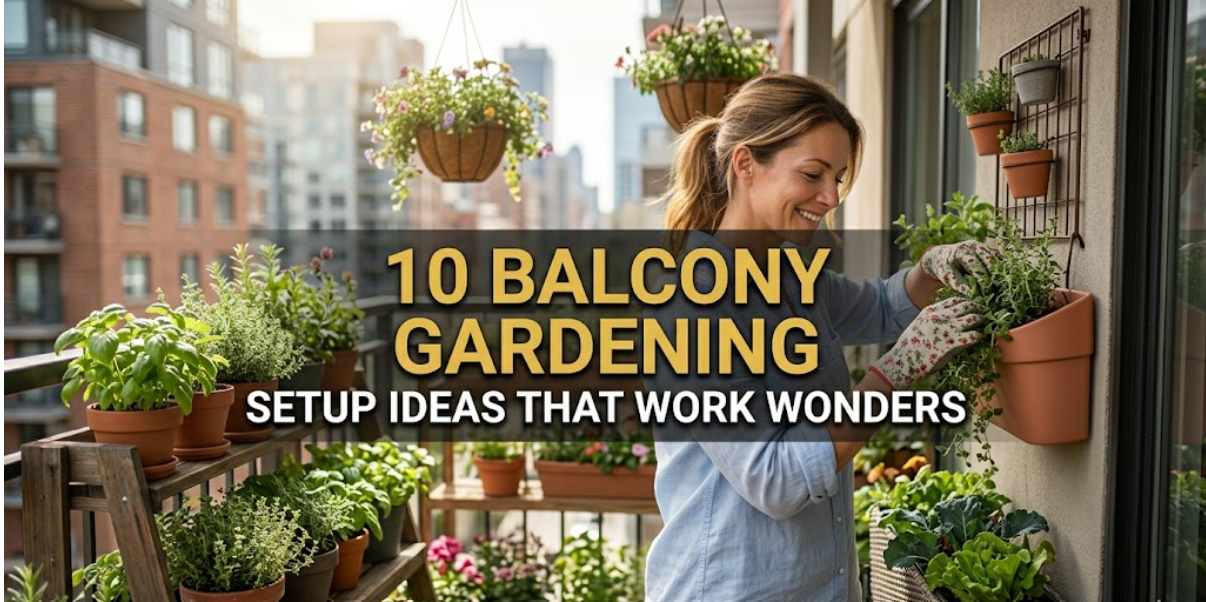
Balcony gardening often starts as a small experiment—one or two pots, maybe a herb plant or a flowering vine. But once you understand how much potential even a tiny balcony holds, it quickly becomes something much bigger. A balcony can turn into a green escape, a food source, a relaxation zone, and even a design statement.
What makes balcony gardening exciting is limitation. You’re working with limited space, sunlight, weight capacity, and airflow. But those limitations often lead to the most creative solutions.
Below are 10 balcony gardening setup ideas that actually work in real-life conditions, especially for urban homes where space is tight but creativity is not.
- vertical wall garden setup
When floor space is limited, walls become your best friend. A vertical garden uses height instead of width, allowing you to grow dozens of plants in a small area.
You can use wall-mounted pots, pocket planters, or even recycled wooden frames.
table: vertical garden suitability guide
| Plant Type | Suitability | Maintenance Level | Best Location |
|---|---|---|---|
| Herbs | High | Low | Sunny wall |
| Ferns | Medium | Medium | Shaded wall |
| Succulents | High | Very Low | Bright balcony |
| Flower vines | High | Medium | Rail-facing wall |
chart: space efficiency comparison
Traditional pots: ███░░ low efficiency
Vertical garden: ██████ high efficiency
Vertical systems can increase plant capacity by up to 4–6 times compared to floor-only setups.
- railing planter system
Balcony railings are often wasted space. Railing planters attach directly to the edge, turning the boundary into a growing zone.
These are perfect for herbs, small flowers, or trailing plants.
table: railing planter advantages
| Feature | Benefit |
|---|---|
| Space saving | Uses unused vertical edge |
| Sun exposure | Usually optimal sunlight angle |
| Easy access | Simple watering and harvesting |
tip: choose lightweight plastic or fiber pots to avoid stress on railing structure.
- tiered plant shelf setup
A tiered shelf creates multiple levels of planting space without occupying a large footprint. Think of it like stadium seating for plants.
You can use metal racks, wooden shelves, or DIY ladders.
chart: plant density improvement
Single level pots: ███░░░ low density
Tiered shelves: ██████ high density
table: shelf placement guide
| Level | Plant Type |
|---|---|
| Top | Sun-loving herbs |
| Middle | Flowers |
| Bottom | Shade plants |
This setup is especially useful for decorative balance.
- hanging basket garden system
Hanging baskets free up floor and railing space while adding visual depth. They also allow trailing plants to cascade naturally.
Best plants include petunias, ivy, strawberries, and mint.
table: hanging plant care needs
| Plant | Water Need | Sunlight | Growth Style |
|---|---|---|---|
| Ivy | Medium | Medium | Trailing |
| Petunia | High | High | Flowering |
| Mint | High | Medium | Bushy |
tip: stagger hanging heights for a layered visual effect.
- compact vegetable grow boxes
Even small balconies can support edible gardening if you use structured grow boxes.
These are shallow containers designed for vegetables like tomatoes, chilies, lettuce, and spinach.
table: vegetable suitability for balconies
| Vegetable | Space Needed | Growth Speed | Difficulty |
|---|---|---|---|
| Lettuce | Low | Fast | Easy |
| Tomatoes | Medium | Medium | Medium |
| Chilies | Low | Medium | Easy |
chart: harvest cycle efficiency
Fast greens: ██████ frequent harvest
Fruiting plants: ████░ slower but high yield
- mini herb kitchen corner
A dedicated herb corner near your kitchen access makes cooking easier and encourages fresh usage.
Common herbs include basil, coriander, mint, and thyme.
table: herb kitchen setup guide
| Herb | Usage Frequency | Care Level |
|---|---|---|
| Basil | High | Medium |
| Mint | High | Low |
| Thyme | Medium | Low |
This setup reduces dependency on store-bought herbs significantly.
- balcony privacy green wall
Plants can act as natural privacy screens, blocking direct view from neighbors while improving aesthetics.
Use tall plants, bamboo, or dense foliage species.
chart: privacy effectiveness
Low plants: ███░░░ minimal coverage
Medium plants: █████░ partial privacy
Tall green wall: ██████ full privacy
table: best privacy plants
| Plant Type | Growth Density | Maintenance |
|---|---|---|
| Bamboo | High | Medium |
| Areca Palm | Medium | Low |
| Money Plant | High | Very Low |
- self-watering balcony system
A self-watering setup reduces maintenance and prevents plant stress during hot weather.
You can use reservoirs, wicks, or modified bottles.
table: watering methods comparison
| Method | Water Efficiency | Effort |
|---|---|---|
| Manual watering | Medium | High |
| Drip system | High | Low |
| Self-watering pot | Very High | Very Low |
chart: plant survival stability
Manual care: ████░ inconsistent
Self-watering: ██████ stable growth
- decorative balcony theme garden
Instead of random placement, you can design your balcony around a theme—minimalist green, tropical jungle, floral paradise, or edible garden.
table: theme ideas breakdown
| Theme | Style Focus | Best Plants |
|---|---|---|
| Tropical | Dense greenery | Palms, ferns |
| Minimalist | Clean arrangement | Succulents, bamboo |
| Floral | Color-rich display | Roses, petunias |
A theme makes even small spaces feel intentional and designed.
- multi-layer micro ecosystem balcony
This is a more advanced setup where plants, soil, compost, and watering systems work together like a mini ecosystem.
You combine herbs, vegetables, flowers, and composting in one integrated system.
chart: ecosystem balance model
Plants → Oxygen production
Compost → Nutrient recycling
Water system → Sustainability loop
table: ecosystem components
| Component | Role |
|---|---|
| Plants | Growth & oxygen |
| Compost | Nutrient regeneration |
| Water | System balance |
This reduces waste and increases long-term sustainability.
balcony gardening comparison overview
table: setup effectiveness summary
| Setup Type | Space Efficiency | Maintenance | Visual Appeal |
|---|---|---|---|
| Vertical garden | Very High | Medium | High |
| Hanging baskets | High | Medium | Very High |
| Tiered shelves | High | Low | Medium |
| Vegetable boxes | Medium | Medium | High |
| Ecosystem setup | Very High | High | Very High |
how to choose the right balcony setup
Choosing the right setup depends on sunlight, space, and lifestyle.
chart: decision guide
Small balcony → Vertical + hanging system
Medium balcony → Tiered + herbs + railing
Large balcony → Ecosystem + vegetable garden
Sun-heavy balcony → Succulents, vegetables
Shade balcony → Ferns, ivy, herbs
final thoughts
Balcony gardening is less about space and more about structure. Even a few square feet can become highly productive and visually impressive if designed correctly. The key is layering: vertical growth, smart containers, and efficient watering systems.
Over time, a balcony garden becomes more than decoration—it becomes part of your daily rhythm. Morning watering, evening observation, seasonal adjustments. It quietly integrates into life in a way that feels natural rather than forced.
frequently asked questions
- what is the best balcony gardening setup for beginners?
Vertical gardening with railing planters is the easiest and most beginner-friendly setup. - how much sunlight do balcony gardens need?
Most plants need at least 4–6 hours of sunlight, but shade-tolerant plants can grow with less. - can I grow vegetables in a small balcony?
Yes, leafy greens, chilies, tomatoes, and herbs grow very well in containers. - how do I prevent overwatering in balcony plants?
Use drainage pots or self-watering systems to maintain balance. - what is the cheapest balcony gardening setup?
Reusing bottles, containers, and DIY vertical racks is the most cost-effective method. - how often should I maintain a balcony garden?
Basic maintenance 10–20 minutes daily or a few times a week is usually enough.