
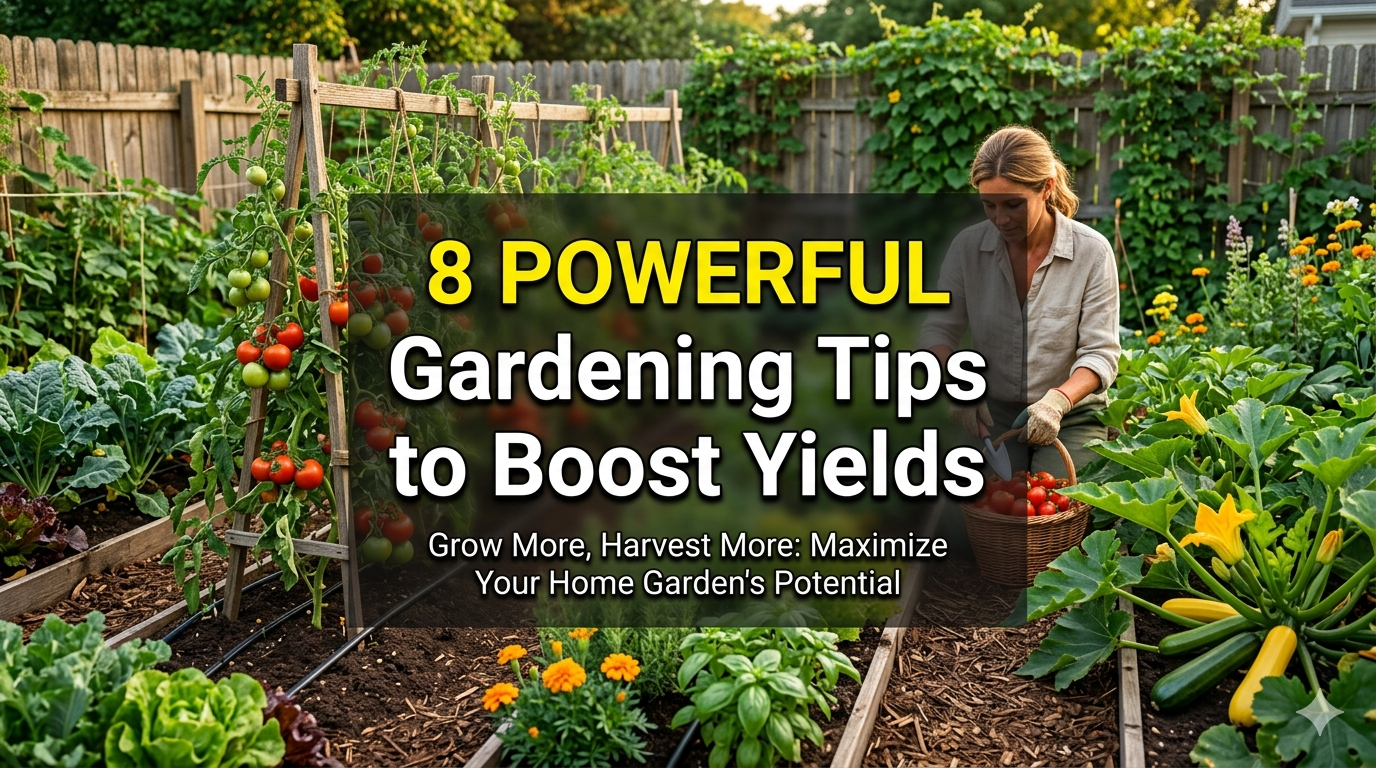
Gardening is not just about growing plants—it’s about growing results. Whether you are working with a small backyard, balcony containers, or a full vegetable garden, the goal is always the same: get more produce from the same space and effort.
Boosting yield does not always require expensive tools or advanced farming techniques. In fact, most improvements come from simple adjustments in soil care, watering habits, spacing, and plant selection.
This guide focuses on eight powerful gardening tips that directly improve plant productivity. These methods are practical, beginner-friendly, and proven to increase harvest quality and quantity over time.
Each section includes tables and structured breakdowns so you can apply them step by step.
tip 1: improve soil fertility before planting anything
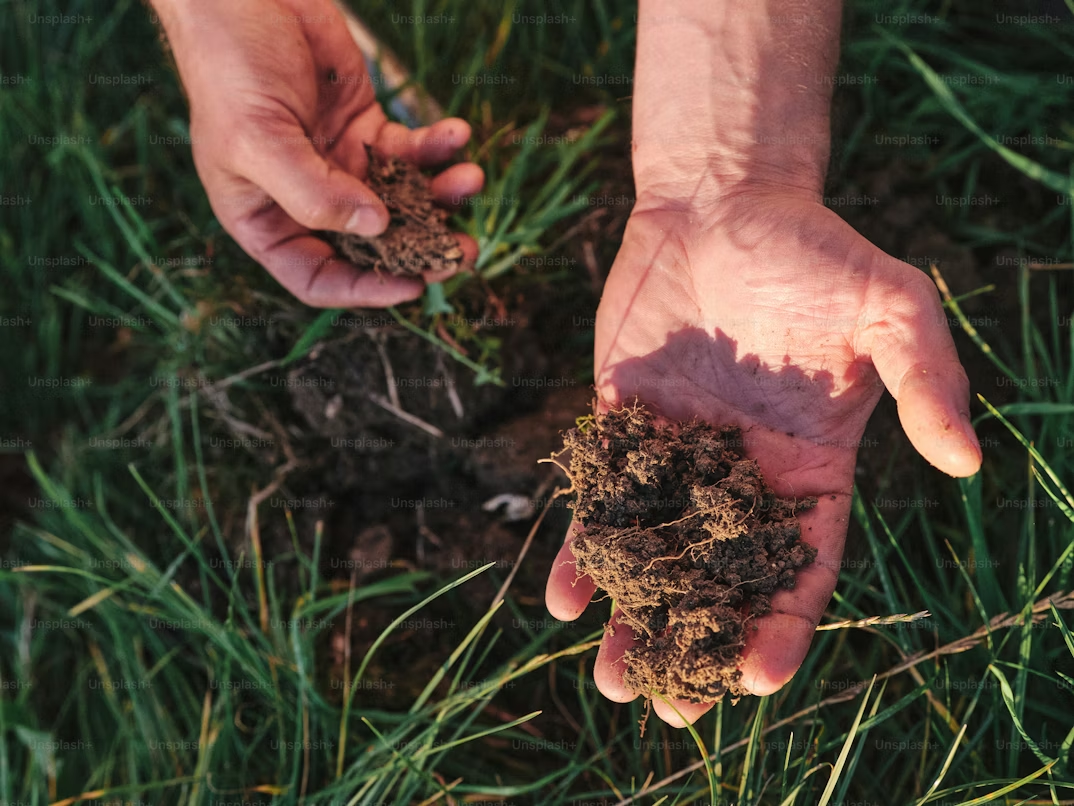
Soil is the foundation of yield. Plants cannot produce more without proper nutrition, no matter how well you water or maintain them.
Healthy soil contains:
- organic matter
- beneficial microorganisms
- balanced nutrients
- good drainage
Instead of relying only on chemical fertilizers, improving soil naturally leads to long-term productivity.
Best soil improvement methods:
- compost addition
- worm castings
- aged manure
- green manure (cover crops)
Table: soil fertility improvement comparison
| Method | Cost | Speed | Long-term impact | Yield boost |
|---|---|---|---|---|
| Chemical fertilizer | Medium | Fast | Low | Short-term |
| Compost | Low | Medium | High | High |
| Manure | Low | Medium | High | High |
| Cover crops | Very low | Slow | Very high | Very high |
Healthy soil alone can increase yield by 30–60% over time.
tip 2: choose high-yield plant varieties
Not all plants produce the same quantity, even under identical conditions. Choosing high-yield varieties is one of the fastest ways to increase output.
For example:
- hybrid tomato varieties produce more fruit
- bush beans yield more per square foot
- improved chili varieties produce longer harvest cycles
Chart: yield difference by plant type
| Plant Type | Traditional Yield | Improved Variety Yield |
|---|---|---|
| Tomatoes | Medium | High |
| Spinach | Medium | High |
| Chili peppers | Medium | Very high |
| Beans | Medium | High |
Smart seed selection reduces effort while increasing output.
tip 3: optimize plant spacing for maximum production
Many beginners assume more plants equal more yield, but overcrowding actually reduces productivity.
Plants compete for:
- sunlight
- water
- nutrients
- air circulation
Proper spacing allows each plant to grow fully and produce better yields.
Table: spacing vs yield impact
| Spacing Condition | Plant Health | Yield Output |
|---|---|---|
| Too close | Poor | Low |
| Proper spacing | Strong | High |
| Too wide | Healthy | Medium |
Best practice is following recommended spacing on seed packets or plant guides.
tip 4: use companion planting for natural yield boost
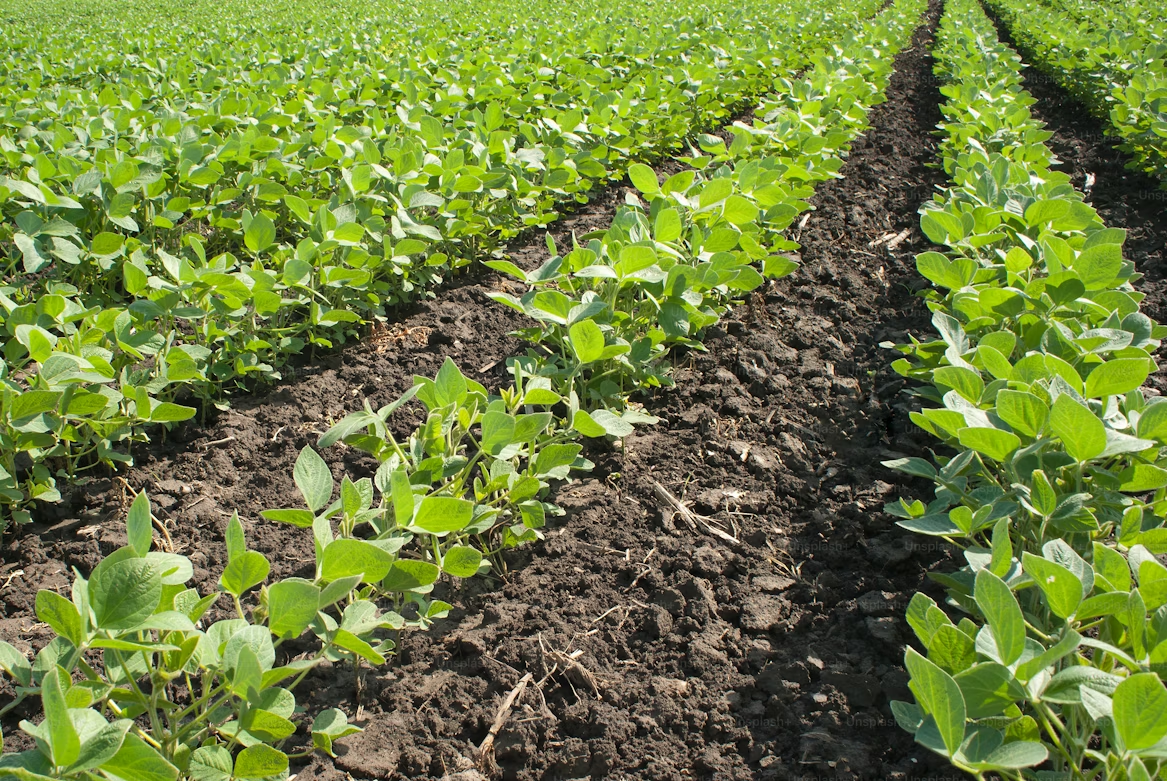
Companion planting means growing certain plants together to improve growth, repel pests, and enhance yield.
Some plants naturally support each other:
- basil improves tomato growth
- marigold repels harmful insects
- beans fix nitrogen for soil
Chart: companion planting effects
| Plant Pair | Benefit |
|---|---|
| Tomato + Basil | Better flavor + growth |
| Carrot + Onion | Pest protection |
| Beans + Corn | Nitrogen support |
| Marigold + Vegetables | Insect control |
This method increases yield without extra cost or chemicals.
tip 5: master watering technique instead of watering more
Water is essential, but incorrect watering reduces yield significantly.
Common mistake: shallow daily watering
Correct method: deep, less frequent watering
Deep watering encourages roots to grow deeper, making plants stronger and more productive.
Table: watering methods comparison
| Method | Root Growth | Yield Impact | Efficiency |
|---|---|---|---|
| Light daily water | Weak | Low | Poor |
| Deep weekly water | Strong | High | Efficient |
| Irregular watering | Stress | Very low | Poor |
Watering consistency directly affects fruit and vegetable production.
tip 6: prune plants to redirect energy into production
Pruning is often overlooked, but it plays a major role in increasing yield.
By removing:
- dead leaves
- weak branches
- overcrowded stems
plants redirect energy into producing fruits and flowers instead of unnecessary growth.
Example:
Tomato plants produce more fruit when side shoots are removed.
Chart: pruning impact on yield
| Plant Condition | Energy Use | Yield Result |
|---|---|---|
| No pruning | Excess leaf growth | Medium |
| Regular pruning | Balanced growth | High |
Pruning improves airflow and reduces disease risk as well.
tip 7: use organic fertilizers at the right growth stage
Different growth stages require different nutrients.
- early stage → nitrogen (leaf growth)
- flowering stage → phosphorus (flowering)
- fruiting stage → potassium (fruit development)
Using the wrong fertilizer at the wrong time reduces yield.
Table: nutrient timing guide
| Growth Stage | Nutrient Needed | Result |
|---|---|---|
| Early | Nitrogen | Healthy leaves |
| Mid-growth | Phosphorus | Strong flowering |
| Fruiting | Potassium | Better yield quality |
Balanced feeding leads to consistent production.
tip 8: control pests early to protect yield potential
Pests can destroy yield before you even notice them. Early prevention is much more effective than treatment after damage.
Common pests:
- aphids
- caterpillars
- whiteflies
- mites
Natural control methods:
- neem oil spray
- garlic-chili solution
- soap water spray
Chart: pest control effectiveness
| Method | Speed | Safety | Yield protection |
|---|---|---|---|
| Chemical | Fast | Medium | High but risky |
| Neem spray | Medium | High | High |
| Soap solution | Medium | High | Medium |
Healthy plants produce significantly higher yields when pest-free.
yield improvement summary chart
| Factor | Yield Impact Level |
|---|---|
| Soil improvement | Very high |
| Plant selection | High |
| Spacing control | High |
| Companion planting | Medium-high |
| Watering system | High |
| Pruning | Medium-high |
| Fertilizer timing | High |
| Pest control | Very high |
real-world example: small garden yield boost
Imagine a 10×10 ft vegetable garden:
Before applying tips:
- scattered planting
- irregular watering
- low soil quality
- minimal yield
After applying tips:
- structured layout
- compost-enriched soil
- companion planting
- pruning and pest control
Result:
- 2x to 3x yield increase
- healthier plants
- longer harvest season
common mistakes that reduce yield
Even experienced gardeners make mistakes that limit productivity:
- overwatering plants
- ignoring soil health
- planting too close
- skipping pruning
- using random fertilizers
Avoiding these alone can significantly improve results.
final thoughts
Increasing gardening yield is not about working harder—it is about working smarter. Once you understand how soil, water, nutrients, and plant interactions work together, you can dramatically improve production from the same space.
The most successful gardens are not the largest—they are the most balanced and well-managed.
With consistent application of these eight strategies, even a small garden can become highly productive.
faqs
- what is the fastest way to increase garden yield?
Improving soil quality with compost and choosing high-yield plant varieties gives the fastest results. - does pruning really increase yield?
Yes, pruning redirects plant energy into fruit and flower production instead of excess leaves. - how important is spacing for plant yield?
Very important—proper spacing prevents competition and improves overall productivity. - can companion planting really improve yield?
Yes, certain plants support each other by improving nutrients and repelling pests. - what is the best natural fertilizer for high yield?
Compost and well-rotted manure are among the best long-term options. - how do pests affect yield?
Pests reduce plant health, damage leaves and fruits, and significantly lower overall production.