
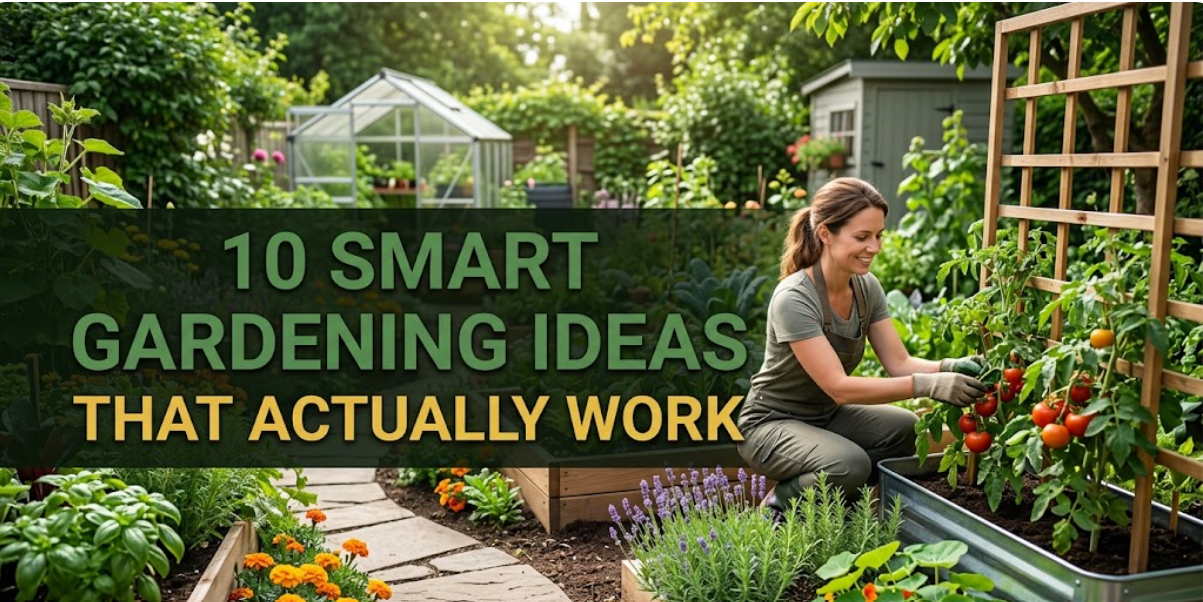
Gardening has a way of humbling even the most enthusiastic beginners. You start with a few pots, a packet of seeds, and a lot of optimism—then reality shows up in the form of yellowing leaves, stubborn pests, or plants that simply refuse to grow. Over time, though, patterns emerge. Certain methods consistently deliver better results, regardless of climate, experience level, or available space.
This article explores ten smart gardening ideas that are not just trendy but proven. These are practical approaches used by experienced gardeners to maximize yield, reduce effort, and create healthier plants. Along the way, you’ll find useful tables, comparisons, and structured insights to help you apply these ideas effectively.
- start with soil that actually supports life
Most gardening problems begin underground. People often underestimate the importance of soil health, focusing instead on fertilizers or watering schedules. But healthy soil is not just dirt—it’s a living ecosystem.
Smart gardeners improve soil before planting anything. This means adding organic matter such as compost, leaf mold, or well-rotted manure. These materials improve structure, water retention, and nutrient availability.
A simple breakdown of soil types and improvements:
Soil Type Common Issues Smart Fix
Clay Soil Poor drainage, compaction Add compost + sand + gypsum
Sandy Soil Drains too quickly Add compost + coconut coir
Loamy Soil Generally balanced Maintain with compost
Silty Soil Compacts easily Add organic matter regularly
One overlooked trick is to avoid over-tilling. While it might feel productive, excessive tilling destroys soil structure and beneficial microbes. Instead, use a “no-dig” or minimal disturbance approach.
- use raised beds for better control
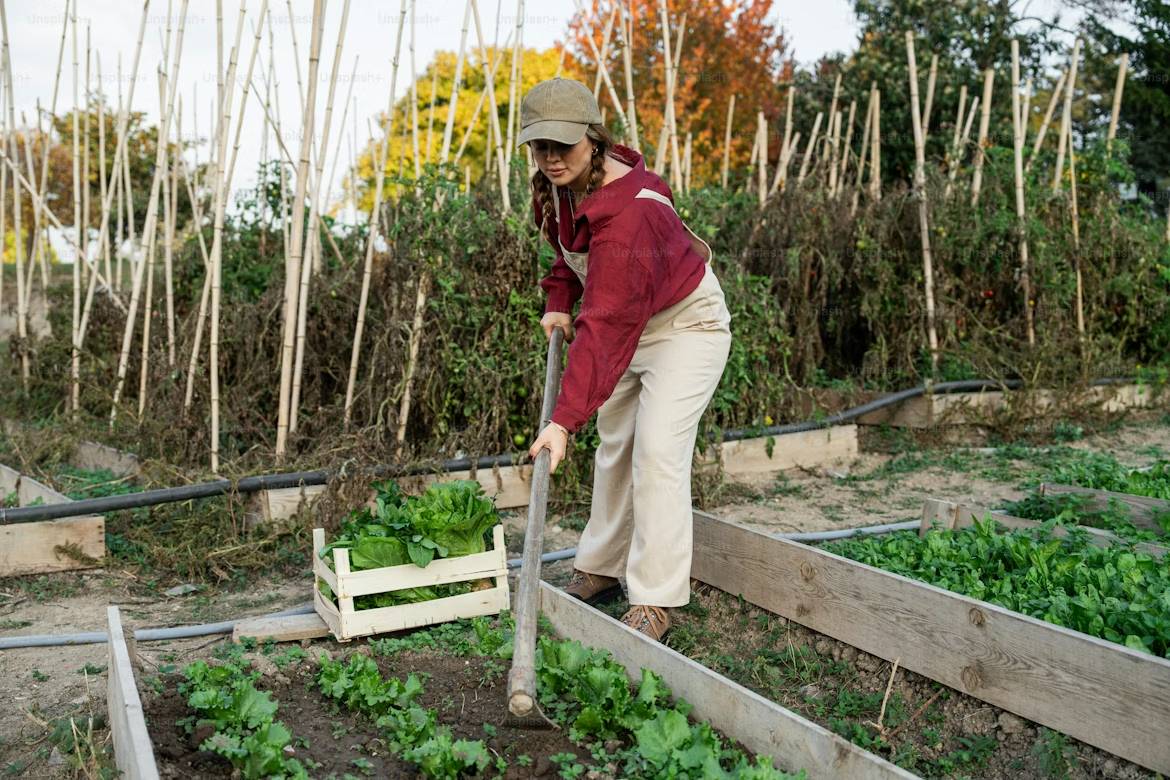
Raised beds are not just aesthetically pleasing—they solve multiple problems at once. They improve drainage, reduce soil compaction, and allow precise control over soil composition.
They are especially useful in urban settings or areas with poor native soil.
Here’s a quick comparison:
Feature Ground Gardening Raised Beds
Drainage Variable Excellent
Weed Control Moderate Easier
Soil Quality Depends on land Fully controlled
Accessibility Lower Higher (less bending)
Raised beds also warm up faster in spring, extending the growing season. Even a simple wooden frame filled with compost-rich soil can dramatically improve plant growth.
- practice companion planting
Plants interact with each other in ways that can either help or hinder growth. Companion planting uses these relationships to your advantage.
For example:
- Basil improves the flavor and growth of tomatoes
- Marigolds repel certain pests
- Carrots and onions protect each other from insects
A simple companion chart:
Plant Good Companions Avoid
Tomato Basil, carrots Corn
Carrot Onion, leek Dill
Cabbage Dill, onion Strawberry
Beans Corn, cucumber Onion
This method reduces reliance on chemical pesticides and encourages a balanced garden ecosystem.
- water deeply, not frequently
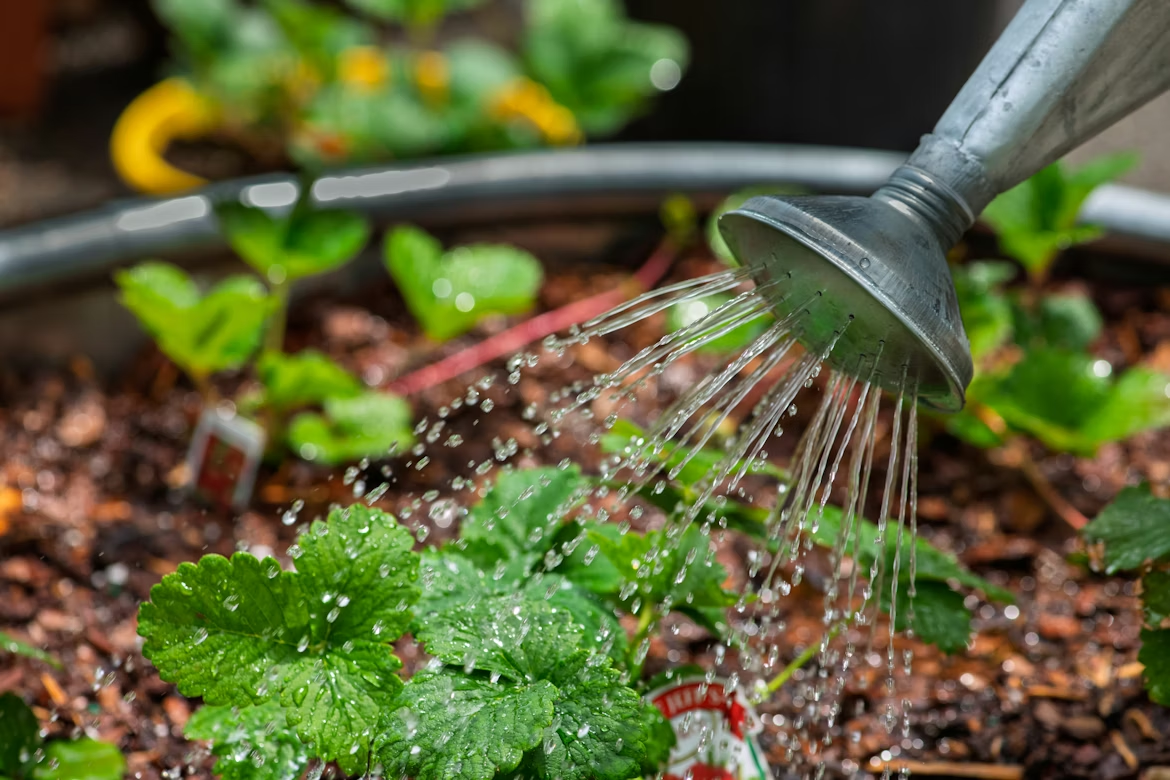
Many beginners water plants too often but too shallowly. This leads to weak root systems that depend on constant moisture.
Smart watering encourages deep roots. Water less often but thoroughly, allowing moisture to penetrate deeper into the soil.
Watering comparison:
Method Result
Frequent shallow Weak roots, higher stress
Deep infrequent Strong roots, drought resistance
Morning watering is ideal, as it reduces evaporation and fungal diseases. Drip irrigation systems or soaker hoses can also improve efficiency.
- mulch like it matters (because it does)
Mulching is one of the simplest yet most effective gardening techniques. It conserves moisture, regulates soil temperature, and suppresses weeds.
Organic mulch options include:
- Straw
- Wood chips
- Grass clippings
- Compost
Benefits of mulching:
Benefit Impact
Moisture retention Reduces watering needs
Weed suppression Less manual labor
Soil improvement Adds nutrients over time
Temperature control Protects roots
A layer of 2–3 inches is usually enough. Too much mulch, however, can suffocate plants or attract pests.
- grow vertically to maximize space
Space limitations don’t have to limit productivity. Vertical gardening allows you to grow more in less area.
This is especially useful for:
- Tomatoes
- Cucumbers
- Beans
- Peas
Vertical structures can include trellises, cages, or even wall-mounted systems.
Comparison of horizontal vs vertical gardening:
Aspect Horizontal Vertical
Space usage High Low
Air circulation Moderate Better
Disease risk Higher Lower
Harvest ease Moderate Easier
Better airflow reduces fungal diseases, and harvesting becomes simpler.
- rotate crops to avoid soil exhaustion
Planting the same crop in the same spot year after year depletes specific nutrients and encourages pests.
Crop rotation breaks this cycle.
Basic rotation groups:
Group Examples
Leaf crops Lettuce, spinach
Fruit crops Tomato, pepper
Root crops Carrot, beet
Legumes Beans, peas
A simple 4-year rotation plan:
Year Bed 1 Bed 2 Bed 3 Bed 4
1 Leaf Fruit Root Legume
2 Fruit Root Legume Leaf
3 Root Legume Leaf Fruit
4 Legume Leaf Fruit Root
This keeps soil balanced and reduces disease buildup.
- compost your waste instead of throwing it away
Kitchen scraps and garden waste can become one of your most valuable resources.
Composting turns organic waste into nutrient-rich material that improves soil structure and fertility.
What to compost:
Green materials (nitrogen-rich):
- Vegetable scraps
- Coffee grounds
- Grass clippings
Brown materials (carbon-rich):
- Dry leaves
- Cardboard
- Straw
Balanced compost ratio:
Material Type Ratio
Green 1 part
Brown 2–3 parts
A well-maintained compost pile should not smell bad. If it does, it likely needs more brown material or better aeration.
- choose the right plants for your climate
Trying to grow plants that are not suited to your environment often leads to frustration. Smart gardeners work with their climate, not against it.
Consider:
- Temperature range
- Rainfall
- Humidity
- Sun exposure
Example plant suitability:
Climate Type Suitable Plants
Hot & Dry Okra, peppers, eggplant
Cool & Moist Lettuce, spinach, broccoli
Tropical Banana, papaya, chili
Local varieties often perform better than imported ones because they are already adapted to the environment.
- observe your garden regularly
This might sound simple, but it’s one of the most powerful habits. Spending a few minutes each day observing your garden helps you catch problems early.
Look for:
- Leaf discoloration
- Pest activity
- Soil moisture levels
- Growth patterns
Early detection often means the difference between a minor issue and a major failure.
A simple observation checklist:
Daily Check Why It Matters
Leaves Detect disease early
Soil Prevent over/under watering
Pests Control before spread
Growth rate Identify nutrient issues
gardening efficiency chart
Below is a simplified comparison of effort vs results for these smart ideas:
Technique Effort Level Impact Level
Soil improvement Medium Very High
Raised beds Medium High
Companion planting Low Medium
Deep watering Low High
Mulching Low High
Vertical gardening Medium High
Crop rotation Low Medium
Composting Medium Very High
Right plant choice Low Very High
Observation Low Very High
faqs
- how long does it take to see results from these methods?
Some changes, like proper watering or mulching, show results within weeks. Soil improvement and composting may take a full season to show significant impact. - can i apply these ideas in a small balcony garden?
Yes, especially vertical gardening, composting (in small bins), and proper watering techniques. Even limited spaces can benefit from these methods. - what is the most important idea for beginners?
Improving soil quality is the most impactful starting point. Healthy soil supports everything else. - do i need expensive tools for smart gardening?
Not at all. Most of these ideas rely on technique rather than equipment. Basic tools and consistency matter more than expensive gear. - how do i deal with pests naturally?
Companion planting, regular observation, and maintaining healthy soil all reduce pest problems. Neem oil and soap sprays can help when needed. - is composting difficult to maintain?
It can seem complex at first, but once you understand the balance between green and brown materials, it becomes routine and low effort.
final thoughts
Smart gardening isn’t about working harder—it’s about working with natural systems instead of against them. Each idea in this guide builds on a simple principle: small, consistent improvements lead to better results over time.
You don’t need to apply all ten ideas at once. Start with one or two, observe the changes, and expand gradually. Over time, your garden becomes not just more productive, but more resilient and enjoyable to maintain.