
I didn’t get into gardening because I had extra money to spend. Quite the opposite. At one point, I remember standing in a garden center, looking at price tags that made me question whether growing my own food was actually cheaper than buying it. Bags of soil, fancy planters, specialized tools—it all added up quickly. That’s when I decided to approach gardening differently.
Instead of spending more, I started experimenting with ways to cut costs without cutting corners. What followed was a mix of trial, error, a few mistakes, and some surprisingly effective discoveries. Over time, these small changes saved me hundreds—maybe even more than I initially realized.
Here are the nine budget gardening ideas that made the biggest difference.
repurposing everyday items into planters
One of the first things I stopped buying was traditional planters. Not because they aren’t useful, but because they’re often overpriced for what they are. Once I started looking around my home, I realized I already had plenty of containers that could do the job just as well.
Old buckets, storage bins, cracked mugs, plastic bottles, even worn-out shoes—almost anything can become a planter with proper drainage.
The key is simple: drill or poke holes at the bottom, ensure the container is safe for plants, and you’re good to go.
Here’s a quick comparison of costs:
Item Type | Average Cost (Store-Bought) | DIY Cost
Standard plastic pot | $5–$15 | $0 (repurposed container)
Ceramic planter | $20–$60 | $0–$5 (thrifted item)
Raised planter box | $50–$150 | $10–$30 (recycled wood)
Over one season, switching to repurposed containers alone saved me more than I expected.
starting plants from seeds instead of seedlings
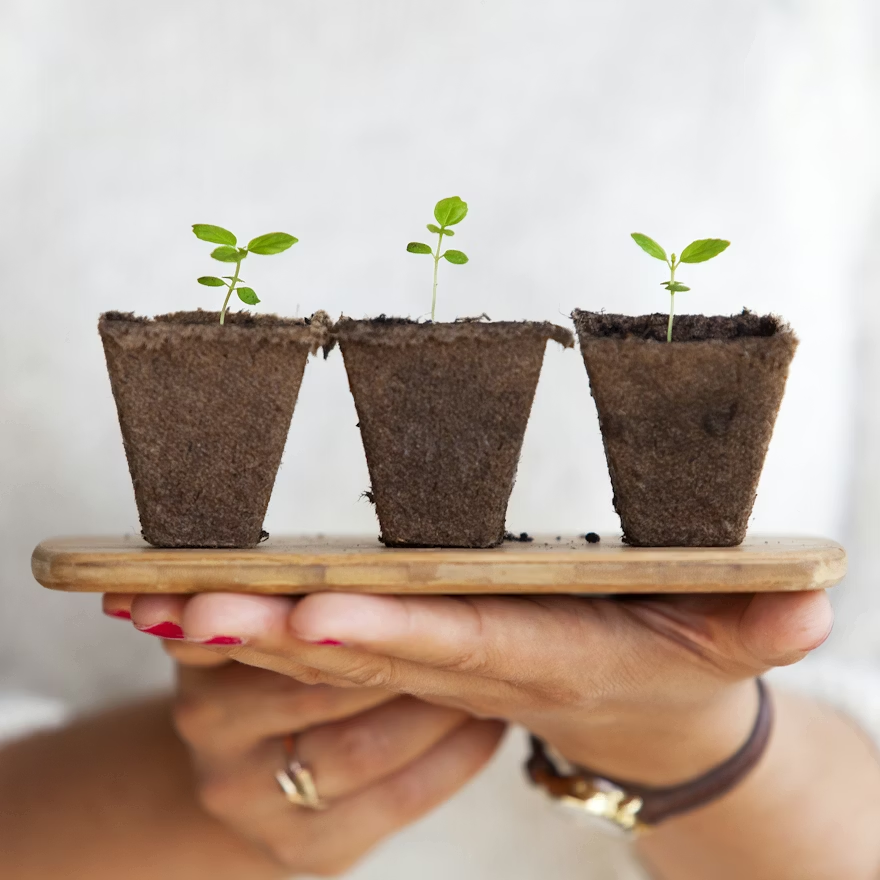
Seedlings are convenient, but they’re also one of the easiest ways to overspend. A single small plant can cost as much as a full packet of seeds that produces dozens of plants.
At first, I hesitated because growing from seeds seemed complicated. But once I tried it, I realized it’s mostly about patience and consistency.
Here’s how the math worked out:
Plant Type | Seed Packet Cost | Number of Plants | Cost per Plant
Tomatoes | $2 | 25–30 | ~$0.07
Lettuce | $1.50 | 50+ | ~$0.03
Peppers | $2.50 | 20–25 | ~$0.10
Store-bought seedlings | $3–$6 each | 1 | $3–$6
The difference is dramatic. Even if only half the seeds succeed, the savings are still substantial.
making your own compost
I used to think composting required a fancy bin and a lot of space. It turns out, neither is strictly necessary.
Kitchen scraps, dry leaves, cardboard, and even coffee grounds can be turned into nutrient-rich compost with minimal setup. I started with a simple pile in a corner of my yard and later upgraded to a basic container.
Not only did this reduce waste, but it also eliminated the need to buy expensive soil amendments.
Common compost materials:
Greens (nitrogen-rich) | Browns (carbon-rich)
Vegetable scraps | Dry leaves
Fruit peels | Cardboard
Coffee grounds | Newspaper
Grass clippings | Wood chips
By balancing these materials, you create your own fertilizer—for free.
collecting rainwater for irrigation
Water bills can quietly climb when you start watering regularly. I noticed this after my first serious gardening season.
The solution was surprisingly simple: collect rainwater.
A basic setup involves placing containers under gutters or areas where water naturally collects. Even a single rainfall can fill multiple buckets.
Here’s a rough comparison:
Water Source | Monthly Cost | Annual Cost
Tap water (garden use) | $10–$30 | $120–$360
Rainwater collection | $0 (after setup) | $0–$20 (containers)
Over time, this became one of the most effective ways to cut recurring costs.
using mulch to reduce watering and weeds
Mulch is one of those things that seems optional until you realize how much work it saves.
Instead of buying expensive mulch, I started using free materials like:
- Grass clippings
- Shredded newspaper
- Fallen leaves
- Wood chips from local tree trimming services
Mulch helps retain moisture, suppress weeds, and improve soil quality over time.
Here’s what changed after I started mulching:
Factor | Without Mulch | With Mulch
Watering frequency | Daily | Every 2–3 days
Weed growth | High | Low
Soil moisture retention | Poor | Strong
Less watering and fewer weeds mean less time and money spent overall.
propagating plants from cuttings
Buying new plants every season adds up quickly. That’s when I discovered propagation.
Many plants can be grown from cuttings—essentially cloning an existing plant.
Some of the easiest plants to propagate:
Plant | Method | Success Rate
Mint | Stem in water | Very high
Basil | Stem in water | High
Rosemary | Stem in soil | Moderate
Succulents | Leaf cuttings | High
Once you have one healthy plant, you can multiply it indefinitely. That’s a powerful way to expand your garden without spending extra.
building DIY garden tools
I used to assume tools had to be bought. But after breaking a few and seeing the cost of replacements, I started improvising.
Some examples:
Tool | Store Price | DIY Alternative
Hand trowel | $10–$20 | Cut plastic bottle
Watering can | $15–$30 | Punctured milk jug
Plant markers | $5–$15 | Popsicle sticks or scrap wood
While these DIY tools may not last forever, they’re often good enough—and essentially free.
growing high-yield, low-cost crops
Not all plants are equal when it comes to savings. Some produce far more food per square foot and require less maintenance.
These became my go-to choices:
Crop | Yield Potential | Cost Efficiency
Zucchini | Very high | Excellent
Tomatoes | High | Excellent
Spinach | Moderate | Good
Herbs (mint, basil) | Continuous | Excellent
Choosing the right crops made a noticeable difference in how much I saved at the grocery store.
joining local plant swaps and communities
This was something I discovered later, but it turned out to be incredibly valuable.
Local gardening groups often organize plant swaps where people exchange seeds, cuttings, and even tools.
Benefits include:
- Free plants and seeds
- Advice from experienced gardeners
- Access to rare or unique varieties
Instead of buying everything new, you become part of a sharing ecosystem.
estimated yearly savings breakdown
To put everything into perspective, here’s a rough estimate of how much these ideas saved over a year:
Category | Traditional Cost | Budget Approach | Savings
Planters | $150 | $20 | $130
Plants/Seeds | $200 | $40 | $160
Soil/Compost | $120 | $20 | $100
Water | $240 | $40 | $200
Tools | $100 | $20 | $80
Total | $810 | $140 | $670
These numbers will vary depending on location and scale, but the pattern is clear: small changes add up quickly.
what surprised me the most
What stood out wasn’t just the money saved—it was how these budget methods often worked better than the expensive alternatives.
Repurposed containers performed just as well as store-bought ones. Compost improved soil more naturally than synthetic fertilizers. Rainwater seemed to benefit plants more than tap water.
It made me rethink the idea that spending more always leads to better results.
common mistakes I made along the way
Not everything worked perfectly from the start. A few lessons came the hard way:
- Overwatering seedlings
- Using containers without proper drainage
- Ignoring soil quality early on
- Trying to grow too many varieties at once
Each mistake helped refine the process and ultimately made the garden more efficient.
how these ideas scale over time
The real advantage of budget gardening becomes clear over multiple seasons.
Once you have:
- A compost system
- A collection of seeds
- Established plants for propagation
- Reusable containers
Your costs drop even further. In some cases, you barely need to spend anything at all.
frequently asked questions
- Is budget gardening less effective than traditional gardening?
Not necessarily. In many cases, budget methods are just as effective, especially when they focus on natural processes like composting and water conservation. - How much space do I need to start?
Very little. Even a balcony or small corner can support a productive garden using containers and vertical space. - Are DIY planters safe for all plants?
As long as the material is non-toxic and has proper drainage, most repurposed containers work well. - How long does it take to see savings?
Some savings, like using repurposed containers, are immediate. Others, like composting, build over a few months. - What’s the easiest crop for beginners?
Herbs like basil and mint are among the easiest and most forgiving plants to grow. - Can I garden year-round on a budget?
Yes, with seasonal planning and simple setups like indoor containers or protective covers, gardening can continue throughout the year.
closing thoughts
If there’s one thing I’ve learned, it’s that gardening doesn’t have to be expensive to be rewarding. In fact, approaching it with a budget mindset often leads to more creativity, better resource use, and a deeper understanding of how things grow.
Saving money was the goal at the start, but what I gained along the way—skills, confidence, and a more sustainable approach—turned out to be just as valuable.