
Most gardening advice circles around the same familiar themes—water regularly, give plants sunlight, use good soil. While these fundamentals matter, experienced growers quietly rely on lesser-known techniques that rarely make it into mainstream guides. These “hidden” practices aren’t complicated, but they can dramatically change how your garden performs.
This article explores 11 such gardening ideas—practical, field-tested, and often overlooked. Along the way, you’ll find tables and structured insights to help you apply each idea effectively.
understanding plant stress as a growth tool
Most people think stress is bad for plants. In reality, controlled stress can enhance resilience, flavor, and even yield.
When plants experience mild stress—like slightly reduced watering or temperature variation—they activate survival mechanisms. These mechanisms often result in deeper roots, stronger stems, and richer taste (especially in herbs and vegetables).
Here’s how controlled stress affects plants:
| Type of Stress | Controlled Method | Result |
|---|---|---|
| Water stress | Slightly delay watering | Deeper root systems |
| Temperature variation | Expose to cooler nights | Stronger stems |
| Nutrient limitation | Reduce nitrogen slightly | More flowers/fruits |
| Wind exposure | Outdoor airflow | Thicker stems |
The key is balance. Excess stress harms plants, but subtle variation builds strength.
using “ugly” compost layers for faster decomposition
Experts rarely mention that compost doesn’t need to look neat. In fact, messy, uneven layers break down faster because they create irregular airflow pockets.
Instead of perfect green-brown layering, try this:
- Mix kitchen scraps randomly with dry leaves
- Add occasional soil handfuls
- Avoid compressing layers too tightly
Here’s a comparison:
| Compost Style | Breakdown Speed | Effort Level |
|---|---|---|
| Perfect layering | Medium | High |
| Random layering | Fast | Low |
| Compacted piles | Slow | Low |
The irregular structure promotes microbial diversity, which accelerates decomposition.
watering deeply but less frequently
One of the most common mistakes is frequent shallow watering. Experts instead water deeply and then wait longer.
Why it works:
- Encourages roots to grow downward
- Prevents surface-level dependency
- Reduces evaporation loss
Watering strategy comparison:
| Method | Root Depth | Water Efficiency | Plant Strength |
|---|---|---|---|
| Daily light watering | Shallow | Low | Weak |
| Deep weekly watering | Deep | High | Strong |
A good rule: water until soil is moist 6–8 inches deep, then allow partial drying.
planting in clusters instead of rows
Traditional gardening uses straight rows, but clustering plants can mimic natural ecosystems.
Benefits:
- Better moisture retention
- Reduced weed growth
- Improved pollination
Example cluster layout:
| Plant Type | Cluster Size | Spacing |
|---|---|---|
| Herbs | 3–5 plants | 6–8 inches |
| Leafy greens | 6–10 plants | 4–6 inches |
| Flowers | 4–7 plants | 8–12 inches |
Clusters create microclimates that protect plants from heat and wind.
using shade strategically, not just avoiding it
Instead of chasing full sun, experts often introduce partial shade deliberately.
Benefits of controlled shade:
- Prevents leaf burn
- Extends growing season
- Reduces water needs
Shade planning chart:
| Plant Type | Ideal Sun Exposure | Shade Benefit |
|---|---|---|
| Lettuce | Partial | Prevents bolting |
| Tomatoes | Full | Afternoon shade reduces stress |
| Herbs | Partial | Enhances flavor oils |
A simple cloth or taller plants can create effective shading.
feeding soil, not plants
Rather than fertilizing plants directly, experienced gardeners focus on enriching the soil ecosystem.
Healthy soil contains:
- Microorganisms
- Organic matter
- Balanced nutrients
Soil enrichment methods:
| Method | Frequency | Impact |
|---|---|---|
| Compost addition | Monthly | Improves structure |
| Mulching | Continuous | Retains moisture |
| Organic teas | Biweekly | Boosts microbes |
When soil thrives, plants naturally follow.
using weeds as indicators
Weeds aren’t just nuisances—they reveal soil conditions.
Common weed signals:
| Weed Type | Indicates | Solution |
|---|---|---|
| Dandelions | Compacted soil | Aerate soil |
| Clover | Low nitrogen | Add compost |
| Moss | Poor drainage | Improve drainage |
| Crabgrass | Bare soil | Add mulch |
Instead of removing weeds blindly, read what they’re telling you.
timing watering with plant biology
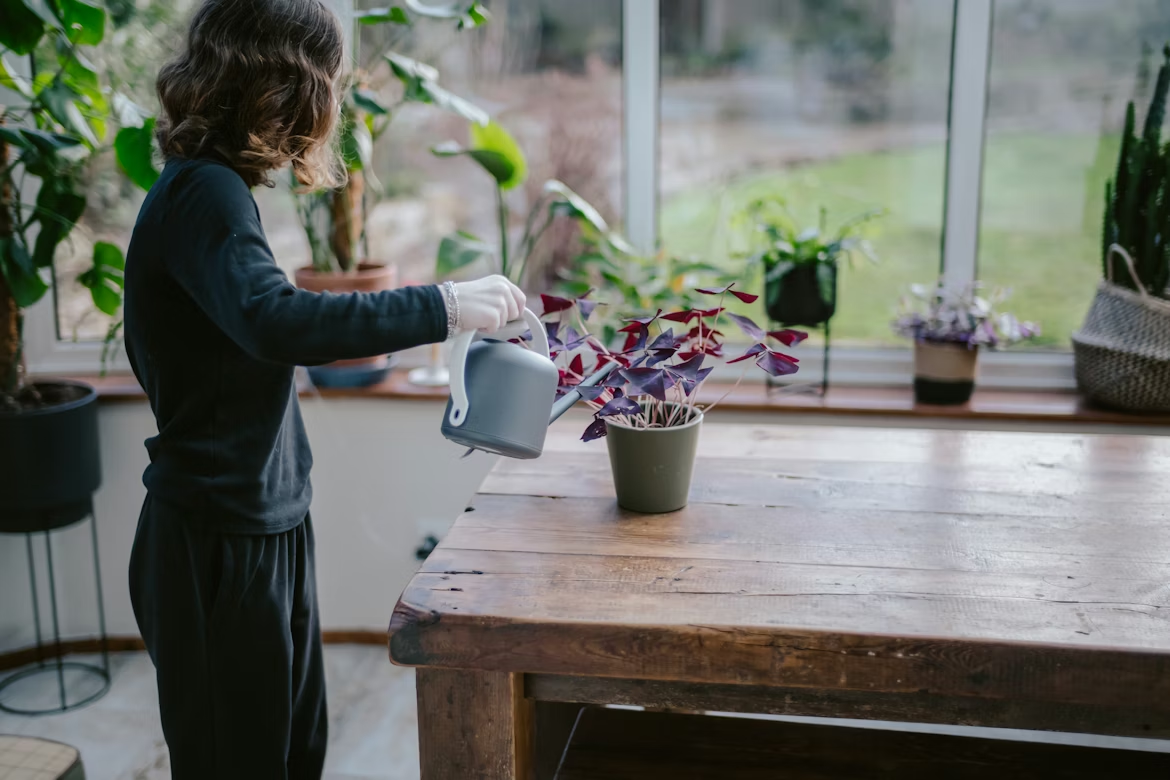
Most advice says “water in the morning,” but experts adjust timing based on plant type and weather.
General guide:
| Condition | Best Time to Water |
|---|---|
| Hot climate | Early morning |
| Humid climate | Mid-morning |
| Cooler seasons | Late morning |
| Indoor plants | When soil dries |
The goal is to minimize evaporation while avoiding fungal growth.
rotating micro-locations, not just crops
Crop rotation is well known, but experts also rotate exact planting spots within small areas.
Benefits:
- Prevents nutrient depletion
- Reduces pest buildup
- Improves soil recovery
Micro-rotation example:
| Season | Bed Position |
|---|---|
| Spring | Left section |
| Summer | Center |
| Fall | Right section |
Even shifting plants by a few feet makes a difference.
using mulch creatively, not uniformly
Most guides recommend spreading mulch evenly. Experts vary thickness depending on plant needs.
Mulch variation chart:
| Area | Mulch Thickness |
|---|---|
| Around trees | 3–4 inches |
| Vegetable beds | 1–2 inches |
| Seedlings | Thin layer |
| Dry zones | Thick layer |
This targeted approach improves moisture control and prevents root suffocation.
harvesting strategically to boost growth
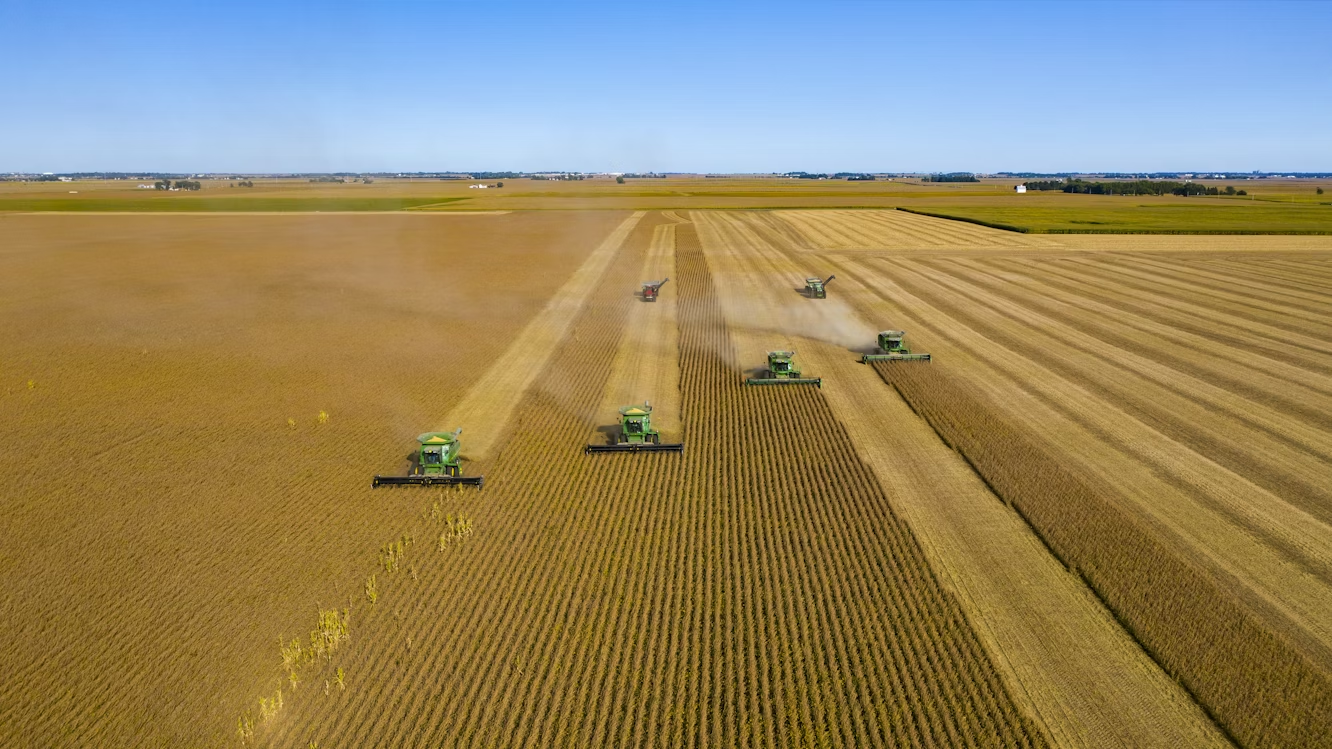
How you harvest affects future yield.
Key techniques:
- Cut above growth nodes
- Harvest regularly to stimulate production
- Avoid removing more than one-third at once
Harvesting impact:
| Method | Result |
|---|---|
| Random cutting | Slower regrowth |
| Strategic cutting | Continuous growth |
| Over-harvesting | Plant stress |
Frequent, careful harvesting encourages plants to keep producing.
visualizing garden efficiency
Below is a simple comparison of traditional vs optimized gardening approaches:
| Factor | Traditional Method | Expert Method |
|---|---|---|
| Watering | Frequent shallow | Deep, spaced |
| Layout | Rows | Clusters |
| Soil care | Fertilizers | Soil ecosystem |
| Weed control | Removal | Analysis |
| Sun exposure | Maximum | Balanced |
These subtle shifts create a more resilient garden system.
practical weekly gardening schedule
Here’s a realistic weekly structure incorporating these ideas:
| Day | Task |
|---|---|
| Monday | Check soil moisture |
| Tuesday | Light pruning/harvesting |
| Wednesday | Compost addition |
| Thursday | Observe plant stress |
| Friday | Adjust shade/mulch |
| Saturday | Deep watering |
| Sunday | Rest and observation |
Gardening becomes easier when guided by rhythm rather than rigid rules.
final thoughts
The difference between average and exceptional gardening often lies in small, quiet adjustments rather than dramatic changes. These 11 ideas aren’t secrets because they’re hidden—they’re simply overlooked in favor of simpler, more marketable advice.
When you start observing your garden as a living system—soil, water, light, and biology working together—you naturally begin to apply these techniques without overthinking them.
frequently asked questions
- are these techniques suitable for beginners?
Yes. Most of these ideas simplify gardening rather than complicate it. Beginners can adopt them gradually. - how long before I see results?
Some changes, like watering methods, show results within weeks. Soil improvements may take a few months. - can I use these ideas in small spaces or containers?
Absolutely. Techniques like clustering, deep watering, and soil feeding work well in containers. - do I need special tools or products?
No. Most methods rely on observation and basic materials like compost and mulch. - is controlled stress risky for plants?
Only if overdone. Mild stress strengthens plants, but extreme conditions can harm them. - what is the most important idea to start with?
Focus on soil health first. Once the soil improves, everything else becomes easier and more effective.