
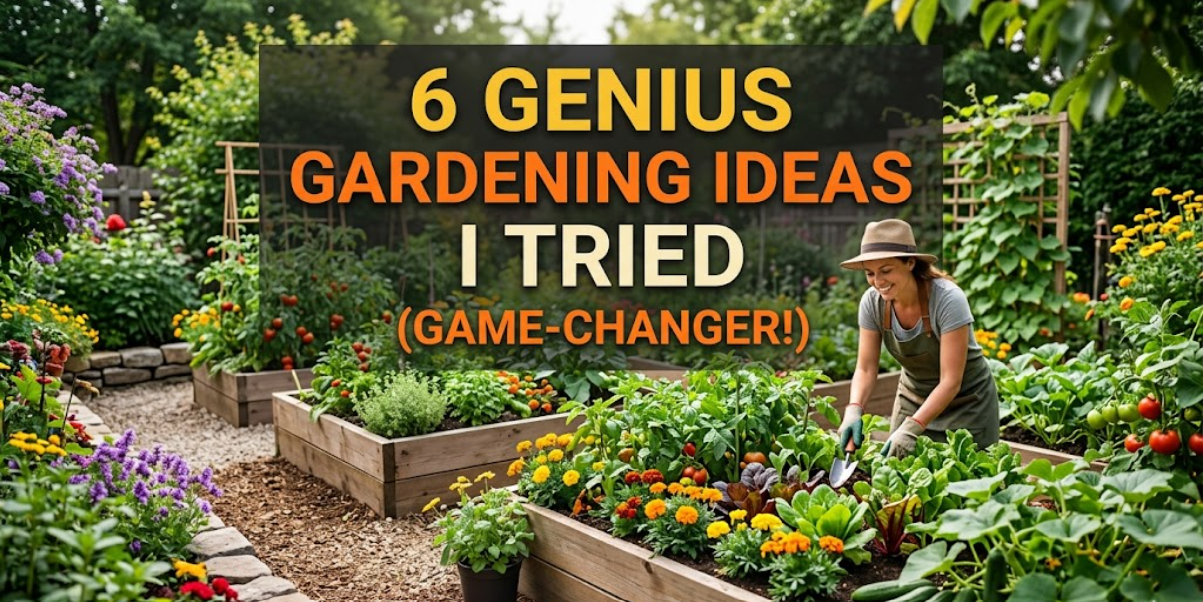
I didn’t set out to become “that person” who talks to plants or rearranges pots at midnight because the light “feels wrong.” It happened gradually—first a couple of herbs on a windowsill, then a stubborn tomato plant that refused to fruit, and eventually a full-blown obsession with figuring out what actually works in a home garden.
What follows isn’t theory. It’s a lived experiment. Six ideas I tried—some out of curiosity, some out of desperation—that ended up reshaping how I garden. Each one came with its own learning curve, small failures, and surprising wins. If you’re looking for something beyond generic advice, this is it.
idea 1: vertical layering instead of traditional spacing
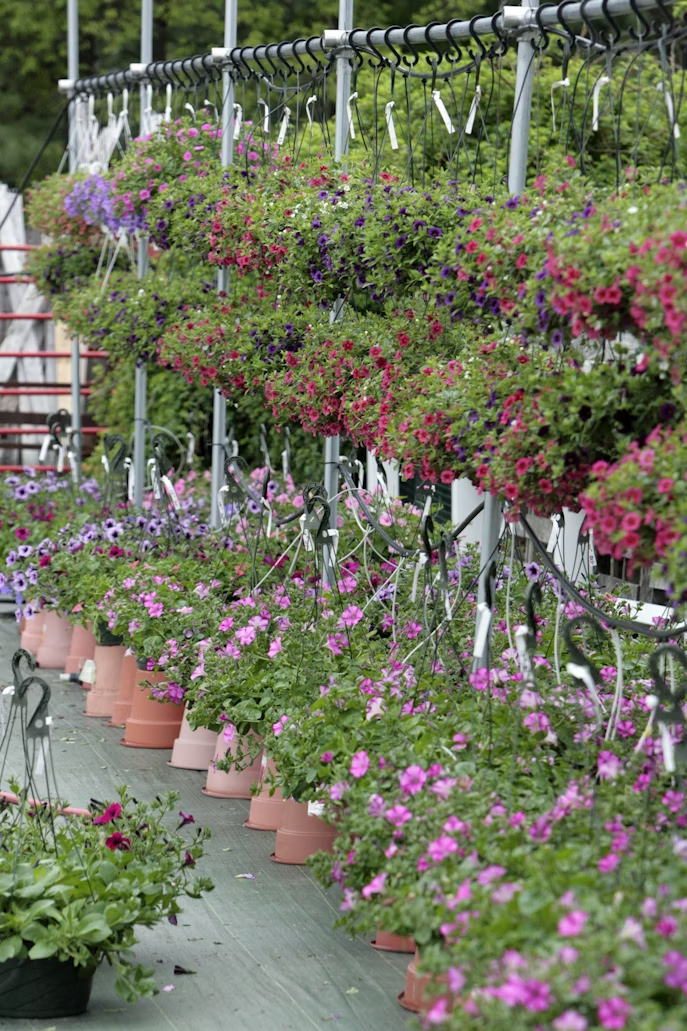
I used to think plants needed “their own space,” neatly arranged in rows like soldiers. Turns out, that mindset wastes both space and potential. Vertical layering changed everything.
Instead of spreading plants horizontally, I started stacking them visually and functionally:
- Tall plants (tomatoes, beans) at the back or center
- Medium growers (peppers, eggplants) in the middle
- Ground covers (lettuce, herbs) at the base
This mimics natural ecosystems where plants coexist at different heights.
Why it worked
Plants stopped competing aggressively for light because I intentionally managed their exposure. The lower layers benefited from partial shade, especially in harsh summer conditions.
Quick comparison
| Method | Space Efficiency | Yield per Sq Ft | Maintenance |
|---|---|---|---|
| Traditional rows | Low | Moderate | Easy |
| Vertical layering | High | High | Moderate |
Unexpected benefit
Weeds had a harder time establishing because the soil was more shaded and covered.
idea 2: self-watering containers (with a twist)
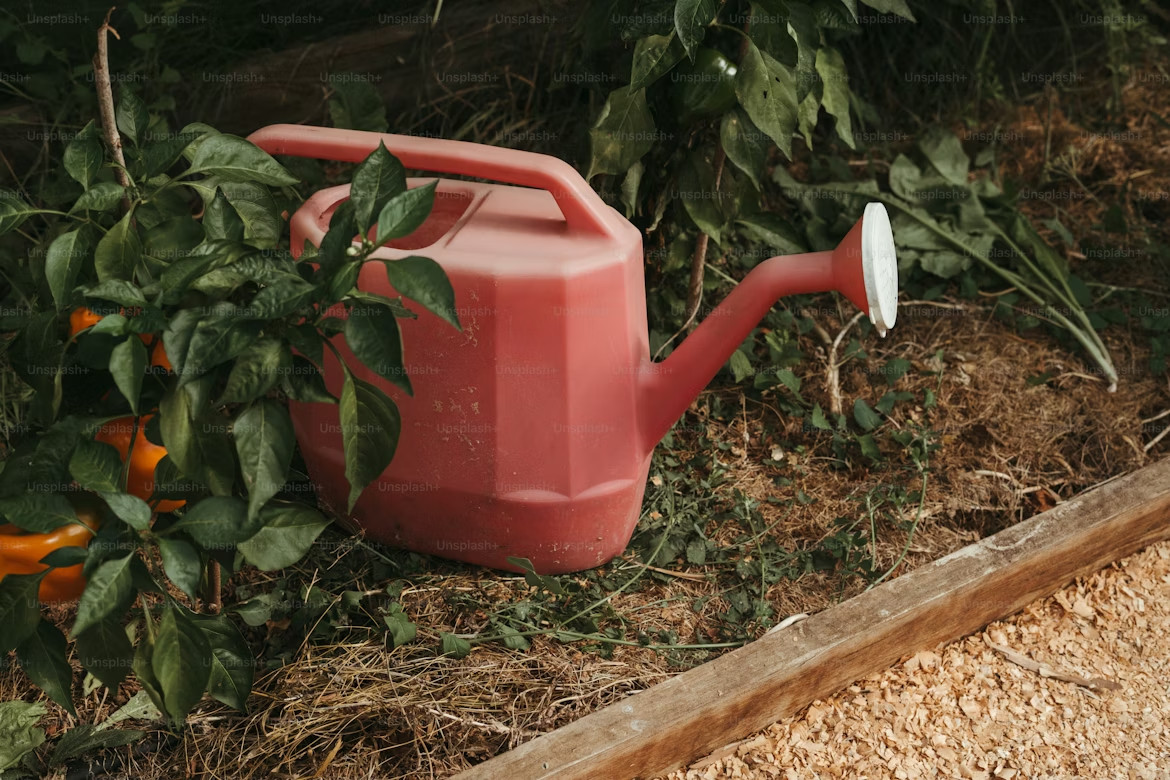
I tried standard self-watering pots before, but they often led to soggy soil. So I modified the setup.
Instead of relying purely on a reservoir, I added:
- A layer of coarse sand for drainage
- A cotton wick system for gradual water absorption
- A small inspection tube to monitor water levels
What changed
Plants got consistent moisture without root rot. The wick ensured water traveled upward only when needed.
Water usage comparison
| Setup Type | Water Frequency | Risk of Overwatering | Plant Health |
|---|---|---|---|
| Regular pots | Daily | High | Variable |
| Basic self-watering | Every 2–3 days | Moderate | Good |
| Modified system (mine) | Weekly | Low | Excellent |
Real-life impact
I left for a 5-day trip and came back to thriving plants. That had never happened before.
idea 3: companion planting that actually makes sense
I had read about companion planting before, but most guides felt overly rigid. Instead of memorizing charts, I focused on practical pairings based on observation.
What I tested:
- Basil near tomatoes → fewer pests, better growth
- Marigolds near everything → noticeable reduction in insects
- Mint in containers near vegetables → acted as a deterrent (without taking over)
Simple companion guide
| Main Plant | Companion | Benefit |
|---|---|---|
| Tomato | Basil | Pest control, flavor |
| Cucumber | Marigold | Repels beetles |
| Carrot | Onion | Confuses pests |
What didn’t work
Planting everything together randomly. Some plants still compete for nutrients and space.
Lesson learned
Companion planting isn’t magic—it’s strategic coexistence.
idea 4: soil layering instead of mixing everything
This one felt counterintuitive. I was used to mixing compost, soil, and fertilizers into one uniform blend. Then I tried layering instead.
The structure looked like this:
- Bottom layer: coarse material (sticks, bark)
- Middle layer: compost-rich soil
- Top layer: fine soil with organic matter
Why it worked
Each layer served a purpose:
- Bottom improved drainage
- Middle provided nutrients
- Top supported root development
Soil performance comparison
| Approach | Drainage | Nutrient Retention | Root Growth |
|---|---|---|---|
| Mixed soil | Moderate | Moderate | Good |
| Layered soil | High | High | Excellent |
Observation
Plants rooted deeper and seemed more resilient during heat waves.
idea 5: microclimate manipulation
I used to blame the weather for everything. Too hot, too dry, too unpredictable. Then I started controlling small environmental factors.
What I adjusted:
- Used reflective surfaces to redirect sunlight
- Placed water containers nearby to increase humidity
- Added temporary shade using cloth during peak hours
Before vs after
| Condition | Before Adjustment | After Adjustment |
|---|---|---|
| Leaf burn | Frequent | Rare |
| Soil dryness | Rapid | Slower |
| Plant stress | High | Low |
Surprising discovery
Even moving a pot by half a meter changed how it received sunlight and wind.
Takeaway
You don’t need a greenhouse to create better growing conditions—just awareness and small tweaks.
idea 6: pruning with intention, not fear
I avoided pruning for the longest time. Cutting a healthy plant felt wrong. But once I started, it became one of the most impactful changes.
What I focused on:
- Removing weak or crowded stems
- Encouraging airflow
- Directing energy toward fruiting branches
Results over time
| Plant Type | Without Pruning | With Pruning |
|---|---|---|
| Tomato | Bushy, fewer fruits | Balanced, more fruits |
| Herbs | Leggy growth | Compact, fuller |
| Peppers | Slow yield | Faster yield |
What changed mentally
I stopped treating plants as fragile and started seeing them as adaptable systems.
a quick visual summary of all six ideas
| Idea | Effort Level | Impact Level | Best For |
|---|---|---|---|
| Vertical layering | Medium | High | Small spaces |
| Self-watering system | Medium | High | Busy schedules |
| Companion planting | Low | Medium | Pest control |
| Soil layering | Medium | High | Root health |
| Microclimate tweaks | Low | Medium | Harsh climates |
| Intentional pruning | Low | High | Yield improvement |
what made these ideas “genius” for me
Not because they’re revolutionary. Most of them exist in some form already. The difference is applying them practically, adapting them, and sticking with them long enough to see results.
Gardening isn’t about copying perfect setups. It’s about responding to what’s in front of you—your space, your climate, your time constraints.
I made mistakes with every single one of these ideas. Overwatered, under-pruned, overcrowded plants. But each adjustment led to something better.
common mistakes I made (so you don’t have to)
- Overcomplicating setups before understanding basics
- Ignoring sunlight patterns throughout the day
- Using too many techniques at once
- Expecting immediate results
- Forgetting that plants need consistency more than perfection
faqs
- do these gardening ideas work in small apartments?
Yes. In fact, vertical layering and microclimate adjustments are especially useful in small spaces like balconies or windowsills. - how long does it take to see results?
Some changes, like pruning and watering adjustments, show results within weeks. Others, like soil improvements, take a full growing cycle. - can beginners try all six ideas at once?
It’s better to start with one or two. Combining everything immediately can make it hard to identify what’s working. - is the self-watering system expensive to build?
Not really. Most materials can be reused household items. The key is the design, not the cost. - does companion planting completely eliminate pests?
No, but it significantly reduces them. Think of it as part of a broader strategy rather than a complete solution. - what’s the easiest idea to start with?
Pruning and microclimate adjustments. They require minimal setup and deliver noticeable improvements quickly.
In the end, what surprised me most wasn’t how much my garden changed—but how much my approach did. I stopped chasing perfect conditions and started working with what I had. That shift made all the difference.