
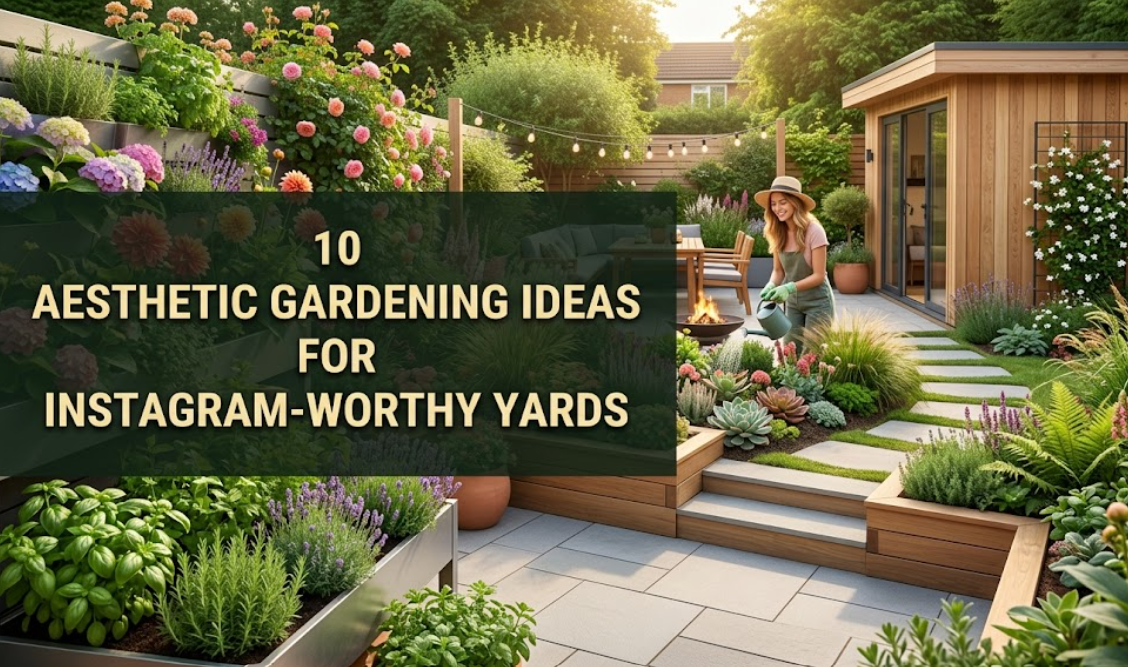
A beautiful garden today is more than just a place to grow plants—it’s a personal visual story. With Instagram and other visual platforms shaping design trends, many people now want gardens that are not only functional but also visually striking. The good news is that you don’t need a luxury budget or professional landscaping skills to achieve that effect.
Aesthetic gardening is about composition, color harmony, textures, and intentional design. This guide explores ten practical ideas that can transform any yard, balcony, or small garden space into something worth photographing.
- build a visual focal point in your garden
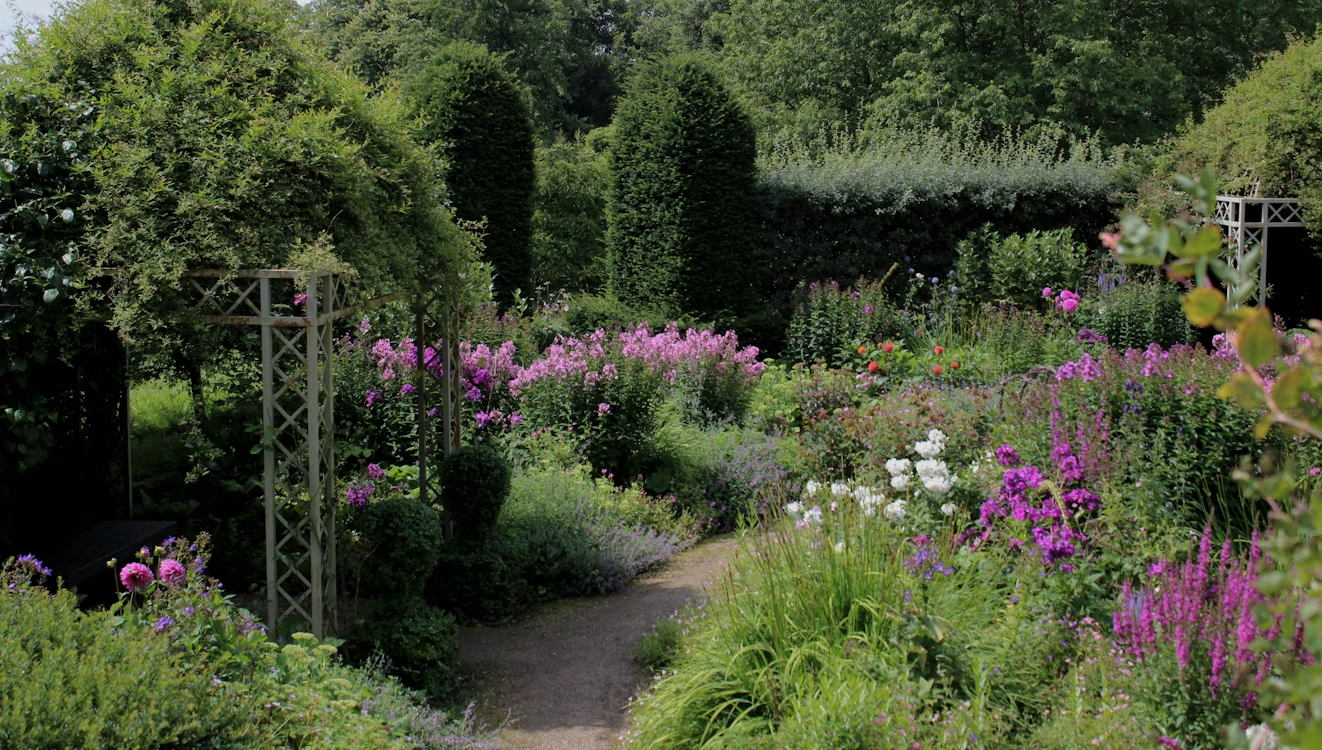
Every Instagram-worthy garden has a focal point. This is the visual anchor that immediately draws attention when someone looks at your space.
Examples of focal points:
- A water fountain
- A large decorative planter
- A garden arch with climbing roses
- A sculptural tree or bonsai centerpiece
Without a focal point, even a well-planted garden can feel visually scattered.
Focal point effectiveness chart:
Type of focal point Visual impact Maintenance level
Water feature Very high Medium
Flower arch High Medium
Statue/sculpture Medium Low
Large planter Medium Low
Tree centerpiece Very high High
A well-placed focal point helps guide the viewer’s eye naturally through the garden space, which is essential for photography.
- use color theory in plant selection
One of the biggest differences between a random garden and an aesthetic one is intentional color planning. Instead of planting whatever is available, think in terms of color palettes.
Popular garden color schemes:
- Monochrome (different shades of one color)
- Complementary (opposite colors on the wheel)
- Analogous (colors next to each other on the wheel)
- Neutral + accent (greens with small pops of color)
Color palette examples:
Style Colors used
Calming garden White, lavender, soft green
Bold tropical Red, orange, deep green
Pastel aesthetic Pink, baby blue, cream
Minimalist Green, white, grey tones
Plants should be selected not only for survival but for how they visually interact with each other.
- layer your plants for depth and dimension
Flat gardens look boring in photos. Professional-looking gardens always use layering to create depth.
Layering structure:
- Tall plants at the back
- Medium-height plants in the middle
- Low-growing plants at the front
This creates a natural “stage” effect that photographs beautifully.
Garden layering chart:
Layer Plant examples
Back layer Bamboo, sunflowers, tall grasses
Middle layer Roses, hydrangeas, hibiscus
Front layer Lavender, petunias, ground covers
When done correctly, layering makes even a small space look larger and more dynamic.
- add soft lighting for evening aesthetics
Lighting completely transforms a garden’s mood. Many viral garden photos on Instagram rely heavily on warm, soft lighting.
Types of garden lighting:
- Fairy lights
- Solar pathway lights
- Lanterns
- Hidden LED strips
Lighting comparison:
Lighting type Mood created Best use
Fairy lights Magical/cozy Trees, fences
Solar lights Practical/clean Walkways
Lanterns Rustic/warm Seating areas
LED strips Modern/minimal Deck edges
Warm-toned lighting (2700K–3000K) usually performs best for aesthetic photography.
- design a dedicated photo corner
Instead of trying to make the entire garden photogenic, create one intentional “Instagram corner.”
Elements of a photo corner:
- Decorative chair or bench
- Vertical plant wall
- Flower backdrop
- Soft lighting
Suggested setup table:
Element Purpose
Seating Adds human scale
Green backdrop Creates depth
Decor items Adds personality
Lighting Enhances mood
This corner becomes your go-to spot for content creation and seasonal photos.
- incorporate symmetry for visual harmony

Symmetry is naturally pleasing to the human eye and plays a big role in aesthetic gardening.
Common symmetrical designs:
- Mirror planting on both sides of a path
- Identical pots on stairways
- Matching garden beds
Symmetry styles comparison:
Style Description
Formal symmetry Perfect mirror layout
Loose symmetry Balanced but natural
Radial symmetry Circular patterns around a center
While strict symmetry can feel formal, slightly relaxed symmetry often looks more natural and Instagram-friendly.
- mix textures, not just colors
Many gardens fail visually because they focus only on color. Texture adds depth and richness that photos can capture beautifully.
Texture categories:
- Soft (ferns, moss, grasses)
- Bold (succulents, monstera leaves)
- Spiky (cacti, yucca plants)
- Flowing (vines, trailing plants)
Texture balance table:
Texture type Visual effect
Soft Calm and dreamy
Bold Dramatic focal interest
Spiky Structure and contrast
Flowing Movement and softness
A balanced mix makes a garden feel layered and intentional.
- use containers as design elements
Pots and planters are not just functional—they are part of the aesthetic composition.
Container styles:
- Terracotta for rustic vibes
- White ceramic for minimalism
- Black matte for modern looks
- Hanging baskets for vertical interest
Container styling chart:
Material Style theme
Terracotta Mediterranean/rustic
Ceramic white Clean/minimal
Metal Industrial/modern
Woven baskets Bohemian/natural
Grouping containers of different heights adds visual rhythm.
- create natural pathways for structure
Paths are not just functional—they guide the visual experience of your garden.
Path materials:
- Gravel
- Stone slabs
- Wood chips
- Brick patterns
Path design comparison:
Material Look style Maintenance
Gravel Natural Low
Stone Elegant Medium
Wood chips Rustic Medium
Brick Classic Low
Curved paths often look more natural and photographic than straight ones.
- embrace seasonal rotation for fresh visuals
An Instagram-worthy garden is never static. It evolves with the seasons.
Seasonal planning:
Season Visual focus
Spring Flowers and blossoms
Summer Green density and brightness
Autumn Warm tones and dried textures
Winter Structure and lighting focus
Seasonal rotation table:
Change type Effect
New flowers Color refresh
Decor updates Visual variation
Lighting changes Mood shift
Pruning Shape enhancement
Even small seasonal changes can make the same garden look entirely new in photos.
aesthetic garden performance overview
Here is a combined view of how each idea contributes to visual impact:
Idea Visual impact
Focal points Very high
Color planning Very high
Layering High
Lighting Very high
Photo corner High
Symmetry Medium-high
Texture mixing High
Containers Medium
Path design Medium-high
Seasonal rotation Very high
faqs
- how do i make a small garden look aesthetic for instagram?
Focus on vertical gardening, container styling, and a dedicated photo corner. Small spaces benefit most from layering and lighting. - what are the easiest plants for aesthetic gardens?
Lavender, roses, ferns, succulents, and ornamental grasses are widely used because they combine beauty with structure. - do i need expensive decor for an instagram garden?
No. Natural materials, good lighting, and thoughtful arrangement matter more than expensive decorations. - how important is lighting for garden aesthetics?
Extremely important. Lighting often determines whether a garden looks ordinary or visually stunning in photos. - can i create an aesthetic garden in a rented house?
Yes. Use containers, movable decor, and vertical setups so everything can be relocated easily. - how long does it take to build an aesthetic garden?
It depends on scale, but noticeable improvements can appear within a few weeks if planting and layout are planned properly.
final thoughts
An Instagram-worthy garden is not about perfection—it’s about intention. When you combine color, structure, lighting, and thoughtful design, even a simple yard can become visually compelling. The key is consistency and gradual improvement rather than trying to transform everything at once.
With the right balance of creativity and planning, your garden can become both a peaceful space in real life and a visually striking one online.