
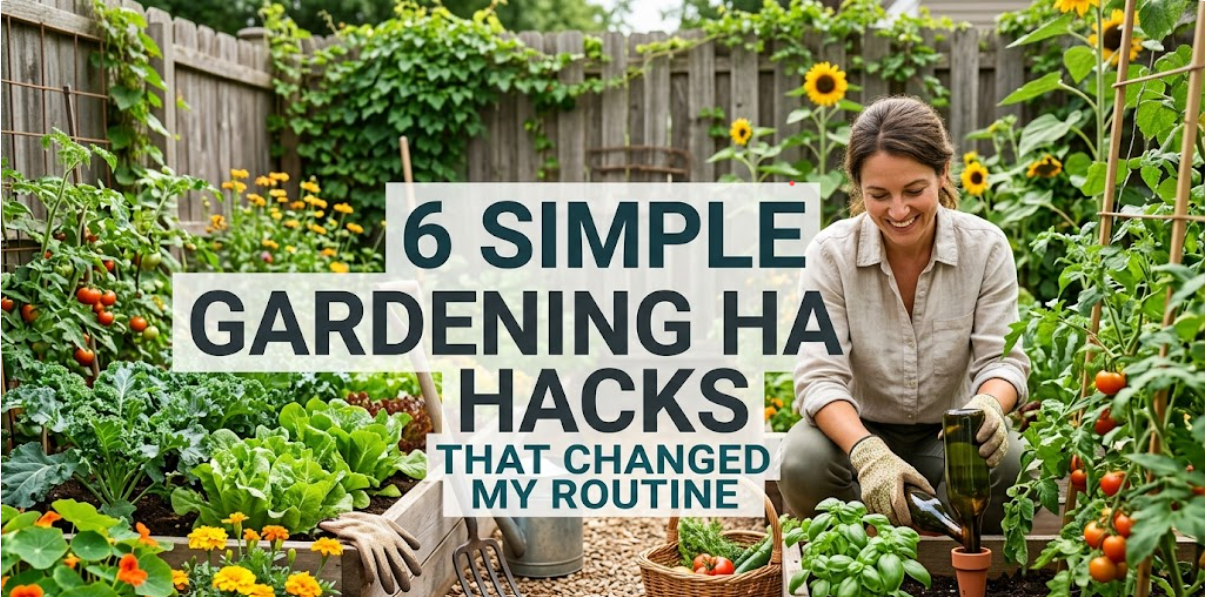
Gardening often looks simple from the outside—plant something, water it, and wait for it to grow. But anyone who has actually maintained a garden knows it’s a constant learning process. Over time, small adjustments can completely transform how efficient, enjoyable, and productive your gardening routine becomes.
This article shares six simple gardening hacks that significantly improve plant health, reduce effort, and make gardening more organized and sustainable. These are practical, tested approaches rather than complex techniques.
Hack 1: The “Morning Watering Window” Method
One of the biggest mistakes many gardeners make is watering plants at random times. I used to water whenever I had free time—sometimes midday, sometimes evening. The results were inconsistent growth and frequent wilting.
Switching to a fixed early morning watering routine changed everything.
Why morning watering works better
- Soil absorbs water more effectively before heat rises
- Less evaporation compared to afternoon watering
- Plants stay hydrated during peak sunlight hours
- Reduces fungal growth caused by nighttime moisture
Watering Efficiency Comparison Table
| Time of Day | Water Absorption | Evaporation Rate | Plant Health Impact |
|---|---|---|---|
| Early Morning | High | Low | Excellent |
| Midday | Medium | Very High | Poor |
| Evening | Medium | Medium | Moderate |
Practical routine tip:
Water between 5:30 AM and 7:30 AM for best results. Even 10–15 minutes of consistency matters more than quantity.
Hack 2: DIY Slow-Release Water Bottles
Instead of watering every day, I started using simple slow-release watering systems made from recycled plastic bottles. This helped maintain consistent soil moisture, especially during hot days.
How it works
You make small holes in a bottle, fill it with water, and bury it near plant roots. The water slowly seeps into the soil over time.
DIY Setup Guide Table
| Bottle Size | Hole Size | Plant Type | Duration |
|---|---|---|---|
| 500 ml | Very small pinholes | Small plants | 1–2 days |
| 1 liter | Small holes | Medium plants | 2–3 days |
| 2 liters | Moderate holes | Shrubs | 3–5 days |
Benefits
- Reduces watering frequency
- Prevents overwatering
- Keeps soil moisture stable
- Ideal for busy schedules
Extra tip:
Place bottles slightly tilted underground for more controlled release.
Hack 3: Companion Planting Strategy
One of the most surprising improvements in my garden came from learning which plants grow better together. Companion planting is the practice of pairing plants that support each other’s growth.
Instead of planting randomly, I began grouping compatible plants—and pest problems dropped noticeably.
Companion Plant Pairing Chart
| Plant A | Plant B | Benefit |
|---|---|---|
| Tomatoes | Basil | Improves flavor, repels insects |
| Carrots | Onions | Pest protection |
| Cucumbers | Beans | Improved soil nitrogen |
| Roses | Garlic | Natural pest control |
What changed in my routine
- Fewer pesticides needed
- Healthier growth cycles
- Better soil usage efficiency
Practical tip:
Avoid planting onions and beans together—they compete and slow growth.
Hack 4: Mulching for Low Maintenance Gardening
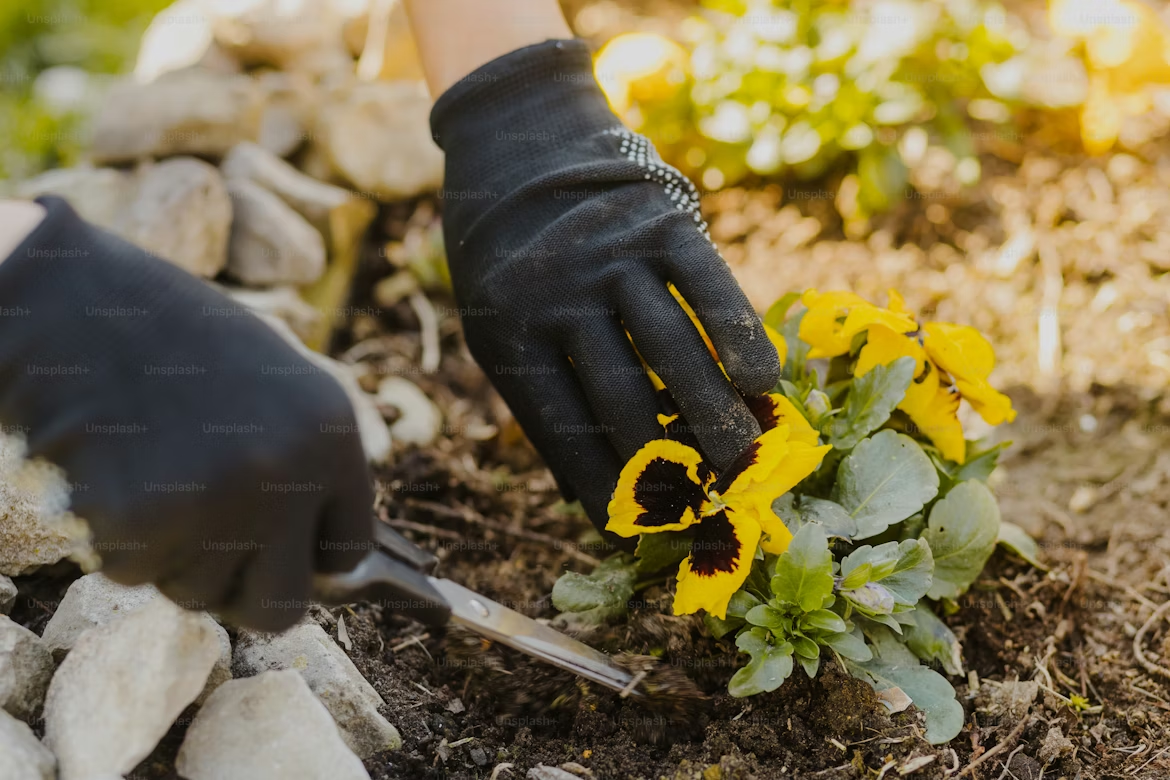
Before using mulch, I spent too much time dealing with weeds and inconsistent soil moisture. Mulching solved both problems at once.
Mulch is simply a protective layer placed over soil. It can be organic (leaves, bark) or inorganic (gravel, stones).
Mulch Comparison Table
| Type | Cost | Longevity | Best Use |
|---|---|---|---|
| Wood Chips | Low | Medium | Flower beds |
| Straw | Very Low | Short | Vegetable gardens |
| Gravel | Medium | Very High | Decorative gardens |
| Leaves | Free | Short | Seasonal beds |
Key benefits
- Reduces weed growth by blocking sunlight
- Keeps soil temperature stable
- Improves soil moisture retention
- Reduces watering needs
Routine improvement:
After mulching, I reduced weeding time by almost 70%.
Hack 5: Pruning with the “3-Branch Rule”
Before learning proper pruning techniques, I used to trim plants randomly, which often led to uneven growth. The “3-Branch Rule” simplified everything.
The idea is simple:
Always maintain 3 main structural branches for balance and airflow.
Pruning Structure Guide
| Plant Type | Branch Count Goal | Result |
|---|---|---|
| Shrubs | 3–5 main branches | Controlled shape |
| Fruit Trees | 3–4 main branches | Better fruit yield |
| Flowering Plants | 3 dominant stems | Fuller blooms |
Why this works
- Improves airflow between branches
- Reduces disease risk
- Encourages stronger root development
- Maintains visual balance
Practical tip:
Always prune in early morning or late evening to reduce plant stress.
Hack 6: Soil “Rest Days” Technique
This was the most unexpected improvement in my gardening routine. Instead of constantly planting in the same soil, I began giving soil rest periods.
Soil, like plants, becomes tired when overused. Resting allows nutrients to naturally recover.
Soil Rotation Plan
| Phase | Duration | Activity |
|---|---|---|
| Active Planting | 3–4 months | Regular growth cycle |
| Rest Phase | 2–3 weeks | No planting, light aeration |
| Recovery Phase | 2–4 weeks | Compost addition |
Benefits of soil resting
- Improves nutrient regeneration
- Reduces soil-borne diseases
- Enhances long-term fertility
- Reduces need for fertilizers
Simple practice:
During rest phases, lightly turn soil and mix compost instead of planting.
Overall Impact on Gardening Routine
After applying these six hacks consistently, the entire gardening routine became more structured and less time-consuming.
Garden Improvement Summary Table
| Area | Before Hacks | After Hacks |
|---|---|---|
| Watering Efficiency | Irregular | Scheduled & optimized |
| Plant Health | Inconsistent | Stable growth |
| Maintenance Time | High | Reduced by ~50% |
| Soil Quality | Degrading | Improving |
| Pest Issues | Frequent | Minimal |
What changed most was not just plant growth—but the overall ease of maintenance.
Additional Insights for Better Results
Even small habits make a big difference in gardening outcomes:
- Observing plants daily for early stress signs
- Avoiding over-fertilization
- Using natural compost whenever possible
- Keeping tools clean and organized
- Tracking plant growth patterns
These small actions compound over time and improve long-term results.
FAQs
- What is the easiest gardening hack for beginners?
The morning watering routine is the easiest and most effective starting point for beginners because it requires no tools or setup changes. - Do slow-release water bottles really work?
Yes, they help maintain consistent moisture levels and are especially useful for small gardens or container plants. - How often should mulch be replaced?
Organic mulch should be refreshed every 3–6 months depending on decomposition rate. - Is pruning necessary for all plants?
Not all plants require heavy pruning, but most benefit from light shaping and removal of dead branches. - Can companion planting replace pesticides completely?
It reduces pesticide use significantly but may not eliminate it entirely in all environments. - What happens if soil is never rested?
Over time, soil loses nutrients, becomes compacted, and produces weaker plant growth.