
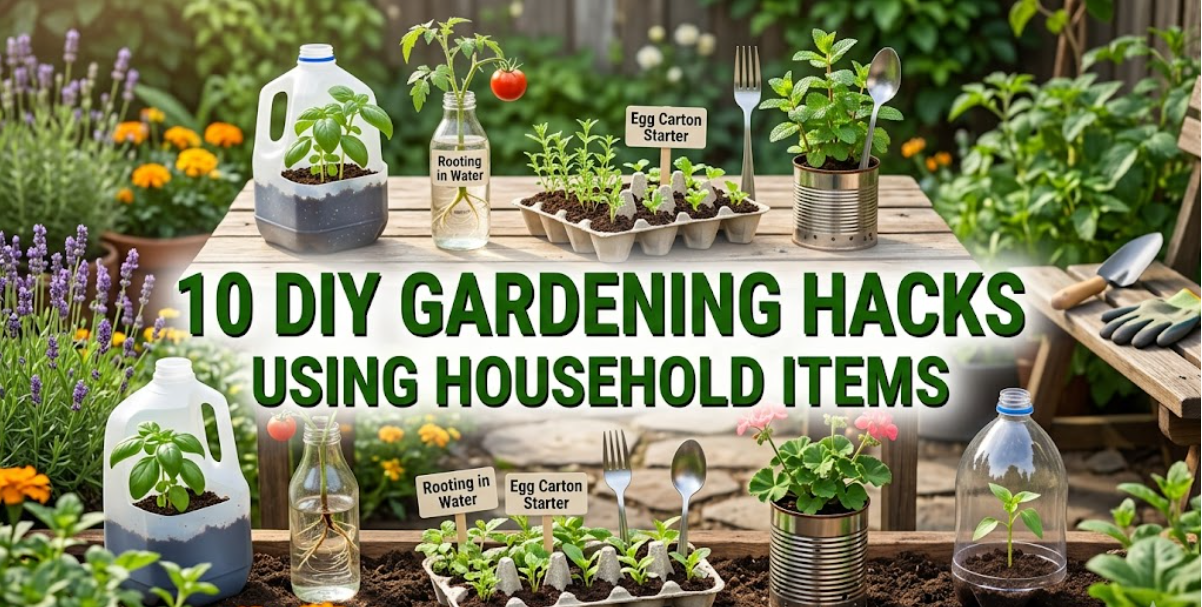
Gardening doesn’t always require expensive tools, specialty fertilizers, or store-bought planters. In fact, many of the most effective gardening tricks come from everyday household items that usually end up in the trash. With a bit of creativity, these items can be transformed into practical gardening solutions that save money, reduce waste, and improve plant health.
This guide explores 10 DIY gardening hacks using common household materials, along with structured tables, comparison charts, and practical usage tips that make gardening more efficient and sustainable.
- egg shells as natural fertilizer
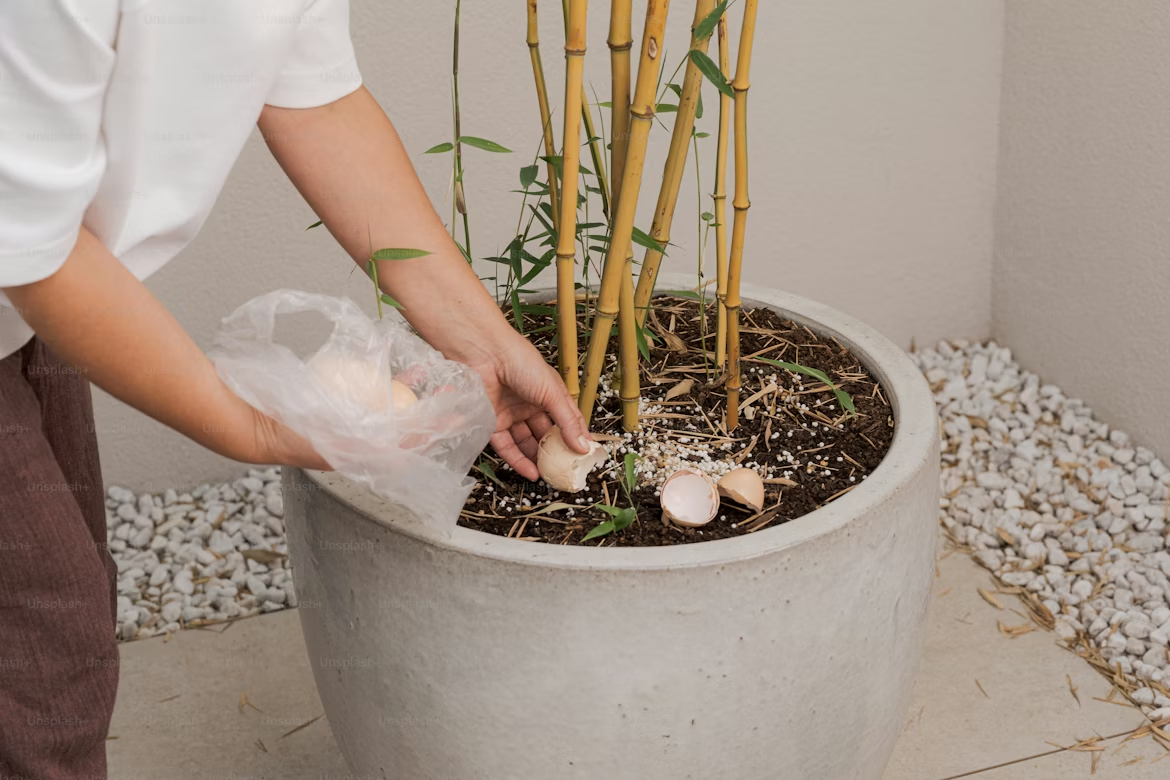
Egg shells are rich in calcium carbonate, which helps strengthen plant cell walls and prevent issues like blossom end rot in tomatoes and peppers. Instead of throwing them away, they can be crushed and added directly to soil.
how to use:
- rinse and dry shells
- crush into small pieces or powder
- mix into soil or compost
table: egg shell benefits for plants
| Benefit | Description | Best Used For |
|---|---|---|
| Calcium boost | Strengthens plant structure | Tomatoes, peppers |
| Pest deterrent | Sharp edges repel slugs | Leafy greens |
| Soil enrichment | Improves long-term fertility | All garden plants |
extra tip: grind egg shells into powder for faster nutrient absorption.
- plastic bottles as self-watering systems
Old plastic bottles can be turned into simple drip irrigation systems. This helps maintain consistent soil moisture, especially during hot weather.
how to use:
- poke small holes in bottle cap
- fill bottle with water
- bury upside down near plant roots
chart: watering efficiency comparison
| Method | Water Waste | Efficiency | Effort Level |
|---|---|---|---|
| Manual watering | Medium | Medium | High |
| Hose watering | High | Low | Medium |
| Bottle drip DIY | Low | High | Low |
this method is especially useful for container plants and vegetable beds.
- coffee grounds as soil booster
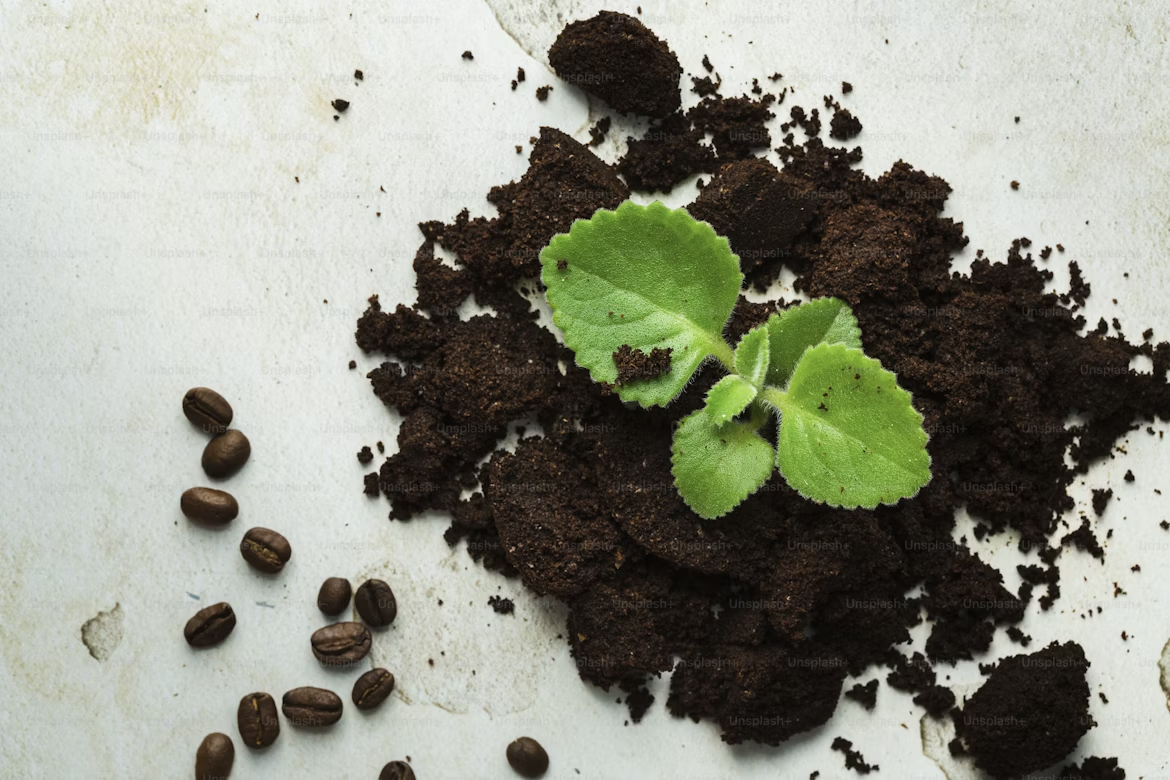
Used coffee grounds are rich in nitrogen and organic matter, making them excellent for compost or direct soil enrichment.
how to use:
- sprinkle lightly around plants
- mix into compost bin
- dilute in water for liquid fertilizer
table: coffee grounds impact on plants
| Plant Type | Effect | Frequency Use |
|---|---|---|
| Roses | Enhances growth | Weekly |
| Tomatoes | Improves yield | Bi-weekly |
| Leafy greens | Boosts leaf growth | Weekly |
avoid overuse, as too much acidity can harm sensitive plants.
- banana peels as potassium fertilizer
Banana peels are packed with potassium, phosphorus, and magnesium—essential nutrients for flowering and fruiting plants.
how to use:
- bury chopped peels in soil
- blend into compost
- soak in water for liquid fertilizer
chart: nutrient comparison of banana peel tea
| Nutrient | Function in Plants |
|---|---|
| Potassium | Flowering & fruiting |
| Phosphorus | Root development |
| Magnesium | Chlorophyll production |
this hack is especially useful for roses and fruiting vegetables.
- old newspapers for weed control
Newspapers can act as biodegradable weed barriers. They block sunlight, preventing weed growth while retaining soil moisture.
how to use:
- lay 5–10 layers of newspaper
- wet them to hold in place
- cover with mulch or soil
table: weed control methods
| Method | Cost | Effectiveness | Eco-Friendly |
|---|---|---|---|
| Chemical herbicide | High | High | Low |
| Plastic sheets | Medium | Medium | Low |
| Newspaper mulch | Free | High | High |
this method improves soil quality as it decomposes.
- tea bags for compost enrichment
Used tea bags contain tannins and nutrients that improve compost quality and soil structure.
how to use:
- bury used tea bags in soil
- add to compost pile
- steep in water for plant feed
chart: tea bag decomposition timeline
| Material Type | Decomposition Time |
|---|---|
| Paper tea bag | 2–3 months |
| Organic tea | 1–2 months |
| Synthetic bag | Not recommended |
always ensure tea bags are plastic-free before composting.
- cardboard boxes as raised bed liners
Cardboard is excellent for suppressing weeds and improving soil structure in raised beds.
how to use:
- lay cardboard at bottom of garden bed
- wet thoroughly
- cover with soil and compost
table: cardboard vs synthetic liners
| Feature | Cardboard | Plastic Liner |
|---|---|---|
| Biodegradable | Yes | No |
| Cost | Free | Medium |
| Soil health | Improves | Neutral |
this method also attracts earthworms, improving soil fertility.
- vinegar for weed control
Household vinegar contains acetic acid, which can kill weeds in walkways and cracks.
how to use:
- pour directly on unwanted weeds
- avoid contact with desirable plants
- use on sunny days for best effect
chart: weed control effectiveness
| Solution | Speed of Action | Safety for Soil |
|---|---|---|
| Vinegar | Fast | Medium |
| Salt solution | Fast | Low |
| Manual pulling | Slow | High |
use carefully to avoid damaging surrounding soil.
- wooden spoons as plant markers
Old wooden spoons can be repurposed into stylish plant labels for herbs and vegetables.
how to use:
- write plant names with waterproof marker
- paint or decorate handles
- stick into soil
table: plant labeling comparison
| Material | Durability | Cost | Aesthetic |
|---|---|---|---|
| Plastic tags | Medium | Low | Basic |
| Metal tags | High | Medium | Industrial |
| Wooden spoons | Medium | Free | Rustic |
this adds both organization and charm to garden beds.
- citrus peels as pest repellents
Orange, lemon, and grapefruit peels can deter pests like ants, mosquitoes, and aphids due to their strong natural oils.
how to use:
- scatter peels around plants
- dry and crush into powder
- add to compost for pest resistance
chart: pest repelling effectiveness
| Pest Type | Effectiveness |
|---|---|
| Ants | High |
| Aphids | Medium |
| Mosquitoes | High |
this method also adds a pleasant scent to the garden.
combining hacks for maximum impact
Using these hacks individually is effective, but combining them creates a more resilient garden ecosystem. For example:
- banana peels + coffee grounds = nutrient-rich soil
- newspaper mulch + vinegar spot treatment = weed-free garden
- egg shells + citrus peels = pest-resistant beds
table: combination strategy guide
| Combination | Result |
|---|---|
| Coffee + banana peels | Enhanced plant growth |
| Newspaper + cardboard | Strong weed prevention system |
| Egg shells + citrus peels | Soil enrichment + pest control |
environmental impact overview
These DIY hacks not only improve plant growth but also significantly reduce household waste. Instead of sending organic waste to landfills, it gets reused in productive ways.
chart: waste reduction potential
| Household Item | Reuse Rate | Environmental Benefit |
|---|---|---|
| Egg shells | High | Soil enrichment |
| Coffee grounds | High | Compost boost |
| Plastic bottles | Medium | Water conservation |
| Newspapers | High | Weed suppression |
final thoughts
DIY gardening using household items is less about complexity and more about creativity. Everyday waste becomes a resource, and simple adjustments lead to healthier plants and more sustainable gardening habits. Over time, these small changes build a self-sufficient garden ecosystem that requires fewer external inputs and delivers more consistent results.
frequently asked questions
- are household items really effective for gardening?
Yes, many household items contain nutrients or properties that directly benefit soil and plant health when used correctly. - can I replace all fertilizers with DIY alternatives?
Not entirely. DIY methods support soil health but may need to be supplemented depending on plant requirements. - is it safe to use kitchen waste in gardens?
Yes, as long as it is organic and properly prepared (cleaned, dried, or composted when necessary). - how often should I use these DIY hacks?
It depends on the method. Some like coffee grounds can be weekly, while others like egg shells are slower-release. - will vinegar harm my soil permanently?
If used sparingly and only on weeds, it is safe. Overuse can affect soil pH temporarily. - what is the most beginner-friendly gardening hack?
Using plastic bottles for self-watering and coffee grounds for compost are the easiest starting points.