
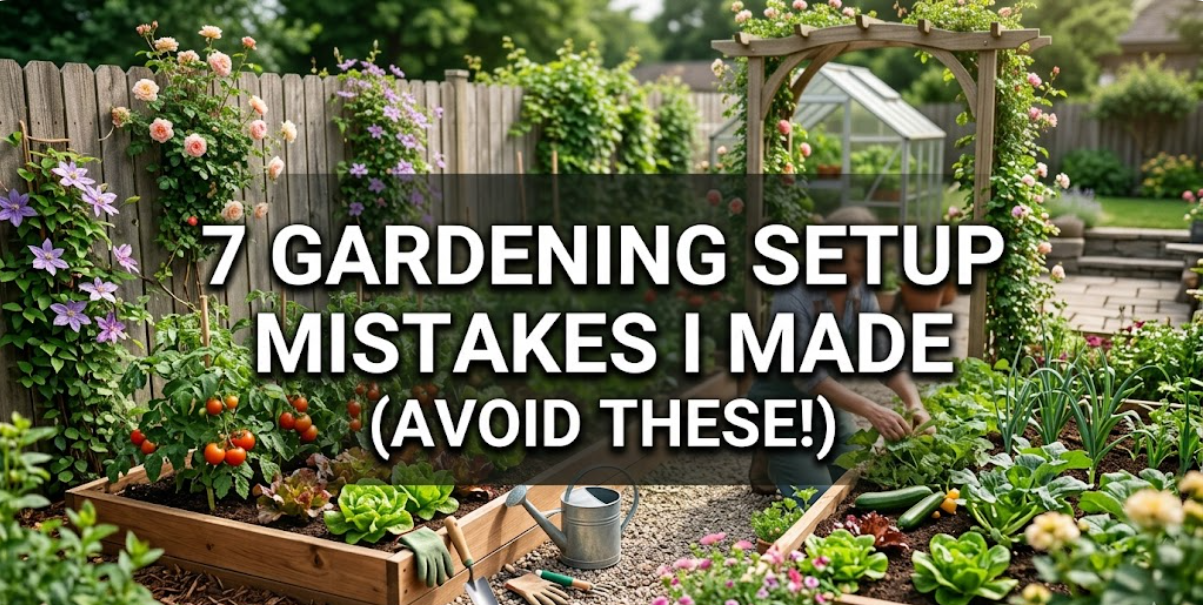
When I first started setting up my garden, I thought success was mostly about buying good seeds and giving plants water. I assumed nature would do the rest. That assumption lasted exactly one season.
What actually happened was a slow series of failures that looked small at first—yellow leaves, weak stems, uneven growth—but eventually turned into full system breakdowns. Plants that should have thrived simply didn’t. Some survived, but never reached their potential.
Over time, I realized the problem wasn’t the plants. It was the setup.
This article is not theory. It’s a breakdown of seven gardening setup mistakes I personally made, what went wrong, how I fixed them, and how you can avoid wasting an entire growing season like I did.
mistake 1: ignoring sunlight patterns instead of tracking them
My first major mistake was assuming “sunny spot” meant consistent sunlight all day. It doesn’t. Sunlight shifts dramatically depending on walls, trees, seasons, and even reflective surfaces.
I placed plants where I thought light was “good enough.” Some got too much harsh afternoon sun, others got barely any direct light at all.
what actually matters
Plants don’t just need sunlight—they need the right timing of sunlight.
sunlight exposure comparison
| Light Type | Plant Growth Impact | Risk Level |
|---|---|---|
| Morning sun | Ideal growth | Low |
| Afternoon sun | Stress risk | Medium |
| Full-day shade | Weak growth | High |
| Mixed exposure | Balanced growth | Low |
daily light distribution chart
Morning: ██████████
Midday: ███████▅▅
Afternoon: ██████▅▅▅
Evening: █████████
what went wrong in my setup
I placed leafy greens in full sun and fruiting plants in partial shade without checking actual light movement.
fix that worked
I tracked sunlight for 2–3 days and mapped zones before moving anything.
lesson
Sunlight is not a location—it’s a pattern.
mistake 2: overcrowding plants in the same space
I used to think more plants in one area meant more harvest. In reality, it meant competition, stress, and disease.
Plants compete for:
- light
- water
- nutrients
- airflow
When they’re too close, none of them win.
spacing comparison table
| Spacing Condition | Growth Rate | Disease Risk | Yield |
|---|---|---|---|
| Overcrowded | Low | High | Low |
| Proper spacing | High | Low | High |
airflow efficiency chart
Overcrowded:
Airflow: ███
Disease resistance: ███▅
Proper spacing:
Airflow: ██████████
Disease resistance: █████████▇
what I noticed
My tomato plants looked healthy early on, but later developed fungal issues because air couldn’t circulate.
fix
I started spacing based on mature plant size, not seedling size.
mistake 3: poor soil preparation before planting
I used to plant directly into whatever soil was available, assuming fertilizer later would fix problems.
It didn’t.
soil is not a container—it’s a living system.
soil readiness comparison
| Soil Condition | Root Growth | Water Retention | Nutrient Flow |
|---|---|---|---|
| Unprepared soil | Weak | Unstable | Poor |
| Prepared soil | Strong | Balanced | Strong |
soil structure breakdown
Unprepared soil:
Compaction: ██████████
Air pockets: ███
Prepared soil:
Compaction: ████
Air pockets: █████████
what I should have done first:
- loosened soil
- added compost
- checked drainage
lesson
Plants don’t fix bad soil. They suffer in it.
mistake 4: using containers without drainage planning
One of my biggest beginner errors was choosing pots based on appearance instead of function.
Some containers had no drainage holes. Others had poor base structure. Water would collect at the bottom, slowly drowning roots.
container performance comparison
| Container Type | Drainage | Root Health | Plant Survival |
|---|---|---|---|
| No drainage | None | Poor | Low |
| Basic pot | Medium | Good | Medium |
| Proper drainage | High | Excellent | High |
water retention chart
No drainage:
Water buildup: ██████████
Root health: ███
With drainage:
Water buildup: ███
Root health: ██████████
what went wrong
I lost basil and mint plants because roots literally rotted from standing water.
fix
I drilled holes into containers and added gravel layers at the base.
lesson
Drainage is not optional—it’s survival infrastructure.
mistake 5: relying too heavily on fertilizers instead of system balance
At one point, I thought fertilizer was the answer to everything. If plants looked weak, I added more feed.
That approach created short bursts of growth followed by long-term instability.
fertilizer impact comparison
| Approach | Short-term Growth | Long-term Health |
|---|---|---|
| No fertilizer | Slow | Stable |
| Balanced use | Strong | Stable |
| Overuse | Fast then crash | Weak |
growth stability chart
Overuse:
Growth: ██████████▅▃▂
Balanced use:
Growth: ██████████▇▇▇
what happened
Plants grew quickly, then became more vulnerable to pests and stress.
fix
I reduced fertilizer use and focused on compost-based soil building.
lesson
Fertilizer feeds plants. Soil feeds systems.
mistake 6: ignoring wind exposure and microclimates
I underestimated wind completely. I thought sunlight mattered most. But wind can dry soil, break stems, and increase plant stress significantly.
microclimate factors I ignored:
- wind tunnels between walls
- heat reflected from surfaces
- shaded moisture pockets
wind impact comparison
| Wind Condition | Moisture Loss | Plant Stability |
|---|---|---|
| High wind | High | Low |
| Moderate wind | Medium | Medium |
| Sheltered zone | Low | High |
moisture loss chart
Windy area:
Soil moisture: █████████▅▃
Sheltered area:
Soil moisture: ██████████▇▇
what I observed
Plants near walls dried faster even when watered equally.
fix
I used barriers like mesh, shrubs, and repositioned pots.
lesson
Wind is an invisible stress factor most beginners ignore.
mistake 7: not planning irrigation before planting layout
I used to water my garden manually without a structured system. That meant some plants were overwatered while others were neglected.
watering inconsistency creates uneven growth.
irrigation consistency table
| Method | Consistency | Efficiency | Plant Health |
|---|---|---|---|
| Random watering | Low | Low | Poor |
| Manual routine | Medium | Medium | Good |
| Planned irrigation | High | High | Excellent |
water distribution chart
Random:
Water reach: ███▅▃
Planned:
Water reach: ██████████
what went wrong
Some plants dried out even though I was watering “every day.”
fix
I grouped plants by water needs and created zones.
lesson
Watering should follow design—not memory.
combined effect of all mistakes
When I look back, the real issue wasn’t one mistake—it was how they stacked together.
error accumulation chart
Light issues: █████▅▃
Soil issues: ███████▅
Spacing issues: █████████▅
Watering issues: ██████████▅
Microclimate issues: ████████▅▃
overall plant health trend
Before correction: ████▅▃▂
After correction: ██████████████▇▇▇
what changed everything
Fixing setup problems had a bigger impact than adding any fertilizer or tool.
what I would do differently from day one
If I could restart, I would:
- map sunlight first
- prepare soil before planting anything
- design irrigation zones early
- plan spacing based on mature plant size
- consider wind and heat zones
- prioritize drainage in every container
These steps don’t feel exciting—but they prevent almost every major failure.
faqs
- what is the most damaging gardening setup mistake overall?
Ignoring soil preparation tends to cause the most long-term damage because it affects every other part of plant growth. - how do I know if my plants are overcrowded?
If leaves touch constantly, airflow feels blocked, or plants compete for light, spacing is too tight. - can poor sunlight placement be fixed after planting?
Yes, most plants can be moved, but it’s best to observe sunlight patterns before planting. - why is drainage so critical for containers?
Without drainage, roots suffocate due to excess water and lack of oxygen. - is fertilizer necessary for a healthy garden?
Not always. Healthy soil often reduces the need for frequent fertilizer use. - how do I identify microclimates in my garden?
Observe temperature, wind, and moisture differences across different areas during the day.
Gardening setups fail quietly. Not through dramatic collapse, but through slow imbalance. Once those imbalances are corrected, everything becomes easier—not because plants change, but because the environment finally works with them instead of against them.