
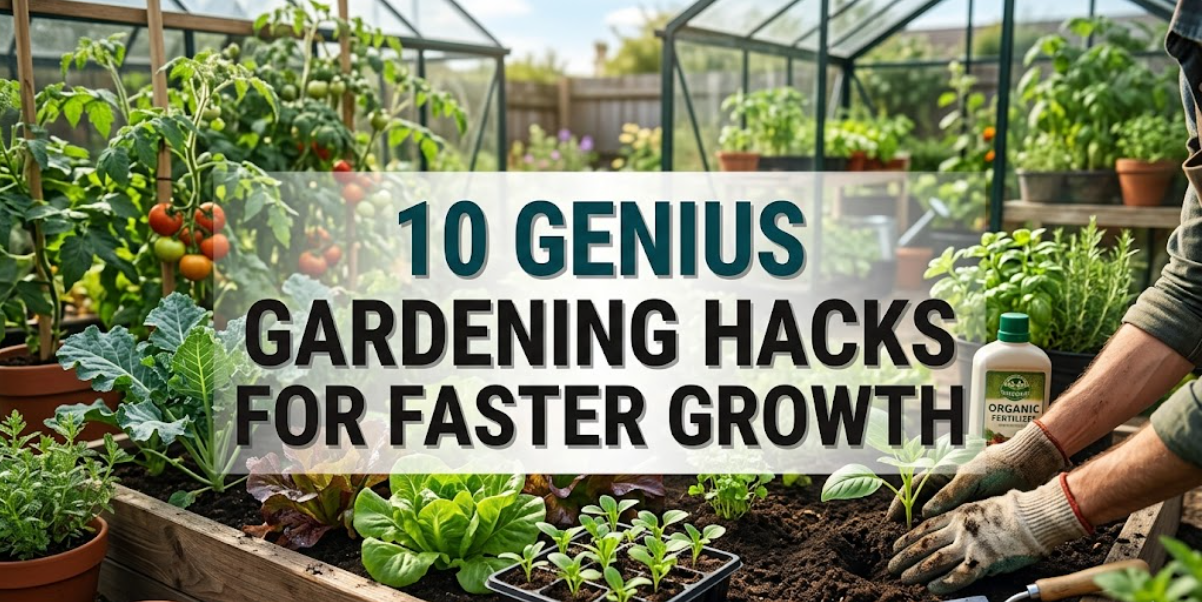
Gardening often feels like a slow conversation with nature. But while plants follow their own biological timelines, there are proven ways to accelerate growth, strengthen yields, and make your garden more productive without forcing unnatural results. These “genius hacks” are not shortcuts in the artificial sense—they are smart optimizations of light, soil, water, nutrients, and plant behavior.
This guide breaks down 10 powerful gardening strategies that can noticeably improve growth speed and plant health. Each method is practical, beginner-friendly, and adaptable to both small home gardens and larger outdoor spaces.
- supercharge soil with living compost systems
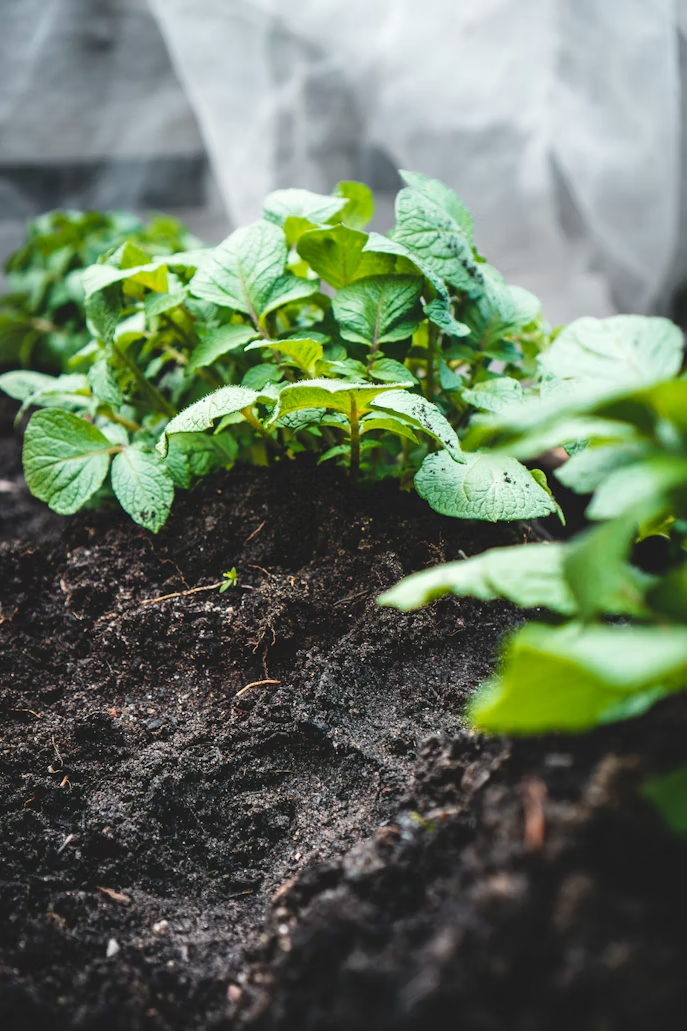
Healthy soil is the foundation of fast plant growth. Instead of relying only on chemical fertilizers, introducing living compost systems dramatically improves microbial activity, which directly affects nutrient absorption.
Compost tea, worm castings, and bioactive soil mixes all help create a thriving underground ecosystem.
soil enhancement comparison table:
| soil method | growth speed impact | sustainability | difficulty |
|---|---|---|---|
| chemical fertilizer | fast (short-term) | low | easy |
| compost tea | fast (long-term) | high | medium |
| worm castings | very fast | very high | easy |
| bioactive soil | fastest overall | very high | medium |
how to apply:
- mix compost into topsoil every 2–3 weeks
- water with compost tea once a week
- add worm castings near root zones
microbial life improves nutrient delivery efficiency, which leads to visibly faster growth in leafy greens and vegetables.
- optimized watering schedules for rapid absorption
Watering is not just about quantity—it’s about timing, depth, and frequency. Incorrect watering slows growth by suffocating roots or starving them.
The goal is deep but infrequent watering to encourage stronger root systems.
watering efficiency chart:
| watering style | root strength | growth rate |
|---|---|---|
| shallow daily | weak | slow |
| deep twice weekly | strong | fast |
| drip irrigation | very strong | very fast |
| random watering | inconsistent | poor |
best practices:
- water early morning for maximum absorption
- avoid evening overwatering (risk of fungus)
- ensure soil dries slightly between cycles
Plants grow faster when roots are “trained” to search deeper for water.
- strategic pruning to redirect plant energy
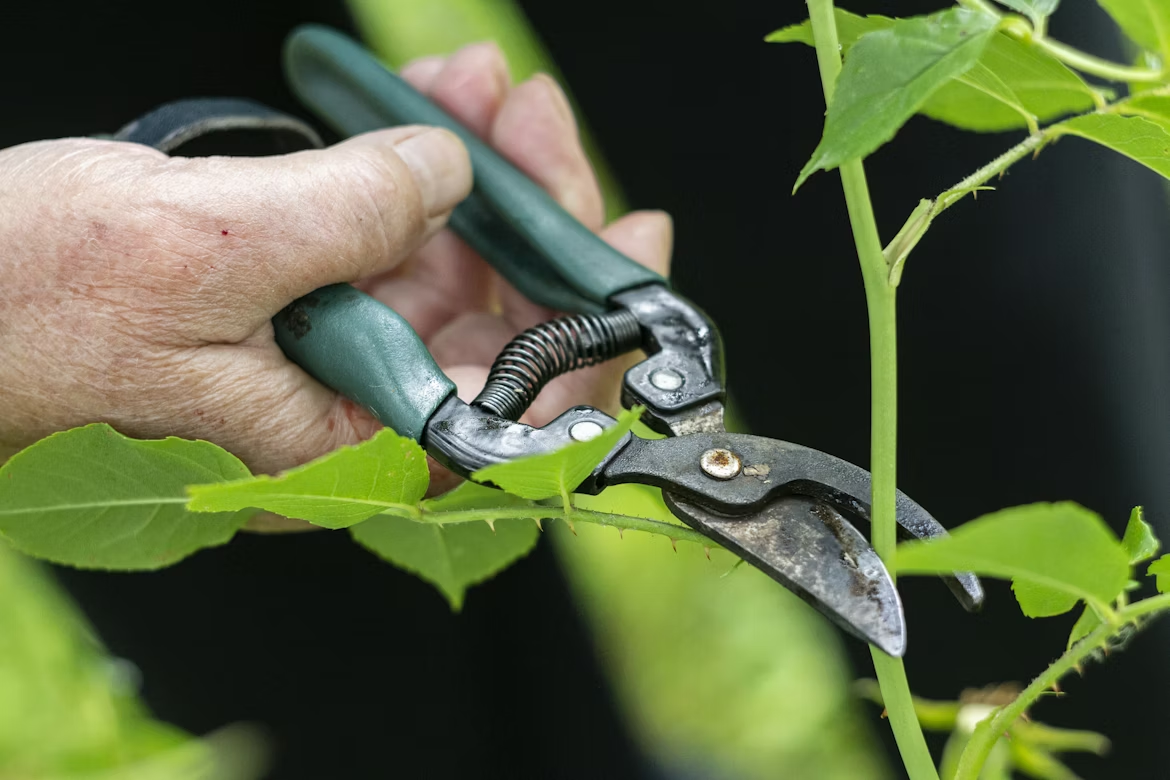
Pruning is often misunderstood as cutting back growth. In reality, it redirects energy to productive parts of the plant.
Removing dead leaves, weak stems, and unnecessary shoots allows plants to focus energy on fruiting and healthy growth.
pruning impact table:
| pruning type | growth response | fruit yield |
|---|---|---|
| no pruning | slow imbalance | low |
| light pruning | moderate boost | medium |
| strategic pruning | strong boost | high |
| aggressive pruning | stress risk | variable |
key techniques:
- pinch tips of herbs to encourage branching
- remove yellow leaves immediately
- prune early morning for best recovery
Well-pruned plants often look smaller initially but grow faster and fuller later.
- companion planting for natural growth acceleration
Certain plants help each other grow faster by improving soil nutrients, repelling pests, or enhancing pollination.
This method mimics natural ecosystems where plants cooperate rather than compete.
companion planting guide:
| plant A | plant B | benefit |
|---|---|---|
| tomatoes | basil | pest resistance |
| carrots | onions | pest confusion |
| beans | corn | nitrogen support |
| lettuce | radish | space optimization |
benefits include:
- improved nutrient availability
- reduced pest damage
- better pollination rates
Plants grow faster when they are part of a supportive biological network.
- mulching for temperature and moisture stability
Mulching is one of the simplest yet most powerful gardening hacks. It involves covering soil with organic or inorganic material to retain moisture and regulate temperature.
common mulch types:
- straw
- wood chips
- dried leaves
- grass clippings
mulch performance chart:
| mulch type | moisture retention | growth boost |
|---|---|---|
| straw | high | strong |
| wood chips | very high | very strong |
| grass clippings | medium | moderate |
| plastic mulch | high | inconsistent |
benefits:
- reduces water evaporation
- prevents weed competition
- stabilizes root temperature
Plants under mulch grow faster because they experience less stress.
- controlled light exposure for accelerated photosynthesis
Light is the engine of plant growth. Too little slows plants down, while too much can cause stress.
Optimizing light exposure improves photosynthesis efficiency and growth speed.
light optimization table:
| light level | plant response |
|---|---|
| low light | slow growth |
| moderate light | steady growth |
| high light | fast growth |
| controlled LED | optimized growth |
techniques:
- rotate pots weekly
- use reflective surfaces indoors
- adjust shade cloth outdoors
Indoor growers can significantly speed up growth using full-spectrum grow lights.
- seed pre-soaking for faster germination
Seeds naturally have protective coatings that delay sprouting. Pre-soaking softens these barriers and triggers faster germination.
seed soaking guide:
| seed type | soak time | expected benefit |
|---|---|---|
| beans | 8–12 hrs | faster sprouting |
| peas | 6–10 hrs | uniform growth |
| spinach | 4–6 hrs | early germination |
| tomatoes | 12 hrs | stronger seedlings |
benefits:
- reduced germination time
- higher success rate
- stronger early roots
This hack alone can save several days in growth cycles.
- nutrient timing instead of overfeeding
More fertilizer does not always mean faster growth. Timing is far more important.
Plants absorb nutrients best during active growth phases, not continuously.
fertilizer timing chart:
| growth stage | nutrient need | fertilizer type |
|---|---|---|
| seedling | low | diluted liquid |
| vegetative | high nitrogen | balanced mix |
| flowering | high potassium | bloom booster |
| dormancy | minimal | none |
key insight:
Overfeeding slows growth due to salt buildup in soil.
- root zone stimulation techniques
Roots are the true engine of plant growth. Stimulating root expansion leads to faster overall plant development.
methods include:
- aerating soil regularly
- using mycorrhizal fungi
- gentle root pruning in containers
root growth impact table:
| technique | root expansion | growth speed |
|---|---|---|
| compact soil | poor | slow |
| aerated soil | strong | fast |
| fungal support | very strong | very fast |
Healthy roots equal faster nutrient uptake and faster visible growth above ground.
- temperature control for growth optimization
Plants grow fastest within specific temperature ranges. Even slight deviations can slow metabolism.
ideal temperature ranges:
| plant type | ideal temp (°C) |
|---|---|
| leafy greens | 15–22 |
| herbs | 18–25 |
| vegetables | 20–28 |
| tropical | 24–30 |
temperature control methods:
- shade nets in hot climates
- indoor heating pads for seedlings
- greenhouse insulation for stability
stable temperatures reduce stress and accelerate metabolic activity.
growth acceleration summary chart
| hack category | impact level | difficulty |
|---|---|---|
| soil optimization | very high | medium |
| watering strategy | high | easy |
| pruning techniques | high | medium |
| companion planting | high | medium |
| mulching | high | easy |
| light control | very high | medium |
| seed soaking | medium | easy |
| nutrient timing | high | medium |
| root stimulation | very high | medium |
| temperature control | high | medium |
integrated gardening approach
The fastest plant growth does not come from one trick alone. It comes from combining multiple systems:
- healthy soil + proper watering
- pruning + companion planting
- light control + temperature stability
When these systems work together, plants enter a state of optimal growth where energy is efficiently distributed across roots, stems, and leaves.
final thoughts
Fast plant growth is not about forcing nature—it is about removing limitations. Soil quality, water consistency, light balance, and biological support systems all play interconnected roles. When these elements are optimized, plants respond naturally with faster, healthier, and more abundant growth.
Even a small garden can outperform larger spaces when these principles are applied consistently.
frequently asked questions
- what is the fastest way to make plants grow faster
Improving soil quality with compost, ensuring proper watering schedules, and optimizing light exposure are the most effective methods. - does over-fertilizing help plants grow faster
No, over-fertilizing often slows growth due to nutrient imbalance and soil toxicity. - how often should I water plants for faster growth
Most plants benefit from deep watering 2–3 times per week rather than shallow daily watering. - do plants really respond to pruning
Yes, pruning redirects energy to healthy growth points, improving both speed and yield. - is compost better than chemical fertilizer
Compost improves long-term soil health and supports sustained faster growth compared to short-term chemical boosts. - can indoor plants grow as fast as outdoor plants
Yes, if provided with proper light, nutrients, and temperature control, indoor plants can grow equally fast or even faster.