
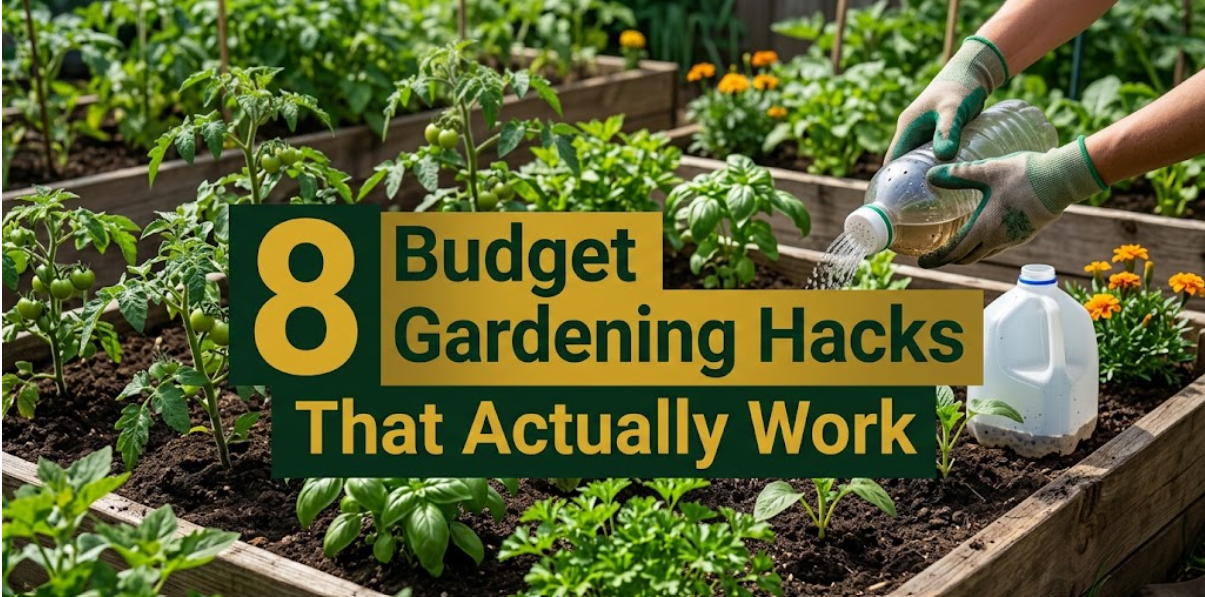
Gardening often looks like an expensive hobby from the outside—bags of soil, fancy tools, raised beds, fertilizers, decorative pots, and endless accessories. But once you step into it, you realize something surprising: a beautiful, productive garden doesn’t require a big budget. It requires smart thinking, a bit of creativity, and knowing where to cut costs without cutting results.
This guide focuses on practical, real-world gardening hacks that save money while still giving you healthy plants, better yields, and a visually appealing space. These are not theoretical ideas—they are methods used by everyday gardeners who want results without overspending.
Instead of buying everything new, the core principle here is reuse, repurpose, and optimize.
hack 1: use kitchen waste as free fertilizer
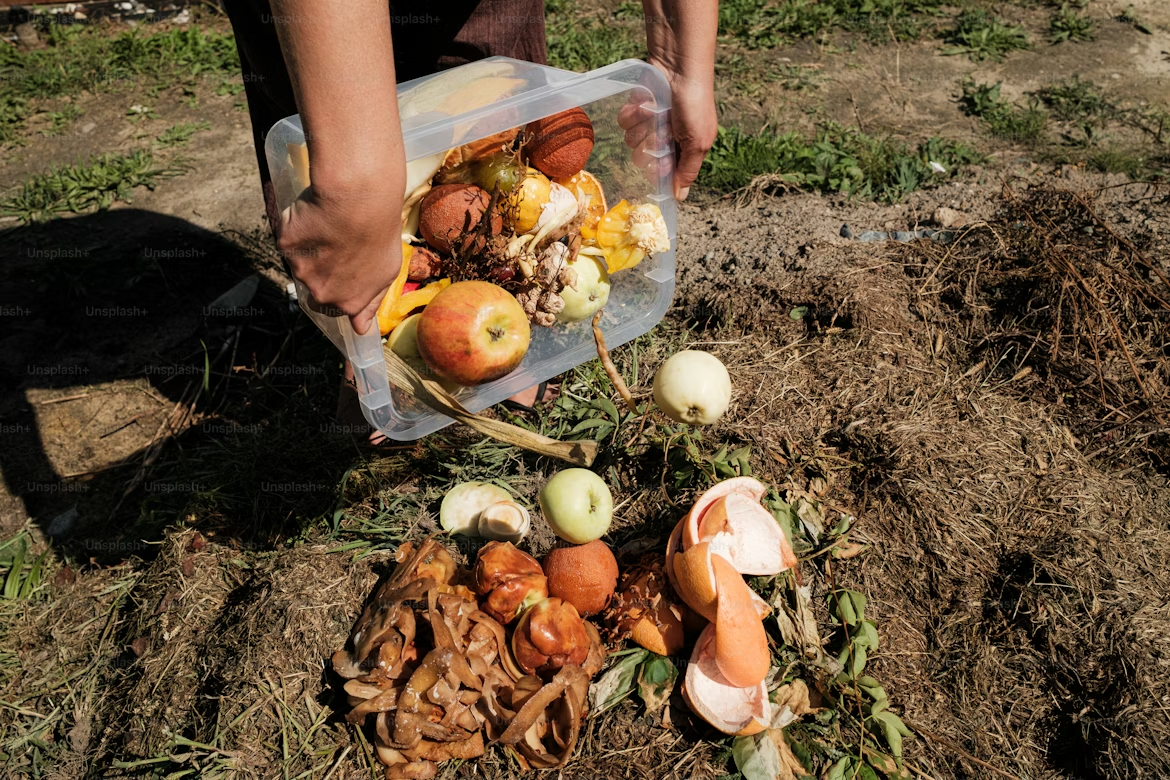
One of the biggest recurring costs in gardening is fertilizer. But most homes already produce a steady supply of natural plant nutrients—right in the kitchen.
Eggshells, vegetable peels, tea leaves, coffee grounds, and even banana peels are rich in nutrients like potassium, calcium, and nitrogen. Instead of throwing them away, they can be converted into powerful soil boosters.
For example:
- crushed eggshells improve soil calcium
- banana peels support flowering plants
- coffee grounds improve soil texture and acidity balance
The key is consistency. A small amount added regularly works better than a large one-time application.
Table: kitchen waste fertilizer breakdown
| Waste Item | Nutrient Content | Best For Plants | Method of Use |
|---|---|---|---|
| Eggshells | Calcium | Tomatoes, peppers | Crushed into soil |
| Banana peels | Potassium | Flowering plants | Soaked or buried |
| Coffee grounds | Nitrogen | Leafy greens | Mixed into soil |
| Vegetable peels | Mixed nutrients | General use | Composting |
| Tea leaves | Nitrogen + tannins | Indoor plants | Dried and sprinkled |
Simple composting can reduce gardening costs by up to 40% over time because you rely less on store-bought fertilizers.
hack 2: grow from cuttings instead of buying plants
Buying new plants every season can quickly drain your budget. A much cheaper alternative is propagation—growing plants from cuttings of existing ones.
Many common plants like mint, basil, rosemary, money plant, and even roses can be regrown from stems or small cuttings placed in water or soil.
This method is almost free and highly effective. One healthy plant can produce dozens of new ones over time.
Propagation is especially powerful for indoor gardening because it reduces dependency on nursery purchases.
Chart: propagation success comparison
| Plant Type | Success Rate | Time to Root | Cost Efficiency |
|---|---|---|---|
| Mint | Very High | 3–5 days | Excellent |
| Money Plant | Very High | 7–10 days | Excellent |
| Basil | High | 5–7 days | High |
| Rose | Medium | 10–20 days | Medium |
| Rosemary | Medium | 2–3 weeks | Medium |
The biggest advantage is sustainability. Once you start propagation, your plant supply becomes self-sufficient.
hack 3: reuse household containers as planters
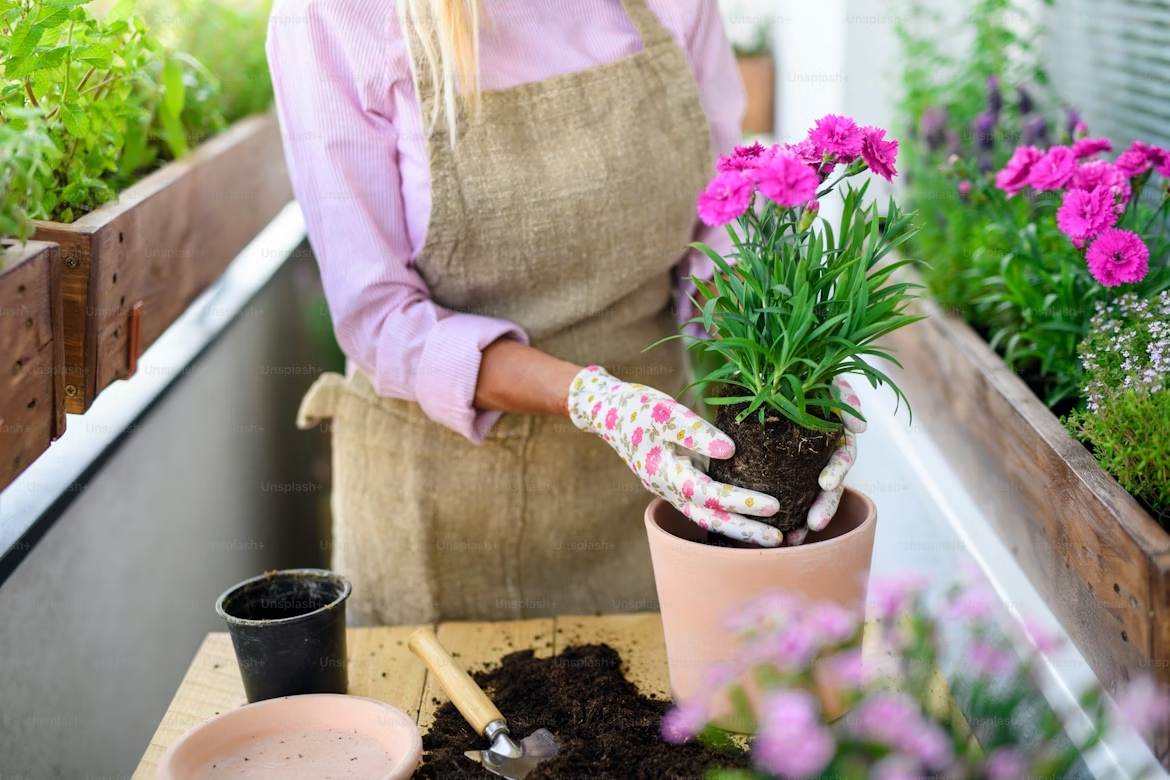
Instead of buying expensive pots, almost anything that holds soil can become a planter. Old buckets, mugs, bottles, broken containers, tin cans, and even worn-out kitchen items can be repurposed.
This not only saves money but also reduces waste.
The only requirement is proper drainage. A few small holes at the bottom are enough to prevent waterlogging.
Creative repurposing ideas:
- plastic bottles → hanging planters
- old tires → flower beds
- broken mugs → succulent pots
- kitchen strainers → herb holders
Table: cost comparison of planters
| Container Type | Average Cost | Durability | Aesthetic Value |
|---|---|---|---|
| Ceramic pots | High | High | Very High |
| Plastic pots | Medium | Medium | Medium |
| Repurposed items | Free | Variable | Creative/Unique |
| Metal containers | Low | High | High |
Repurposing is one of the easiest ways to cut gardening costs immediately.
hack 4: make your own potting mix
Pre-packaged soil mixes can be surprisingly expensive. But you can easily make your own nutrient-rich potting mix using simple ingredients.
A balanced homemade mix usually includes:
- garden soil
- compost
- sand or coco peat
- organic matter like dried leaves
This combination improves drainage, aeration, and nutrient availability while costing significantly less.
Table: DIY potting mix ratios
| Component | Purpose | Ratio (basic mix) |
|---|---|---|
| Garden soil | Base structure | 40% |
| Compost | Nutrients | 30% |
| Coco peat | Moisture retention | 20% |
| Sand | Drainage | 10% |
Making your own mix reduces soil costs by nearly half and improves long-term plant health.
hack 5: collect rainwater for irrigation
Water bills can become a hidden cost in gardening, especially in hot climates. Collecting rainwater is a simple but powerful way to reduce expenses.
All you need is a clean container or barrel placed under a roof outlet or open area where rainwater can be collected.
Rainwater is actually better for plants because it is free from chlorine and chemicals commonly found in tap water.
Benefits of rainwater use:
- reduces monthly water cost
- improves plant growth
- reduces soil salt buildup
- environmentally sustainable
Chart: water cost reduction estimate
| Garden Size | Monthly Water Cost | With Rainwater Use |
|---|---|---|
| Small balcony | Low | Near zero |
| Medium garden | Medium | Reduced by 50–70% |
| Large garden | High | Reduced by 60–80% |
Even a small collection system can make a noticeable difference over time.
hack 6: use mulch to reduce maintenance costs
Mulching is one of the most underrated budget gardening techniques. It involves covering soil with organic materials like dry leaves, grass clippings, or wood chips.
This simple layer reduces water evaporation, controls weeds, and improves soil health.
Instead of buying herbicides or frequent fertilizers, mulch naturally maintains the garden ecosystem.
Free mulch materials:
- dried leaves from trees
- grass clippings from mowing
- shredded paper
- wood chips from local carpenters
Table: mulch benefits comparison
| Benefit | Without Mulch | With Mulch |
|---|---|---|
| Water retention | Low | High |
| Weed growth | High | Low |
| Soil temperature | Unstable | Stable |
| Fertilizer need | High | Reduced |
Mulching reduces both time and money spent on garden maintenance.
hack 7: swap seeds instead of buying them
Seeds are a recurring expense, especially if you like experimenting with different plants. A simple way to avoid this cost is seed swapping.
Many gardeners exchange seeds with friends, neighbors, or gardening communities. One packet of seeds can easily turn into dozens of future exchanges.
This method not only saves money but also increases plant diversity in your garden.
Popular swap-friendly seeds:
- marigold
- basil
- coriander
- spinach
- chili peppers
Chart: seed cost vs swap system
| Method | Cost per Season | Variety Level | Sustainability |
|---|---|---|---|
| Buying seeds | Medium | Medium | Medium |
| Seed swap | Free | High | High |
Over time, seed swapping creates a self-sustaining gardening network.
hack 8: natural pest control instead of chemicals
Pesticides are expensive and can harm both plants and soil health. Natural pest control methods are not only cheaper but also safer.
Common household ingredients like garlic, neem leaves, and chili can be turned into effective pest repellents.
For example:
- garlic spray repels insects
- neem water prevents fungal growth
- chili spray discourages chewing pests
These solutions are easy to prepare and cost almost nothing.
Table: natural pest control solutions
| Ingredient | Target Pest | Application Method |
|---|---|---|
| Garlic | Aphids, mites | Spray solution |
| Neem | Fungus, insects | Soaked water spray |
| Chili | Caterpillars | Diluted spray |
| Soap water | Soft-bodied insects | Direct spray |
Natural methods reduce long-term dependency on chemical products.
budget gardening comparison overview
| Gardening Area | Traditional Cost | Budget Hack Cost | Savings Level |
|---|---|---|---|
| Fertilizer | High | Very Low | 60–80% |
| Plants | High | Low/Free | 70–90% |
| Pots/Containers | Medium-High | Free | 80–100% |
| Soil | Medium | Low | 40–60% |
| Pest Control | Medium | Very Low | 50–80% |
These numbers show how quickly gardening costs can drop when small changes are applied consistently.
final thoughts
Budget gardening is not about compromise—it’s about awareness. Once you start noticing how many useful resources are already available around you, gardening becomes far more affordable and sustainable.
The biggest shift happens when you stop relying on store-bought solutions for everything and begin building a system from what you already have. Kitchen waste becomes fertilizer, containers become pots, and cuttings become new plants.
Over time, these small hacks don’t just save money—they create a more resilient, self-sustaining garden.
faqs
- what is the cheapest way to start a garden?
Using kitchen waste compost, repurposed containers, and plant cuttings is the cheapest way to start gardening with almost zero investment. - can I really grow plants without buying seeds or saplings?
Yes, many plants can be grown from cuttings, propagation, or seed swapping with other gardeners. - how much money can I save with budget gardening hacks?
Depending on garden size, you can save anywhere from 40% to 90% of regular gardening expenses. - is homemade compost as effective as store-bought fertilizer?
Yes, if properly balanced, homemade compost can be just as effective and often improves soil health better in the long term. - what are the easiest plants to propagate at home?
Mint, money plant, basil, and spider plant are among the easiest and fastest to propagate. - is rainwater safe for all types of plants?
Yes, rainwater is generally better than tap water because it is free from chemicals and supports healthier plant growth.