
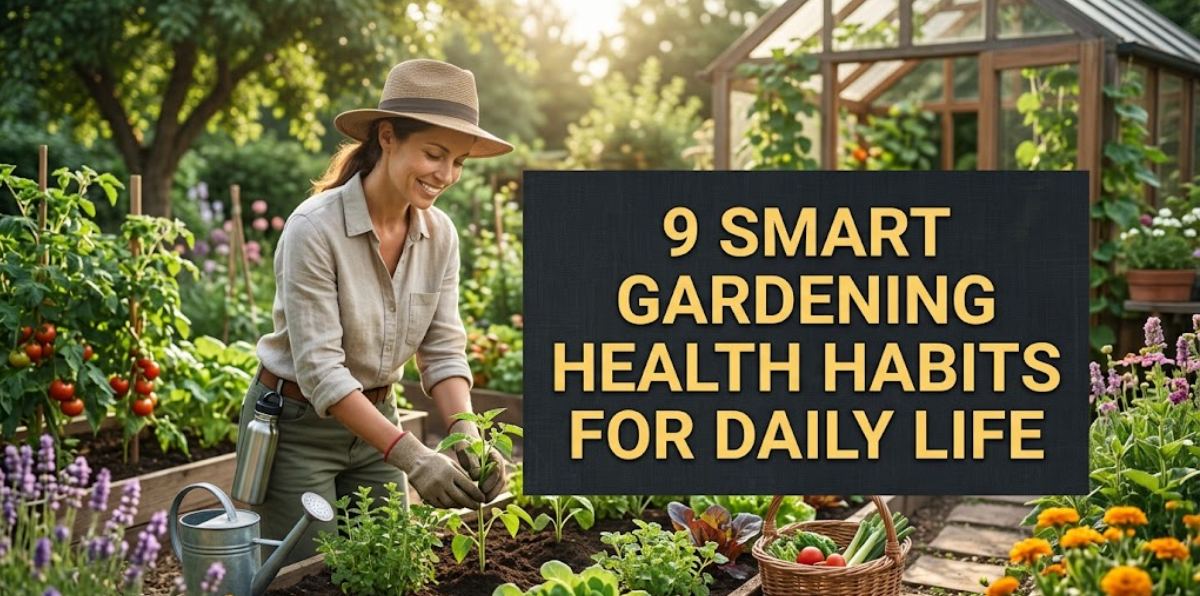
Gardening is often seen as a hobby, but over time it becomes something closer to a lifestyle. The way you water, observe, touch, and care for plants starts blending into your daily routine. What I didn’t expect when I first started gardening was how much it would influence my own habits—my patience, my attention to detail, even my sense of timing.
After years of trial, observation, and plenty of plant failures, I realized something simple: healthy gardens don’t come from big weekend efforts. They come from small daily habits repeated consistently.
These nine smart gardening health habits transformed not just my plants, but how I approach daily life.
habit 1: morning plant observation routine
One of the most underrated gardening habits is simply looking at your plants every morning. Not rushing, not watering immediately—just observing.
This habit helps you notice small changes before they become big problems.
what to observe daily:
Observation Area | What to Look For
Leaves | Color changes, spots, drooping
Soil | Dryness, cracks, moisture level
Stems | Weakness, bending, pests
Flowers | Early bloom changes or decay
why it matters:
- Early pest detection
- Faster disease response
- Better watering decisions
comparison:
Habit | No Observation | Daily Observation
Plant survival rate | Lower | Higher
Problem detection | Late | Early
Maintenance stress | High | Low
This habit takes less than 5 minutes but prevents weeks of damage.
habit 2: consistent watering rhythm instead of random watering
Plants don’t respond well to chaos in watering. One day too much, next day too little—that inconsistency is more harmful than slight underwatering.
A stable rhythm matters more than perfection.
watering frequency guide:
Plant Type | Ideal Frequency | Notes
Herbs | Every 2–3 days | Light watering
Vegetables | 1–2 times/week | Deep watering
Succulents | Weekly or less | Minimal water
Flowering plants | 2–3 times/week | Depends on climate
watering behavior comparison:
Pattern | Plant Response
Random watering | Stress + weak roots
Scheduled watering | Stable growth
Adaptive watering (weather-based) | Optimal health
Once I started watering on a rhythm instead of impulse, plant health improved noticeably within two weeks.
habit 3: weekly soil check and touch test
Soil is often ignored because it’s not visible, but it’s the foundation of everything.
The simple habit of touching soil weekly tells you more than any tool.
soil indicators:
Texture | Meaning
Too dry and powdery | Needs water
Sticky or muddy | Overwatering
Loose and crumbly | Healthy balance
Hard and compact | Needs aeration
soil condition chart:
Condition | Root Health Impact
Healthy soil | Strong growth
Compacted soil | Weak growth
Waterlogged soil | Root rot risk
I used to rely on guesswork. Now I just use my fingers. It’s surprisingly accurate.
habit 4: removing dead leaves immediately
Dead leaves are not harmless. They attract pests, spread fungus, and drain energy from the plant.
This habit is simple but powerful: remove decay as soon as you see it.
impact breakdown:
Action | Result
Removing dead leaves | Healthier plant focus
Leaving dead leaves | Pest attraction + disease spread
plant cleanliness effect:
Condition | Disease Risk
Clean plant base | Low
Unclean plant base | High
It takes seconds, but it prevents long-term damage.
habit 5: rotating plant focus daily
Instead of treating all plants equally every day, I started focusing on different sections of my garden each day.
Example rotation:
Day | Focus Area
Monday | Herbs section
Tuesday | Vegetables
Wednesday | Flower beds
Thursday | Soil and compost
Friday | Pest inspection zones
benefits:
- Better attention to detail
- Less overwhelming workload
- Faster problem detection
attention distribution comparison:
Method | Efficiency
All-at-once care | Medium
Rotational care | High
This habit made gardening feel more structured and less chaotic.
habit 6: silent pest inspection habit
Most pest problems start small and go unnoticed. A quiet inspection habit changed everything for me.
Instead of actively searching, I started casually scanning plants while walking through the garden.
pest signs checklist:
Sign | Possible Issue
Holes in leaves | Insects
Sticky residue | Aphids
Webbing | Spider mites
Curling leaves | Stress or pests
pest detection speed:
Method | Detection Time
Random noticing | Late
Silent inspection habit | Early
The key is consistency, not intensity.
habit 7: compost awareness habit
Instead of just dumping kitchen waste into compost, I started paying attention to what I was adding.
This improved compost quality dramatically.
compost balance guide:
Material Type | Example | Function
Greens | Vegetable scraps | Nitrogen source
Browns | Dry leaves | Carbon source
compost quality comparison:
Balanced compost | Rich soil output
Unbalanced compost | Slow decomposition
This habit turns waste into a predictable system instead of a random pile.
habit 8: seasonal adaptation thinking
Plants behave differently depending on seasons, but many gardeners ignore this and use the same routine year-round.
I started adjusting habits slightly every season.
seasonal adjustments:
Season | Habit Change
Summer | More morning watering
Winter | Reduced watering
Spring | Fertilizer focus
Autumn | Soil strengthening
seasonal effectiveness:
Approach | Plant Response
Fixed routine | Average
Adaptive routine | Strong
This habit prevents unnecessary stress on plants.
habit 9: end-of-day garden check
Just like the morning observation, an evening check became part of my routine.
This is not about heavy work—it’s about reflection.
evening checklist:
- Did plants receive enough water?
- Are any leaves wilting?
- Any visible pest activity?
- Is soil drying too fast?
day cycle comparison:
Time | Purpose
Morning | Observation and planning
Evening | Review and correction
This habit closes the loop of daily care.
combined impact of all habits
When these habits are practiced together, gardening becomes far more stable and predictable.
overall results:
Factor | Before Habits | After Habits
Plant health | Inconsistent | Stable
Pest issues | Frequent | Rare
Water efficiency | Low | Improved
Stress level | High | Low
Yield quality | Moderate | High
what changes most:
- Better awareness
- Faster reaction time
- Healthier soil ecosystem
- More predictable plant behavior
how these habits change daily life beyond gardening
Interestingly, these habits don’t stay limited to plants.
They influence:
- Attention to detail in daily tasks
- Patience with slow processes
- Observation skills
- Routine discipline
Many gardeners notice they become more mindful in general.
common mistakes while building these habits
- Trying to adopt all habits at once
- Overchecking plants and stressing them
- Ignoring seasonal adjustments
- Not trusting observation skills early on
These habits work best when built gradually.
frequently asked questions
- Do I need to follow all nine habits daily?
No. They work best when developed gradually and adapted to your routine. - How long does it take to see improvement in plants?
Most people notice changes within 2–4 weeks of consistent habits. - Can beginners follow these habits easily?
Yes. They are simple observation and maintenance routines, not technical skills. - Is daily gardening necessary for plant health?
Not heavy work daily—just small observations and adjustments. - What is the most important habit of all?
Morning observation and watering consistency usually have the biggest impact. - Can these habits work for indoor plants too?
Yes, they are equally effective for indoor gardening setups.
closing thought
Healthy gardening isn’t about doing more—it’s about noticing more. These habits didn’t just improve my plants; they changed how I think about care, routine, and consistency.
And once these small actions become part of daily life, gardening stops feeling like work and starts feeling like a natural rhythm.