
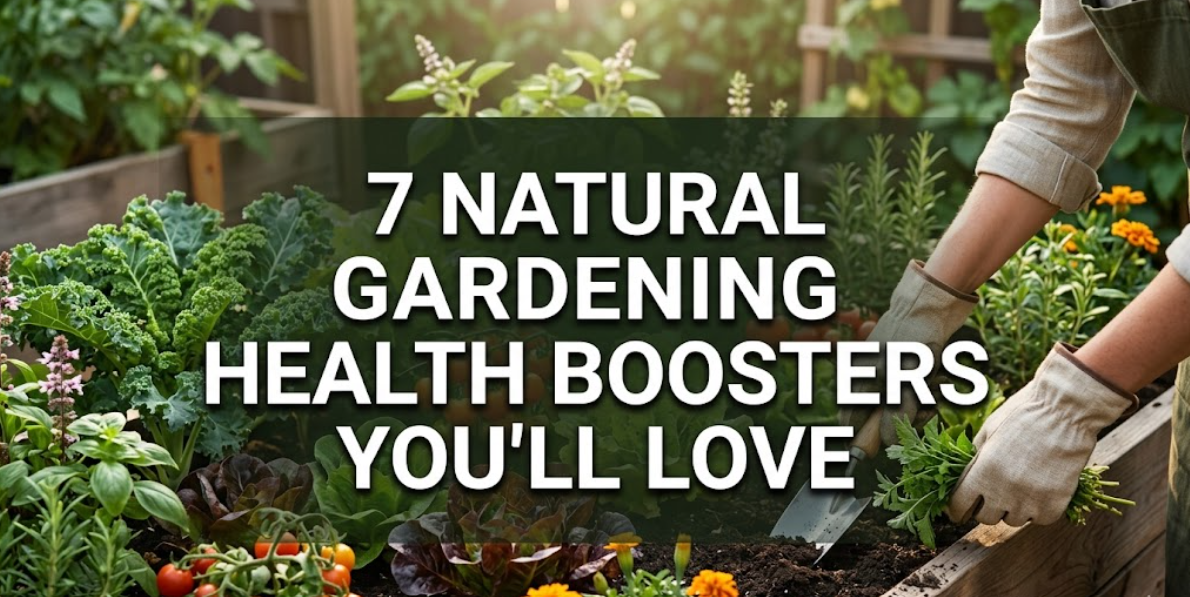
Gardening always looks peaceful from the outside—green leaves, slow growth, seasonal rhythm. But anyone who has actually worked with soil knows it is closer to managing a living system than simply “growing plants.” Every small change in soil, water, or sunlight creates a ripple effect.
Over time, I noticed something interesting: the healthiest gardens were not always the ones with expensive tools or complicated methods. They were the ones where gardeners used simple, natural boosters consistently and correctly.
This article breaks down seven natural gardening health boosters that genuinely improve plant vitality, soil quality, and long-term yield. These are not theoretical tricks—they are practical, repeatable methods that work across different climates and garden sizes.
booster 1: compost tea for microbial strength
Compost tea is one of the simplest yet most powerful natural fertilizers. Instead of adding raw compost to soil, nutrients are extracted into a liquid form and applied directly to plants.
It works because plants don’t just rely on nutrients—they rely on microbes that help unlock those nutrients.
basic compost tea process:
- Fill a bucket with dechlorinated water
- Add mature compost
- Let it steep for 24–48 hours
- Stir occasionally for oxygenation
- Strain and apply to soil or leaves
comparison table
| Factor | Plain Water | Chemical Fertilizer | Compost Tea |
|---|---|---|---|
| Soil microbes | No boost | Often reduced | Strong boost |
| Nutrient delivery | None | Fast but harsh | Balanced |
| Plant stress risk | Low | Medium–High | Low |
microbial activity chart
Soil life intensity:
Plain water: ███
Chemical fertilizer ████▅
Compost tea: ██████████▇▇
key benefit
Compost tea improves soil biology rather than just feeding plants temporarily.
booster 2: mulching with organic materials
Mulch acts like a protective skin for soil. It regulates temperature, locks in moisture, and slowly breaks down into nutrients.
But the real advantage is stability. Plants hate sudden changes in soil conditions.
best natural mulch options:
- dry leaves
- straw
- shredded bark
- grass clippings (dried)
effect comparison
| Condition | Without Mulch | With Organic Mulch |
|---|---|---|
| Water retention | Low | High |
| Weed growth | High | Very low |
| Soil temperature | Unstable | Stable |
soil moisture retention over time
Without mulch:
Day 1: ██████████
Day 3: ████
Day 5: ██
With mulch:
Day 1: ██████████
Day 3: ████████
Day 5: ███████
hidden advantage
Mulch slowly feeds the soil as it decomposes, improving structure over time.
booster 3: banana peel potassium boost
Banana peels are often discarded, but they are a natural source of potassium, phosphorus, and calcium—nutrients essential for flowering and fruiting plants.
simple methods:
- bury chopped peels near plant roots
- soak peels in water for 2–3 days for liquid fertilizer
- dry and grind into powder
nutrient comparison
| Source | Potassium Level | Ease of Use | Speed of Effect |
|---|---|---|---|
| Banana peel | Medium–High | Easy | Moderate |
| Synthetic K mix | High | Easy | Fast |
| Compost | Medium | Medium | Slow |
plant response chart
Flowering response:
No booster: ████▅
Chemical fertilizer ████████▅
Banana peel boost: ██████████▇
important note
Banana peel boosters work best when combined with compost or soil rather than used alone.
booster 4: worm activity enhancement
Earthworms are one of the most powerful natural soil engineers. They aerate soil, break down organic matter, and improve nutrient availability.
Instead of buying fertilizers, improving worm activity often produces better long-term results.
how to encourage worms:
- keep soil moist (not soggy)
- add organic matter regularly
- avoid chemical pesticides
- maintain mulch layer
soil quality comparison
| Soil Type | Worm Presence | Aeration | Fertility |
|---|---|---|---|
| Dry compact soil | Low | Poor | Low |
| Balanced soil | Medium | Good | Medium |
| Worm-rich soil | High | Excellent | High |
worm activity impact chart
Nutrient cycling speed:
Low worms: ███
Medium worms: ██████
High worms: ██████████▇▇
unexpected benefit
Worm tunnels naturally improve drainage, reducing root rot.
booster 5: wood ash mineral enrichment
Wood ash (from untreated wood only) contains potassium, calcium, and trace minerals that support plant health.
It should be used carefully because too much can alter soil pH.
usage methods:
- sprinkle lightly on soil
- mix into compost
- dissolve small amounts in water for diluted feed
comparison table
| Factor | No Ash | Controlled Ash Use |
|---|---|---|
| Soil pH balance | Stable | Slightly alkaline |
| Mineral supply | Low | Moderate–High |
| Plant response | Normal | Improved flowering |
effect on flowering plants
Without ash: █████▅
With ash boost: ██████████▇
warning
Avoid using ash in large amounts or on acid-loving plants like blueberries.
booster 6: neem-based natural protection
Neem is a powerful natural pest control solution that does not harm beneficial insects when used correctly.
It works by disrupting pest feeding and reproduction cycles rather than killing everything outright.
forms of neem use:
- neem oil spray
- neem leaf compost addition
- diluted neem water spray
pest control comparison
| Method | Effectiveness | Environmental Impact |
|---|---|---|
| Chemical pesticide | High | Harmful |
| Neem spray | High | Low |
| No treatment | Low | Neutral |
pest reduction chart
No treatment: ██████████
Chemical spray: ███████▅
Neem solution: █████████▇▇
key insight
Neem supports long-term garden balance instead of short-term elimination.
booster 7: companion planting synergy
Companion planting is about grouping plants that support each other naturally through nutrients, scent, or pest control.
It creates a balanced ecosystem rather than isolated plants.
examples:
- tomato + basil (pest reduction + flavor boost)
- carrot + onion (pest confusion)
- beans + corn (nitrogen support + structure)
functional grouping table
| Pairing | Benefit |
|---|---|
| Tomato + Basil | Pest control, taste boost |
| Corn + Beans | Structural + nitrogen fix |
| Carrot + Onion | Pest protection |
efficiency comparison
Monoculture planting: ████▅
Companion system: ██████████▇▇
hidden advantage
Companion planting reduces dependency on external fertilizers and pesticides.
combined effect of all 7 boosters
When used together, these boosters create a self-supporting garden ecosystem.
system breakdown
| Booster | Main Function |
|---|---|
| Compost tea | Microbial activation |
| Mulching | Moisture + temperature |
| Banana peel nutrients | Potassium supply |
| Worm activity | Soil aeration |
| Wood ash | Mineral balance |
| Neem solution | Pest control |
| Companion planting | Ecosystem balance |
overall garden health progression
Before:
Health: ████▅▃
After:
Health: ██████████████▇▇▇▇
why natural boosters work better long term
Synthetic solutions often show fast results but weaken soil biology over time. Natural boosters work slower but build resilience.
long-term comparison
| Factor | Synthetic Inputs | Natural Boosters |
|---|---|---|
| Soil health | Declining | Improving |
| Cost efficiency | High | Low |
| Sustainability | Low | High |
faqs
- how quickly do natural gardening boosters show results?
Some boosters like neem and compost tea show effects within days, while soil-based improvements take weeks or months. - can I use all boosters together?
Yes, but it is better to introduce them gradually to observe how your garden responds. - is compost tea safe for all plants?
Yes, when properly diluted, it is safe for most vegetables, flowers, and herbs. - how often should neem spray be applied?
Usually once every 7–14 days, depending on pest pressure. - does banana peel fertilizer attract pests?
If buried properly or used in liquid form, it does not attract pests significantly. - is wood ash suitable for all soil types?
No, it should be avoided in already alkaline soils or used in very small amounts.