
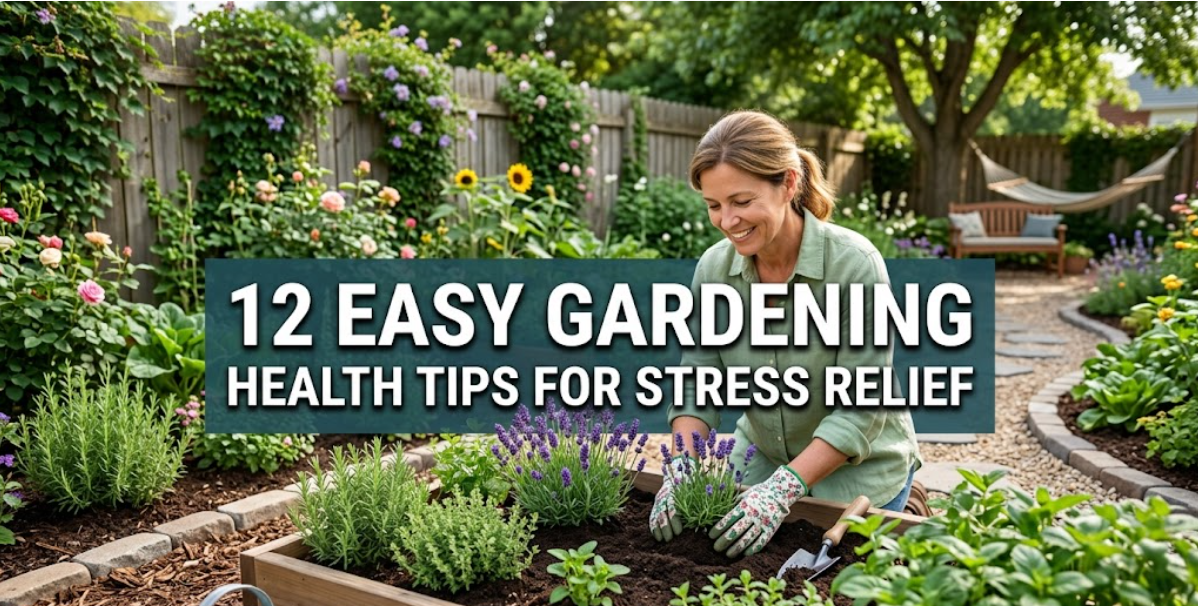
Gardening is often seen as a hobby for people who enjoy plants, but in recent years it has also become recognized as a simple, natural form of stress relief. In 2026, when most daily life is filled with screens, notifications, and constant mental overload, gardening offers something different—slow, physical, and grounding.
What makes gardening especially powerful for stress relief is that it works on multiple levels at once. It engages your body, focuses your mind, and connects you with something living. Even small activities like watering plants or touching soil can shift your mental state in a noticeable way.
This guide explores 12 practical gardening health tips that reduce stress naturally. These are not complicated techniques. They are simple habits and approaches anyone can use, whether you have a backyard, balcony, or just a few pots indoors.
tip 1: start with 10 minutes of daily plant interaction
You don’t need hours of gardening to feel the benefits. Even short, daily interaction with plants can reduce stress hormones.
what to do in 10 minutes:
- water plants slowly
- check leaf health
- wipe dust from leaves
- observe new growth
stress reduction impact:
| activity duration | stress reduction level | effort required |
|---|---|---|
| 5 minutes | low but noticeable | very low |
| 10 minutes | moderate | low |
| 20+ minutes | high | medium |
The key is consistency, not duration.
tip 2: use soil touching as a grounding technique
One of the most underrated stress relief methods in gardening is simply touching soil.
why it works:
- connects you physically with nature
- slows breathing and heart rate
- encourages mindfulness
soil interaction effect table:
| activity | emotional benefit | stress impact |
|---|---|---|
| touching dry soil | mild grounding | low reduction |
| repotting plants | moderate focus | medium reduction |
| planting seeds | deep calm | high reduction |
Many therapists refer to this as a grounding technique because it shifts attention away from mental noise.
tip 3: grow aromatic plants for instant relaxation
Scent is directly linked to emotional regulation in the brain. Aromatic plants provide quick stress relief through natural fragrance.
best stress-relief plants:
- lavender
- mint
- jasmine
- rosemary
- basil
aroma impact chart:
| plant | scent type | stress effect | best time |
|---|---|---|---|
| lavender | floral | calming | evening |
| mint | fresh | refreshing | morning |
| jasmine | sweet | soothing | night |
| rosemary | herbal | focus + calm | daytime |
Even brushing against these plants releases scent molecules that affect mood instantly.
tip 4: create a small “green focus corner”
Having a dedicated plant space helps the brain associate that area with relaxation.
how to set it up:
- choose a quiet corner
- add 2–5 plants
- avoid clutter
- include natural light
environmental effect comparison:
| setup type | stress level | focus improvement |
|---|---|---|
| cluttered space | high stress | low |
| neutral space | moderate | medium |
| green focus corner | low stress | high |
This becomes a personal mental reset zone.
tip 5: practice slow watering instead of rushing
Watering plants is often rushed, but slowing it down turns it into a calming ritual.
slow watering benefits:
- regulates breathing
- increases awareness
- reduces anxiety cycles
watering style comparison:
| style | stress impact | plant health |
|---|---|---|
| rushed watering | low benefit | inconsistent |
| moderate watering | medium benefit | stable |
| slow mindful watering | high benefit | optimal |
Tip: use a small watering can to naturally slow down the process.
tip 6: listen to natural sounds while gardening
Combining gardening with sound therapy increases relaxation effects.
recommended sounds:
- birds chirping
- soft rain
- flowing water
- instrumental music
sound impact table:
| sound type | stress reduction | focus level |
|---|---|---|
| natural sounds | high | high |
| soft music | medium | medium |
| silence | moderate | high awareness |
| urban noise | low | low |
This creates a multi-sensory calming experience.
tip 7: grow fast plants for emotional rewards
Slow progress can sometimes feel discouraging. Growing fast plants helps maintain motivation.
fast-growing plants:
- lettuce
- radish
- mint
- spinach
growth reward chart:
| plant | visible growth time | motivation boost |
|---|---|---|
| radish | 3–4 weeks | high |
| lettuce | 4–6 weeks | high |
| mint | 2–3 weeks | very high |
| spinach | 4–5 weeks | medium |
Seeing results quickly reinforces positive emotional feedback.
tip 8: use pruning as emotional release
Pruning is often overlooked as a stress relief activity, but it has strong psychological benefits.
why pruning helps:
- gives sense of control
- removes visual clutter
- encourages focus
emotional impact:
| activity | stress relief level |
|---|---|
| removing dead leaves | mild |
| shaping plants | moderate |
| heavy pruning | strong emotional reset |
Many people describe pruning as “clearing their mind through action.”
tip 9: keep a small indoor plant near your workspace
Having greenery in your immediate visual field improves focus and reduces fatigue.
workspace plant benefits:
- reduces eye strain
- improves attention span
- softens harsh environment
workspace comparison:
| setup | stress level | productivity |
|---|---|---|
| no plants | high | moderate |
| one plant | medium | improved |
| multiple plants | low | high focus |
Even a single small plant can change the mood of a desk.
tip 10: follow a simple plant care routine
Uncertainty creates stress. A simple routine removes that mental load.
weekly gardening routine:
| day | task | benefit |
|---|---|---|
| monday | check soil moisture | stability |
| tuesday | light watering | consistency |
| wednesday | inspect leaves | awareness |
| thursday | pruning | control |
| friday | fertilizing if needed | nourishment |
| saturday | harvesting | reward |
| sunday | observation | relaxation |
Routine reduces decision fatigue.
tip 11: use gardening as a break from screens
Screen fatigue is one of the biggest modern stress sources. Gardening provides a natural break.
screen vs gardening effect:
| activity | mental fatigue | recovery level |
|---|---|---|
| scrolling phone | high fatigue | none |
| watching videos | moderate fatigue | low |
| gardening | low fatigue | high recovery |
Even 5–10 minutes away from screens can reset attention.
tip 12: focus on observation instead of perfection
Many beginners stress about perfect plant care. However, plants are naturally resilient.
shift in mindset:
- from perfection → observation
- from control → support
- from worry → awareness
mindset comparison:
| approach | stress level | satisfaction |
|---|---|---|
| perfection-focused | high stress | low |
| observation-focused | low stress | high |
This mindset shift is often the biggest source of long-term relief.
how gardening affects mental health scientifically
Gardening influences stress through multiple biological pathways:
| factor | effect |
|---|---|
| green visual exposure | lowers cortisol levels |
| physical movement | releases endorphins |
| soil bacteria exposure | improves mood regulation |
| routine building | reduces anxiety |
Even short exposure to plants can trigger relaxation responses in the nervous system.
simple stress-relief gardening schedule
| day | activity | emotional benefit |
|---|---|---|
| monday | watering plants | calm start |
| tuesday | leaf check | awareness |
| wednesday | soil touch | grounding |
| thursday | pruning | release tension |
| friday | aroma exposure | relaxation |
| saturday | harvesting | reward feeling |
| sunday | sitting with plants | deep calm |
closing thoughts
Gardening is not just about growing plants—it is also about growing mental balance. The act of caring for something living naturally slows down thoughts and creates emotional stability.
The best part is that it doesn’t require perfection, expensive tools, or large spaces. Even a few small plants in a corner of your home can change how your mind responds to daily stress.
The key is consistency and presence. When gardening becomes a small daily habit instead of a task, it gradually turns into a form of therapy that fits naturally into everyday life.
frequently asked questions
- how quickly does gardening reduce stress?
Many people feel calmer within minutes of interacting with plants, especially through watering or touching soil. - what is the easiest plant for stress relief?
Lavender, mint, and pothos are popular because they are easy to grow and visually calming. - do indoor plants help with anxiety?
Yes, studies show that indoor plants can reduce anxiety levels and improve mood stability. - how long should I garden for stress relief?
Even 10–15 minutes daily is enough to create noticeable relaxation effects. - is gardening better than meditation for stress?
They work differently—gardening combines physical activity with mindfulness, which some people find easier than meditation. - can beginners use gardening for mental health?
Absolutely. Even simple plant care routines can significantly improve emotional well-being.