
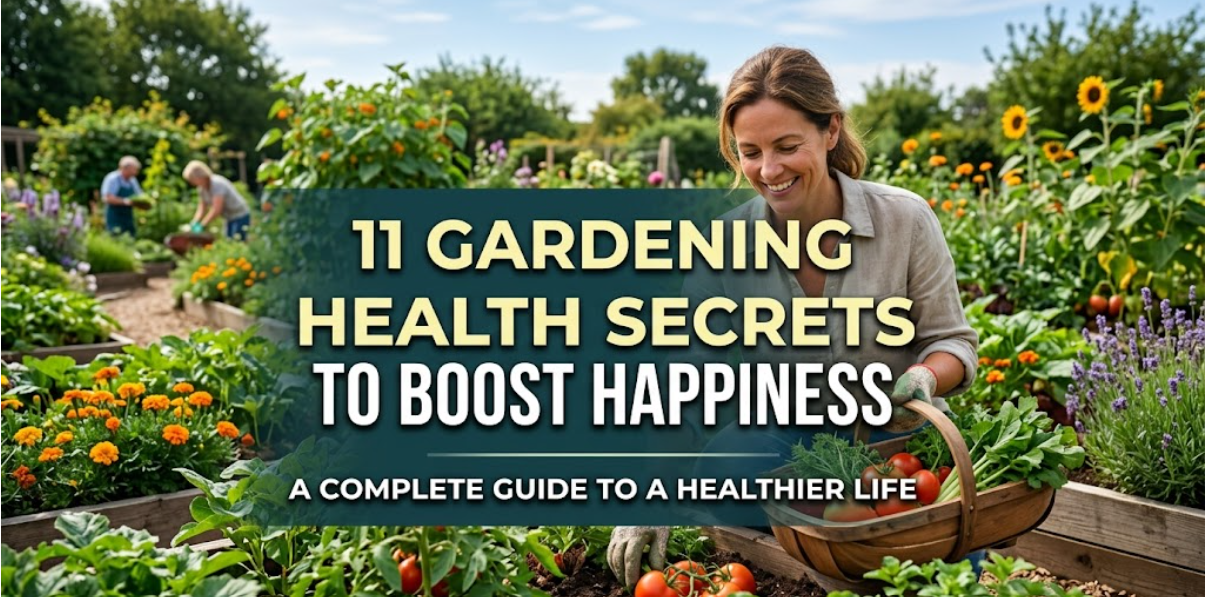
Gardening is often described as a hobby, but for many people it becomes something deeper—almost like therapy without a couch. The connection between soil, plants, sunlight, and human mood is stronger than most realize. When approached intentionally, gardening can improve mental health, reduce stress hormones, increase physical activity, and even improve sleep quality.
But beyond the obvious benefits, there are lesser-known “health secrets” in gardening that quietly influence happiness levels. These are not just about planting flowers or growing vegetables—they are about how your body and brain respond to the gardening environment.
This guide explores 11 powerful gardening health secrets that can meaningfully boost happiness, supported by practical explanations, structured tables, and real-world application methods.
- soil contact and the “grounding effect” on mood
One of the most overlooked health benefits of gardening is direct contact with soil. Soil contains naturally occurring microorganisms, including a harmless bacterium called Mycobacterium vaccae, which has been linked to serotonin production in the brain.
Simply touching soil can influence mood chemistry.
Psychological and physical effects of soil contact:
| Activity | Biological Effect | Emotional Outcome |
|---|---|---|
| Bare hand planting | Microbial exposure | Increased calmness |
| Digging soil | Physical grounding | Reduced anxiety |
| Kneeling in soil | Sensory engagement | Improved focus |
Even 10–15 minutes of soil interaction has been associated with a noticeable reduction in stress perception.
- sunlight exposure as a natural mood regulator
Sunlight is one of the strongest natural regulators of human mood. Gardening naturally increases exposure to morning or afternoon light, which influences serotonin and melatonin balance.
Light exposure comparison:
| Exposure Type | Vitamin D Production | Mood Impact |
|---|---|---|
| Indoor lighting | Very low | Neutral |
| Short outdoor walk | Medium | Mild improvement |
| Gardening (30–60 min) | High | Strong improvement |
Morning gardening is especially effective because it helps reset the body’s circadian rhythm, leading to better sleep at night.
- repetitive motion and its meditative effect
Many gardening tasks involve repetition—watering, pruning, digging, and planting. These repetitive motions create a rhythm similar to meditation.
Examples of calming repetitive tasks:
- Raking soil
- Watering plants
- Trimming leaves
- Transplanting seedlings
Effect on mental state:
| Task Type | Brain Activity | Stress Level |
|---|---|---|
| Random multitasking | High cognitive load | High stress |
| Repetitive gardening | Low cognitive load | Low stress |
This explains why many people feel mentally “lighter” after gardening sessions.
- plant nurturing and emotional attachment
Humans naturally form emotional bonds with living things they care for. Plants become symbolic sources of responsibility and progress.
Psychological benefits:
| Gardening Activity | Emotional Response |
|---|---|
| Watering plants | Sense of responsibility |
| Watching growth | Sense of achievement |
| Harvesting food | Sense of reward |
This cycle of care and reward activates dopamine pathways in the brain, improving long-term happiness.
- green color exposure and visual relaxation
The color green has been scientifically linked to relaxation and reduced mental fatigue. Gardens naturally provide constant exposure to this color spectrum.
Color impact comparison:
| Color Environment | Stress Level |
|---|---|
| Gray urban spaces | High |
| Mixed artificial colors | Medium |
| Green natural spaces | Low |
Even short visual exposure to greenery has been shown to reduce eye strain and mental exhaustion.
- micro-movement exercise hidden in gardening
Gardening is often underestimated as a form of physical activity. It involves squatting, lifting, stretching, and walking—all of which contribute to light-to-moderate exercise.
Calorie and movement comparison:
| Activity | Calories Burned (per hour) | Physical Benefit |
|---|---|---|
| Sitting indoors | 60–80 | None |
| Walking slowly | 150–200 | Moderate |
| Gardening | 200–400 | Full-body light exercise |
This combination of movement and purpose makes exercise feel less like a chore.
- sensory stimulation and brain activation
Gardening activates multiple senses simultaneously: touch, smell, sight, and sometimes taste. This multi-sensory stimulation increases cognitive engagement and emotional satisfaction.
Sensory breakdown:
| Sense | Gardening Trigger | Brain Effect |
|---|---|---|
| Smell | Flowers, herbs | Emotional memory activation |
| Touch | Soil, leaves | Sensory grounding |
| Sight | Colors, growth | Visual satisfaction |
| Taste | Herbs, fruits | Reward response |
This layered sensory experience is one reason gardening feels deeply fulfilling.
- micro-achievements and dopamine cycles
Unlike large life goals, gardening provides frequent small wins. Each sprouting seed or blooming flower acts as a micro-achievement.
Dopamine reward cycle:
| Stage | Event | Emotional Result |
|---|---|---|
| Planting | Starting growth | Hope |
| Sprouting | Visible progress | Excitement |
| Growth | Development | Satisfaction |
| Harvest | Completion | Joy |
This steady cycle prevents emotional burnout and supports consistent motivation.
- soil microbiome exposure and mental health
Emerging research suggests that exposure to diverse soil microbes may influence mental well-being through the gut-brain axis.
Soil exposure impact:
| Exposure Type | Microbial Diversity | Mental Effect |
|---|---|---|
| Sterile environments | Low | Neutral |
| Indoor plants only | Medium | Mild benefit |
| Outdoor gardening | High | Strong benefit |
A diverse soil ecosystem contributes indirectly to emotional stability.
- gardening as structured time away from screens
Modern lifestyles involve heavy screen exposure, which can increase anxiety and mental fatigue. Gardening acts as a natural digital detox.
Screen vs gardening comparison:
| Activity | Cognitive Load | Recovery Effect |
|---|---|---|
| Social media scrolling | High | Fatiguing |
| Watching TV | Medium | Passive |
| Gardening | Low-active | Restorative |
Even 20–30 minutes of gardening can significantly reduce digital overstimulation effects.
- social gardening and shared happiness
Gardening does not need to be a solo activity. Community or shared gardening increases social connection, which is strongly linked to happiness.
Social benefits:
| Interaction Type | Emotional Benefit |
|---|---|
| Sharing plants | Connection building |
| Group gardening | Reduced loneliness |
| Exchanging harvests | Mutual satisfaction |
Humans are biologically wired for social cooperation, and gardening provides a natural setting for it.
overall happiness impact summary
When combined, these 11 gardening secrets create a multi-layered mental health support system.
Overall effect chart:
| Factor | Contribution to Happiness |
|---|---|
| Soil contact | High |
| Sunlight | Very high |
| Movement | Medium-high |
| Sensory stimulation | High |
| Social interaction | Medium |
| Achievement cycles | Very high |
Together, they create a balanced emotional environment that supports long-term well-being.
simple weekly gardening happiness routine
A structured approach can maximize mental health benefits without requiring much time.
| Day | Activity | Duration |
|---|---|---|
| Monday | Water plants mindfully | 10–15 min |
| Tuesday | Touch soil / repot | 15 min |
| Wednesday | Light pruning | 15 min |
| Thursday | Observe plant growth | 10 min |
| Friday | Outdoor sunlight session | 20 min |
| Saturday | Gardening activity | 30–60 min |
| Sunday | Rest + reflection | 10 min |
This routine emphasizes consistency over intensity.
final thoughts
Gardening is not just about growing plants—it is a deeply interactive system that influences mood, body chemistry, and emotional stability. The health benefits are not accidental; they emerge from repeated engagement with natural processes.
When you combine soil contact, sunlight exposure, physical movement, sensory stimulation, and small achievement cycles, gardening becomes a quiet but powerful form of mental health support.
Even small efforts—like tending a few pots on a balcony—can begin to shift emotional balance in a meaningful way over time.
frequently asked questions
- how quickly can gardening improve mood?
Some people feel calmer within minutes due to sensory engagement, but long-term benefits build over weeks. - do I need a large garden to experience these benefits?
No. Even small container gardens or balcony plants provide similar psychological effects. - is soil contact really important?
Yes. Direct contact with soil can influence sensory grounding and emotional relaxation. - can gardening replace exercise?
It can contribute to light exercise, but it is best combined with other physical activities for full fitness. - what is the biggest mental health benefit of gardening?
The combination of reduced stress and consistent micro-achievements is often the most impactful. - is indoor gardening enough?
Indoor plants still provide benefits like visual relaxation and responsibility cycles, though outdoor gardening offers stronger effects.