
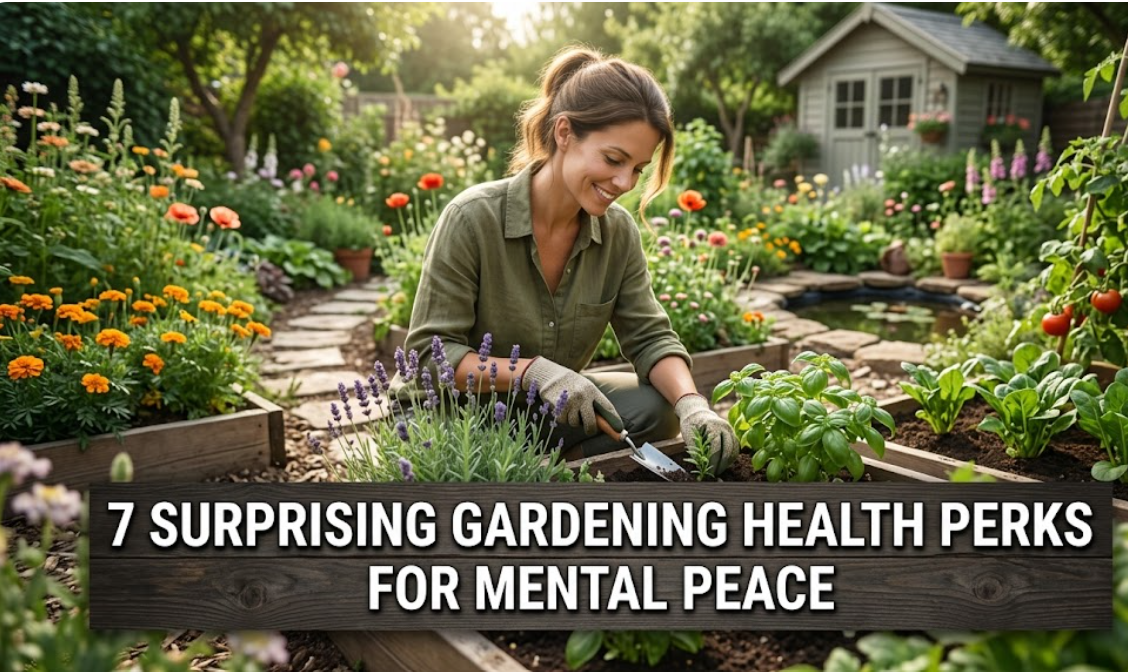
Gardening is often seen as a hobby—something people do to decorate their homes, grow vegetables, or pass time on weekends. But beneath the surface, it has a much deeper impact on human well-being. Over the past few decades, psychologists, neuroscientists, and wellness researchers have consistently found that gardening plays a powerful role in improving mental health.
What makes it especially interesting is that the benefits are not subtle. People often notice changes in mood, stress levels, and emotional balance within just a few days or weeks of spending time with plants.
This article explores seven surprising health perks of gardening for mental peace, supported with structured insights, comparisons, and practical observations that show why soil, plants, and sunlight can be as powerful as any wellness routine.
- gardening reduces stress hormones naturally
One of the most well-documented benefits of gardening is its ability to reduce cortisol, the body’s primary stress hormone. When people spend time in natural environments, the brain shifts from a “fight-or-flight” mode into a calmer state.
Gardening combines multiple stress-relieving elements:
- Physical activity
- Exposure to greenery
- Repetitive calming tasks
- Fresh air and sunlight
Stress reduction comparison:
Activity type Average stress impact
Office work High stress increase
Screen scrolling Moderate stress increase
Walking outdoors Moderate stress reduction
Gardening High stress reduction
Why this works:
Soil contains harmless microbes that may trigger serotonin release when inhaled or absorbed through contact. This creates a subtle mood-lifting effect often described as “natural calm.”
A simple observation many gardeners report:
After 20–30 minutes of planting or watering, mental tension feels noticeably reduced, even if external stressors remain unchanged.
- improves focus and attention span
Modern life constantly pulls attention in multiple directions—phones, notifications, work pressure, and digital overload. Gardening helps reverse this fragmentation by requiring gentle, sustained focus.
Tasks like:
- Pruning plants
- Watering carefully
- Checking soil
- Removing weeds
…require presence without pressure.
Attention span comparison:
Activity Focus stability
Social media use Low
Multitasking work Low-medium
Reading Medium-high
Gardening High
Why gardening improves focus:
It encourages “soft attention”—a mental state where awareness is relaxed but still engaged. Unlike screen-based tasks, gardening does not overload cognitive capacity.
Over time, this strengthens the brain’s ability to stay present for longer periods.
- sunlight exposure boosts mood chemistry
Gardening naturally increases exposure to sunlight, which plays a major role in mental health. Sunlight helps the body produce vitamin D, which is linked to emotional stability and reduced symptoms of low mood.
Key sunlight effects:
- Boosts serotonin levels
- Regulates sleep cycles
- Improves energy levels
Sun exposure comparison chart:
Activity Sunlight exposure
Indoor lifestyle Very low
Office routine Low
Outdoor walking Medium
Gardening High
Why this matters:
People who spend long hours indoors often experience mood dips without realizing sunlight deficiency is a factor.
Even 20–40 minutes of gardening daily can create noticeable improvements in energy and emotional balance over time.
- creates a sense of purpose and responsibility
Mental peace is not only about relaxation—it also comes from having a sense of meaning. Gardening provides this through responsibility toward living things.
Plants depend on:
- Regular watering
- Proper sunlight
- Occasional pruning
- Pest management
This creates a gentle responsibility loop that feels rewarding rather than stressful.
Emotional fulfillment comparison:
Activity Sense of purpose
Passive entertainment Low
Routine tasks Medium
Pet care High
Gardening High
Why it matters:
When a plant grows successfully, it creates visible feedback for effort. This reinforces motivation and emotional satisfaction.
Even small improvements—like a new leaf or flower—can create a sense of achievement.
- reduces anxiety through repetitive motion
Repetitive physical actions have been shown to calm the nervous system. Gardening is full of such motions:
- Digging soil
- Watering plants
- Weeding
- Raking leaves
These repetitive tasks act like a form of natural meditation.
Anxiety relief comparison:
Activity Anxiety reduction level
Overthinking Low
Screen distraction Low-medium
Walking Medium
Gardening High
Why repetition helps:
The brain begins to focus on rhythm rather than intrusive thoughts. This reduces mental noise and creates emotional grounding.
Many gardeners describe this as “quieting the mind without effort.”
- strengthens emotional resilience over time
Gardening involves both success and failure. Some plants thrive, while others don’t survive despite care. This teaches emotional adaptability in a very natural way.
Lessons learned through gardening:
- Not everything is controllable
- Growth takes time
- Failure is part of learning
- Consistency matters more than perfection
Resilience development chart:
Experience type Emotional outcome
Instant gratification Low resilience growth
Controlled success Medium growth
Gardening experience High resilience growth
Why this matters:
People who garden regularly often develop a calmer response to setbacks in other areas of life, including work and relationships.
It builds patience in a very organic way.
- improves sleep quality through natural rhythm alignment
Gardening helps regulate daily routines by increasing exposure to natural light and physical activity. This helps reset the body’s circadian rhythm—the internal clock that controls sleep.
Key sleep-related benefits:
- More physical tiredness (healthy fatigue)
- Better melatonin regulation
- Reduced screen exposure time
Sleep quality comparison:
Lifestyle type Sleep quality
Sedentary indoor Poor to moderate
Moderately active Moderate
Regular gardening High
Why it works:
Sunlight during the day signals the body to stay alert, while physical activity helps release excess energy. At night, the body naturally transitions into deeper rest.
Many gardeners report falling asleep faster and experiencing more stable sleep cycles.
combined mental health impact overview
When all seven benefits are combined, gardening becomes more than a hobby—it becomes a structured mental wellness system.
Mental benefit summary:
Benefit Impact level
Stress reduction Very high
Focus improvement High
Mood enhancement High
Sense of purpose High
Anxiety reduction Very high
Emotional resilience High
Sleep improvement High
Overall effect:
Gardening works on multiple layers of mental health simultaneously—cognitive, emotional, physical, and behavioral.
supporting lifestyle integration chart
Here is how gardening compares to other common wellness practices:
Practice Sustainability Mental impact
Meditation Medium High
Gym workouts Medium High
Screen detox Low Medium
Gardening High Very high
Why gardening stands out:
It does not feel like a “health task.” Instead, it naturally integrates into daily life while still providing psychological benefits.
practical ways to maximize mental peace from gardening
To fully experience the mental health benefits, consistency matters more than scale.
Helpful habits:
- Garden at the same time daily
- Start with low-maintenance plants
- Avoid pressure for perfection
- Focus on process, not outcome
Simple beginner setup:
Garden type Mental ease level
Indoor pots High
Balcony garden High
Backyard garden Very high
Even a few plants can create meaningful psychological benefits if cared for regularly.
faqs
- how long does it take to feel mental health benefits from gardening?
Some people notice reduced stress within a few days, while deeper benefits like emotional stability develop over a few weeks of consistent gardening. - do i need a large garden to get these benefits?
No. Even small indoor plants or balcony setups can provide significant mental health improvements. - is gardening better than other relaxation activities?
It depends on the person, but gardening is unique because it combines physical activity, nature exposure, and responsibility in one activity. - can gardening help with anxiety?
Yes. Repetitive tasks, fresh air, and focus on living plants can significantly reduce anxiety symptoms for many people. - what type of plants are best for mental peace?
Low-maintenance plants like lavender, jasmine, snake plants, and pothos are often recommended because they are easy to care for and visually calming. - how often should i garden for mental benefits?
Even 20–30 minutes daily or a few times per week is enough to experience noticeable improvements in mood and stress levels.
final thoughts
Gardening is not just about growing plants—it’s about creating a quieter internal environment. Through repetitive care, natural exposure, and simple daily interaction with living things, it gently reshapes how the mind responds to stress, attention, and emotion.
Unlike many wellness practices that require structured effort, gardening integrates into life naturally. Over time, it becomes less of a task and more of a stabilizing rhythm that supports mental peace in a quiet but powerful way.