
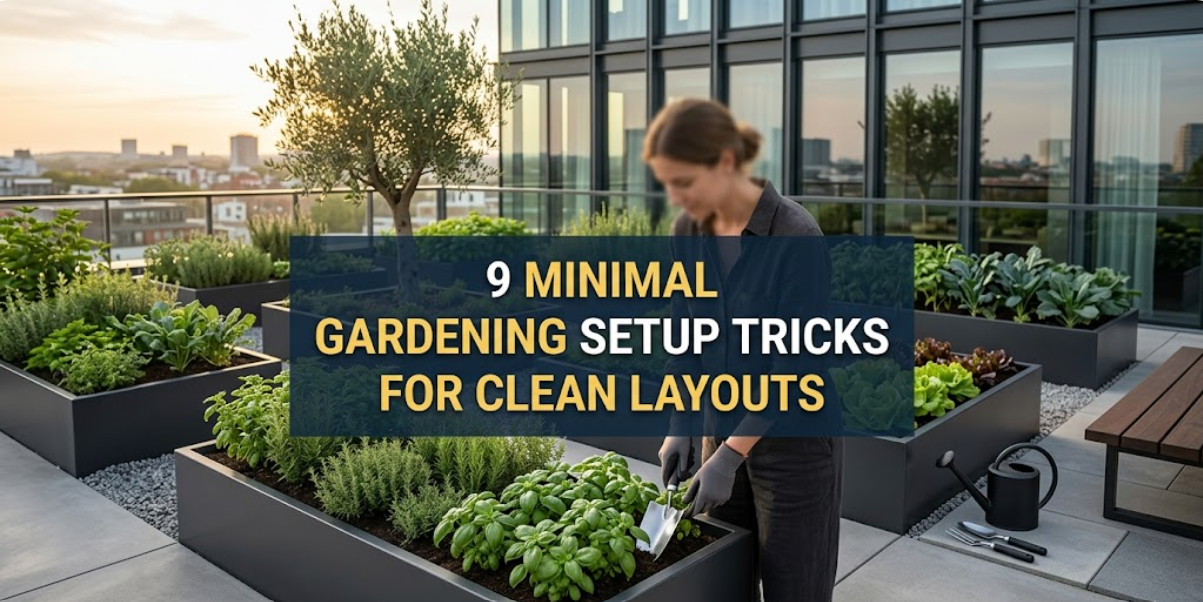
A clean garden layout doesn’t happen by accident. It’s usually the result of small, intentional choices repeated over time—spacing, structure, repetition, and restraint. When I first started gardening, I tried to fit as many plants as possible into every available inch. The result was messy, hard to maintain, and visually overwhelming.
Over time, I realized something simple: less clutter creates more impact. A minimal garden doesn’t mean empty—it means intentional. Every plant, container, and pathway has a purpose.
These nine setup tricks helped me transform chaotic planting into a clean, balanced, and visually calm garden space.
trick 1: grid-based planting layout
One of the simplest ways to create order is to stop planting randomly and start using a grid system.
Instead of scattering plants, you assign each one a defined square or section.
basic grid example:
Grid Cell | Plant Type
A1 | Tomato
A2 | Basil
A3 | Empty space (airflow)
B1 | Lettuce
B2 | Pepper
B3 | Lettuce
why grids work:
- Easy maintenance
- Balanced spacing
- Predictable growth patterns
comparison:
Layout Type | Visual Clarity | Maintenance Ease
Random planting | Low | Hard
Row planting | Medium | Moderate
Grid system | High | Easy
This alone instantly makes a garden feel more structured.
trick 2: repeating plant patterns instead of mixing everything
Minimal design often relies on repetition. Instead of using many different plants randomly, I started repeating the same ones in structured patterns.
pattern example:
Row 1: Tomato – Basil – Tomato – Basil
Row 2: Lettuce – Lettuce – Lettuce
Row 3: Pepper – Pepper – Empty space
benefits of repetition:
- Visual calmness
- Easier care routines
- Better soil consistency
plant diversity vs repetition:
Factor | High Diversity Chaos | Controlled Repetition
Visual effect | Busy | Clean
Maintenance | Difficult | Simple
Plant health | Inconsistent | Stable
Repetition creates rhythm, which the eye naturally finds pleasing.
trick 3: strict pathway separation
One of the biggest reasons gardens look messy is lack of defined walking space.
I started creating clear pathways using simple materials like:
- Gravel
- Wood chips
- Bricks
- Compact soil lines
pathway structure example:
Area | Purpose
Central path | Main movement route
Side paths | Access to beds
Edge borders | Plant containment
pathway impact:
Feature | Without Paths | With Defined Paths
Navigation | Confusing | Clear
Visual structure | Weak | Strong
Plant protection | Low | High
Even a small garden looks professional once paths are defined.
trick 4: container uniformity rule
One mistake I made early on was using random pots of all shapes, colors, and sizes. It made everything look chaotic.
Minimal gardening uses consistency in containers.
container consistency table:
Style Choice | Visual Result
Mixed containers | Busy and cluttered
Uniform color pots | Clean and modern
Uniform shape + size | Highly structured
rules I started following:
- Same color family (white, terracotta, black)
- Limited size variation
- Consistent material when possible
This created visual harmony even before plants grew.
trick 5: negative space planning (intentional emptiness)
In gardening, empty space is not wasted space—it is design space.
I started deliberately leaving gaps between plant groups.
negative space effects:
Spacing Level | Garden Feel
No gaps | Overcrowded
Small gaps | Slightly structured
Intentional empty zones | Clean and breathable
why negative space matters:
- Improves airflow
- Highlights plants better
- Reduces visual stress
layout balance chart:
Element | Role in Design
Plants | Main visual focus
Paths | Movement structure
Empty space | Visual breathing room
Without empty space, even healthy gardens look messy.
trick 6: height zoning system
Instead of placing plants randomly, I began organizing them by height.
vertical zoning structure:
Zone | Plant Type
Back zone | Tall plants (corn, sunflowers)
Middle zone | Medium plants (tomato, pepper)
Front zone | Low plants (herbs, lettuce)
height layering effects:
Arrangement | Visual Depth
Flat height mix | Confusing
Random heights | Chaotic
Zoned heights | Structured
This creates a natural “stadium effect” where every plant is visible.
trick 7: color limitation rule
Too many colors create visual noise. I reduced plant variety based on color balance.
color structure example:
Zone | Color Theme
Herb section | Green tones
Flower section | Warm tones (yellow/red)
Accent section | Purple/white
color overload comparison:
Color Use | Visual Result
Unlimited colors | Chaotic
3–4 color groups | Balanced
Single dominant palette | Minimal and elegant
This made the garden feel intentionally designed rather than accidental.
trick 8: edge framing technique
Edges define structure. Without clear edges, gardens look unfinished.
I started framing garden beds using:
- Stones
- Wooden borders
- Low hedges
- Brick outlines
edge structure table:
Material | Effect
Stone border | Natural + stable
Wood frame | Warm + structured
Brick outline | Clean + geometric
impact of edges:
Feature | Without Borders | With Borders
Shape clarity | Weak | Strong
Maintenance control | Low | High
Visual finish | Incomplete | Polished
Edges act like picture frames for your plants.
trick 9: fixed focal point strategy
Every clean layout needs a visual anchor. I started creating one central focal point per garden section.
focal point examples:
- Large potted plant
- Water feature
- Decorative structure
- Flower cluster
focal point function:
Element | Role
Main focal plant | Attention center
Surrounding plants | Supporting design
Empty space | Enhances focus
design clarity chart:
Layout Type | Eye Movement
No focal point | Scattered attention
Multiple focal points | Confused focus
Single focal point | Clear direction
This prevents the garden from feeling visually directionless.
combined impact of all 9 tricks
When all nine techniques are applied together, the garden changes completely.
overall comparison:
Factor | Before Minimal Setup | After Minimal Setup
Visual clarity | Low | High
Maintenance difficulty | High | Low
Design structure | Random | Intentional
Space efficiency | Moderate | High
Overall feel | Busy | Calm and organized
what improves most:
- Clean structure
- Easier maintenance
- Better plant health
- Strong visual identity
why minimal gardening works psychologically
Minimal layouts don’t just look better—they feel better.
reasons:
- Less visual overload
- Easier cognitive processing
- Clear organization reduces stress
- Natural focus on healthy plants
garden perception shift:
Type | Mental Effect
Cluttered garden | Overstimulating
Minimal garden | Calming
Structured garden | Satisfying
common mistakes in minimal gardening setups
- Removing too many plants too quickly
- Forgetting soil diversity while simplifying layout
- Ignoring seasonal changes
- Over-standardizing everything until it looks artificial
Balance is important—minimal does not mean empty.
frequently asked questions
- Do I need a large garden to apply minimal setup tricks?
No. Minimal design actually works better in small spaces because structure becomes more visible. - Will reducing plant variety affect yield?
Not necessarily. Strategic planting often improves yield efficiency. - What is the easiest trick to start with?
Defining pathways and using uniform containers gives the fastest visible improvement. - Can minimal gardening still include flowers and vegetables together?
Yes, as long as zoning and structure are maintained. - Does negative space mean wasting soil area?
No. It improves airflow, plant health, and visual balance. - How long does it take to transform a messy garden?
Most people notice improvements within a single growing season.
closing thought
Minimal gardening isn’t about doing less work—it’s about removing unnecessary complexity. Once structure replaces randomness, everything becomes easier: planting, maintenance, and even enjoyment.
And surprisingly, the less crowded the garden becomes, the more alive it feels.