
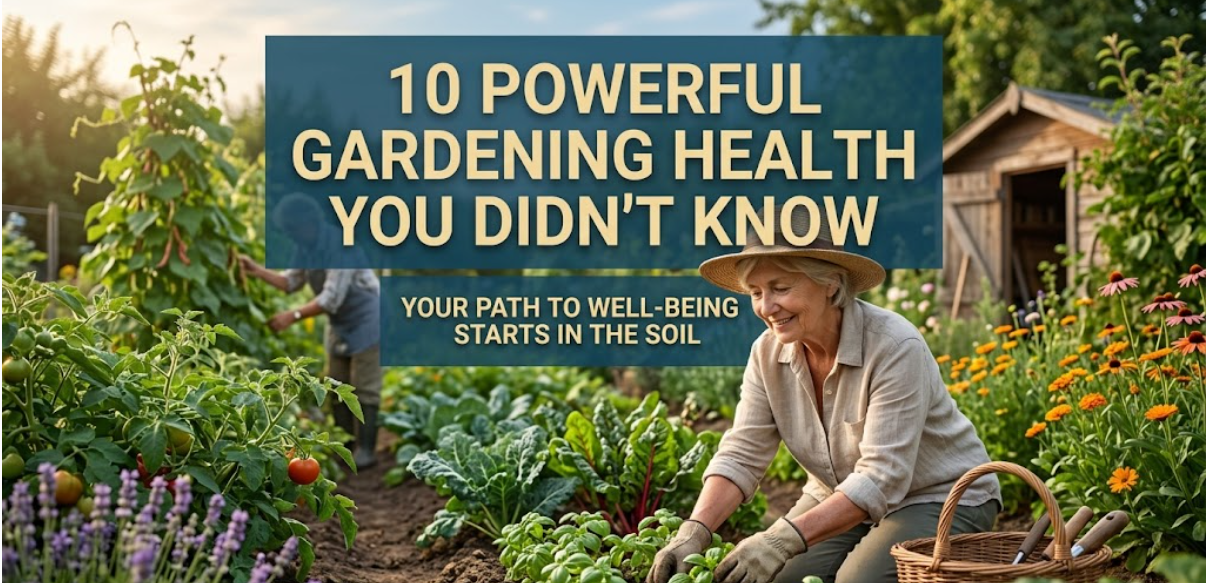
Gardening is often seen as a hobby—something relaxing, decorative, or even productive for growing food. But beneath the surface, it is one of the most powerful natural activities for improving human health in multiple dimensions: physical, mental, emotional, and even social.
What makes gardening especially unique is that it works quietly. You don’t “feel” it like exercise in a gym, yet it engages almost every system in the body. It reduces stress hormones, improves cardiovascular function, strengthens immunity, and even supports cognitive health.
This article explores 10 powerful gardening health benefits that are often overlooked, supported by practical insights, comparisons, and structured breakdowns to show how deeply gardening impacts overall wellbeing.
- gardening naturally reduces chronic stress levels
One of the most immediate effects of gardening is stress reduction. Being around plants lowers cortisol levels—the hormone responsible for stress response.
Studies consistently show that even 20–30 minutes of gardening activity can significantly calm the nervous system.
stress reduction comparison table:
| activity type | stress reduction level | recovery time |
|---|---|---|
| scrolling social media | low | none |
| watching TV | mild | short-term |
| walking in nature | high | moderate |
| gardening | very high | sustained |
why it works:
- exposure to natural greenery calms brain activity
- rhythmic movements like planting or watering induce relaxation
- soil microbes stimulate serotonin production
Gardening is often described as “natural therapy without prescription.”
- improves cardiovascular health without intense exercise
Gardening involves bending, stretching, digging, lifting, and walking—all forms of low-to-moderate physical activity that benefit heart health.
Unlike structured workouts, gardening feels effortless while still improving circulation.
cardio impact chart:
| gardening task | heart rate impact | calories burned/hour |
|---|---|---|
| watering plants | low | 120–150 |
| planting seeds | moderate | 200–250 |
| digging soil | high | 300–400 |
| lawn maintenance | very high | 400–500 |
benefits include:
- improved blood circulation
- lower blood pressure
- reduced risk of heart disease
Over time, regular gardening acts like a gentle but consistent cardio program.
- strengthens immune system through soil exposure
One of the lesser-known benefits of gardening is immune system enhancement through exposure to beneficial microorganisms found in soil.
These microbes help train the immune system to respond properly to threats.
immune support comparison:
| exposure type | immune effect |
|---|---|
| sterile indoor life | weak immune response |
| limited outdoor exposure | moderate |
| regular gardening | strong resilience |
key mechanism:
- soil bacteria stimulate immune regulation
- reduced inflammation response over time
- improved gut microbiome diversity
This is why gardeners often report fewer seasonal illnesses.
- boosts mental health and reduces anxiety symptoms
Gardening is widely used in therapeutic settings because of its calming psychological effects.
The combination of sunlight, physical movement, and plant interaction helps regulate mood disorders.
mental health improvement table:
| condition | improvement level |
|---|---|
| mild anxiety | high |
| depression symptoms | moderate to high |
| burnout | very high |
| chronic stress | very high |
why it works:
- repetitive tasks reduce mental overload
- green color exposure stabilizes emotional processing
- sense of responsibility improves emotional grounding
Gardening provides structure without pressure, which is ideal for mental recovery.
- enhances cognitive function and memory
Gardening is not just physical—it is deeply cognitive. It requires planning, observation, problem-solving, and memory use.
This stimulates brain regions responsible for learning and executive function.
cognitive engagement chart:
| gardening task | brain activity level |
|---|---|
| planting layout | high |
| seasonal planning | very high |
| pest management | high |
| harvesting timing | moderate |
long-term benefits:
- improved memory retention
- better attention span
- slower cognitive decline with age
Studies suggest gardening may reduce risk of dementia in older adults.
- increases vitamin D naturally through sunlight exposure
Gardening encourages safe, consistent exposure to sunlight, which helps the body produce vitamin D.
This vitamin is essential for bone health, immunity, and mood regulation.
sun exposure efficiency:
| duration outside | vitamin D impact |
|---|---|
| 10 minutes | low |
| 30 minutes | moderate |
| 1 hour | high |
| regular gardening | optimal |
benefits include:
- stronger bones
- improved immune response
- reduced fatigue
Unlike artificial supplements, sunlight exposure is naturally regulated by the body.
- improves sleep quality through physical activity
Gardening helps regulate sleep cycles by combining physical exertion with stress reduction.
People who garden regularly often report deeper and more consistent sleep patterns.
sleep quality comparison:
| lifestyle type | sleep quality |
|---|---|
| sedentary routine | poor |
| light activity | moderate |
| gardening routine | high |
mechanisms:
- physical fatigue improves sleep onset
- stress reduction lowers nighttime cortisol
- daylight exposure regulates circadian rhythm
Better sleep leads to improved overall health and energy levels.
- encourages healthier eating habits through home-grown food
When people grow their own fruits, vegetables, or herbs, they naturally develop healthier eating habits.
This is due to increased awareness of food quality and effort invested in production.
diet impact table:
| food source | dietary quality |
|---|---|
| processed food | low |
| store-bought vegetables | medium |
| home-grown produce | very high |
benefits:
- increased vegetable intake
- reduced processed food consumption
- better nutritional awareness
Gardening indirectly improves long-term dietary behavior.
- supports joint flexibility and mobility
Gardening involves bending, squatting, reaching, and lifting, which keeps joints active and flexible.
This is particularly beneficial for older adults.
mobility impact chart:
| activity type | joint engagement |
|---|---|
| sitting lifestyle | low |
| walking only | moderate |
| gardening | high |
benefits:
- improved joint lubrication
- reduced stiffness
- enhanced range of motion
Unlike repetitive gym exercises, gardening movements are varied and functional.
- strengthens social connection and emotional wellbeing
Community gardening or even sharing home harvests fosters social interaction.
Humans naturally bond over shared growth experiences, and gardening becomes a social bridge.
social benefit comparison:
| activity type | social engagement |
|---|---|
| isolated hobbies | low |
| online interaction | medium |
| gardening groups | high |
effects include:
- reduced loneliness
- improved emotional support systems
- stronger sense of belonging
Gardening connects people through shared purpose rather than forced interaction.
overall health benefit summary chart
| health category | impact level of gardening |
|---|---|
| physical health | very high |
| mental health | very high |
| emotional health | very high |
| cognitive health | high |
| social health | moderate to high |
how gardening improves the body as a system
Instead of targeting one issue at a time, gardening improves multiple systems simultaneously:
- cardiovascular system through movement
- nervous system through relaxation
- immune system through soil exposure
- endocrine system through stress regulation
This makes gardening one of the few activities that provides holistic health improvement without structured effort.
final thoughts
Gardening is not just about growing plants—it is about growing healthier human beings. It quietly integrates physical movement, emotional balance, cognitive stimulation, and environmental connection into one seamless activity.
Even small-scale gardening, such as a balcony herb garden or a few pots by a window, can produce measurable health improvements over time.
The real power of gardening lies in consistency. It is not a quick fix—it is a long-term lifestyle enhancement that works gently but deeply.
frequently asked questions
- how long should i garden to see health benefits
Even 20–30 minutes a day can produce noticeable improvements in mood, stress levels, and physical activity. - is gardening good for mental health
Yes, gardening significantly reduces stress, anxiety, and symptoms of depression by calming the nervous system. - can gardening replace exercise
It can complement exercise, but in many cases it provides enough moderate activity to support cardiovascular health. - does gardening improve immunity
Yes, exposure to soil microbes helps strengthen immune response and reduce inflammation. - is gardening suitable for older adults
Absolutely. It improves mobility, flexibility, cognitive function, and emotional wellbeing in older individuals. - what is the easiest gardening type for beginners
Container gardening and herb gardening are the easiest starting points, requiring minimal space and maintenance.