
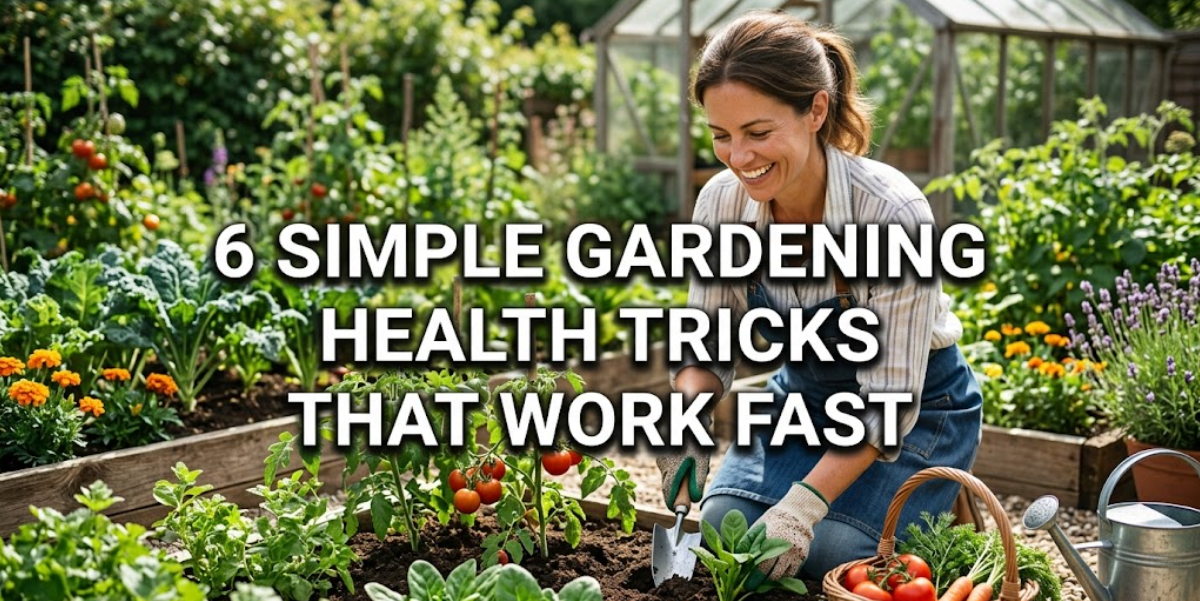
A healthy garden is not just about watering regularly or planting the right seeds. It’s about understanding how plants respond to their environment, soil, and care routines. Many gardeners struggle with slow growth, weak plants, or recurring pests, even when they follow basic instructions. The difference often comes down to small but powerful “health tricks” that improve plant vitality quickly.
This article explores six simple gardening health tricks that produce noticeable results in a short time. These are not complicated techniques—they are practical, field-tested methods that can instantly improve plant condition, soil strength, and overall garden performance.
- The “Deep Root Activation” Watering Trick
Most people water plants lightly and frequently, which keeps only the surface soil moist. This encourages shallow root growth, making plants weaker and more dependent on constant watering.
Deep root activation is a method where you water less frequently but more deeply, encouraging roots to grow downward in search of moisture.
How deep watering changes plant health
- Encourages strong root systems
- Improves drought resistance
- Reduces fungal and soil surface issues
- Helps plants absorb nutrients more efficiently
Watering Method Comparison Table
| Method | Water Depth | Frequency | Root Strength | Plant Health |
|---|---|---|---|---|
| Shallow watering | 2–5 cm | Daily | Weak | Moderate |
| Medium watering | 5–10 cm | Every 2–3 days | Average | Good |
| Deep watering | 15–30 cm | 1–2 times/week | Strong | Excellent |
Practical application:
Water slowly for longer duration so moisture penetrates deeper layers of soil. A simple hose trick is to let water drip near the base for 10–15 minutes instead of quick spraying.
Fast result:
Within 1–2 weeks, plants often show improved leaf firmness and color.
- Compost “Boost Layer” Technique
Compost is well-known in gardening, but most people mix it randomly into soil. The “boost layer” method is different—it involves placing a concentrated compost layer directly under root zones.
This creates a nutrient-rich zone that plants can access immediately.
Compost Layering Breakdown
| Soil Layer | Composition | Function |
|---|---|---|
| Top layer | Mulch or soil cover | Moisture retention |
| Middle layer | Mixed soil | Root expansion |
| Bottom layer | Rich compost | Nutrient supply |
Why this works fast
- Nutrients are concentrated where roots grow
- Microbial activity increases rapidly
- Plants receive immediate nutrient access
- Reduces need for chemical fertilizers
Best compost materials
- Kitchen vegetable waste
- Dry leaves
- Grass clippings
- Crushed eggshells
Quick improvement timeline:
Plants often show greener leaves within 5–7 days of applying this technique.
- Leaf Cleaning for Instant Photosynthesis Boost
Dust, pollution, and water residue can block sunlight absorption on plant leaves. This reduces photosynthesis efficiency without most gardeners noticing it.
Cleaning leaves is a simple but powerful health trick.
Leaf Health Improvement Table
| Condition | Photosynthesis Rate | Growth Speed |
|---|---|---|
| Dusty leaves | Low | Slow |
| Lightly cleaned | Medium | Normal |
| Fully clean leaves | High | Fast |
How to clean leaves safely
- Use a damp soft cloth
- Avoid harsh chemicals
- Clean early morning or evening
- Support leaves while wiping to prevent damage
Immediate effect:
Plants often look brighter and more upright within hours after cleaning.
Extra benefit:
Cleaner leaves also reduce pest hiding spots.
- Salt Balance Control in Soil
Soil salt buildup is one of the most ignored gardening problems. Over time, fertilizers and hard water increase salt concentration in soil, making it harder for roots to absorb water.
This leads to “false drought,” where soil is wet but plants behave as if they are dry.
Soil Salt Impact Chart
| Salt Level | Root Activity | Plant Behavior |
|---|---|---|
| Low | Normal | Healthy growth |
| Medium | Reduced | Slow growth |
| High | Blocked | Wilting and stress |
How to fix salt imbalance quickly
- Flush soil with excess clean water once a month
- Add organic compost to neutralize salts
- Avoid over-fertilizing
- Use rainwater when possible
Fast recovery result:
Within 7–10 days, wilting plants often regain strength if salt stress is corrected.
- Strategic Plant Spacing for Airflow Health
Overcrowding is one of the fastest ways to weaken a garden. Plants need airflow to prevent disease, regulate temperature, and grow efficiently.
Proper spacing is not just aesthetic—it is a health requirement.
Plant Spacing Health Guide
| Plant Type | Minimum Space | Health Benefit |
|---|---|---|
| Herbs | 10–15 cm | Better aroma and growth |
| Vegetables | 20–40 cm | Disease prevention |
| Shrubs | 50–100 cm | Strong airflow |
| Trees | 2–5 meters | Structural health |
What improves quickly with spacing
- Reduced fungal infections
- Stronger stems
- Better leaf coloration
- Faster flowering cycles
Practical tip:
If plants are already crowded, remove weaker ones instead of forcing tight growth.
- Morning Sunlight Optimization Trick
Sunlight is not just about exposure—it is about timing. Morning sunlight is far more beneficial than harsh afternoon sun.
Plants exposed properly to early sunlight show faster metabolic activity and healthier growth cycles.
Sunlight Efficiency Table
| Time of Day | Light Quality | Plant Response |
|---|---|---|
| Early Morning | Soft & balanced | Optimal growth |
| Midday | Harsh & intense | Stress risk |
| Afternoon | Declining quality | Reduced efficiency |
How to optimize sunlight exposure
- Position plants east-facing when possible
- Ensure 3–5 hours of morning light
- Provide partial shade during peak heat
- Rotate potted plants weekly
Fast effect:
Improved leaf color and upright growth often appear within a few days of correcting sunlight exposure.
Overall Garden Health Improvement Summary
When these six tricks are applied together, the improvement is significantly faster than traditional gardening adjustments.
Garden Performance Comparison Table
| Factor | Before Tricks | After Tricks |
|---|---|---|
| Growth speed | Slow | Fast |
| Leaf color | Dull | Vibrant |
| Root strength | Weak | Strong |
| Pest resistance | Low | High |
| Water efficiency | Poor | Optimized |
The key insight is that plant health is not only about adding inputs—but optimizing conditions.
Extra Quick-Action Tips
These small habits amplify results even further:
- Remove dead leaves weekly
- Avoid watering during peak heat
- Rotate compost use across beds
- Keep soil slightly loose for oxygen flow
- Monitor plant response instead of fixed schedules
Consistency matters more than intensity in gardening care.
FAQs
- How fast do these gardening health tricks show results?
Some tricks like leaf cleaning and sunlight optimization show results within hours to days, while soil improvements take 1–2 weeks. - Can deep watering harm plants?
No, if done correctly. Overwatering is avoided by spacing watering sessions rather than increasing frequency. - How often should compost be added?
Every 2–4 weeks depending on plant type and soil condition. - Is leaf cleaning necessary for all plants?
Yes, especially for indoor or dust-exposed outdoor plants where photosynthesis can be blocked. - What is the most important trick among all six?
Deep root watering and soil health management have the most long-term impact. - Can these methods be used in pots and containers?
Yes, all six techniques work in both ground gardens and container gardening setups.